The Toyota Corolla Hybrid has quietly become one of the most efficient compact sedans on the market, and the 2026 model year continues that tradition with minor refinements to Toyota's fifth-generation hybrid system. For buyers researching a 2026 Toyota Corolla Hybrid lease, the appeal is straightforward: EPA-rated fuel economy north of 50 MPG combined, all-wheel-drive availability, Toyota Safety Sense 3.0 standard, and a starting MSRP near $24,000. But before you sign a lease agreement, you need to understand exactly what you're getting — including the real-world MPG you can expect, the hybrid battery warranty that protects you, and how this HEV stacks up against plug-in hybrids and full EVs.
This guide covers the 2026 Corolla Hybrid's powertrain specs, fuel economy data, pricing, lease economics, battery longevity, and tax-credit eligibility. We'll also clarify the most common point of confusion: the Corolla Hybrid is a conventional hybrid (HEV), not a plug-in hybrid.
HEV vs PHEV: What the Corolla Hybrid Actually Is
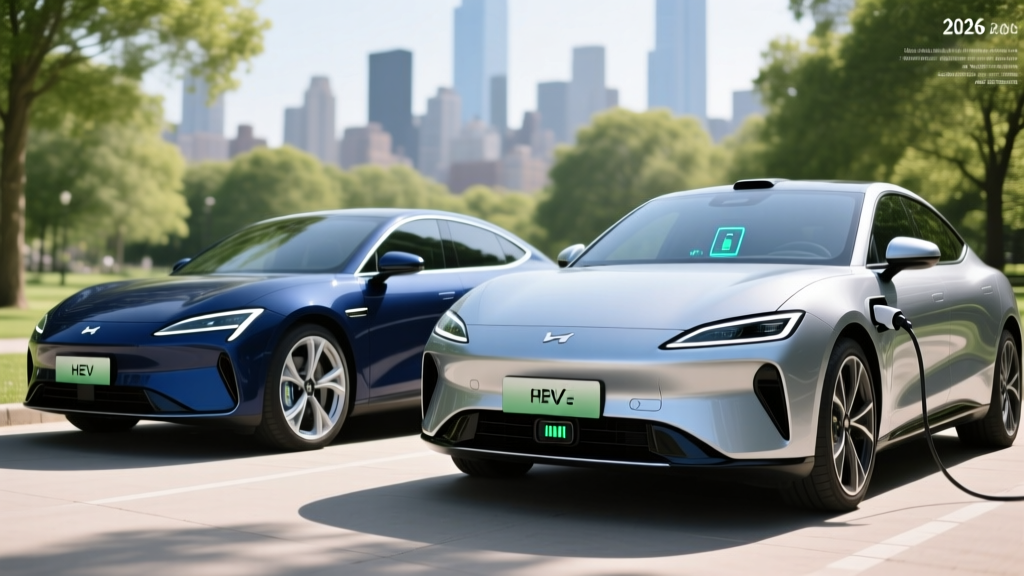
Before evaluating any lease deal, it's critical to understand what kind of hybrid the Corolla is. The 2026 Toyota Corolla Hybrid is a conventional hybrid electric vehicle (HEV). It does not have a charge port, it cannot be plugged in, and it has no meaningful electric-only driving range. Instead, it uses a small battery pack (approximately 1.0 kWh usable) that charges itself through regenerative braking and the gasoline engine.
| Feature | HEV (Corolla Hybrid) | PHEV (e.g., Prius Prime) | BEV (e.g., Tesla Model 3) |
|---|---|---|---|
| Plug-in charging | No | Yes | Yes |
| Electric-only range | ~1 mile at low speed | 35–45 miles | 250–350+ miles |
| Battery size | ~1.0 kWh | ~13.6 kWh | 50–82 kWh |
| Gas engine | Yes (primary) | Yes (backup) | No |
| Federal tax credit (§30D) | Not eligible | Up to $7,500* | Up to $7,500* |
| Home charger needed | No | Recommended | Required |
*§30D eligibility depends on MSRP caps, buyer income limits, and battery-sourcing requirements. See IRS.gov for current rules.
If you're looking for plug-in capability with Toyota's hybrid reliability, the Prius Prime is the PHEV to consider — it offers roughly 44 miles of electric-only range. The Corolla Hybrid is purely an HEV, designed to maximize MPG without any lifestyle changes.
Fuel Economy: EPA Ratings and Real-World MPG
The 2026 Corolla Hybrid carries over the powertrain that has made this car a favorite among efficiency-focused drivers. Here are the official EPA estimates:
| Drivetrain | City MPG | Highway MPG | Combined MPG |
|---|---|---|---|
| FWD (LE) | 53 | 46 | 50 |
| AWD (SE / XLE) | 47 | 41 | 44 |
Source: fueleconomy.gov
The FWD Corolla Hybrid's 53 MPG city rating is particularly impressive and reflects how Toyota's hybrid system operates: the electric motor handles low-speed and stop-and-go driving, where gasoline engines are least efficient. This means the Corolla Hybrid often exceeds its EPA city rating in real-world urban driving — a rarity among vehicles.
Based on owner-reported data and testing, expect the FWD Corolla Hybrid to deliver 48–54 MPG in mixed city/highway driving in mild weather. Highway-only trips at 75+ MPH typically yield 40–44 MPG, as aerodynamic drag reduces the hybrid system's advantage. In cold weather (below 30°F), expect a 5–10% reduction as the engine runs longer to provide cabin heat. Drivers who do mostly city commuting at moderate speeds may see 55+ MPG consistently.
Powertrain Specs and Performance
The 2026 Corolla Hybrid pairs a 1.8-liter four-cylinder Atkinson-cycle engine with Toyota's fifth-generation hybrid transaxle. The FWD model uses a single front motor, while AWD variants add a rear-mounted electric motor for all-wheel drive.
| Engine | 1.8L 4-cylinder Atkinson-cycle |
| Engine power | 96 hp / 105 lb-ft torque |
| Electric motor (front) | 94 hp / 139 lb-ft |
| Combined net horsepower | 138 hp |
| AWD rear motor | 40 hp (AWD models only) |
| Transmission | ECVT (electronic continuously variable) |
| 0–60 mph | ~9.0 seconds (FWD) |
| Hybrid battery | ~1.0 kWh, lithium-ion |
| Fuel tank | 11.4 gallons |
| Total driving range | ~570 miles (FWD, at 50 MPG combined) |
At 138 net horsepower, the Corolla Hybrid prioritizes efficiency over acceleration. The 9.0-second 0–60 time is adequate for daily commuting and highway merging but won't satisfy performance-oriented drivers. The eCVT provides seamless power delivery with no gear-shift shock, and the transition between electric and gas power is nearly imperceptible.
2026 Toyota Corolla Hybrid Lease: Pricing and Monthly Cost
Understanding the numbers behind a 2026 Toyota Corolla Hybrid lease requires looking at MSRP, typical lease terms, and what drives your monthly payment.
| Trim | Drivetrain | MSRP |
|---|---|---|
| LE | FWD | $24,050 |
| SE | AWD | $26,550 |
| XLE | AWD | $28,350 |
A typical 36-month lease for a Corolla Hybrid LE with 12,000 miles per year might look like this:
- Capitalized cost: ~$22,500 (negotiated below MSRP)
- Residual value: ~58–62% (Toyota Corollas hold value well)
- Money factor: 0.00225–0.00275 (varies by credit tier)
- Estimated monthly payment: $275–$340 before taxes and fees
- Due at signing: $2,000–$3,500 (first payment, acquisition fee, registration)
Lease deals vary by region and dealer. Toyota Financial Services periodically offers lease cash incentives on hybrid models — check your local dealer or Toyota's national offers page for current promotions. The Corolla's strong residual value (typically 55–63% at 36 months) helps keep lease payments competitive compared to vehicles that depreciate faster.
Does the Corolla Hybrid Qualify for a Federal Tax Credit?
No. The 2026 Toyota Corolla Hybrid is a conventional HEV and does not qualify for the IRS §30D New Clean Vehicle Credit. That credit — up to $7,500 — is reserved for plug-in vehicles (PHEVs and BEVs) with battery packs of at least 7 kWh that meet critical-mineral and battery-component sourcing requirements.
- Vehicle must be a PHEV or BEV with ≥7 kWh battery — Corolla Hybrid has ~1.0 kWh ✗
- MSRP cap: $55,000 (sedans) / $80,000 (SUVs, trucks)
- Buyer AGI limits: $150K single / $300K joint
- Battery critical minerals and components must meet phased-in sourcing thresholds
- Credit can be transferred to dealer at point of sale for instant discount
Some states and local utilities offer rebates for conventional hybrids, though these are increasingly rare as incentives shift toward plug-in vehicles. Check your state's energy office or utility provider for any current hybrid rebates.
Battery Warranty, Lifespan, and Replacement Cost
Hybrid battery longevity is the single most common concern among prospective hybrid buyers — and it's a key factor when evaluating a lease vs. purchase.
Toyota covers the hybrid battery and all hybrid-system components for 10 years or 150,000 miles, whichever comes first. This warranty has been standard across Toyota's hybrid lineup since the 2020 model year and applies to the original owner and all subsequent owners.
The Corolla Hybrid's lithium-ion battery pack is significantly smaller than a PHEV or BEV battery — roughly 1.0 kWh versus 13+ kWh in a Prius Prime or 60+ kWh in a full EV. This smaller battery experiences less stress per cycle and benefits from Toyota's conservative charge-window management (the system never fully charges or fully depletes the pack, keeping it in the 40–80% state-of-charge sweet spot).
Real-World Hybrid Battery Longevity
Toyota's hybrid batteries have an excellent long-term track record. Data from millions of Prius vehicles on the road shows that most original hybrid batteries last 150,000–200,000+ miles before significant capacity loss. Failures before 100,000 miles are uncommon and typically covered under warranty.
If you're leasing for 36 months and typical mileage (36,000–45,000 miles), hybrid battery degradation is essentially a non-issue. You'll return the car long before the battery becomes a concern. If you're purchasing and plan to keep the car 10+ years, the 10-year/150,000-mile warranty provides substantial protection.
Battery Replacement Cost
Should the hybrid battery need replacement out of warranty, a new OEM battery for the Corolla Hybrid costs approximately $2,000–$3,500 including labor at a Toyota dealership. Third-party reconditioned batteries are available for $1,000–$1,800. Given the battery's proven longevity, most owners will never face this expense.
Lease vs. Buy: Which Makes Sense for the Corolla Hybrid?
The decision to lease or buy a 2026 Corolla Hybrid depends on your priorities:
- You want the lowest monthly payment and drive under 15,000 miles/year
- You prefer a new car every 3 years with the latest safety tech
- You don't want to think about battery longevity or resale value
- You can stay within typical lease mileage limits (10K–15K miles/year)
- You drive more than 15,000 miles/year (lease overage fees add up fast)
- You plan to keep the car 7–10+ years to maximize total cost savings
- You want the flexibility to modify or sell the vehicle anytime
- You value building equity vs. perpetual payments
One advantage of buying a Corolla Hybrid: with no federal tax credit available, there's no incentive cliff to worry about. The purchase price is the purchase price, and the car's 50 MPG efficiency delivers savings from day one regardless of how you finance it.
Who Should Choose the Corolla Hybrid vs. a PHEV or Full EV?
The Corolla Hybrid occupies a specific niche. Here's how to decide if it's the right electrified vehicle for your situation:
| Your Situation | Best Choice |
|---|---|
| No home charging access, want max MPG | Corolla Hybrid (HEV) |
| Can charge at home, commute under 40 miles | Prius Prime (PHEV) |
| Can charge at home, want zero gas use | Tesla Model 3 or Chevy Equinox EV (BEV) |
| Drive 200+ miles daily, no reliable charging | Corolla Hybrid (HEV) |
| Want lowest total cost of ownership over 10 years | Corolla Hybrid (HEV) or BEV with credit |
| Want federal tax credit up to $7,500 | PHEV or BEV (not HEV) |
The Corolla Hybrid is ideal for renters, apartment dwellers, or anyone without reliable access to a charging outlet. It requires zero infrastructure — just fill up with gas and drive. The 50+ MPG combined rating means roughly $900–$1,100 per year in fuel costs (at 12,000 miles and $3.40/gallon), compared to $1,600–$1,900 for a comparable gas-only compact sedan getting 30 MPG combined.
Reliability, Safety, and Ownership Costs
Toyota's hybrid powertrain is one of the most proven in the automotive industry. The Corolla Hybrid shares its core hybrid architecture with the Prius, which has accumulated billions of real-world miles globally. Toyota consistently ranks at or near the top of J.D. Power and Consumer Reports reliability surveys, and the hybrid system adds minimal complexity — there's no traditional starter motor, no alternator, and the eCVT has no physical gears or bands to wear out.
The 2026 Corolla Hybrid comes standard with Toyota Safety Sense 3.0, which includes:
- Pre-Collision System with Pedestrian Detection
- Full-Speed Range Dynamic Radar Cruise Control
- Lane Departure Alert with Steering Assist
- Lane Tracing Assist
- Automatic High Beams
- Road Sign Assist
Note: These are SAE Level 1–2 driver-assistance features, not autonomous driving. The driver must remain fully engaged and responsible for vehicle control at all times.
The Corolla has earned top safety ratings from both NHTSA and the IIHS in recent model years, and the 2026 version carries forward the same structural platform.
- 50 MPG combined (FWD) — among the best in the compact segment
- No plug-in required; works with existing gas-station infrastructure
- 10-year / 150,000-mile hybrid battery warranty
- AWD available for snow-belt drivers
- Strong resale value supports competitive lease payments
- Toyota Safety Sense 3.0 standard on all trims
- 9.0-second 0–60 — noticeably slower than turbocharged competitors
- No federal tax credit eligibility (HEV limitation)
- Rear seat and cargo space tighter than some rivals
- AWD drops combined MPG to 44
- Infotainment system functional but not class-leading
Frequently Asked Questions
How many MPG does the 2026 Toyota Corolla Hybrid get?
The FWD Corolla Hybrid LE is EPA-rated at 53 city / 46 highway / 50 combined MPG. AWD trims (SE, XLE) are rated at 47 city / 41 highway / 44 combined. In real-world city driving, many owners report matching or slightly exceeding the EPA city number thanks to the hybrid system's regenerative braking advantage in stop-and-go traffic.
Does the Corolla Hybrid need to be plugged in?
No. The Corolla Hybrid is a conventional HEV — it charges its small battery through regenerative braking and the gasoline engine. There is no charge port. You fuel it like any other gas car.
How far can the Corolla Hybrid drive on electric only?
Effectively less than 1 mile at very low speeds (under 25 mph). The hybrid battery is too small (~1.0 kWh) for meaningful electric-only driving. If you want electric-only range, look at the Prius Prime PHEV, which offers approximately 44 miles on battery power alone.
Is the hybrid battery reliable, and what does replacement cost?
Toyota's hybrid batteries have a strong track record, typically lasting 150,000–200,000+ miles. The 2026 Corolla Hybrid includes a 10-year / 150,000-mile hybrid battery warranty. Out-of-warranty replacement costs approximately $2,000–$3,500 for a new OEM battery. Most owners will never need a replacement.
Does the 2026 Corolla Hybrid qualify for any tax credit?
No. The federal §30D New Clean Vehicle Credit requires a plug-in vehicle with at least 7 kWh of battery capacity. The Corolla Hybrid's ~1.0 kWh battery does not qualify. Some states or utilities may offer small rebates for conventional hybrids — check your local programs.
What's a typical monthly lease payment for the 2026 Corolla Hybrid?
Based on current market conditions, expect approximately $275–$340 per month for a 36-month lease on a Corolla Hybrid LE with 12,000 miles/year and $2,000–$3,500 due at signing. Exact terms vary by dealer, region, credit tier, and any active Toyota incentive programs.
Should I lease the Corolla Hybrid or buy a full EV instead?
If you have reliable home charging and your daily commute is under 50 miles round-trip, a full EV like the Chevy Equinox EV or Tesla Model 3 offers lower per-mile energy costs and federal tax credit eligibility. If you lack home charging, frequently drive long distances, or want the lowest upfront hassle, the Corolla Hybrid's 50 MPG and zero infrastructure requirements make it the more practical choice.