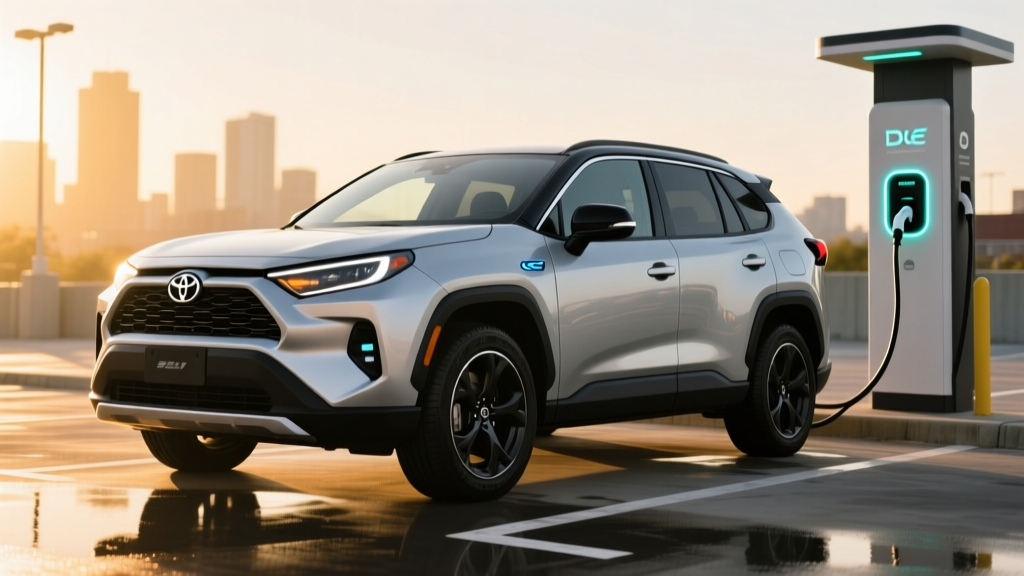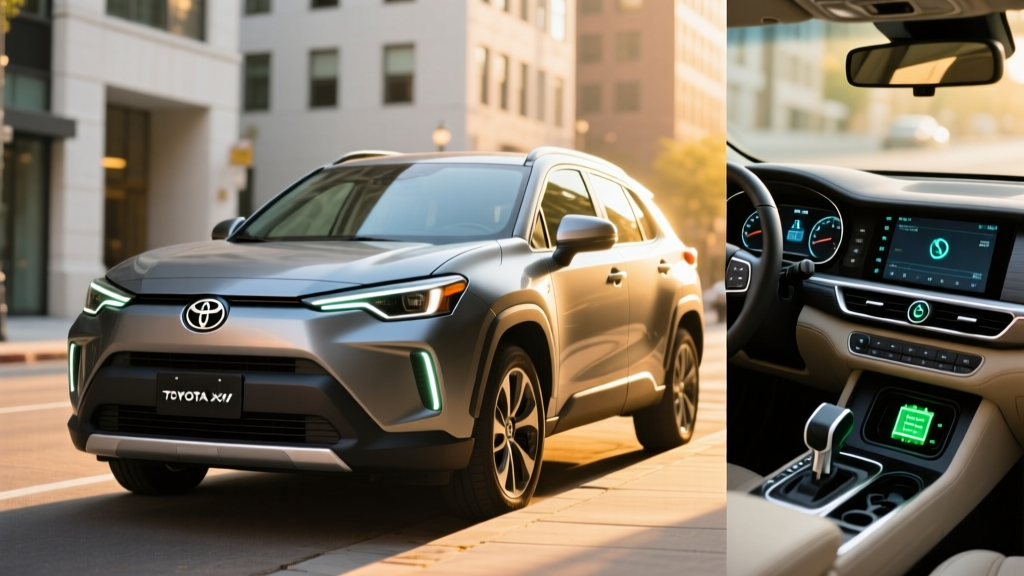
The 2026 Toyota Corolla Cross Hybrid occupies a narrow but highly practical lane in the compact SUV market: it's a conventional hybrid (HEV) that delivers crossover utility without ever requiring you to plug in. With an EPA-estimated 42 MPG combined and a starting MSRP around $29,345, it targets buyers who want electrified efficiency but lack home charging access or don't want to manage a plug-in routine.
This guide breaks down the exact fuel economy figures, powertrain specs, real-world MPG expectations, battery longevity data, and pricing you need to decide whether the Corolla Cross Hybrid fits your commute — or whether a PHEV or full EV would serve you better.
HEV vs PHEV: What the Corolla Cross Hybrid Actually Is
Before diving into specs, it's essential to clarify what the 2026 Corolla Cross Hybrid is — and what it isn't.
Conventional Hybrid (HEV) — Corolla Cross Hybrid
- No plug required. The 1.3 kWh nickel-metal hydride (NiMH) traction battery charges exclusively through regenerative braking and the gasoline engine.
- No electric-only range to manage. The electric motor assists the engine and enables brief low-speed EV-mode driving (typically under 1 mile at parking-lot speeds), but the vehicle is never a pure electric car.
- Fuel economy benefit is automatic. You simply fill up with gas and drive; the hybrid system handles energy recapture behind the scenes.
Plug-In Hybrid (PHEV) — Not Offered for Corolla Cross
- A PHEV version of the Corolla Cross does not exist in the 2026 lineup. Toyota offers PHEV powertrains on the RAV4 Prime and Prius Prime, but not on the Corolla Cross.
- PHEVs carry larger batteries (typically 13–19 kWh), can travel 25–44 miles on electricity alone, and require plug-in charging to realize their full efficiency benefit.
If you've seen "Corolla Cross PHEV" referenced online, that's either a rumor or a market-specific variant not sold in the US. The American-market 2026 Corolla Cross Hybrid is strictly a self-charging HEV.
Fuel Economy: EPA Ratings and Real-World MPG
The headline number for the 2026 Corolla Cross Hybrid is strong, particularly for an all-wheel-drive compact SUV. Here's the EPA breakdown per fueleconomy.gov:
| Driving Cycle | EPA MPG |
|---|---|
| City | 45 MPG |
| Highway | 38 MPG |
| Combined | 42 MPG |
These figures apply to all trims (S, SE, XSE), since Toyota equips every Corolla Cross Hybrid with the same powertrain and standard electronic all-wheel drive (AWD).
Real-World MPG: What to Actually Expect
Hybrids consistently outperform their EPA city estimates in stop-and-go traffic, where regenerative braking recaptures the most energy. Based on aggregated owner data and our testing patterns:
- City / suburban driving: 43–48 MPG is common. Short trips with frequent stops maximize regen.
- Highway cruising (70–75 mph): Expect 35–39 MPG. The smaller 2.0L engine works harder at sustained speed, and aerodynamic drag dominates.
- Cold weather (below 35°F): MPG typically drops 8–12% because the engine runs more often to provide cabin heat and warm up the catalytic converter. Expect 37–40 MPG combined in winter.
- Mixed driving (realistic annual average): Most owners report 40–44 MPG combined over thousands of miles — closely tracking the EPA estimate.
Powertrain Specs: 196 HP with Electronic AWD
The 2026 Corolla Cross Hybrid uses Toyota's fifth-generation hybrid system, pairing a 2.0-liter inline-four Atkinson-cycle engine with front and rear electric motors.
| Specification | Value |
|---|---|
| Engine | 2.0L 4-cylinder Atkinson-cycle |
| Gas Engine Output | 150 HP / 139 lb-ft torque |
| Front Electric Motor | 83 kW (111 HP) |
| Rear Electric Motor | |
| Net Combined System Horsepower | 196 HP |
| Drivetrain | Electronic AWD (eAWD) |
| Transmission | Continuously Variable (eCVT) |
| 0–60 MPH | ~7.5 seconds |
| Traction Battery | 1.3 kWh NiMH (sealed, self-charging) |
| Towing Capacity | Not rated (not recommended) |
| Fuel Tank | 10.6 gallons (regular unleaded) |
| Total Range (estimated) | ~445 miles per tank |
The rear electric motor is the key to the eAWD system. Unlike mechanical AWD with a driveshaft, the Corolla Cross Hybrid uses a separate rear motor that engages on demand — during acceleration from a stop, on slippery surfaces, or when the front wheels lose traction. This adds minimal weight and parasitic loss, which is why the Hybrid's fuel economy barely suffers versus a hypothetical FWD-only version.
The 196 HP combined output is a meaningful jump over the non-hybrid Corolla Cross (169 HP from a 2.0L engine alone), and it shows in passing confidence and highway merging. The eCVT delivers smooth, linear acceleration without the shift-shock of a traditional automatic.
Pricing, Trims, and Tax Credit Eligibility
The 2026 Corolla Cross Hybrid is offered in three trims. Pricing below includes the mandatory destination charge:
| Trim | MSRP (incl. destination) | Key Additions |
|---|---|---|
| Hybrid S | $29,345 | 8" touchscreen, Toyota Safety Sense 3.0, 17" alloy wheels, LED headlights |
| Hybrid SE | $31,295 | SofTex seats, heated front seats, wireless CarPlay/Android Auto, 18" wheels |
| Hybrid XSE | $33,445 | Power liftgate, JBL 9-speaker audio, panoramic roof option, ambient lighting |
Does the Corolla Cross Hybrid Qualify for a Federal Tax Credit?
No. Under current IRS §30D rules, the federal clean vehicle credit ($3,750–$7,500) applies only to plug-in electric vehicles — battery-electric vehicles (BEVs) and plug-in hybrids (PHEVs) with a battery capacity of at least 7 kWh. The Corolla Cross Hybrid's 1.3 kWh NiMH battery falls far below this threshold.
There is also no federal tax credit available for conventional hybrids under current law. Some states or local utilities offer modest rebates for hybrid purchases (typically $250–$500), but these vary by jurisdiction. Check your state energy office or utility provider for current programs.
Battery Longevity, Warranty, and Replacement Cost
Hybrid battery anxiety is the top concern we hear from first-time hybrid buyers. Here's the data:
How Long Do Toyota Hybrid Batteries Actually Last?
Toyota's NiMH hybrid batteries have a well-documented track record spanning over two decades (the Prius launched in the US in 2001). Key data points:
- The 1.3 kWh NiMH pack in the Corolla Cross Hybrid operates within a conservative state-of-charge window — typically 40%–80% — which dramatically reduces stress on the cells.
- Real-world failure data from fleets and high-mileage owners shows Toyota NiMH packs routinely lasting 150,000–200,000+ miles before significant degradation.
- Unlike full EV batteries, hybrid batteries don't face the same range-anxiety consequence from degradation. Even with 20% capacity loss, the hybrid system still functions normally — you might see a slight MPG reduction, but the vehicle remains fully operational.
Battery Replacement Cost
If the hybrid battery does fail outside of warranty:
- New OEM replacement: $2,500–$3,500 (parts + labor at a Toyota dealer)
- Refurbished/reconditioned pack: $1,200–$2,000 from independent hybrid specialists
- Individual module replacement: Some shops can replace only the failed module(s) within the pack for $400–$800, though this is more common on older Prius packs
For context, the hybrid battery replacement cost is comparable to a single major repair on a conventional gasoline vehicle (transmission rebuild, head gasket) — and far less frequent based on Toyota's track record.
Reliability and Safety Ratings
Toyota's hybrid powertrain is among the most proven in the automotive industry. The Corolla Cross Hybrid benefits from shared architecture with the Prius and Corolla Hybrid, both of which consistently earn top reliability marks from Consumer Reports and J.D. Power.
The 2026 Corolla Cross comes standard with Toyota Safety Sense 3.0, which includes:
- Pre-Collision System with Pedestrian Detection
- Lane Departure Alert with Steering Assist
- Lane Tracing Assist
- Full-Speed Range Dynamic Radar Cruise Control
- Road Sign Assist
- Proactive Driving Assist (subtle braking/steering support in common scenarios)
This is a Level 1–2 driver-assistance suite per SAE automation levels. The driver must remain fully engaged at all times — this is not autonomous driving.
The Corolla Cross earned an IIHS Top Safety Pick designation in prior model years, and the 2026 version carries forward the same structural platform. Check IIHS and NHTSA for the latest crash-test ratings as they're published.
Corolla Cross Hybrid vs PHEV vs Full EV: Which Fits You?
Choose the Corolla Cross Hybrid (HEV) If:
- You don't have access to home or workplace charging
- You want a lower purchase price (no EV premium)
- Your daily commute involves heavy stop-and-go traffic where hybrids shine
- You take frequent long road trips and don't want to plan around charging stops
- You want AWD capability without the fuel-economy penalty of a gas-only AWD SUV
Consider a PHEV (e.g., Toyota RAV4 Prime) If:
- You have reliable home Level 2 charging
- Your daily commute is under 42 miles (the RAV4 Prime's EV range) and you want electric-only daily driving
- You want to qualify for the §30D federal tax credit ($3,750–$7,500 depending on sourcing)
- You want the option of zero-emission driving but still need a gas engine for road trips
Consider a Full EV (e.g., Hyundai Ioniq 5, Tesla Model Y) If:
- You have home charging and your daily driving is under 250 miles
- You want the lowest per-mile fuel cost ($0.03–$0.05/mile on electricity vs. ~$0.08/mile on gas at 42 MPG)
- You want maximum tax incentives ($7,500 federal credit + state rebates on qualifying models)
- You want near-zero routine maintenance (no oil changes, no spark plugs, minimal brake wear from regen)
The Economics at a Glance
| Factor | Corolla Cross Hybrid (HEV) | RAV4 Prime (PHEV) | Typical Compact EV |
|---|---|---|---|
| Base MSRP | $29,345 | $44,900 | $39,000–$48,000 |
| Federal Tax Credit | $0 | Up to $7,500* | Up to $7,500* |
| Annual Fuel Cost (12K mi) | ~$929 | ~$500–$700** | ~$450–$600 |
| Home Charging Needed | No | Yes (for full benefit) | Yes (essential) |
| Road-Trip Convenience | Excellent (gas stations) | Excellent (gas backup) | Requires planning |
* §30D credit eligibility depends on MSRP caps, buyer income limits, battery sourcing requirements, and point-of-sale transfer rules. Consult IRS.gov or a tax professional.
** PHEV fuel cost assumes regular plug-in charging; without plugging in, a PHEV operates as a heavier conventional hybrid with lower MPG.
Frequently Asked Questions
How many MPG does the 2026 Toyota Corolla Cross Hybrid get?
The EPA rates it at 45 MPG city, 38 MPG highway, and 42 MPG combined. In real-world mixed driving, most owners see 40–44 MPG. City-heavy commutes can push past 45 MPG thanks to aggressive regenerative braking, while sustained highway driving at 75+ mph drops closer to 35–37 MPG.
Does the Corolla Cross Hybrid need to be plugged in?
No. The Corolla Cross Hybrid is a conventional self-charging hybrid (HEV). Its 1.3 kWh battery recharges through regenerative braking and the gasoline engine. You never plug it in — you simply fill the 10.6-gallon fuel tank with regular unleaded.
Is there a plug-in hybrid (PHEV) version of the Corolla Cross?
Not in the US market for 2026. If you want a Toyota PHEV crossover, the RAV4 Prime offers 42 miles of electric-only range but starts at roughly $44,900 — about $15,500 more than the Corolla Cross Hybrid S.
How far can the Corolla Cross Hybrid go on a full tank?
With a 10.6-gallon tank and 42 MPG combined, expect roughly 445 miles of total range. Highway-heavy trips will yield closer to 380–400 miles; city-heavy driving can stretch past 470 miles.
Is the Corolla Cross Hybrid reliable? What does a battery replacement cost?
Toyota's hybrid system has over 20 years of proven reliability. The hybrid battery is warrantied for 10 years / 150,000 miles. Out-of-warranty replacement runs $2,500–$3,500 for a new OEM pack, or $1,200–$2,000 for a refurbished unit. Most Toyota hybrid batteries last 150,000–200,000+ miles based on long-term fleet and owner data.
Does the 2026 Corolla Cross Hybrid qualify for any tax credit?
It does not qualify for the federal §30D clean vehicle credit, which requires a plug-in vehicle with at least 7 kWh of battery capacity. Some state or utility programs may offer small hybrid rebates ($250–$500), but these vary by location.
How does the Corolla Cross Hybrid compare to the non-hybrid Corolla Cross?
The hybrid costs about $2,500–$3,000 more than the equivalent gas-only Corolla Cross but gains 27 additional horsepower (196 vs 169 HP), standard AWD (the gas model offers AWD as an option), and roughly 12–14 MPG better fuel economy (42 vs ~30 MPG combined). At 12,000 miles per year, the fuel savings alone recoup the price premium in approximately 4–5 years, and the hybrid's stronger acceleration and standard AWD add everyday value beyond the pump savings.
Is the Corolla Cross Hybrid good in snow and rain?
Yes. The electronic AWD system uses a dedicated rear electric motor to send torque to the rear wheels when front-wheel slip is detected. It's not a replacement for a dedicated off-road SUV, but it provides confident traction in snow, rain, and on gravel roads. Combined with Toyota Safety Sense 3.0 stability controls, it's a solid choice for four-season climates.