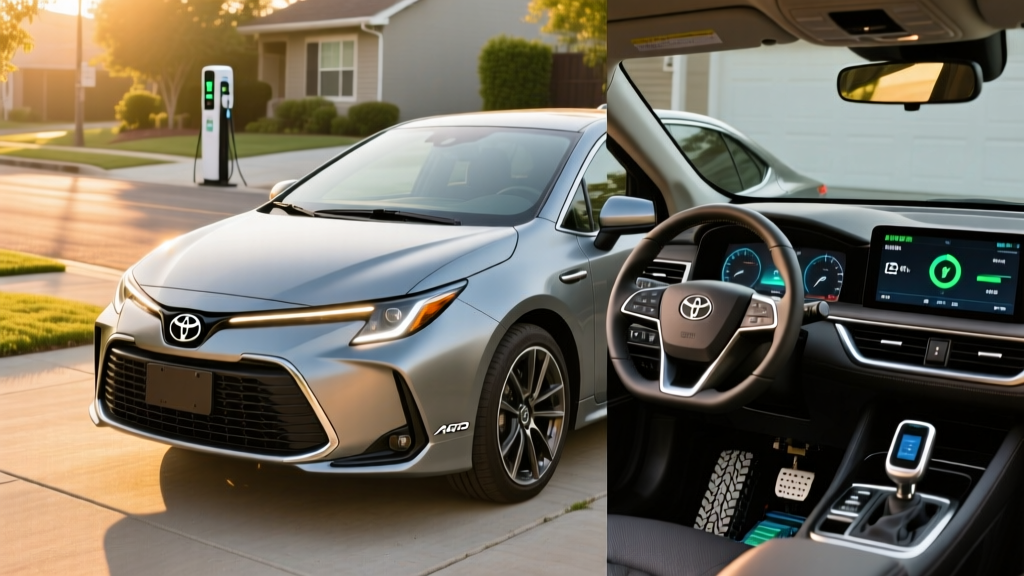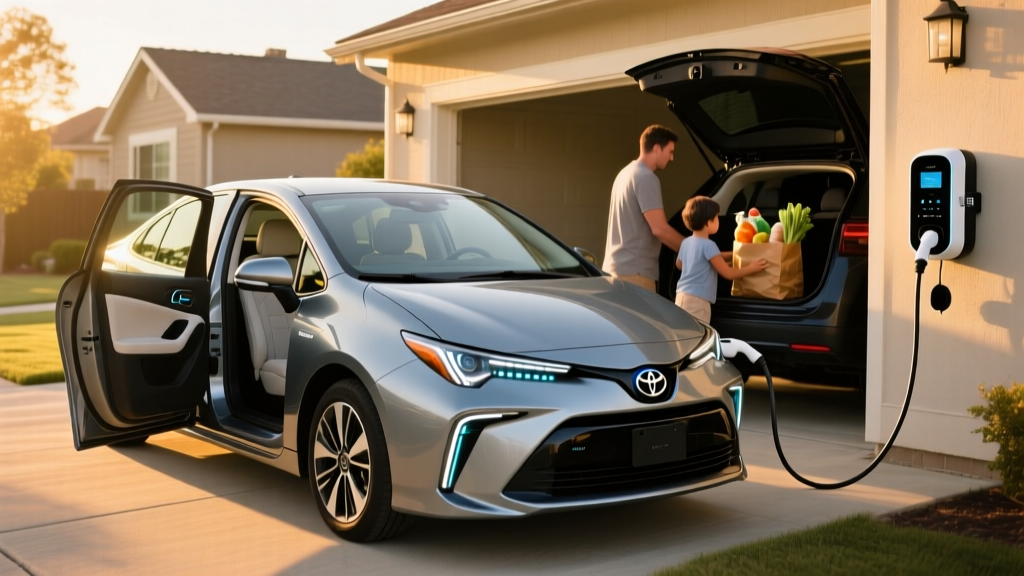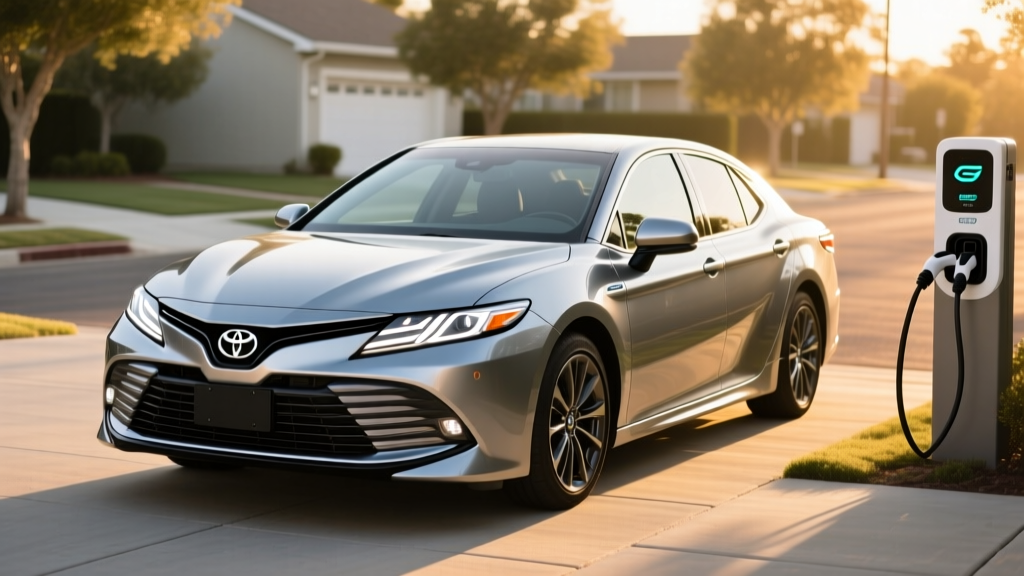
The Toyota Camry went fully hybrid starting with the 2025 model year, and the 2026 Toyota Camry Hybrid carries over the fifth-generation hybrid powertrain that made its debut such a sales success. With no gasoline-only Camry variant in the lineup, every new Camry you buy is a hybrid — and that's a good thing. The result is a midsize sedan that delivers up to 51 MPG combined while still offering all-wheel drive, 225 horsepower, and a starting price under $30,000.
This guide covers the 2026 Camry Hybrid's real-world efficiency, powertrain details, battery longevity, and how it stacks up against plug-in hybrids and full battery-electric vehicles. If you've been searching for a Camry Hybrid and want hard numbers before visiting a dealer, you're in the right place.
2026 Camry Hybrid Fuel Economy: EPA and Real-World MPG
The Camry Hybrid's fuel economy varies by drivetrain and trim. Front-wheel-drive (FWD) models achieve the highest ratings, while the available electronic all-wheel-drive (AWD) system trims efficiency slightly due to the additional rear motor and weight. Here's the official EPA data from fueleconomy.gov:
| Configuration | City MPG | Highway MPG | Combined MPG |
|---|---|---|---|
| FWD (LE, SE) | 53 | 50 | 51 |
| AWD (LE, SE, XLE, XSE) | 51 | 49 | 50 |
With a 13.2-gallon fuel tank, the FWD Camry Hybrid delivers a theoretical range of over 670 miles per tank. In mixed real-world driving, 550–600 miles between fill-ups is typical and achievable without hypermiling.
Powertrain: 225 HP Fifth-Gen Hybrid System
Every 2026 Camry Hybrid uses Toyota's fifth-generation hybrid powertrain, pairing a 2.5-liter four-cylinder engine operating on the Atkinson cycle with one or two electric motors. FWD models use a single front motor; AWD models add a rear-mounted electric motor for on-demand all-wheel traction.
| Engine | 2.5L inline-4 Atkinson cycle |
| Engine Output | 184 hp / 163 lb-ft torque |
| Electric Motor (FWD front) | 100 kW (134 hp) |
| Electric Motor (AWD rear) | 30 kW (40 hp) |
| Net Combined System HP | 225 hp (FWD) / 232 hp (AWD) |
| Transmission | eCVT (planetary gearset) |
| 0–60 mph | ~7.1 seconds (FWD) |
| Hybrid Battery | 1.1 kWh lithium-ion (sealed NiMH on base LE in some markets) |
| Drivetrain | FWD standard, AWD available |
The eCVT is not a belt-driven continuously variable transmission — it's a planetary gearset that blends engine and motor power with no rubber bands or slipping clutches. This design is one reason Toyota's hybrid systems have earned a reputation for extraordinary durability.
Camry Hybrid vs. Plug-In Hybrid vs. Full EV: Which Fits You?
The Camry is a conventional hybrid (HEV), not a plug-in hybrid (PHEV). Understanding this distinction is critical before you shop:
| Feature | HEV (Camry Hybrid) | PHEV (e.g., Prius Prime) | BEV (e.g., Tesla Model 3) |
|---|---|---|---|
| Plugs in? | No | Yes | Yes |
| Electric-only range | ~1 mile at low speed | 30–44 miles | 250–360+ miles |
| Gas engine | Yes (primary) | Yes (backup) | None |
| Home charging needed | No | Recommended (Level 2) | Required |
| Refueling | Gas station | Gas station + outlet | Charger only |
| Federal tax credit (§30D) | Not eligible | Up to $7,500* | Up to $7,500* |
*§30D credit subject to MSRP caps, buyer income limits, and battery critical-mineral sourcing requirements. See IRS.gov for current eligibility rules.
Choose the Camry Hybrid (HEV) if: You don't have reliable access to home or workplace charging, you want maximum simplicity, you drive more than 15,000 miles per year mostly on highways, and you want a proven, low-maintenance powertrain without range anxiety.
Choose a PHEV if: You can charge at home, your daily commute is under 40 miles round-trip (so you drive mostly on electricity), but you still want gas-engine flexibility for longer road trips without planning charging stops.
Choose a full EV if: You have Level 2 home charging, your daily driving is predictable, you want the lowest per-mile fuel cost, and you're ready to plan DC fast-charging stops on road trips.
Pricing, Trims, and Tax Credit Eligibility
The 2026 Camry Hybrid is offered in four trims. Pricing below includes the mandatory destination charge:
| Trim | Drivetrain | MSRP (incl. destination) |
|---|---|---|
| LE | FWD | $29,990 |
| LE | AWD | $31,390 |
| SE | FWD | $31,490 |
| SE | AWD | $32,890 |
| XLE | FWD | $34,490 |
| XLE | AWD | $35,890 |
| XSE | AWD | $36,990 |
- No. The IRS §30D Clean Vehicle Credit applies only to plug-in electric vehicles (PHEVs and BEVs) with a minimum battery capacity of 7 kWh and plug-in charging capability.
- The Camry Hybrid's ~1.1 kWh battery and HEV architecture do not meet §30D requirements.
- Some states and utilities offer modest rebates for conventional hybrids — check your local utility and state energy office.
- If you want a Toyota with federal credit eligibility, the Prius Prime PHEV qualifies for up to $3,750 under current sourcing rules (check IRS §30D guidance for the latest).
Battery Warranty, Lifespan, and Replacement Cost
Hybrid battery longevity is the number-one concern among first-time hybrid buyers. Toyota addresses this with one of the strongest hybrid battery warranties in the industry:
- Hybrid battery: 10 years / 150,000 miles (whichever comes first)
- Hybrid system components (inverter, motor, control module): 8 years / 100,000 miles
- Standard powertrain warranty: 5 years / 60,000 miles
The 10-year/150,000-mile hybrid battery warranty applies in all 50 states for 2020 and newer Toyota hybrids. If the battery fails within this window, Toyota replaces it at no cost to the owner.
Real-world longevity data: Toyota's hybrid batteries in the Camry, Prius, and RAV4 Hybrid have demonstrated exceptional durability. Taxi fleets and high-mileage owners have logged 250,000–350,000 miles on original hybrid batteries. The lithium-ion pack in the fifth-generation system is smaller, lighter, and better thermally managed than earlier nickel-metal-hydride packs.
Out-of-warranty replacement cost: If a hybrid battery does eventually need replacement after the warranty period, expect to pay between $2,000 and $4,000 for a new OEM battery pack, plus approximately $300–$500 in labor. Refurbished and aftermarket packs are available for $1,000–$2,000. This is a fraction of the $10,000–$20,000+ cost of replacing a full EV traction battery.
Reliability and Safety Ratings
Toyota's hybrid powertrains are among the most thoroughly proven in the automotive industry, with over 25 years of continuous production since the original 1997 Prius. The eCVT planetary gearset has no belts, no clutches, and no torque converter to wear out — it's one of the simplest and most durable transmissions ever mass-produced.
The 2026 Camry comes standard with Toyota Safety Sense 3.0, which includes:
- Pre-Collision System with Pedestrian Detection
- Full-Speed Range Dynamic Radar Cruise Control
- Lane Departure Alert with Steering Assist
- Lane Tracing Assist
- Road Sign Assist
- Automatic High Beams
- Proactive Driving Assist (low-speed braking and distance management)
The Camry earned the IIHS Top Safety Pick+ designation (when equipped with specific headlights) and a 5-Star Overall rating from NHTSA. These are SAE Level 1–2 driver-assist features — the driver must remain fully engaged at all times.
Camry Hybrid Ownership Costs: 5-Year Projection
One of the Camry Hybrid's strongest selling points is low total cost of ownership. Here's a five-year estimate for an FWD LE model driven 15,000 miles per year at $3.50/gallon regular unleaded:
| Category | Estimated Cost |
|---|---|
| Purchase price (MSRP) | $29,990 |
| Fuel (75,000 mi ÷ 51 MPG × $3.50/gal) | $5,147 |
| Insurance (avg. $1,400/yr × 5) | $7,000 |
| Maintenance (oil, filters, brakes, tires) | $2,800 |
| Federal tax credit | $0 |
| Estimated 5-yr depreciation (45%) | –$13,496 |
| Total 5-year cost of ownership | ~$31,441 |
Compare this to a comparable gas-only midsize sedan getting 30 MPG combined: fuel alone would cost $8,750 over the same period — a $3,603 difference. The Camry Hybrid's regenerative braking also extends brake pad life significantly, with many owners reporting 60,000–80,000 miles on original pads.
Pros, Cons, and the Bottom Line
Pros
- 51 MPG combined EPA (FWD) — best-in-class for midsize sedans
- No plug-in charging required — fuel at any gas station
- 10-year / 150,000-mile hybrid battery warranty
- Available AWD with dedicated rear electric motor
- Standard Toyota Safety Sense 3.0 suite
- Sub-$30,000 starting price
- Proven 25+ year hybrid track record
- Strong resale value and low depreciation
Cons
- No federal tax credit (HEV, not PHEV)
- Modest 225 hp — adequate but not sporty
- AWD trims lose 1 MPG combined
- Highway fuel economy dips at 75+ mph
- No DC fast charging (not applicable to HEV)
- Infotainment is functional but not class-leading
- Electric-only driving limited to very low speeds
The 2026 Camry Hybrid occupies a clear niche: it's the default choice for buyers who want maximum fuel efficiency without changing their refueling habits. You don't need a garage charger, you don't need to plan road trips around DC fast-charging stations, and you don't need to worry about battery degradation in any meaningful way. You just drive and fill up less often.
Frequently Asked Questions
How many MPG does the 2026 Camry Hybrid get?
The FWD Camry Hybrid achieves 53 city / 50 highway / 51 combined MPG per the EPA. AWD models rate 51 city / 49 highway / 50 combined. In real-world city driving, many owners exceed the EPA city figure thanks to aggressive regenerative braking and frequent electric-motor operation at low speeds.
Does the Camry Hybrid need to be plugged in?
No. The Camry Hybrid is a conventional hybrid (HEV). Its small battery recharges through regenerative braking and the gasoline engine. You never plug it in — you simply refuel at a gas station like any other car.
Is the Camry Hybrid a PHEV?
No. Toyota does not offer a plug-in hybrid version of the Camry. If you want a Toyota PHEV with electric-only driving range, the Prius Prime (up to 44 miles electric-only) and RAV4 Prime (up to 42 miles electric-only) are the current options. Both qualify for partial federal tax credits under §30D.
How long will the Camry Hybrid battery last?
Toyota warranties the hybrid battery for 10 years or 150,000 miles. Real-world data from Toyota hybrid taxis and high-mileage owners shows many batteries lasting 200,000–300,000+ miles. Out-of-warranty replacement costs $2,000–$4,000 for an OEM pack.
Is the Camry Hybrid reliable?
Toyota's hybrid system is one of the most reliable powertrains in production. The eCVT planetary gearset has no wear-prone belts or clutches. Toyota has produced over 25 million hybrid vehicles globally since 1997. The Camry Hybrid consistently earns above-average reliability scores from major automotive research firms.
Does the Camry Hybrid qualify for any tax credit?
The Camry Hybrid does not qualify for the federal §30D Clean Vehicle Credit, which requires plug-in capability and a minimum 7 kWh battery. Some state programs and local utilities may offer small hybrid incentives — check your state energy office and electric provider for current programs.
Should I buy the Camry Hybrid or a full EV?
If you have Level 2 home charging, a predictable commute, and want the lowest possible fuel cost (roughly $0.04–$0.06 per mile on electricity vs. $0.07–$0.09 per mile in the Camry Hybrid), a full EV like the Tesla Model 3 or Hyundai Ioniq 6 is worth considering. If you lack home charging, frequently drive 400+ mile trips, or live in an area with sparse public charging infrastructure, the Camry Hybrid is the more practical and lower-risk choice.