Quick Verdict: The 2026 RAV4 Plug-In Hybrid at a Glance
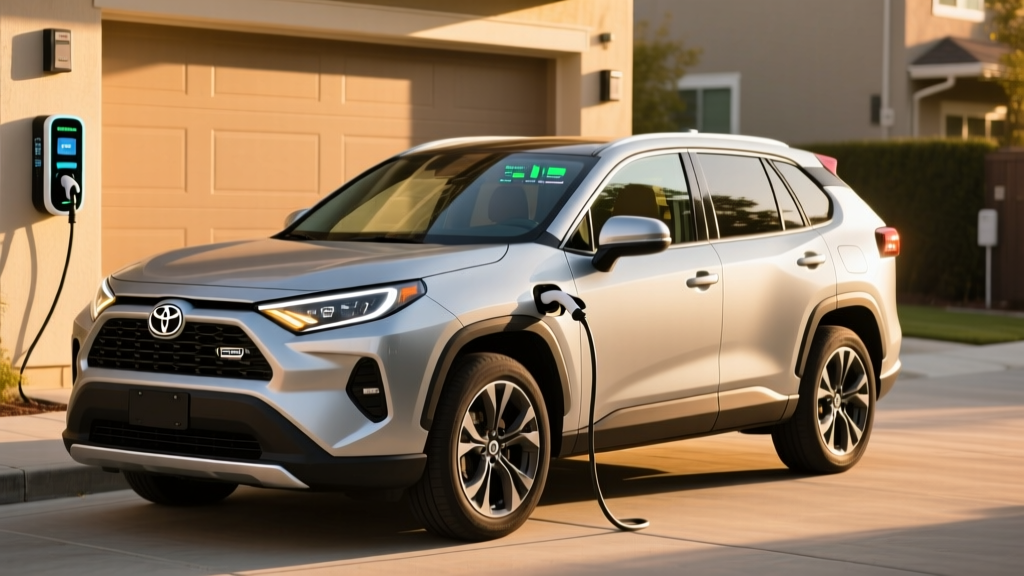
The 2026 Toyota RAV4 Plug-In Hybrid (formerly known as the RAV4 Prime) remains one of the most compelling PHEVs on the market for buyers who want meaningful electric-only commuting without range anxiety on longer trips. With an EPA-estimated 42 miles of electric-only range, 302 combined horsepower, and standard all-wheel drive, it occupies a rare sweet spot: daily zero-emission driving for most commutes, plus a gasoline engine that eliminates charging-desert worries on road trips.
For 2026, Toyota continues to refine the RAV4 PHEV lineup with updated infotainment, expanded Toyota Safety Sense features, and trim repositioning. But the core powertrain — a 2.5-liter four-cylinder paired with front and rear electric motors and an 18.1 kWh lithium-ion battery — carries forward with proven reliability. If you can charge at home and your round-trip commute falls under 40 miles, this vehicle effectively operates as an EV on weekdays and a highly efficient hybrid on weekends.
| Spec | Value |
|---|---|
| Electric-Only Range (EPA) | 42 miles |
| Total Combined Range | ~600 miles |
| Battery Capacity | 18.1 kWh (lithium-ion) |
| Combined Horsepower | 302 hp |
| 0-60 mph | 5.7 seconds |
| MPGe (Electric + Gas) | 94 MPGe combined |
| Gas-Only MPG (Combined) | 38 MPG combined |
| Drivetrain | AWD (standard) |
| Level 2 Charge Time (0-100%) | ~2.5 hours (240V, 32A) |
| DC Fast Charging | Not available |
| Base MSRP (SE trim) | $45,450 |
| Battery Warranty | 10 years / 150,000 miles |
HEV vs PHEV: What's the Actual Difference?
Toyota sells two electrified RAV4 variants, and the distinction matters enormously for your wallet and daily routine:
RAV4 Hybrid (HEV)
- No plug required. The battery charges exclusively through regenerative braking and the gasoline engine.
- 1.6 kWh battery — too small for meaningful electric-only driving.
- EPA: 41 city / 38 highway / 40 combined MPG.
- 219 hp combined output.
- Base MSRP: ~$33,450.
- No federal tax credit. Conventional hybrids do not qualify under IRS §30D.
RAV4 Plug-In Hybrid (PHEV)
- Plug in to unlock electric-only range. A larger 18.1 kWh battery enables 42 miles of pure EV driving.
- EPA: 94 MPGe (electric + gas combined); 38 MPG gas-only after battery depletes.
- 302 hp combined output — the quickest RAV4 in the lineup.
- Base MSRP: $45,450.
- Tax credit eligibility depends on battery sourcing and buyer income (see below).
The HEV is the right call if you lack home charging access or want maximum affordability. The PHEV pays off if you can install a Level 2 charger at home and your daily driving falls within that 42-mile electric envelope — effectively giving you EV running costs for most trips while retaining gas-engine flexibility.
Fuel Economy: EPA Numbers vs Real-World MPG
The 2026 RAV4 Plug-In Hybrid posts strong EPA figures, but real-world results depend heavily on your driving pattern and climate:
| Metric | EPA Estimate | Real-World Expectation |
|---|---|---|
| MPGe (EV + Gas Combined) | 94 MPGe | 85-100 MPGe (depends on EV-mode usage) |
| Gas-Only City MPG | 40 MPG | 38-42 MPG (hybrids often beat EPA in stop-and-go) |
| Gas-Only Highway MPG | 36 MPG | 33-36 MPG (aerodynamic drag reduces efficiency at 70+ mph) |
| Gas-Only Combined MPG | 38 MPG | 36-39 MPG |
| Electric Consumption | 28 kWh/100 mi | 26-32 kWh/100 mi (climate control impacts are significant) |
Cold-weather caveat: In sub-freezing temperatures, expect electric-only range to drop 20-30% — roughly 30-34 miles instead of 42. The RAV4 PHEV uses a heat pump for cabin heating (an efficiency advantage over resistive heaters), but battery chemistry inherently loses capacity in cold conditions. Gas-mode MPG also dips slightly as the engine runs more frequently to provide cabin heat.
Real-world insight: Owners who charge nightly and commute 25-35 miles round-trip report using gasoline only on weekend road trips, achieving effective "MPG" well above the EPA sticker because most miles are electric. If you rarely plug in, you'll default to the 38 MPG gas-only figure — still excellent for a 302-hp AWD SUV, but you're leaving the PHEV's biggest advantage on the table.
Electric-Only Range, Charging, and Powertrain Details
Electric Range and Total Range
The 2026 RAV4 PHEV's 18.1 kWh battery delivers an EPA-rated 42 miles of electric-only driving. In practice, drivers report 38-45 miles depending on speed, terrain, and temperature. City driving with frequent regenerative braking extends range; sustained highway speeds above 65 mph reduce it.
Charging: Level 1 and Level 2 Only
A critical limitation: the RAV4 PHEV does not support DC fast charging. This is typical for PHEVs — the smaller battery makes DCFC infrastructure unnecessary for most use cases, but it means you cannot top up quickly on a road trip.
| Level | Power Source | Charge Rate | 0-100% Time | Miles of EV Range per Hour |
|---|---|---|---|---|
| Level 1 | 120V household outlet | ~1.4 kW | ~12 hours | ~4 miles/hr |
| Level 2 (standard) | 240V, 16A | ~3.3 kW | ~5.5 hours | ~8 miles/hr |
| Level 2 (upgraded) | 240V, 32A | ~6.6 kW | ~2.5 hours | ~17 miles/hr |
| DC Fast Charge | N/A | Not supported | — | — |
For most owners, overnight Level 1 charging from a standard 120V outlet is sufficient to replenish 42 miles in about 10-12 hours. However, a 240V Level 2 installation (typically $500-$1,500 depending on electrical panel proximity) unlocks faster top-ups and is recommended if you make multiple short trips throughout the day and want to recharge between them.
Powertrain: 302 hp AWD
The RAV4 PHEV powertrain pairs a 2.5-liter Atkinson-cycle four-cylinder engine (177 hp, 165 lb-ft) with a front electric motor (134 kW / 180 hp) and a rear electric motor (40 kW / 54 hp). Combined system output is 302 hp, making it the quickest RAV4 variant with a 5.7-second 0-60 mph time. The electronic AWD system (Toyota calls it "Electronic On-Demand AWD") uses the rear motor for traction without a mechanical driveshaft, reducing weight and complexity.
Pricing, Trims, and Federal Tax Credit Eligibility
The 2026 RAV4 Plug-In Hybrid is offered in two trims:
- SE: $45,450 MSRP (destination included). Includes 18-inch alloy wheels, SofTex-trimmed seats, 10.5-inch touchscreen with wireless CarPlay/Android Auto, heated front seats, and the full Toyota Safety Sense 3.0 suite.
- XSE: $48,850 MSRP. Adds 19-inch wheels, panoramic moonroof, 11-speaker JBL audio, digital rearview mirror, and premium interior accents.
Federal Tax Credit (§30D) — Current Rules
Under the IRS §30D Clean Vehicle Credit, the RAV4 PHEV's eligibility is complex and subject to change based on battery component sourcing requirements:
- Maximum credit: Up to $7,500, split between critical minerals ($3,750) and battery components ($3,750).
- MSRP cap: SUVs must be under $80,000 — both RAV4 PHEV trims qualify.
- Buyer income caps: $150,000 single / $225,000 head of household / $300,000 married filing jointly (modified AGI).
- Battery sourcing: Increasingly strict critical-mineral and battery-component requirements may reduce or eliminate the credit depending on Toyota's supply chain for the 2026 model year. Check the fueleconomy.gov tax credit database for the latest status.
- Point-of-sale transfer: If eligible, you can transfer the credit to the dealer at purchase for an immediate price reduction rather than waiting to claim it on your tax return.
- Assembly requirement: Final assembly must occur in North America — the RAV4 PHEV is assembled in Japan, which may disqualify it from §30D entirely. Verify current status at irs.gov before purchase.
Battery Warranty, Reliability, and Replacement Cost
Toyota's hybrid battery warranty is among the strongest in the industry:
- Hybrid battery warranty: 10 years or 150,000 miles (whichever comes first), covering capacity below 70% of original.
- Hybrid system components: 8 years / 100,000 miles for the inverter, electric motors, and related control electronics.
- Basic vehicle warranty: 3 years / 36,000 miles bumper-to-bumper.
- Powertrain warranty: 5 years / 60,000 miles.
Real-World Reliability
Toyota's hybrid synergy drive system has been in production since the 1997 Prius, and the RAV4 PHEV benefits from decades of iterative refinement. The 18.1 kWh battery uses a conservative state-of-charge buffer (Toyota never allows full 0% or 100% at the cell level) to minimize degradation. Industry data from sources like Consumer Reports consistently ranks Toyota hybrids among the most reliable electrified vehicles, with many first-generation Prius batteries exceeding 200,000 miles before notable capacity loss.
Battery Replacement Cost
If the traction battery fails outside warranty, replacement costs for the RAV4 PHEV's 18.1 kWh pack typically range from $4,000 to $6,500 including labor at a Toyota dealership. Independent hybrid specialists may offer refurbished packs for $2,500-$4,000. However, out-of-warranty battery failures in Toyota PHEVs remain rare based on long-term fleet data — the system is engineered for a 15-year service life under normal use.
Who Should Choose the RAV4 PHEV vs a Full EV or Gas Car?
Choose the RAV4 Plug-In Hybrid if:
- You can charge at home (Level 1 or Level 2) and your daily commute is under 42 miles round-trip.
- You take regular road trips beyond 200 miles where charging infrastructure is uncertain.
- You want EV-like daily running costs without committing to a full battery-electric vehicle.
- You need AWD for snow or rough roads but don't want the efficiency penalty of a traditional AWD SUV.
- You're not ready to depend on public charging networks for longer travel.
Choose the RAV4 Hybrid (HEV) instead if:
- You cannot install any form of home charging (apartment, street parking, no garage).
- Your budget is tighter and the $12,000 PHEV premium doesn't pencil out against fuel savings.
- You drive mostly highway miles where the PHEV's electric range advantage diminishes.
Choose a full EV (e.g., Tesla Model Y, Hyundai Ioniq 5) instead if:
- You have reliable home Level 2 charging and rarely drive more than 250 miles in a single day.
- You want to eliminate all gasoline use and associated maintenance (oil changes, fuel filters).
- Your state offers additional EV-only incentives that make a full BEV more economical.
- You want access to DC fast charging for road trips (10-80% in 18-25 minutes on modern BEVs).
Pros
- 42-mile electric range covers most commutes gas-free
- 302 hp and 5.7s 0-60 — quickest RAV4 variant
- Standard AWD with no fuel-economy penalty vs FWD
- Proven Toyota hybrid reliability with 10-year battery warranty
- ~600-mile total range eliminates road-trip anxiety
- Can trickle-charge on a standard 120V outlet overnight
Cons
- No DC fast charging — road-trip EV top-ups impossible
- $45,450 starting price is $12,000 above RAV4 Hybrid
- Likely ineligible for federal §30D tax credit (Japan assembly)
- Cargo space slightly reduced vs gas RAV4 (battery placement)
- Electric range drops 20-30% in freezing weather
- Premium trim (XSE) pushes $50K+ without luxury-brand cachet
Frequently Asked Questions
How many MPG does the 2026 RAV4 Plug-In Hybrid get?
The EPA rates the RAV4 PHEV at 94 MPGe combined when using both electric and gasoline power. Once the battery depletes, it operates as a conventional hybrid rated at 38 MPG combined (40 city / 36 highway). Real-world gas-only MPG typically falls between 36-42 depending on driving conditions — city driving often exceeds the EPA estimate thanks to regenerative braking.
How far can the RAV4 PHEV go on electric only?
The EPA rates it at 42 miles of electric-only range. In real-world driving, expect 38-45 miles in moderate temperatures with mixed city/highway use. Highway-only driving at 70+ mph reduces this to roughly 35-38 miles, and freezing weather can drop it to 28-34 miles due to battery chemistry limitations and cabin heating demands.
Does the RAV4 Plug-In Hybrid qualify for a federal tax credit?
Likely not under current §30D rules, because the RAV4 PHEV is assembled in Japan rather than North America. The final assembly requirement has been a consistent disqualifier. Always verify on fueleconomy.gov and consult a tax professional, as rules can shift with supply chain changes and legislative updates.
Is the RAV4 PHEV reliable, and what does battery replacement cost?
Toyota's hybrid systems are among the most reliable in the industry, backed by decades of data from millions of Prius and RAV4 Hybrid vehicles on the road. The 18.1 kWh traction battery is warranted for 10 years / 150,000 miles. Out-of-warranty replacement typically costs $4,000-$6,500 at a dealer, though failures before 200,000 miles are uncommon based on fleet data.
Do I need to install a special charger at home?
No. The RAV4 PHEV can charge on a standard 120V household outlet (Level 1), which replenishes the battery in about 12 hours — sufficient for overnight charging. A 240V Level 2 charger reduces this to 2.5-5.5 hours depending on amperage and is recommended if you want faster turnaround between trips. No DC fast charging hardware is needed or supported.
How does the RAV4 PHEV compare to a full EV like the Tesla Model Y?
The Model Y offers 300+ miles of range, DC fast charging, and lower per-mile energy costs, but requires commitment to charging infrastructure and a higher purchase price. The RAV4 PHEV sacrifices all-electric range for unlimited gasoline flexibility. If you charge at home daily and rarely exceed 250 miles in a day, a full EV may save more long-term. If you road-trip frequently or lack reliable charging access, the PHEV's dual-mode capability is the safer choice.
What's the difference between kW and kWh on this vehicle?
kW (kilowatts) measures power — the rate at which the car charges or delivers energy. The RAV4 PHEV charges at up to 6.6 kW on Level 2. kWh (kilowatt-hours) measures energy capacity — the battery holds 18.1 kWh, which is the "fuel tank" for electric driving. Think of kW as the speed of filling the tank and kWh as the size of the tank.