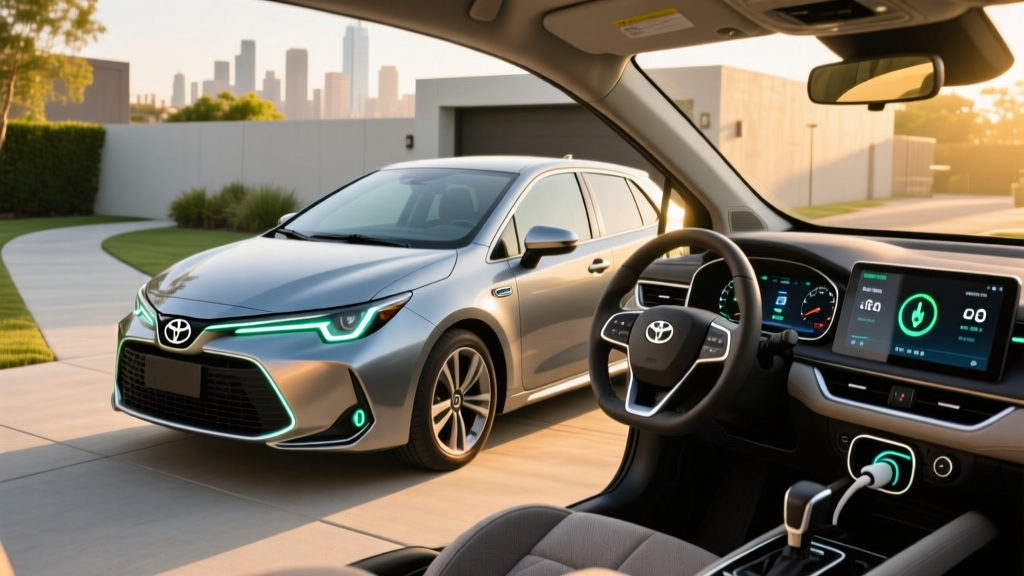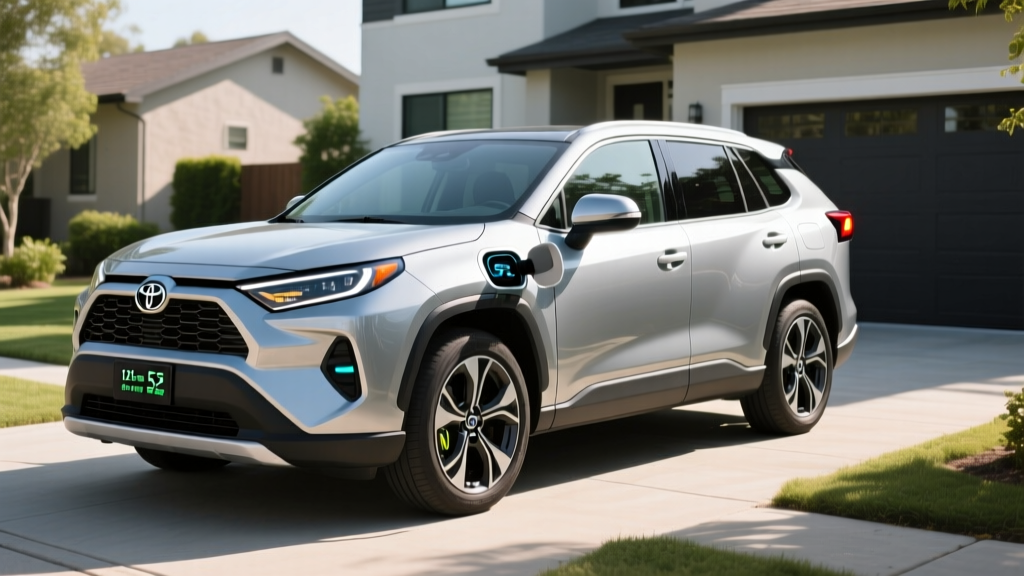
The Toyota RAV4 Prime — officially rebranded as the RAV4 PHEV for the 2026 model year — remains one of the most compelling plug-in hybrids on the market. It bridges the gap between a conventional hybrid's simplicity and a full battery-electric vehicle's zero-emission commuting capability, all without the range anxiety that still deters some buyers from going fully electric. With 42 miles of EPA-rated electric-only range, 302 combined horsepower, and standard all-wheel drive, the 2026 RAV4 PHEV targets a specific buyer: someone who wants to commute on electricity most days but still road-trip on weekends without planning charging stops.
This guide breaks down every spec that matters — from real-world MPG and the 18.1 kWh battery pack to federal tax credit eligibility under current IRS §30D rules — and helps you decide whether this PHEV, a conventional RAV4 Hybrid, or a full EV is the right move for your garage.
2026 RAV4 PHEV Core Specifications at a Glance
| Spec | Value |
|---|---|
| EPA Electric-Only Range | 42 miles |
| Total Combined Range (EV + Gas) | ~440 miles |
| EPA MPGe (Electric Mode) | 94 MPGe combined |
| EPA MPG (Hybrid Mode, Combined) | 38 MPG combined |
| Battery Capacity | 18.1 kWh (lithium-ion, NMC chemistry) |
| Combined Horsepower | 302 hp |
| 0–60 mph | 5.7 seconds |
| Drivetrain | Electronic AWD (eAWD) |
| Level 2 Charge Time (0–100%) | ~2.5 hours (7.2 kW onboard charger available on XSE; ~5.5 hours on SE at 3.3 kW) |
| DC Fast Charging | Not available |
| Base MSRP (SE trim) | $44,890 |
| Battery Warranty | 10 years / 150,000 miles |
HEV vs PHEV: What's the Difference and Why It Matters
Conventional Hybrid (HEV): The standard RAV4 Hybrid uses a small battery (~1.6 kWh) charged entirely by regenerative braking and the gas engine. You never plug it in. EPA-rated at 39 MPG combined, it's ideal if you lack home charging access or want the simplest ownership experience.
Plug-In Hybrid (PHEV): The RAV4 PHEV carries a much larger 18.1 kWh battery that you plug in overnight. It delivers 42 miles of pure electric driving before the gas engine engages, operating as a conventional hybrid afterward. If your commute is under 42 miles round-trip, you may burn almost no gasoline on weekdays.
The critical distinction: a conventional hybrid cannot be plugged in and has no meaningful electric-only range. A PHEV must be plugged in regularly to realize its efficiency and cost advantages. If you'll never plug in, you're paying a premium for battery capacity you won't use — and the RAV4 Hybrid HEV is the smarter buy.
Fuel Economy Breakdown: EPA Numbers and Real-World MPG
| Mode | City | Highway | Combined |
|---|---|---|---|
| Electric Only (MPGe) | 105 MPGe | 84 MPGe | 94 MPGe |
| Hybrid (Gas Only, MPG) | 40 MPG | 36 MPG | 38 MPG |
Real-world expectations: Toyota's hybrid system is one of the most efficient on the market, and real-world owners frequently report matching or slightly exceeding EPA city MPG in stop-and-go traffic — regenerative braking is most effective at lower speeds. On sustained highway trips at 75+ mph with the battery depleted, expect 33–35 MPG in hybrid mode, consistent with the typical 10–15% highway shortfall most hybrids experience. In cold weather (below 30°F), electric-only range drops roughly 15–25%, bringing the 42-mile rating down to approximately 32–36 miles — a function of battery chemistry and cabin heating demand, not a defect. Source: fueleconomy.gov.
Electric-Only Range, Charging, and the 18.1 kWh Battery
The 2026 RAV4 PHEV's 18.1 kWh lithium-ion battery pack (NMC chemistry) delivers 42 miles of EPA-rated electric-only range. In practice, gentle city driving in mild weather can stretch this to 45–48 miles, while aggressive acceleration or cold temperatures compress it to the low-to-mid 30s.
Charging options:
- Level 1 (120V household outlet): Adds roughly 3–4 miles of range per hour. A full charge from empty takes approximately 12 hours — feasible for overnight top-ups if your daily electric driving is modest.
- Level 2 (240V, SE trim, 3.3 kW onboard charger): Full charge in ~5.5 hours.
- Level 2 (240V, XSE trim with Premium Package, 7.2 kW onboard charger): Full charge in ~2.5 hours. This is the trim to choose if you want faster home charging.
No DC fast charging: The RAV4 PHEV does not support DC fast charging (no CCS or NACS port for high-speed public charging). This is standard across nearly all PHEVs — the battery is small enough that Level 2 charging is sufficient for overnight replenishment, and the added cost and weight of DC fast-charge hardware isn't justified. If you need road-trip fast-charging capability, that's a strong argument for a full BEV.
Battery Warranty: Toyota covers the hybrid/PHEV battery for 10 years or 150,000 miles (whichever comes first), transferable to subsequent owners. This is among the best in the segment. If the battery degrades below Toyota's capacity threshold during the warranty period, replacement is covered at no cost. Out-of-warranty replacement runs approximately $3,500–$5,500 including labor, based on current dealer pricing — a figure worth budgeting for if you plan to keep the vehicle well past the warranty window.
Powertrain and Performance: 302 HP and 5.7-Second 0–60
The RAV4 PHEV pairs a 2.5-liter inline-four Atkinson-cycle gasoline engine with front and rear electric motors for a combined system output of 302 horsepower. That makes it the quickest RAV4 variant by a wide margin — the conventional Hybrid produces 219 hp, and the gas-only RAV4 manages 203 hp.
The 0–60 mph sprint clocks in at 5.7 seconds, which is genuinely quick for a compact SUV and puts it in the territory of sport sedans. The eAWD system uses the rear electric motor to drive the rear wheels independently (no mechanical driveshaft), providing confident traction in rain and light snow without the efficiency penalty of a traditional AWD system.
One practical note: the PHEV's larger battery adds roughly 300 pounds compared to the conventional RAV4 Hybrid, which slightly reduces cargo volume (33.5 cu ft behind the rear seats vs. 37.6 cu ft in the Hybrid) and gives the ride a firmer, more planted feel.
Pricing, Trims, and Federal Tax Credit Eligibility
The 2026 RAV4 PHEV is offered in two trims:
- SE: Starting at $44,890 (including destination). Includes the 3.3 kW onboard charger, heated front seats, 8-inch touchscreen, and Toyota Safety Sense 3.0.
- XSE: Starting at $48,790. Adds the available 7.2 kW onboard charger (with Premium Package), panoramic moonroof option, 9-inch touchscreen, and sport-tuned suspension.
Does the 2026 RAV4 PHEV Qualify for the Federal Tax Credit?
Under current IRS §30D rules, the RAV4 PHEV's federal tax credit eligibility depends on several factors that change periodically based on battery sourcing and critical mineral requirements. As of the 2026 tax year:
- MSRP cap: SUVs must have an MSRP at or below $80,000. Both RAV4 PHEV trims qualify.
- Buyer income cap: Modified adjusted gross income must not exceed $150,000 (single), $225,000 (head of household), or $300,000 (joint filers).
- Battery sourcing: The credit is split into two $3,750 halves — one for critical minerals and one for battery component assembly. Sourcing requirements tighten annually, and PHEVs must meet the same thresholds as full BEVs. Check the latest IRS clean vehicle credit page or the fueleconomy.gov tax credit lookup for the RAV4 PHEV's current partial or full credit status before purchasing.
- Point-of-sale transfer: If eligible, the credit can be transferred to the dealer at purchase, reducing your out-of-pocket cost immediately rather than waiting for a tax refund.
State incentives: Many states offer additional rebates or HOV lane access for PHEVs (e.g., California, Colorado, New York). These vary by jurisdiction and change frequently — consult your state's energy office or DMV for current programs.
Who Should Buy the RAV4 PHEV vs. a Hybrid or Full EV?
✓ Choose the RAV4 PHEV if:
- Your daily commute is under 40 miles round-trip and you can charge at home
- You want electric commuting but take road trips where charging infrastructure is sparse
- You need AWD and compact-SUV practicality
- You want 302 hp performance without an EV price premium
✗ Choose the RAV4 Hybrid (HEV) instead if:
- You can't install a home charger (apartment, street parking)
- Your budget is tighter — the Hybrid starts ~$10,000 less
- You won't plug in regularly (an unplugged PHEV is just a heavier, more expensive hybrid)
⚡ Choose a full EV (e.g., Tesla Model Y, Hyundai Ioniq 5) if:
- You want zero gasoline use and minimal maintenance
- You have reliable home and/or workplace charging
- You want DC fast charging for long road trips
- You want to maximize the $7,500 federal tax credit (full BEVs generally qualify more readily)
Reliability, Long-Term Ownership, and Battery Lifespan
Toyota's hybrid powertrain has an exceptional reliability track record spanning over two decades (the Prius debuted in 1997). The RAV4 PHEV's battery, motors, and power-split device have no wear items comparable to a conventional transmission or clutch. Consumer Reports and J.D. Power consistently rate Toyota hybrids among the most reliable vehicles in their segments.
The 10-year/150,000-mile hybrid battery warranty provides substantial peace of mind. Real-world data from earlier Toyota PHEVs (the prior-generation RAV4 Prime) suggests minimal battery degradation — most owners report less than 5–8% capacity loss after 5 years and 60,000+ miles. The Atkinson-cycle engine is inherently less stressed than a conventional engine, further supporting long-term durability.
Total cost of ownership advantage: For a commuter driving 30 miles round-trip and charging nightly, the RAV4 PHEV can operate on electricity for roughly 75% of weekday miles. At an average U.S. electricity rate of $0.16/kWh and gasoline at $3.40/gallon, that translates to approximately $800–$1,200 in annual fuel savings versus the conventional RAV4 Hybrid, depending on local rates and driving patterns.
Frequently Asked Questions
How many MPG does the 2026 RAV4 PHEV get?
In hybrid mode (battery depleted), the EPA rates it at 38 MPG combined (40 city / 36 highway). In electric mode, it achieves 94 MPGe combined. Real-world highway driving in hybrid mode typically yields 33–35 MPG.
How far can the RAV4 PHEV go on electric only?
The EPA rates it at 42 miles of electric-only range. Real-world results vary from roughly 32 miles in cold weather to 48 miles in mild city driving. Total combined range (electric + gas tank) is approximately 440 miles.
Does the RAV4 PHEV need to be plugged in?
No — it will operate as a conventional hybrid if you never plug it in. However, you'll forfeit the electric-only range, the fuel cost savings, and the performance benefit of a full battery. Plugging in is where the PHEV's value proposition lives.
Is the RAV4 PHEV battery reliable and what does replacement cost?
Toyota's PHEV batteries have proven highly reliable with minimal degradation. The battery is warranted for 10 years / 150,000 miles. Out-of-warranty replacement costs approximately $3,500–$5,500 including labor.
Does the 2026 RAV4 PHEV qualify for the $7,500 federal tax credit?
Eligibility depends on current-year battery sourcing requirements, buyer income limits, and MSRP caps under IRS §30D. The RAV4 PHEV's MSRP is well under the $80,000 SUV cap, but the credit amount (up to $7,500, potentially partial) depends on critical-mineral and battery-component sourcing compliance. Verify current eligibility at fueleconomy.gov before purchasing.
Can the RAV4 PHEV DC fast charge?
No. The RAV4 PHEV charges only via Level 1 (120V) or Level 2 (240V) AC charging. This is typical for PHEVs — the 18.1 kWh battery is small enough that Level 2 replenishes it fully in 2.5–5.5 hours depending on trim.