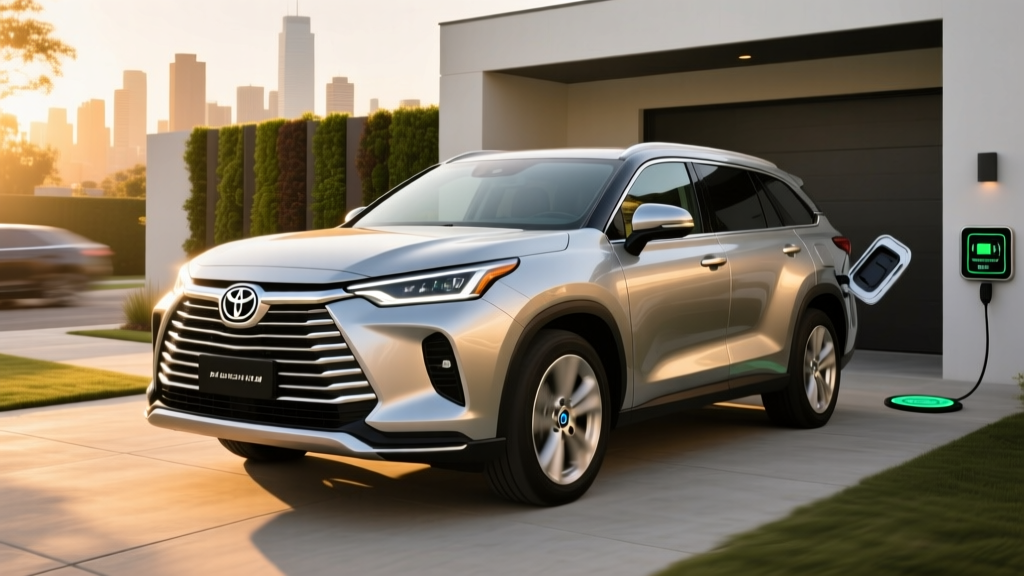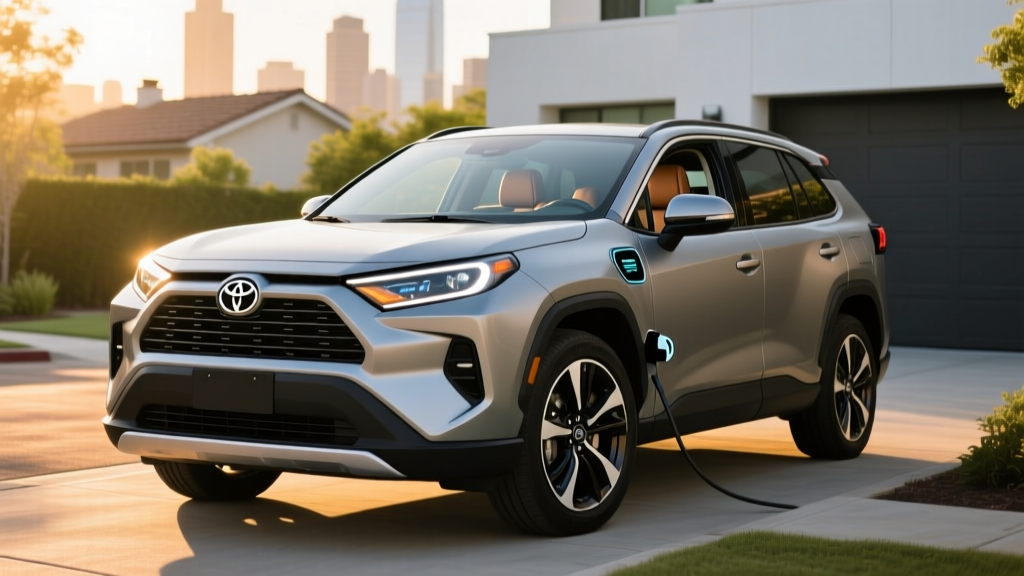
The Toyota RAV4 Hybrid has held the compact hybrid SUV crown for years, and the 2026 RAV4 Hybrid XSE sits at the sporty end of the lineup. With its blacked-out accents, SofTex sport seats, and a tuned suspension, the XSE trim targets buyers who want hybrid efficiency without the vanilla aesthetic. But the real question is whether the 2026 model's powertrain and fuel economy justify the price premium over the LE or SE — and whether you should be looking at the RAV4 Prime plug-in hybrid instead.
This guide breaks down every number that matters: EPA MPG, real-world fuel economy, powertrain specs, pricing, battery warranty, and how the conventional hybrid stacks up against the plug-in variant and full EVs.
HEV vs PHEV: Which RAV4 Hybrid Are You Actually Buying?
Toyota sells two electrified RAV4 models, and confusing them is the single most common buyer mistake. Here's the distinction:
RAV4 Hybrid (HEV) — This Is the XSE
The conventional hybrid does not plug in. It uses a small 1.6 kWh nickel-metal hydride battery that charges through regenerative braking and the gasoline engine. You fuel it like any other car at a gas station. The electric motor assists the engine to improve MPG — it cannot drive on electric power alone for meaningful distances.
RAV4 Prime (PHEV) — The Plug-In Variant
The plug-in hybrid has a much larger 18.1 kWh lithium-ion battery, a charging port, and an EPA-rated 42 miles of electric-only range. You plug it in overnight, drive most commutes on electricity alone, and the gas engine kicks in for longer trips. The Prime carries a significantly higher MSRP and may qualify for federal tax credits.
If you're reading this for the XSE trim, you're looking at the conventional HEV. The Prime comes in SE and XSE trims as well, but it's a fundamentally different vehicle under the skin.
2026 RAV4 Hybrid XSE: Full Spec Sheet
| Specification | 2026 RAV4 Hybrid XSE |
|---|---|
| Powertrain | 2.5L 4-cylinder + 3 electric motors (AWD-i) |
| Combined Horsepower | 219 hp |
| Engine Output | 176 hp @ 5,700 rpm / 163 lb-ft torque |
| Front Motor | 88 kW (118 hp) |
| Rear Motor | 40 kW (54 hp) |
| Hybrid Battery | 1.6 kWh NiMH (sealed, non-plug-in) |
| Drivetrain | Electronic AWD (AWD-i, standard on XSE) |
| Transmission | eCVT (planetary gearset, no belts) |
| 0-60 mph | 7.4 seconds |
| EPA Fuel Economy | 41 city / 38 highway / 39 combined MPG |
| Fuel Tank | 14.5 gallons |
| Total Driving Range | ~565 miles |
| Towing Capacity | 1,750 lbs |
| Cargo Volume | 37.5 cu ft (rear seats up) / 69.8 cu ft (folded) |
| Base MSRP | ~$36,450 (est. incl. destination) |
Note: The XSE's EPA rating of 41/38/39 MPG is slightly lower than the LE/SE trims (which achieve 41/38/40 combined) due to the XSE's larger 19-inch alloy wheels, sport-tuned suspension, and slightly heavier curb weight.
Real-World MPG: What You'll Actually See
| Driving Scenario | Expected MPG | Notes |
|---|---|---|
| EPA Combined (sticker) | 39 MPG | Official EPA estimate |
| City / stop-and-go | 42-45 MPG | Hybrids exceed EPA city ratings in real traffic — regen braking recovers energy |
| Highway (70-75 mph) | 33-36 MPG | Aerodynamic drag hurts all hybrids at sustained speed; expect a 10-15% drop |
| Cold weather (below 30°F) | 32-36 MPG | Engine runs more often for cabin heat; battery efficiency drops in cold |
| Mountainous terrain | 30-35 MPG | Steep grades demand engine power; regen recovers some on descents |
The RAV4 Hybrid's real-world advantage is in urban driving. Toyota's hybrid system runs the electric motor extensively at low speeds, and regenerative braking recovers energy that gas-only cars waste as heat. On a FuelEconomy.gov owner-reported basis, many RAV4 Hybrid drivers report averages of 40-43 MPG in mixed suburban commuting — often exceeding the EPA combined estimate.
However, highway-heavy commuters should expect numbers closer to 34-36 MPG. The hybrid system provides less benefit at sustained high speeds where the gasoline engine does nearly all the work. If your commute is 90% interstate, a diesel or efficient turbo gas car may narrow the gap.
Pricing, Trims, and Tax Credit Eligibility
The 2026 RAV4 Hybrid XSE carries an estimated MSRP of $36,450 including destination charges. Here's how it fits in the broader RAV4 Hybrid lineup:
- Hybrid LE: ~$33,100 — entry point, 41 MPG combined
- Hybrid SE: ~$35,200 — sport-tuned suspension, paddle shifters
- Hybrid XSE: ~$36,450 — 19-inch black alloys, SofTex, heated front seats
- Hybrid Limited: ~$40,300 — premium audio, ventilated seats, panoramic roof option
The XSE trim adds approximately $1,250 over the SE for cosmetic and comfort upgrades: unique black exterior accents, a sport-specific front fascia, Softex-trimmed heated front seats, and a power liftgate. Mechanically, it's identical to the SE.
Federal Tax Credit: Does the RAV4 Hybrid Qualify?
No. The conventional RAV4 Hybrid (HEV) does not qualify for the IRS §30D Clean Vehicle Credit. That credit applies only to battery electric vehicles (BEVs) and plug-in hybrids (PHEVs) that meet battery sourcing, MSRP, and buyer income requirements.
If you want federal tax incentive eligibility in a RAV4, you need the RAV4 Prime (PHEV), which may qualify for up to $7,500 depending on battery component sourcing, your adjusted gross income, and the vehicle's MSRP falling under the $80,000 SUV cap. Always verify current-year eligibility on IRS.gov's clean vehicle credit page before purchasing, as critical mineral and battery component sourcing requirements change annually.
Some states and municipalities offer separate rebates for conventional hybrids, but these vary widely by jurisdiction. Check your state energy office or AFDC's state law database for local programs.
Hybrid Battery Warranty, Lifespan, and Replacement Cost
Toyota Hybrid Battery Warranty
Coverage: 10 years / 150,000 miles (whichever comes first)
What's covered: Hybrid battery pack, hybrid control module, inverter with converter
Threshold: Toyota warrants the hybrid battery against defect and abnormal capacity loss
Transferability: Fully transferable to subsequent owners
This is the top concern for hybrid buyers, and Toyota's track record here is strong. The RAV4 Hybrid uses a proven 1.6 kWh nickel-metal hydride (NiMH) battery — the same chemistry Toyota has refined over 25+ years since the original Prius. NiMH is less energy-dense than lithium-ion but extremely durable and thermally stable.
Real-world degradation data: Based on long-term fleet data from RAV4 Hybrid and Camry Hybrid owners, the NiMH battery typically retains 85-90%+ of its capacity at 150,000 miles. Unlike a BEV's traction battery, the hybrid battery is small and cycled within a narrow state-of-charge window (roughly 40-80%), which dramatically reduces stress and extends cycle life.
Replacement cost if out of warranty: A new OEM hybrid battery replacement runs approximately $3,000-$4,500 including labor at a Toyota dealer. Independent hybrid shops and refurbished battery options can bring this down to $1,500-$2,500. However, given the 10-year/150,000-mile warranty and the proven longevity of NiMH packs, most owners will never face this expense.
The eCVT transmission — which is really a planetary gearset with no belts, clutches, or traditional wear items — has proven equally durable, with very few reported failures even at high mileage.
RAV4 Hybrid XSE vs RAV4 Prime vs Full EV: Which Fits You?
Choosing between a conventional hybrid, plug-in hybrid, and battery electric vehicle comes down to your daily mileage, charging access, and budget. Here's a practical decision framework:
Choose the RAV4 Hybrid (HEV / XSE) if:
- You don't have access to home or workplace charging (apartment, street parking, no garage outlet)
- Your budget is under $38,000 and you want maximum efficiency per dollar
- You regularly take long road trips and don't want to plan around charging stops
- You want proven, low-maintenance reliability with minimal new-technology risk
- You drive 200+ miles per week in mixed city/highway conditions
Choose the RAV4 Prime (PHEV) if:
- You have a garage or driveway where you can install a Level 2 (240V) charger
- Your daily commute is under 42 miles round-trip (you'd drive mostly on electricity)
- You want to reduce gasoline consumption by 70-90% while keeping a gas engine for road trips
- You qualify for the federal §30D tax credit, effectively reducing the price premium
- You want 302 hp combined — the Prime is significantly quicker (0-60 in ~5.7 sec)
Choose a Full EV (e.g., Tesla Model Y, Hyundai Ioniq 5) if:
- You have reliable home Level 2 charging and access to DC fast chargers on road-trip routes
- You want zero tailpipe emissions and the lowest per-mile energy cost
- You qualify for the full $7,500 federal tax credit, closing the upfront price gap
- Your daily driving is under 250 miles and you can plan charging on longer trips
- You want minimal scheduled maintenance (no oil changes, no spark plugs, no transmission fluid)
Ownership Economics: 5-Year Cost Snapshot
Let's compare what the 2026 RAV4 Hybrid XSE actually costs to own versus a gas-only compact SUV baseline (using the 2026 RAV4 LE AWD gas model at ~28 MPG combined) over 5 years and 75,000 miles:
| Cost Factor | RAV4 Hybrid XSE | RAV4 LE AWD (Gas) |
|---|---|---|
| Purchase Price (MSRP) | ~$36,450 | ~$31,000 |
| Fuel Cost (75K mi @ $3.40/gal) | ~$6,538 (2,692 gal) | ~$9,107 (3,750 gal) |
| Fuel Savings vs Gas | ~$2,569 saved over 5 years | |
| Maintenance (est. 5 yr) | ~$2,200 | ~$2,800 |
| Insurance (est. avg) | ~$7,500 | ~$6,800 |
| Federal Tax Credit | $0 | $0 |
The hybrid's $5,450 price premium is partially offset by ~$2,569 in fuel savings and ~$600 in maintenance savings over five years. The gap narrows further if gas prices rise above $3.40/gallon. The hybrid also typically holds stronger resale value — IIHS Top Safety Pick ratings and Toyota's reliability reputation support used-market demand.
However, note that insurance premiums for the hybrid run slightly higher (~10%) due to the higher replacement cost of hybrid-specific components. Get a quote before purchasing to factor this into your budget.
Pros and Cons: The Honest Summary
Pros
- 41/38/39 MPG EPA — real-world city driving often exceeds 42 MPG
- AWD-i standard — electronic all-wheel drive with no mechanical drivetrain loss
- 10-year/150K hybrid warranty — among the best in the industry
- 565-mile total range — fewer fill-ups than any gas compact SUV
- No charging infrastructure needed — works with your existing gas-station routine
- Strong resale value — RAV4 Hybrid demand consistently outstrips supply
- 219 hp with AWD — adequate acceleration for merging and passing
Cons
- No federal tax credit — HEV doesn't qualify for §30D, unlike the Prime PHEV
- Highway MPG drops to ~34 — hybrid advantage shrinks at sustained speed
- eCVT drone under hard acceleration — the planetary gearset holds engine RPM high
- XSE price premium — $1,250 over SE mostly for cosmetics, not performance
- 1,750-lb towing limit — lower than some turbo-gas competitors
- No DC fast charging — because it doesn't plug in (this is by design for HEVs)
- Infotainment learning curve — Toyota's interface lags behind Hyundai/Kia in responsiveness
Frequently Asked Questions
How many MPG does the 2026 RAV4 Hybrid XSE get?
The EPA rates the 2026 RAV4 Hybrid XSE at 41 city / 38 highway / 39 combined MPG. In real-world city and suburban driving, many owners report 42-45 MPG thanks to the hybrid system's efficiency at low speeds. Highway-only driving at 70+ mph typically yields 33-36 MPG.
Does the RAV4 Hybrid need to be plugged in?
No. The RAV4 Hybrid is a conventional hybrid (HEV), not a plug-in hybrid. It charges its small 1.6 kWh battery through regenerative braking and the gasoline engine. You simply fill it with gas like any other car. If you want plug-in capability, look at the RAV4 Prime.
How far can the RAV4 Prime go on electric only?
The RAV4 Prime (PHEV, separate model) has an EPA-rated 42 miles of electric-only range from its 18.1 kWh lithium-ion battery. Total combined range with a full tank and full charge is approximately 600 miles. The Prime's battery charges in about 2.5 hours on a 240V Level 2 charger. It does not support DC fast charging.
Is the RAV4 Hybrid reliable, and what does battery replacement cost?
Toyota's hybrid system has over 25 years of proven reliability. The hybrid battery is covered by a 10-year/150,000-mile warranty. Out-of-warranty replacement costs approximately $3,000-$4,500 at a dealer, or $1,500-$2,500 through independent shops. Most owners never need a replacement — NiMH batteries in Toyota hybrids regularly exceed 200,000 miles with minimal degradation.
Does the 2026 RAV4 Hybrid qualify for any tax credit?
The conventional RAV4 Hybrid (HEV) does not qualify for the federal §30D Clean Vehicle Credit — that credit is reserved for BEVs and PHEVs. The RAV4 Prime (PHEV) may qualify for up to $7,500 depending on your income, the vehicle's MSRP, and battery sourcing requirements. Some states offer separate hybrid rebates; check your local programs.
How does the XSE differ from the SE trim?
The XSE adds cosmetic and comfort upgrades over the SE: unique 19-inch black alloy wheels, black exterior trim accents, a sport-specific front bumper, SofTex-trimmed heated front seats, a power liftgate, and an auto-dimming rearview mirror. The powertrain, fuel economy, and AWD system are identical between the two trims.
Should I get the RAV4 Hybrid or a full electric SUV?
If you have home charging access and your daily driving is under 250 miles, a full EV like the Tesla Model Y or Hyundai Ioniq 5 offers lower per-mile energy costs, zero tailpipe emissions, and less maintenance. However, if you lack charging access, frequently drive 300+ miles in a day, or want the lowest upfront cost, the RAV4 Hybrid is the pragmatic choice — no charging planning required, proven reliability, and 39 MPG combined.
Sources: EPA fuel economy data via fueleconomy.gov; federal tax credit rules via IRS.gov §30D; safety ratings via IIHS.org. Pricing reflects estimated 2026 MSRP and is subject to change. Verify all tax credit eligibility with a qualified tax professional before purchase.