Quick Verdict: The 2026 RAV4 Hybrid XLE at a Glance
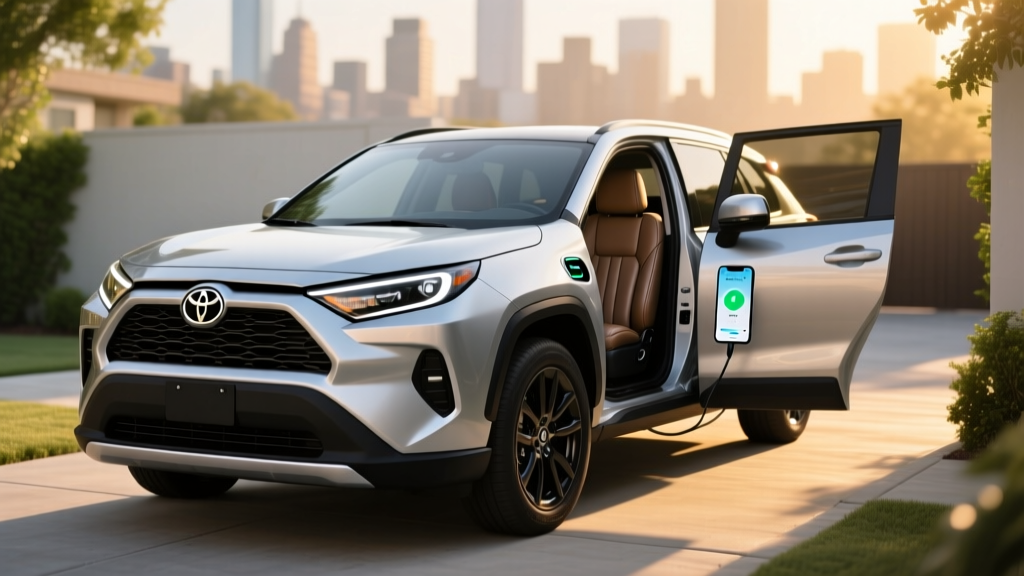
The 2026 Toyota RAV4 Hybrid XLE occupies a sweet spot in the compact crossover segment: standard all-wheel drive, 39 MPG combined, and a starting MSRP around $34,395 — all without ever needing to plug in. For buyers who want electrified efficiency without the lifestyle change of a plug-in hybrid (PHEV) or full battery-electric vehicle (BEV), the XLE trim hits the right balance of features, fuel savings, and Toyota's proven hybrid reliability.
This is a conventional hybrid (HEV), meaning its 1.6 kWh nickel-metal hydride battery charges entirely through regenerative braking and the gasoline engine. You fuel it like any other car. The electric motor assists the 2.5-liter four-cylinder to deliver 219 combined horsepower and seamless stop-start driving that shines in city traffic.
| Specification | 2026 RAV4 Hybrid XLE |
|---|---|
| Powertrain | 2.5L 4-cyl + 3 electric motors (AWD-i) |
| Combined Horsepower | 219 hp |
| EPA MPG (City / Hwy / Combined) | 41 / 38 / 39 |
| Battery Capacity | 1.6 kWh (NiMH) |
| Plug-In Required? | No (self-charging HEV) |
| 0–60 mph | ~7.4 seconds |
| Cargo Volume | 37.5 cu ft (rear seats up) |
| Towing Capacity | 1,750 lbs |
| Base MSRP | ~$34,395 |
| Federal Tax Credit (§30D) | Not eligible (HEV) |
| Hybrid Battery Warranty | 10 years / 150,000 miles |
How Many MPG Does the 2026 RAV4 Hybrid XLE Actually Get?
The EPA rates the 2026 RAV4 Hybrid XLE at 41 MPG city, 38 MPG highway, and 39 MPG combined. These figures apply across all RAV4 Hybrid trims with the AWD-i powertrain, as confirmed by fueleconomy.gov.
| Driving Scenario | EPA Estimate | Real-World Expectation |
|---|---|---|
| City (stop-and-go) | 41 MPG | 40–44 MPG (hybrids excel here) |
| Highway (70+ mph) | 38 MPG | 34–37 MPG (aero drag, less regen benefit) |
| Combined | 39 MPG | 37–41 MPG depending on mix |
| Cold weather (below 30°F) | — | 33–36 MPG (engine runs more for heat) |
Real-world insight: Toyota's hybrid system recovers energy during braking and low-speed driving, which is why the city MPG exceeds the highway number — the opposite of most gas-only vehicles. Owners who drive predominantly in urban and suburban conditions routinely report beating the EPA combined estimate by 1–3 MPG. On sustained highway trips at 75–80 mph, expect a slight dip below the sticker, particularly in winter when the gasoline engine runs more frequently to provide cabin heat and maintain battery temperature.
For context, the non-hybrid 2026 RAV4 gas AWD returns roughly 30 MPG combined — meaning the hybrid saves approximately 3–4 gallons per 100 miles driven. At $3.40/gallon and 12,000 annual miles, that translates to roughly $400–$500 in annual fuel savings over the gas model.
HEV vs. PHEV: Is the RAV4 Hybrid or RAV4 Prime Right for You?
Toyota also offers the RAV4 Prime, a plug-in hybrid (PHEV) variant with a larger 18.1 kWh lithium-ion battery and 42 miles of electric-only range. Understanding the difference is critical before you visit the dealer.
| Feature | RAV4 Hybrid (HEV) | RAV4 Prime (PHEV) |
|---|---|---|
| Plug-in charging? | No | Yes (Level 1 or Level 2) |
| Battery size | 1.6 kWh (NiMH) | 18.1 kWh (Li-ion) |
| Electric-only range | N/A (EV assist only) | 42 miles (EPA) |
| Combined horsepower | 219 hp | 302 hp |
| 0–60 mph | ~7.4 sec | ~5.7 sec |
| MPG (after battery depleted) | 39 combined | ~38 combined (gas mode) |
| MPGe (electric + gas) | N/A | 94 MPGe |
| DC fast charging? | N/A | No (Level 2 max ~6.6 kW) |
| Level 2 charge time (0–100%) | N/A | ~2.5 hours at 240V/32A |
| Starting MSRP | ~$34,395 | ~$44,500 |
| Federal tax credit (§30D) | Not eligible | May qualify up to $7,500* |
Choose the RAV4 Hybrid (HEV) if you don't have reliable access to a home charger, want a lower purchase price, and your priority is simply reducing fuel consumption without changing your refueling habits. The XLE trim is ideal for daily commuters who rack up highway and city miles in roughly equal measure.
Choose the RAV4 Prime (PHEV) if you can install a Level 2 home charger, your daily commute is under 42 miles round-trip (meaning you can drive mostly on electricity), and you want the performance boost of 302 hp. The Prime's $10,000+ price premium can be partially offset by the federal tax credit if you meet all IRS §30D eligibility requirements, including income caps, MSRP limits, and battery component/critical mineral sourcing thresholds.
*Tax credit eligibility for PHEVs depends on current-year IRS rules including battery sourcing requirements, buyer income limits (AGI ≤ $150K single / $300K joint), and MSRP caps ($80K for SUVs). Verify with a tax professional before relying on credit estimates.
Powertrain Deep Dive: 219 hp and AWD-i Explained
The 2026 RAV4 Hybrid XLE uses Toyota's fifth-generation hybrid system pairing a 2.5-liter Dynamic Force four-cylinder engine (176 hp, 163 lb-ft) with three electric motor-generators:
- MG1: Functions as a starter, generator, and engine-speed controller within the planetary gearset
- MG2: Primary drive motor powering the front axle (118 hp, 149 lb-ft)
- Rear motor: Independent 54 hp motor powering the rear axle for AWD-i traction
The combined system output of 219 hp isn't a simple addition of these figures — it reflects the maximum usable power the engine and motors can deliver simultaneously through Toyota's eCVT (electronically controlled continuously variable transmission). The eCVT uses the planetary gearset rather than a traditional belt-and-pulley design, which contributes to the system's renowned reliability since there are no friction bands or clutch packs to wear.
The AWD-i system engages the rear motor automatically during acceleration, slippery conditions, or when front-wheel traction is limited. Unlike mechanical AWD systems with a driveshaft and transfer case, AWD-i has no mechanical connection between the axles, reducing weight and parasitic loss. The trade-off is a lower towing capacity of 1,750 lbs compared to some competitors with mechanical AWD.
Pricing, Trims, and Tax Credit Reality for the XLE
The 2026 RAV4 Hybrid XLE starts at approximately $34,395 (including destination). Here's how the hybrid lineup stacks up:
| Trim | Approximate MSRP | Key Additions Over XLE |
|---|---|---|
| LE (base hybrid) | $32,895 | — |
| XLE | $34,395 | Blind-spot monitor, dual-zone climate, alloy wheels, smart key |
| XLE Premium | $36,795 | SofTex seats, sunroof, power liftgate |
| Woodland Edition | $37,295 | TRD-tuned suspension, all-terrain tires |
| Limited | $40,395 | Leather, JBL audio, panoramic roof |
Does the RAV4 Hybrid Qualify for Any Tax Credit?
No. The conventional RAV4 Hybrid (HEV) does not qualify for the federal §30D Clean Vehicle Credit. That credit applies only to plug-in vehicles (BEVs and PHEVs) with sufficient battery capacity and compliant sourcing. The RAV4 Hybrid's 1.6 kWh battery is far below the threshold, and the vehicle cannot be plugged in.
Some states offer modest rebates for conventional hybrids, but these are increasingly rare as incentive programs shift toward plug-in vehicles. Check your state energy office or the Alternative Fuels Data Center for any local hybrid incentives, but do not budget around them.
Battery Warranty, Lifespan, and Replacement Cost
Hybrid battery longevity is the single most common concern among first-time hybrid buyers. Here's what the data shows for Toyota's system:
2026 RAV4 Hybrid Battery Warranty: 10 years or 150,000 miles (whichever comes first), covering defects and capacity loss below a defined threshold. This applies in all 50 states following California's adoption of the extended warranty standard.
Hybrid System Warranty: 8 years / 100,000 miles covering the inverter, motor-generators, and eCVT.
How Long Do Toyota Hybrid Batteries Actually Last?
Toyota's NiMH hybrid batteries have an exceptionally well-documented track record. Data aggregated from fleet operators, Consumer Reports reliability surveys, and independent mechanics indicates:
- Median lifespan: 15–18 years or 180,000–220,000 miles before significant capacity loss
- Failure rate before 150,000 miles: Under 5% based on warranty claim data
- Common failure mode: Individual cell imbalance rather than full pack failure — often repairable by replacing single modules for $200–$500 at a hybrid specialist
What Does a Full Battery Replacement Cost?
If the hybrid battery does require full replacement outside of warranty:
- OEM new battery (Toyota dealer): $3,000–$4,500 installed
- Refurbished/reconditioned battery: $1,500–$2,500 installed (independent hybrid shops)
- Aftermarket new battery: $2,000–$3,200 installed
For comparison, a conventional gas car's transmission replacement often costs $3,500–$6,000. The hybrid battery is not a ticking time bomb — it's a wear item with a predictable, long lifespan and manageable replacement cost.
Real-World Ownership: Who Should Choose the RAV4 Hybrid XLE?
Pros
- 39 MPG combined with no plug-in requirement
- Standard AWD across all hybrid trims
- 219 hp provides confident highway merging
- 10-year/150,000-mile hybrid battery warranty
- Toyota's class-leading reliability and resale value
- 37.5 cu ft cargo space with rear seats upright
- XLE includes blind-spot monitoring and dual-zone climate
Cons
- No federal tax credit eligibility (HEV)
- 1,750-lb towing capacity limits utility
- eCVT engine drone under hard acceleration
- Not eligible for HOV/carpool lane access in most states
- Infotainment system functional but not class-leading
- Premium ~$1,500 over gas RAV4 XLE (payback in ~3–4 years)
Decision Framework: Hybrid vs. PHEV vs. Full EV
Choose the RAV4 Hybrid (HEV) if:
- You lack reliable home or workplace charging access
- Your budget is under $37,000 for a new crossover
- You want fuel savings without any behavior change
- You frequently take road trips beyond charging infrastructure
Choose the RAV4 Prime (PHEV) if:
- You can install Level 2 charging at home
- Your daily commute is under 40 miles round-trip
- You want to drive mostly on electricity with gas backup
- You qualify for the federal tax credit (reducing effective price by up to $7,500)
Choose a full EV (e.g., Tesla Model Y, Hyundai Ioniq 5) if:
- You have home charging and want zero tailpipe emissions
- Your daily driving is under 250 miles with occasional road trips
- You want minimal maintenance (no oil changes, fewer moving parts)
- You qualify for the full $7,500 federal credit
Reliability, Safety, and Long-Term Value
Toyota's hybrid powertrain is among the most proven in the industry, with over 25 years of continuous refinement since the original Prius. The RAV4 Hybrid carries forward this legacy:
- IIHS Rating: The RAV4 has historically earned Top Safety Pick or Top Safety Pick+ designation. Check IIHS.org for the 2026 model-year results once published.
- NHTSA: The RAV4 platform has consistently earned 5-star overall ratings. Verify at NHTSA.gov.
- Toyota Safety Sense 3.0: Standard on all trims including XLE — pre-collision system with pedestrian detection, lane departure alert with steering assist, full-speed dynamic radar cruise control, lane tracing assist, and automatic high beams.
- Resale value: Kelley Blue Book and ALG consistently rank the RAV4 Hybrid among the top compact SUVs for 5-year retained value, typically holding 55–62% of MSRP after five years.
The eCVT's simplicity (no traditional transmission clutches, bands, or torque converter) is a key reliability advantage. There are no transmission fluid changes on the recommended maintenance schedule for most driving conditions, and the planetary gearset has no wear-prone friction elements.
Frequently Asked Questions
Does the 2026 RAV4 Hybrid XLE need to be plugged in?
No. The RAV4 Hybrid is a conventional hybrid (HEV). Its battery recharges through regenerative braking and the gasoline engine. You simply fill it with regular unleaded fuel like any other car. Only the RAV4 Prime (PHEV) requires plug-in charging to access its electric-only range.
How far can the RAV4 Hybrid drive on electric power alone?
Only very short distances at low speeds — typically under 1 mile at parking-lot speeds. The 1.6 kWh battery isn't designed for sustained electric-only driving. Its role is to assist the gas engine, enable regenerative braking, and provide smooth stop-start operation. If you want meaningful electric-only range, you need the RAV4 Prime PHEV (42 miles EV range).
How much does it cost to fill up the RAV4 Hybrid vs. the gas RAV4?
The RAV4 Hybrid has a 14.5-gallon fuel tank. At $3.40/gallon, a fill-up costs roughly $49 and provides approximately 565 miles of range at 39 MPG combined. The gas RAV4 AWD at ~30 MPG combined would need about 18.8 gallons for the same distance, costing roughly $64 — a $15 difference per tank, or about $400–$500 annually at 12,000 miles/year.
Is the hybrid battery expensive to replace?
A full OEM replacement runs $3,000–$4,500 at a dealer, but most Toyota hybrid batteries last 180,000+ miles. The 10-year/150,000-mile warranty covers premature failures, and independent hybrid specialists can often repair individual cell modules for $200–$500 rather than replacing the entire pack.
Does the RAV4 Hybrid XLE qualify for any tax credits?
No federal tax credit applies to conventional hybrids. The IRS §30D Clean Vehicle Credit requires a plug-in vehicle with a battery of at least 7 kWh (among other sourcing and income requirements). The RAV4 Hybrid's 1.6 kWh battery and lack of plug-in capability disqualify it. Some states may offer small hybrid incentives — check your local programs.
How does the RAV4 Hybrid compare to competitors?
The Honda CR-V Hybrid (40 MPG combined, ~$36,000) and Hyundai Tucson Hybrid (38 MPG combined, ~$34,000) are the closest rivals. The RAV4 Hybrid's advantages include standard AWD across all trims, a longer track record of hybrid reliability, and typically stronger resale value. The CR-V Hybrid edges it out by 1 MPG combined; the Tucson Hybrid offers a more modern interior but has a shorter reliability history.
What maintenance does the RAV4 Hybrid require?
Standard maintenance mirrors the gas RAV4: oil changes every 10,000 miles, tire rotations every 5,000 miles, brake fluid inspection, and cabin/engine air filter replacement. Hybrid-specific benefits include significantly reduced brake pad wear (regenerative braking handles most deceleration) and no transmission fluid service under normal conditions. Many owners report original brake pads lasting 80,000–100,000 miles.