Quick Verdict: The RAV4 Hybrid Remains the Benchmark Compact SUV Hybrid
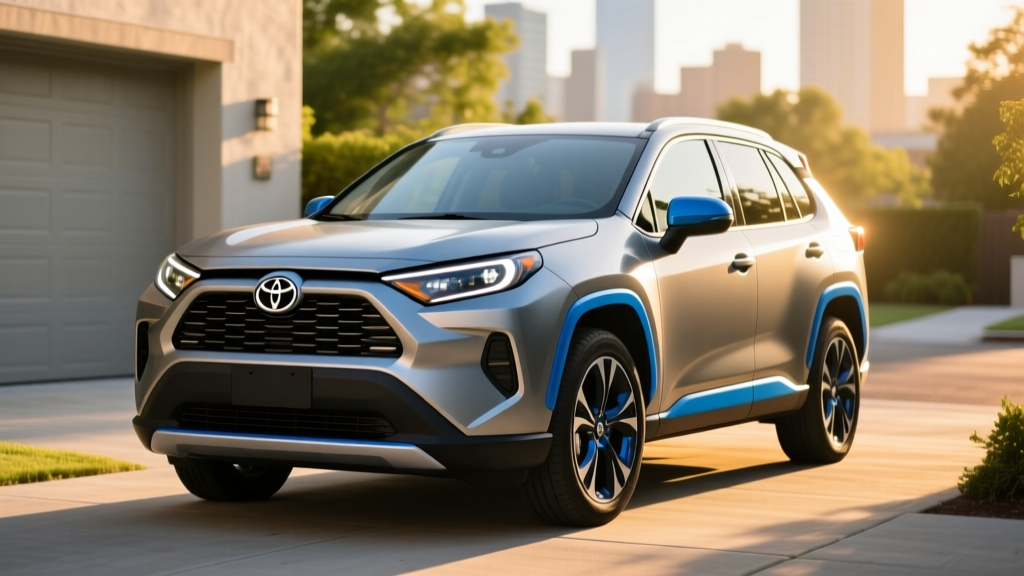
The Toyota RAV4 Hybrid vehicle has held the top spot in the compact hybrid SUV segment for years, and the current generation continues to justify that position with a 219-horsepower all-wheel-drive powertrain, EPA ratings up to 41 MPG city, and a starting MSRP around $33,575. Unlike plug-in hybrids, the RAV4 Hybrid (HEV) requires no charging infrastructure — it recovers energy through regenerative braking and its gasoline engine, making it the lowest-friction entry point into electrified driving for buyers who lack home charging access or simply want to refuel at any gas station.
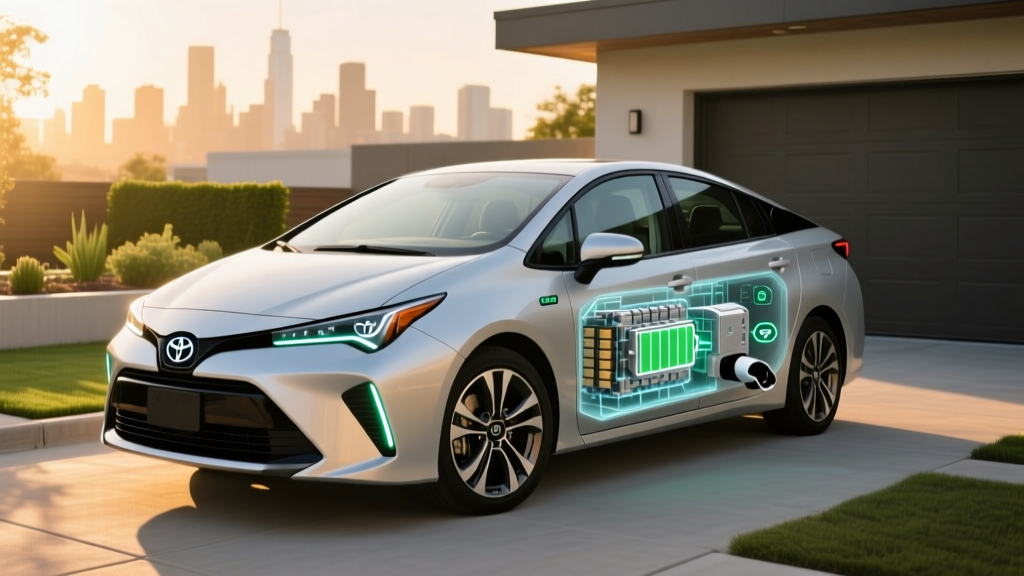
This guide covers the conventional RAV4 Hybrid. Toyota also offers the RAV4 Prime, a plug-in hybrid (PHEV) variant with 42 miles of electric-only range and a larger 18.1 kWh battery. We address the RAV4 Prime throughout where comparisons add clarity, but the primary focus is the self-charging HEV model that most buyers are searching for.
HEV vs PHEV: Which RAV4 Electrified Model Is Which?
Toyota sells two electrified RAV4 variants, and confusing them is the single most common buyer mistake. Here is the fundamental split:
| Attribute | RAV4 Hybrid (HEV) | RAV4 Prime (PHEV) |
|---|---|---|
| Plug-in charging required? | No — self-charging via regen + engine | Yes — plug in to access EV range |
| Battery capacity | ~1.6 kWh (small buffer) | 18.1 kWh usable |
| Electric-only range | Not applicable (EV assist only) | 42 miles (EPA) |
| Combined horsepower | 219 hp | 302 hp |
| EPA combined MPG / MPGe | 39–41 MPG | 94 MPGe (EV mode) / 38 MPG (hybrid mode) |
| DC fast charging | No | No (Level 2 AC only, ~2.5 hrs) |
| Federal tax credit (§30D) | Not eligible | Up to $7,500 (subject to sourcing & income rules) |
| Starting MSRP (approx.) | $33,575 | $44,905 |
Bottom line: If you cannot charge at home or at work, the RAV4 Hybrid (HEV) is the correct choice. If you have reliable Level 2 charging access and a commute under 40 miles round-trip, the RAV4 Prime lets you drive almost entirely on electricity while keeping a gas engine for road trips.
Fuel Economy: EPA Ratings and Real-World MPG
The RAV4 Hybrid's efficiency varies slightly by trim, primarily due to wheel size and weight. Here are the official EPA figures from fueleconomy.gov:
| Trim | City MPG | Highway MPG | Combined MPG |
|---|---|---|---|
| LE / XLE (18" wheels) | 41 | 38 | 39 |
| XLE Premium / SE (18"/19") | 41 | 38 | 39 |
| XSE / Limited (19" wheels) | 41 | 38 | 39 |
| Woodland Edition (all-terrain tires) | 38 | 35 | 37 |
Real-world MPG reality check: Toyota's hybrid system excels in stop-and-go city driving, where the electric motor handles low-speed propulsion and regenerative braking recaptures energy. Many owners report exceeding the 41 MPG city EPA figure in warm-weather urban commuting — 43–45 MPG is common in forums and long-term tests. Highway driving is the opposite: at sustained 70–80 MPH, the gasoline engine does most of the work, and real-world highway numbers often land between 34–37 MPG. In cold weather (below 30°F), expect a 5–10% reduction across the board as the engine runs more frequently for cabin heat and battery warmup.
Total range estimate: With a 14.5-gallon fuel tank and 39 MPG combined, the RAV4 Hybrid delivers approximately 565 miles of total range per fill-up. Real-world mixed driving typically yields 480–540 miles before the low-fuel warning.
Powertrain and Performance Specs
| Engine | 2.5L inline-4 (Atkinson cycle) |
| Engine output | 176 hp / 163 lb-ft torque |
| Front electric motor | 118 hp / 149 lb-ft |
| Rear electric motor (AWD) | 54 hp / 89 lb-ft |
| Net combined system output | 219 hp |
| Drivetrain | Electronic AWD (eAWD) — standard on all trims |
| Transmission | eCVT (electronically controlled continuously variable) |
| 0–60 MPH | 7.4 seconds (Car and Driver tested) |
| Towing capacity | 1,750 lbs (maximum) |
| Battery type | Nickel-metal hydride (NiMH), ~1.6 kWh |
| Regenerative braking | Yes — multi-mode with B-position for stronger regen |
The RAV4 Hybrid uses Toyota's fifth-generation hybrid system. The rear axle has no mechanical connection to the engine — it is driven entirely by a dedicated electric motor that engages during acceleration, low-traction conditions, and low-speed maneuvers. This eAWD system is seamless and requires no driver input, though it is not designed for serious off-roading. The Woodland Edition adds tuned dampers and all-terrain tires for light trail use, but ground clearance remains modest at 8.1 inches.
The 7.4-second 0–60 time is adequate for merging and passing but not quick. If acceleration matters, the RAV4 Prime's 302 hp drops that figure to 5.7 seconds — a meaningful gap in highway on-ramp confidence.
Pricing, Trims, and Tax Credit Eligibility
As of the current model year, the RAV4 Hybrid starts at approximately $33,575 (LE trim, including destination) and tops out near $41,000 for a fully optioned Limited. Key trims include:
- LE (~$33,575): Toyota Safety Sense 2.5+, 8" touchscreen, wireless Apple CarPlay/Android Auto, LED headlights
- XLE (~$35,075): Blind-spot monitoring, dual-zone climate, smart key, 18" alloy wheels
- XLE Premium (~$36,500): SofTex seats, power liftgate, sunroof
- SE (~$37,500): Sport-tuned suspension, paddle shifters, 19" wheels
- XSE (~$38,500): Sport appearance, heated front seats, larger infotainment
- Limited (~$40,500): Premium audio, panoramic moonroof, ventilated seats, 360° camera
Federal tax credit status: The conventional RAV4 Hybrid (HEV) does not qualify for the IRS §30D Clean Vehicle Credit. That credit applies only to plug-in electric vehicles (BEVs and PHEVs) meeting battery sourcing, MSRP caps ($80,000 for SUVs), and buyer income limits. The RAV4 Prime (PHEV variant) may qualify for up to $7,500 under §30D, but eligibility depends on critical-mineral and battery-component sourcing requirements that change annually — consult the IRS Clean Vehicle Credit page for current-year rules and verify with a tax professional before purchasing.
Some states and utilities offer separate rebates for conventional hybrids, though these are increasingly rare as incentive programs shift toward plug-in vehicles. Check your state energy office or utility provider for current availability.
Battery Longevity, Warranty, and Replacement Cost
Toyota Hybrid Battery Warranty: 10 years / 150,000 miles (whichever comes first) on the hybrid battery pack, covered under Toyota's Hybrid System Warranty. This applies nationwide regardless of state emissions regulations.
Battery longevity is the top concern for hybrid buyers, and Toyota has the strongest track record in the industry. The RAV4 Hybrid's NiMH battery pack is small (~1.6 kWh) and operates within a narrow state-of-charge window — the hybrid system never fully charges or fully depletes it, which dramatically reduces degradation stress. This shallow-cycling strategy is why Toyota hybrid batteries routinely last 150,000–200,000+ miles with minimal capacity loss.
Replacement cost if out of warranty: A new OEM hybrid battery pack for the RAV4 Hybrid runs approximately $2,500–$3,500 including labor at a Toyota dealer. Third-party rebuilt packs are available for $1,500–$2,200. This is dramatically cheaper than a full EV battery replacement ($8,000–$20,000+) because the hybrid pack is small and simple.
Toyota's hybrid system warranty also covers the inverter, electric motors, and associated control electronics for the same 10-year/150,000-mile term. The conventional powertrain (engine, transmission) carries a 5-year/60,000-mile warranty, and the overall vehicle limited warranty is 3 years/36,000 miles.
Toyota's official warranty documentation provides full terms. Reliability data from Consumer Reports and J.D. Power consistently rank the RAV4 Hybrid above the compact SUV segment average, with the hybrid system being one of the least problematic components.
Who Should Choose the RAV4 Hybrid vs a PHEV or Full EV?
Choose the RAV4 Hybrid (HEV) if:
- You lack access to home or workplace charging (apartment, street parking, no garage)
- You want better fuel economy with zero behavioral change — just drive and refuel normally
- Your budget is under $38,000 and you want AWD standard
- You regularly drive in extreme cold where EV range loss is a concern
- You want proven long-term reliability with minimal maintenance costs
Choose the RAV4 Prime (PHEV) if:
- You have Level 2 home charging and a commute under 42 miles round-trip
- You want to drive mostly on electricity while keeping a gas backup for road trips
- You want 302 hp and significantly quicker acceleration
- You may qualify for the $7,500 federal tax credit, bringing effective cost closer to the HEV
Choose a full EV (e.g., Tesla Model Y, Hyundai Ioniq 5) if:
- You have reliable home charging and want zero tailpipe emissions
- Your daily driving is under 250 miles and you road-trip infrequently
- You want the lowest per-mile fuel cost (electricity at $0.13/kWh ≈ $4.50/gallon equivalent)
- You want to eliminate oil changes and engine maintenance entirely
The RAV4 Hybrid's strongest competitive advantage is its infrastructure independence. It delivers 35–45 MPG in real-world driving regardless of whether you have a garage charger, and it does so without the range-planning burden of a full EV. For the roughly 40% of US households that cannot install home charging, the HEV remains the most pragmatic path to lower fuel costs.
Pros
- Standard AWD on every trim — rare at this price point
- 39–41 MPG combined with real-world city numbers often higher
- No charging required; 565-mile total range
- 10-year / 150,000-mile hybrid battery warranty
- Strong resale value; Toyota hybrid reliability track record
- Competitive starting price for an AWD hybrid SUV
Cons
- No federal tax credit (HEV); only the PHEV Prime qualifies
- 7.4-second 0–60 is adequate, not quick
- 1,750-lb towing capacity trails some turbo-gas competitors
- Highway MPG drops to 34–37 in real-world 75+ MPH driving
- Cabin noise under hard acceleration (eCVT drone)
- Rear cargo space (37.6 cu ft) slightly less than some rivals
Frequently Asked Questions
How many MPG does the RAV4 Hybrid actually get?
The EPA rates most trims at 41 city / 38 highway / 39 combined. In real-world driving, city MPG often exceeds 41 in warm weather (43–45 is common), while sustained highway driving at 70–80 MPH typically returns 34–37 MPG. Cold weather reduces all figures by roughly 5–10%.
Does the RAV4 Hybrid need to be plugged in?
No. The RAV4 Hybrid is a conventional (self-charging) hybrid. It charges its small battery pack through regenerative braking and the gasoline engine. You refuel it at any gas station, exactly like a conventional car. Only the RAV4 Prime (PHEV) variant benefits from plug-in charging.
How far can the RAV4 Prime go on electric only?
The RAV4 Prime (PHEV) delivers an EPA-rated 42 miles of electric-only range on a full charge of its 18.1 kWh battery. This covers most daily commutes without using gasoline. Once the battery is depleted, it operates as a conventional hybrid at 38 MPG combined. The Prime charges via Level 1 (120V, ~12 hours) or Level 2 (240V, ~2.5 hours) but does not support DC fast charging.
Is the RAV4 Hybrid reliable, and what does battery replacement cost?
Toyota's hybrid system has one of the strongest reliability records in the auto industry. The hybrid battery is warranted for 10 years / 150,000 miles, and real-world data shows these packs frequently lasting 200,000+ miles. If replacement is needed out of warranty, expect $2,500–$3,500 for an OEM pack at a dealer, or $1,500–$2,200 for a rebuilt unit.
Does the RAV4 Hybrid qualify for any tax credit?
The conventional RAV4 Hybrid (HEV) does not qualify for the federal §30D Clean Vehicle Credit, which is reserved for plug-in vehicles. The RAV4 Prime (PHEV) may qualify for up to $7,500, subject to battery sourcing requirements, MSRP caps, and buyer income limits. Verify current eligibility on IRS.gov and consult a tax professional. Some state or utility rebates may apply to hybrids — check locally.
How does the RAV4 Hybrid compare to competing hybrid SUVs?
Key competitors include the Honda CR-V Hybrid (40 MPG combined, 204 hp, ~$35,395), Hyundai Tucson Hybrid (38 MPG combined, 226 hp, ~$37,090), and Ford Escape Hybrid (39 MPG combined, 210 hp, ~$36,500). The RAV4 Hybrid's advantages are standard AWD across all trims, a stronger long-term reliability record, and typically higher resale value. The CR-V Hybrid is its closest rival in efficiency, while the Tucson Hybrid offers more power.
What maintenance does the RAV4 Hybrid require?
Maintenance is similar to a conventional gas car: oil changes (every 10,000 miles with synthetic), tire rotations, brake fluid, and cabin air filters. The hybrid system adds no routine maintenance items. Regenerative braking reduces brake pad wear significantly — many owners report original brake pads lasting 80,000–100,000 miles. There is no transmission fluid service interval under normal driving conditions for the eCVT.