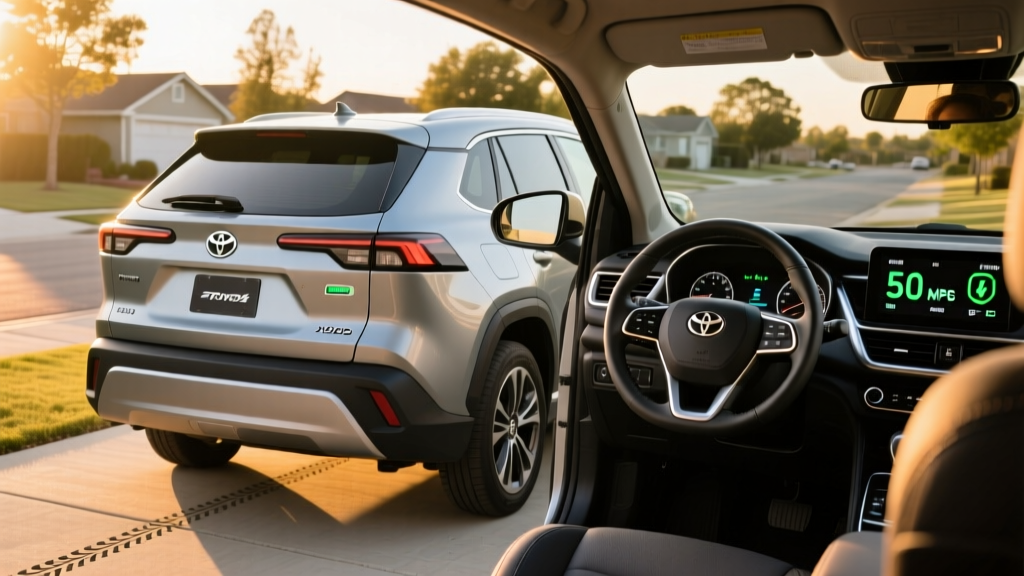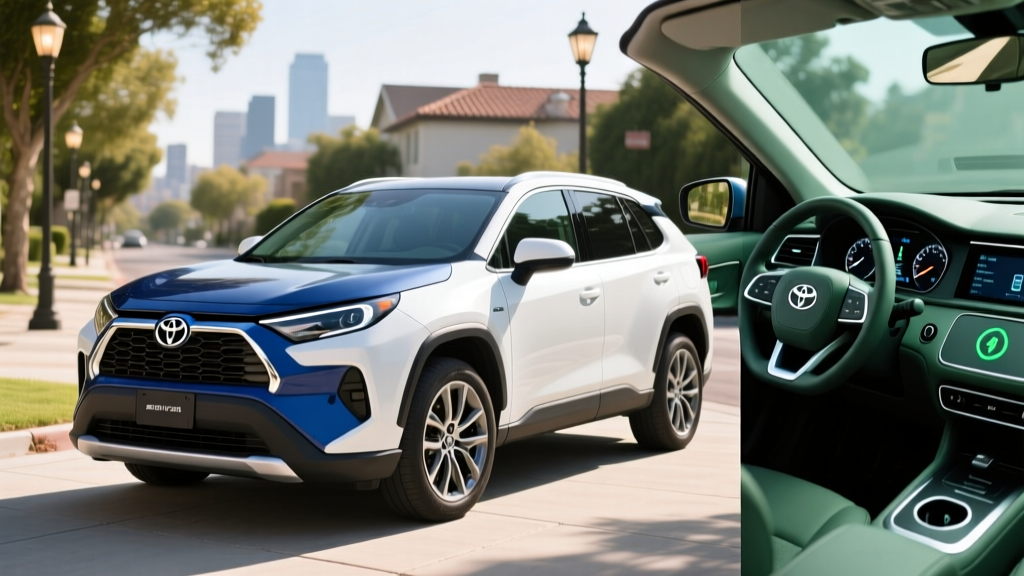
The 2026 RAV4 Hybrid: Exterior Colour Palette and Trim Pairings
If you're researching the 2026 RAV4 Hybrid colours, you're likely close to a purchase decision and want to see how Toyota's latest compact hybrid SUV looks in every available shade. Toyota carries forward a refined palette for the 2026 model year, with certain colours exclusive to specific trims — a detail that matters when you're cross-shopping the LE, XLE, XLE Premium, SE, Woodland Edition, and Limited.
Here is the full exterior colour lineup for the 2026 RAV4 Hybrid, along with trim availability notes:
| Colour Name | Colour Code | Available Trims | Notes |
|---|---|---|---|
| Magnetic Gray Metallic | 1G3 | LE, XLE, XLE Premium, SE, Limited | Carryover staple; hides road grime well |
| Ice Cap (White) | 040 | LE, XLE, XLE Premium, Limited | Classic non-metallic white, no upcharge |
| Midnight Black Metallic | 218 | LE, XLE, XLE Premium, SE, Limited | Popular; shows swirl marks more readily |
| Ruby Flare Pearl | 3T3 | XLE, XLE Premium, SE, Limited | Premium pearl tri-coat ($425 upcharge) |
| Blueprint | 8X8 | LE, XLE, XLE Premium, Limited | Deep navy metallic; strong in sunlight |
| Solar Octane (Orange) | 5A3 | SE | SE-exclusive; bold, sporty statement |
| Cavalry Blue | 8K2 | Woodland Edition | Woodland-exclusive flat blue-gray |
| Army Green | 6X4 | Woodland Edition, XLE Premium | Earthy tone; pairs with black roof option |
| Wind Chill Pearl | 089 | XLE Premium, Limited | Premium pearl ($425 upcharge) |
Two-tone roof options (typically a Midnight Black Metallic roof paired with Ice Cap, Wind Chill Pearl, or Army Green) are available on the XLE Premium, SE, and Woodland Edition trims for an additional $600. If colour choice is a deal-breaker, note that the SE trim's Solar Octane and the Woodland Edition's Cavalry Blue are exclusive — you cannot get them on other trims.
2026 RAV4 Hybrid Powertrain: Engine, Motors, and Horsepower
The 2026 RAV4 Hybrid uses Toyota's fifth-generation hybrid system (THS V), pairing a 2.5-liter Dynamic Force inline-four engine with front and rear electric motors for standard electronic all-wheel drive (AWD-i). Here's the powertrain breakdown:
- Gasoline engine: 2.5L 4-cylinder, 176 hp / 163 lb-ft torque
- Front electric motor: 134 hp / 199 lb-ft
- Rear electric motor: 54 hp / 89 lb-ft
- Net combined system output: 219 hp
- Transmission: eCVT (electronically controlled continuously variable)
- Drivetrain: AWD-i (electronic on-demand AWD, no mechanical driveshaft)
The electric motors provide instant torque at low speeds, which is why the RAV4 Hybrid feels notably more responsive in city driving than its 203-hp gas-only sibling. The 0-60 mph time sits at approximately 7.4 seconds — adequate for merging and passing, though not sporty. The rear motor engages automatically when the system detects slip, providing traction in rain and light snow without the weight or parasitic loss of a traditional mechanical AWD system.
EPA Fuel Economy: How Many MPG Does the 2026 RAV4 Hybrid Get?
Fuel economy is the core reason buyers choose the RAV4 Hybrid over the gas model. According to fueleconomy.gov, the 2026 RAV4 Hybrid AWD earns the following EPA ratings:
| Trim | City MPG | Highway MPG | Combined MPG |
|---|---|---|---|
| LE | 41 | 38 | 39 |
| XLE / XLE Premium | 41 | 38 | 39 |
| SE | 40 | 37 | 38 |
| Woodland Edition | 38 | 35 | 37 |
| Limited | 41 | 38 | 39 |
Real-world MPG vs. EPA: Toyota hybrids frequently exceed their EPA city ratings in stop-and-go traffic because regenerative braking recovers energy that a gas car wastes as heat. Owners consistently report 42-45 MPG in urban driving. Highway MPG, however, tends to run 1-3 MPG below the sticker at sustained 70-80 mph speeds, since aerodynamic drag dominates and the hybrid system offers less benefit. In mixed real-world driving, expect 37-42 MPG combined depending on your commute profile, climate, and driving style. Cold weather (below 40°F) can temporarily reduce fuel economy by 5-10% as the engine runs more frequently to maintain cabin heat and battery temperature.
RAV4 Hybrid vs. RAV4 Prime (PHEV): Which One Fits You?
Toyota offers the RAV4 in two electrified flavours, and confusing them is a common buyer mistake. Here's the clear distinction:
A conventional hybrid (HEV) like the RAV4 Hybrid charges its small battery through regenerative braking and the gas engine. You never plug it in. A plug-in hybrid (PHEV) like the RAV4 Prime has a larger battery you charge from a wall outlet, giving you a pure electric driving range before the gas engine kicks in.
| Specification | RAV4 Hybrid (HEV) | RAV4 Prime (PHEV) |
|---|---|---|
| Powertrain type | Self-charging hybrid | Plug-in hybrid |
| Plug-in charging required? | No | Yes (optional but recommended) |
| Battery capacity | 1.6 kWh (nickel-metal hydride) | 18.1 kWh (lithium-ion) |
| Electric-only range | N/A (EV mode ~1 mi at low speed) | 42 miles (EPA) |
| Combined system HP | 219 hp | 302 hp |
| 0-60 mph | 7.4 sec | 5.7 sec |
| Combined MPG / MPGe | 39 MPG | 94 MPGe (electric) / 38 MPG (gas) |
| Total range | ~580 miles | ~600 miles (42 EV + 558 gas) |
| DC fast charging | N/A | No (Level 2 AC only, ~2.5 hrs) |
| Base MSRP (2026 est.) | $33,425 | $45,675 |
Who should choose the RAV4 Hybrid (HEV)? Drivers who lack access to home or workplace charging, want lower upfront cost, and primarily need excellent fuel economy without changing their refuelling habits. If you live in an apartment without a garage outlet or street-park nightly, the HEV is the practical choice.
Who should choose the RAV4 Prime (PHEV)? Drivers with reliable Level 2 home charging (a standard 120V outlet works but is slow) who commute under 42 miles round-trip. You'll drive most weekdays on electricity alone, only using gas for longer weekend trips. The $12,000+ price premium over the Hybrid is offset partly by the federal tax credit (see below) and dramatically lower fuel costs if your daily driving stays within the electric range.
Pricing, Trims, and Tax Credit Eligibility for the 2026 RAV4 Hybrid
The 2026 RAV4 Hybrid starts at an estimated $33,425 (LE trim, including destination) and climbs to approximately $42,000 for a fully equipped Limited. Here's a trim-level breakdown:
| Trim | Est. MSRP | Key Features |
|---|---|---|
| LE | $33,425 | Toyota Safety Sense 3.0, 8" touchscreen, AWD-i |
| XLE | $35,850 | Blind-spot monitor, dual-zone climate, alloy wheels |
| XLE Premium | $37,600 | SofTex seats, sunroof, power liftgate |
| SE | $38,200 | Sport-tuned suspension, 19" wheels, Solar Octane colour |
| Woodland Edition | $38,750 | TRD-tuned suspension, all-terrain tires, Cavalry Blue |
| Limited | $42,000 | 12.3" display, heated/ventilated front seats, JBL audio |
Federal tax credit for the RAV4 Hybrid (HEV): The conventional RAV4 Hybrid does not qualify for the federal §30D clean vehicle credit. That credit is reserved for plug-in vehicles (BEVs and PHEVs) meeting battery sourcing and critical mineral requirements per IRS guidelines.
Federal tax credit for the RAV4 Prime (PHEV): The RAV4 Prime may qualify for up to $7,500 under §30D, but eligibility depends on several factors that change frequently: the vehicle's battery components must be manufactured or assembled in North America, critical minerals must be sourced from the US or free-trade-agreement partners, and the buyer must meet income caps ($150,000 single / $300,000 joint). The MSRP cap for SUVs is $80,000, which the RAV4 Prime clears easily. Starting in 2024, the credit can be transferred to the dealer at point of sale, reducing your purchase price directly. Always verify current eligibility with your dealer and a tax professional before relying on the credit.
State incentives: Some states (California, Colorado, New York, and others) offer additional rebates for PHEVs. These vary widely and change annually — check your state's energy office or the AFDC state incentives database for current programs.
Hybrid Battery Longevity, Warranty, and Replacement Cost
Toyota covers the RAV4 Hybrid's battery with a 10-year / 150,000-mile hybrid battery warranty (whichever comes first) in all 50 states. This was extended from the previous 8-year/100,000-mile standard. The warranty covers battery capacity below a specified threshold and defects.
How long does a RAV4 Hybrid battery last? Toyota's nickel-metal hydride (NiMH) hybrid battery in the RAV4 Hybrid is one of the most proven in the industry. Real-world data from millions of Toyota hybrids on the road shows that the vast majority of hybrid batteries last 150,000-200,000+ miles without replacement. Unlike full EV batteries, the hybrid battery operates in a narrow state-of-charge window (roughly 40-80%), which dramatically reduces degradation stress.
Replacement cost: If the battery does fail outside warranty, a new OEM replacement runs approximately $3,000-$4,500 installed at a dealership. Refurbished or aftermarket options can reduce this to $1,500-$2,500. Given the 10-year/150,000-mile warranty coverage and the proven longevity of Toyota's NiMH packs, battery replacement should be a very low-probability concern for most owners.
Reliability track record: The RAV4 Hybrid consistently earns above-average reliability scores. Toyota's hybrid system has been refined over 25+ years since the original Prius, and the eCVT transmission has no traditional gears or clutch packs to wear out. IIHS has historically rated the RAV4 as a Top Safety Pick, and the hybrid shares the same crash structure.
Real-World Ownership: What the Specs Don't Tell You
After spending time with the RAV4 Hybrid platform across multiple model years, here are the practical ownership details that spec sheets omit:
- Cold-weather fuel economy: Expect a 5-10% MPG drop in sustained sub-40°F weather. The gas engine runs more often to provide cabin heat, reducing the hybrid system's efficiency advantage. A block heater or garage parking mitigates this.
- Highway cruising: At 75-80 mph, the RAV4 Hybrid returns roughly 35-37 MPG — below the 38 MPG EPA highway rating. Aerodynamic drag is the limiting factor, and the hybrid system provides minimal benefit at steady high speeds.
- Towing: The RAV4 Hybrid is rated for 1,750 lbs of towing capacity across all trims — adequate for a small utility trailer but not for boats or campers. Towing will significantly reduce fuel economy (expect 25-30 MPG while towing).
- Cargo space: 37.5 cu ft behind the rear seats, 69.8 cu ft with seats folded. The hybrid battery sits under the rear seat, so cargo volume is identical to the gas model — no compromise.
- Noise and refinement: The eCVT produces a characteristic "drone" under hard acceleration as the engine holds at high RPM while the transmission adjusts ratios. It's noticeable but not objectionable in normal driving. Toyota has added sound-deadening in recent years.
- Regenerative braking feel: The brake pedal transition between regen and friction braking is smoother than most hybrids, but there's still a slight grabbiness at very low speeds. You adapt within a few days.
RAV4 Hybrid vs. Full EV vs. Gas: The Decision Framework
- You can't charge at home or work (apartment living, street parking)
- You want 39+ MPG without changing any habits
- Your budget is under $40,000
- You frequently drive long road trips and don't want to plan charging stops
- You want proven reliability with a 10-year battery warranty
- You have Level 2 home charging (or at least a dedicated 120V outlet)
- Your daily commute is under 42 miles round-trip
- You want 302 hp and 5.7-second 0-60 performance
- You qualify for the $7,500 federal tax credit, narrowing the price gap
- You want to drive mostly on electricity but keep gas for road trips
- You have reliable home Level 2 charging
- Your daily driving is under 250 miles
- You want zero tailpipe emissions and minimal maintenance (no oil changes, no engine)
- You want the lowest per-mile "fuel" cost (electricity is typically $0.04-$0.06/mile vs. $0.12-$0.15/mile for the hybrid on gas)
- You're willing to plan longer road trips around DC fast-charging stops
Frequently Asked Questions
How many MPG does the 2026 RAV4 Hybrid get in real-world driving?
The EPA rates it at 39 MPG combined (41 city / 38 highway) for most trims. In real-world mixed driving, owners typically see 37-42 MPG combined. City driving often exceeds the EPA rating thanks to regenerative braking, while sustained highway speeds above 70 mph return 35-37 MPG.
Does the RAV4 Hybrid need to be plugged in?
No. The RAV4 Hybrid is a conventional (self-charging) hybrid. Its small 1.6 kWh battery is charged by regenerative braking and the gasoline engine. You simply fill up at a gas station as you would with any car. Only the RAV4 Prime (PHEV) benefits from plugging in.
How far can the RAV4 Prime go on electric power alone?
The RAV4 Prime delivers an EPA-rated 42 miles of electric-only range on a full charge. This covers most daily commutes without using any gasoline. Once the battery is depleted, it operates as a conventional hybrid at 38 MPG combined.
Is the RAV4 Hybrid battery reliable and what does replacement cost?
Toyota's hybrid batteries are among the most reliable in the industry, typically lasting 150,000-200,000+ miles. The battery is covered by a 10-year/150,000-mile warranty. Out-of-pocket replacement costs approximately $3,000-$4,500 at a dealership, though refurbished options are available for less.
Does the 2026 RAV4 Hybrid qualify for any tax credit?
No. The conventional RAV4 Hybrid (HEV) does not qualify for the federal §30D clean vehicle tax credit, which is reserved for plug-in vehicles. The RAV4 Prime (PHEV) may qualify for up to $7,500, subject to income caps, battery sourcing requirements, and point-of-sale transfer rules. Check current IRS rules before purchasing. Some states offer separate hybrid rebates — verify with your state energy office.
Which 2026 RAV4 Hybrid colours are exclusive to certain trims?
Solar Octane (vibrant orange) is exclusive to the SE trim. Cavalry Blue (flat blue-gray) is exclusive to the Woodland Edition. All other colours — Magnetic Gray, Ice Cap, Midnight Black, Ruby Flare Pearl, Blueprint, Army Green, and Wind Chill Pearl — are available across multiple trims as listed in the colour table above.
How does the RAV4 Hybrid compare to competing hybrid SUVs?
The RAV4 Hybrid's 39 MPG combined and 219 hp place it near the top of the compact hybrid SUV segment. The Honda CR-V Hybrid achieves 40 MPG combined but offers slightly less power (204 hp). The Hyundai Tucson Hybrid returns 38 MPG with 232 hp. The RAV4's advantage is Toyota's long-proven hybrid reliability record, strong resale value, and the broadest trim/colour selection in the segment.