Quick Verdict: The Prius Prime Still Owns the PHEV Commute
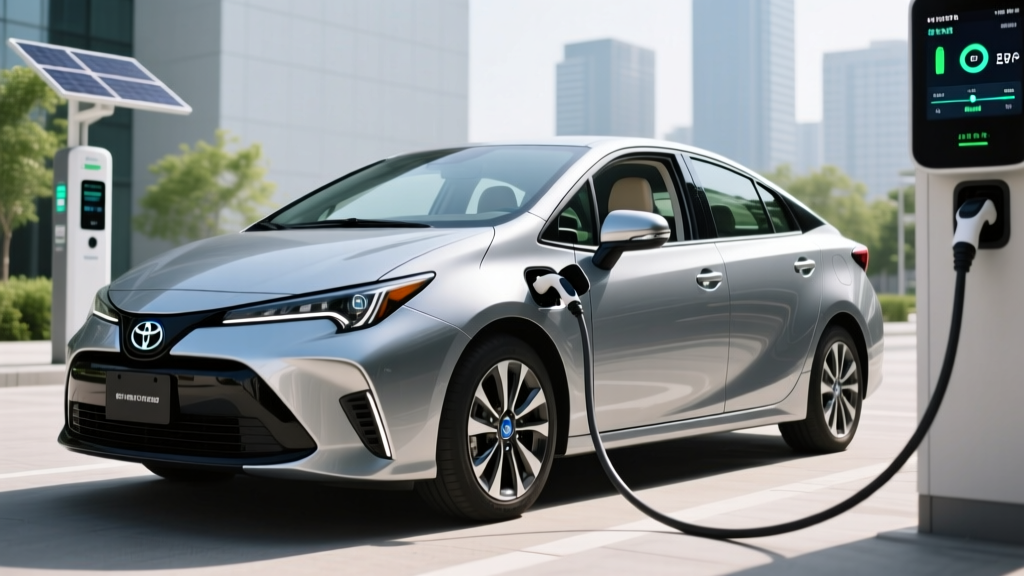
The 2026 Toyota Prius Prime (formerly the Prius Plug-In Hybrid) remains the benchmark for plug-in hybrid commuters who want meaningful electric-only range without sacrificing the flexibility of a gas engine. With 44 miles of EPA-rated electric range, 52 MPG combined once the battery depletes, and a starting MSRP around $33,450, it occupies a narrow but valuable lane: enough electric driving to cover most daily commutes, with a 400+ mile total range for road trips.
Toyota's fifth-generation Prius platform, which debuted for the 2023 model year, gave the Prime a dramatic styling and performance overhaul. The 2026 model continues with the 2.0-liter four-cylinder plug-in hybrid powertrain producing 220 combined horsepower — a massive improvement over the sluggish pre-2023 generations. If you're researching a prius plug-in hybrid vehicle for 2026, here's every spec, cost, and ownership detail you need.
| Specification | 2026 Toyota Prius Prime |
|---|---|
| EPA Electric-Only Range | 44 miles (SE trim) / 40 miles (XSE/XSE Premium) |
| Total Combined Range | ~440+ miles (electric + gas) |
| Battery Capacity | 13.6 kWh (lithium-ion) |
| Combined Horsepower | 220 hp |
| Engine | 2.0L 4-cylinder + 2 electric motors |
| 0-60 mph | 6.6 seconds |
| EPA MPG (Gas Mode, Combined) | 52 MPG (SE) / 48 MPG (XSE/XSE Premium) |
| MPGe (Electric + Gas Combined) | 127 MPGe (SE) |
| DC Fast Charging | Not available (Level 2 AC only) |
| Level 2 Charge Time (0-100%) | ~4 hours at 3.3 kW |
| Base MSRP (SE) | $33,450 |
| Battery Warranty | 10 years / 150,000 miles |
HEV vs PHEV: What's the Difference on the Prius Lineup?
Toyota sells two distinct Prius models, and confusing them is a common buyer mistake:
| Feature | Prius (Standard HEV) | Prius Prime (PHEV) |
|---|---|---|
| Plug-in Required? | No — charges via regenerative braking & engine | Yes — plug in to access electric-only range |
| Electric-Only Range | 0 miles (EV mode is very limited, low-speed only) | 40-44 miles EPA |
| Battery Size | ~1.0 kWh (small buffer) | 13.6 kWh (usable) |
| Combined MPG (gas) | 57 MPG (LE FWD) | 48-52 MPG (varies by trim) |
| Horsepower | 194 hp (FWD) / 196 hp (AWD) | 220 hp |
| Base MSRP | ~$28,550 | ~$33,450 |
| Federal Tax Credit | Not eligible | Not eligible for §30D new-vehicle credit* |
*The Prius Prime previously qualified for a partial federal tax credit, but under current 2026 IRS §30D rules, it does not meet the critical-mineral and battery-component sourcing requirements. Always verify at the IRS qualified vehicle list.
The standard Prius HEV is ideal if you have no access to charging — at home or at work. It delivers exceptional fuel economy with zero behavior change. The Prius Prime PHEV is the upgrade pick for drivers who can plug in regularly and want to commute on electricity most days while keeping a gas engine for longer trips.
Electric-Only Range and Real-World Commuting
The EPA rates the 2026 Prius Prime SE at 44 miles of electric-only range, while the heavier XSE and XSE Premium trims drop to 40 miles due to larger 19-inch wheels and additional equipment. This range is measured under EPA's city-heavy test cycle, which favors regenerative braking and lower speeds.
Real-World Electric Range Expectations:
- Mild weather, mixed driving: 38-44 miles — close to EPA in suburban commuting
- Highway-dominant (70+ mph): 30-35 miles — electric range drops significantly at sustained speed
- Cold weather (below 35°F): 28-34 miles — battery efficiency decreases and cabin heating draws power
- Hot weather with A/C: 35-40 miles — less impact than cold, but still a reduction
For a 20-mile each-way commute with home charging, most Prime owners will drive 90%+ of their weekday miles on electricity, only using the gas engine for weekend trips or unexpected detours.
Fuel Economy: EPA Numbers and Real-World MPG
Once the battery depletes, the Prius Prime operates as a conventional hybrid. Here's the full EPA breakdown by trim:
| Trim | City MPG | Highway MPG | Combined MPG | MPGe (with charge) |
|---|---|---|---|---|
| SE | 53 | 51 | 52 | 127 |
| XSE | 50 | 47 | 48 | 114 |
| XSE Premium | 50 | 47 | 48 | 114 |
Source: fueleconomy.gov
Real-world MPG observations: Toyota hybrids historically exceed EPA city estimates in stop-and-go traffic, where regenerative braking recaptures energy most effectively. Expect 54-58 MPG in warm-weather city driving on the SE trim. Highway MPG tends to run slightly below EPA at sustained 75-80 mph speeds — figure 47-49 MPG on the SE. Cold weather reduces both battery and engine efficiency, so winter combined MPG may dip to 44-48 on the SE.
The 4 MPG gap between SE and XSE trims is driven entirely by wheel size: 17-inch on the SE versus 19-inch on the XSE. If fuel economy is your top priority, the SE is the clear pick.
Powertrain, Performance, and Charging
The 2026 Prius Prime pairs a 2.0-liter Atkinson-cycle four-cylinder engine with two motor-generators and a 13.6 kWh lithium-ion battery pack. Combined system output is 220 horsepower — enough for confident highway merging and a 6.6-second 0-60 time, a dramatic improvement from the 10+ second sprints of older Prius Plug-In models.
Charging capabilities are limited to Level 2 AC:
- Level 1 (120V household outlet): ~11-12 hours for a full charge at roughly 1.2 kW — viable for overnight top-ups if you drive less than the full electric range daily
- Level 2 (240V, standard J1772 connector): ~4 hours for a full charge at 3.3 kW
- DC Fast Charging: Not available. The Prius Prime does not support CCS or NACS DC fast charging.
The lack of DC fast charging is typical for PHEVs — the 13.6 kWh battery is small enough that Level 2 charging is sufficient for overnight replenishment. If you need rapid public charging, a full battery-electric vehicle (BEV) with a 70+ kWh battery and 150+ kW DC capability is a better fit.
Pricing, Trims, and Tax Credit Eligibility
The 2026 Prius Prime is offered in three trims:
- SE: ~$33,450 MSRP — 44-mile electric range, 52 MPG combined, 17-inch wheels
- XSE: ~$36,750 MSRP — 40-mile range, 48 MPG, 19-inch wheels, synthetic leather, heated front seats
- XSE Premium: ~$40,000 MSRP — adds panoramic roof, premium audio, advanced parking assist
Federal Tax Credit Status (2026): The Prius Prime does not currently qualify for the IRS §30D new clean vehicle credit (up to $7,500). The battery components and critical minerals do not meet the sourcing thresholds established under the Inflation Reduction Act and tightened through 2025-2026. This is a significant competitive disadvantage versus PHEVs that do qualify (such as certain domestic-built models). Always confirm current eligibility at the IRS qualified vehicle list before purchasing, as manufacturer sourcing can change.
Some states offer additional incentives for PHEVs. California's CVRP program, for example, has historically offered rebates for qualifying plug-in hybrids, though income caps apply. Check your state energy office for current programs.
Battery Reliability, Warranty, and Replacement Cost
Toyota's hybrid battery warranty covers the Prime's 13.6 kWh lithium-ion pack for 10 years or 150,000 miles (whichever comes first) in all 50 states. This warranty guarantees the battery will retain sufficient capacity — Toyota's threshold is typically 70-75% of original capacity before a warranty claim is triggered.
Reliability track record: Toyota's hybrid systems have an exceptional longevity record. The fourth-generation Prius (2016-2022) hybrid batteries commonly exceed 200,000 miles with minimal degradation. The Prime's larger PHEV battery operates with a generous buffer (the car never uses 100% of the pack), which reduces stress on cells and extends cycle life. Based on historical data, Prius Prime battery replacements under normal use are rare within the first 150,000 miles.
Out-of-warranty replacement cost: If a battery replacement is needed after the warranty period, expect $4,000-$7,000 for the pack plus installation at a Toyota dealer. Third-party hybrid battery rebuilds can reduce this to $2,500-$4,000. This is substantially less than full BEV battery replacements, which can exceed $15,000 for larger packs.
Pros
- 44-mile electric range covers most commutes
- 52 MPG combined in hybrid mode (SE trim)
- 220 hp — genuinely quick for a Prius
- No range anxiety — 440+ mile total range
- 10-year/150k-mile hybrid battery warranty
- Proven Toyota reliability and resale value
Cons
- No DC fast charging capability
- Does not qualify for $7,500 federal tax credit (2026)
- 3.3 kW onboard charger is slow for Level 2
- XSE trims lose 4 miles of range and 4 MPG
- Rear seat and cargo space tighter than RAV4 Prime
- Tight competitor pricing from Chrysler Pacifica PHEV for families
Hybrid vs PHEV vs EV: Which Is Right for You?
Choose the standard Prius HEV if:
- You have no access to home or workplace charging
- You want the lowest purchase price (~$28,550) and maximum MPG (57 combined)
- Your daily driving is unpredictable and you don't want to think about plugging in
Choose the Prius Prime PHEV if:
- You can install a Level 2 charger at home or have reliable workplace charging
- Your daily commute is under 40 miles round-trip
- You want electric commuting but need gas flexibility for road trips or multi-car households
- You're not ready to commit to a full EV but want to reduce gas consumption significantly
Choose a full BEV (like the Tesla Model 3 or Hyundai Ioniq 6) if:
- You have reliable home charging and access to DC fast charging for road trips
- Your household has a second gas vehicle for long trips
- You want to eliminate oil changes and gas-engine maintenance entirely
- You qualify for the $7,500 federal tax credit on an eligible BEV
Frequently Asked Questions
How many MPG does the 2026 Prius Prime get?
The SE trim achieves 53 city / 51 highway / 52 combined MPG in hybrid mode (after the battery depletes). The XSE and XSE Premium trims get 50/47/48. In real-world city driving, many owners report 54-58 MPG on the SE. When operating on battery charge, the SE achieves 127 MPGe.
How far can the Prius Prime go on electric only?
The EPA rates the SE trim at 44 miles of electric-only range and the XSE/XSE Premium at 40 miles. Real-world results vary: expect 38-44 miles in mild weather, 30-35 on the highway, and 28-34 in freezing temperatures.
Does the Prius Prime qualify for a federal tax credit?
As of 2026, the Prius Prime does not qualify for the IRS §30D new clean vehicle credit (up to $7,500) because its battery components and critical minerals do not meet current domestic-sourcing requirements. State-level incentives may still apply. Verify at irs.gov.
Is the Prius Prime reliable, and what does battery replacement cost?
Toyota's hybrid systems have an outstanding reliability record spanning two decades. The Prime's battery is warrantied for 10 years / 150,000 miles. Out-of-warranty battery replacement typically costs $4,000-$7,000 at a dealer, or $2,500-$4,000 through a third-party hybrid specialist. Full replacements within the warranty period are rare based on historical Prius data.
Can the Prius Prime DC fast charge?
No. The Prius Prime supports only AC charging — Level 1 (120V, ~12 hours) and Level 2 (240V J1772, ~4 hours). This is standard for most PHEVs, as the 13.6 kWh battery is small enough that overnight Level 2 charging is sufficient.
How does the Prius Prime compare to the RAV4 Prime?
The RAV4 Prime offers 42 miles of electric range, 94 MPGe, 302 hp, and available AWD — but starts around $44,000 and has faced chronic availability issues. The Prius Prime is lighter, more efficient in hybrid mode (52 vs 38 MPG combined), less expensive, and easier to find at dealers. Choose the RAV4 Prime if you need SUV cargo space and AWD; choose the Prius Prime for efficiency and value.