The Toyota Prius Prime — officially badged as the Prius PHEV — enters the 2026 model year as one of the most compelling plug-in hybrids on the market. With up to 44 miles of electric-only driving, a combined 52 MPG once the battery depletes, and a starting MSRP of $33,445, it occupies a specific niche: drivers who want EV-like daily commuting without any range-anxiety compromise on road trips.
This guide covers every number that matters for the 2026 Prius PHEV, from its 13.6 kWh battery and 220 combined horsepower to its federal tax credit eligibility under IRS §30D rules. We also compare it directly to the conventional Prius HEV so you can determine whether the plug-in premium makes sense for your driving pattern.
2026 Prius PHEV vs. Conventional Prius HEV: What's the Difference?
Before examining specs, it is essential to distinguish the two Prius variants, because they serve different use cases and have fundamentally different powertrains.
Conventional Hybrid (HEV) — Prius
The standard Prius uses a small battery (roughly 0.9 kWh) that charges exclusively through regenerative braking and the gasoline engine. You never plug it in. It delivers excellent fuel economy — up to 57 MPG combined — but offers no meaningful electric-only driving distance.
Plug-In Hybrid (PHEV) — Prius Prime
The Prius Prime carries a much larger 13.6 kWh lithium-ion battery, a more powerful electric motor, and a charge port. You plug it in overnight to get up to 44 miles of pure electric range. Once that battery depletes, it operates exactly like a conventional hybrid, using the gas engine and regenerative braking with no driver intervention required.
The practical implication: if your round-trip commute is under 40 miles and you can charge at home, the PHEV lets you drive on electricity most days while retaining a gas engine for weekend trips. If you cannot charge at home or your commute exceeds 44 miles daily, the conventional HEV may be the more pragmatic — and less expensive — choice.
EPA Fuel Economy & Electric Range: The Numbers
| Metric | 2026 Prius Prime (PHEV) | 2026 Prius (HEV) |
|---|---|---|
| Electric-only range | 44 miles (SE trim) / 40 miles (XSE/XSE Premium) | N/A |
| MPGe (electric + gas combined) | 126 MPGe | N/A |
| Gas-only MPG — City | 50 MPG | 57 MPG |
| Gas-only MPG — Highway | 47 MPG | 56 MPG |
| Gas-only MPG — Combined | 52 MPG | 57 MPG |
| Total range (electric + gas) | ~440 miles | ~580 miles |
| Fuel tank capacity | 10.6 gallons | 11.3 gallons |
Real-world MPG note: According to fueleconomy.gov, the Prius Prime's 52 MPG combined rating applies once the battery is depleted. In real-world driving, hybrid owners frequently exceed EPA city ratings because stop-and-go traffic maximizes regenerative braking. Highway driving at 75+ MPH will typically yield 2-4 MPG below the sticker. Cold weather (below 35°F) can reduce electric-only range by 20-30%, meaning that 44-mile electric range may drop to 30-35 miles in winter conditions.
Powertrain & Performance Specs
| Specification | 2026 Prius Prime |
|---|---|
| Combined system horsepower | 220 HP |
| Gas engine | 2.0L 4-cylinder (150 HP) |
| Electric motor (front) | 161 HP |
| 0-60 MPH | 6.6 seconds |
| Drivetrain | Front-wheel drive (FWD) / AWD available |
| Transmission | Continuously variable (eCVT) |
| Battery capacity (usable) | 13.6 kWh lithium-ion |
| Top speed (EV mode) | 84 MPH |
The 220 combined horsepower is a dramatic improvement over the previous-generation Prius Prime, which made just 121 HP. The 2026 model's 6.6-second 0-60 time makes it genuinely quick for a fuel-economy-focused vehicle — faster than many compact crossovers. The eCVT delivers seamless acceleration without the rubber-band feeling that older CVTs exhibited.
Charging: Times, Connectors & What You Need at Home
One question every prospective PHEV buyer asks: how long does it take to charge, and do I need special equipment?
| Charging Level | Power | Time (0-100%) | Equipment Needed |
|---|---|---|---|
| Level 1 (120V household outlet) | ~1.4 kW | ~11 hours | Included portable cord |
| Level 2 (240V home charger) | ~3.3 kW (vehicle-limited) | ~4 hours | J1772 home station |
| DC Fast Charging | Not supported | N/A | N/A |
Critical detail: The Prius Prime's onboard charger is limited to 3.3 kW. Even if you plug into a 7.2 kW or 11.5 kW Level 2 station, the car will only accept 3.3 kW. This is common for PHEVs with smaller batteries — the Prius Prime's 13.6 kWh pack simply does not need high-speed charging. A full charge on Level 2 takes approximately 4 hours, which means plugging in when you get home from work delivers a full battery by morning.
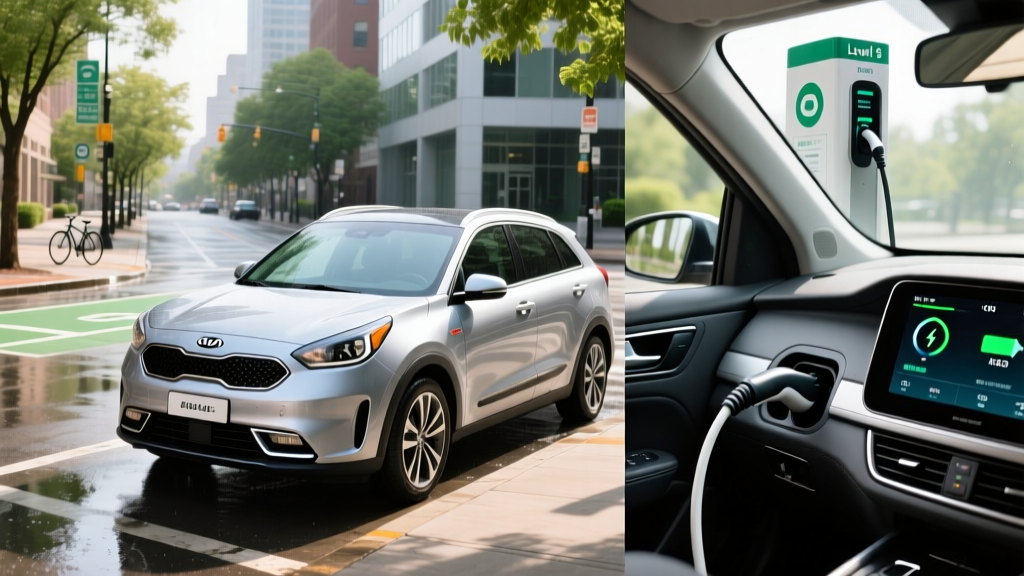
The Prius Prime uses the J1772 connector for AC charging (the standard for all non-Tesla plug-in vehicles in North America). It does not support DC fast charging — there is no CCS or NACS port. This is a deliberate engineering choice: the battery is small enough that Level 2 overnight charging covers virtually all use cases.
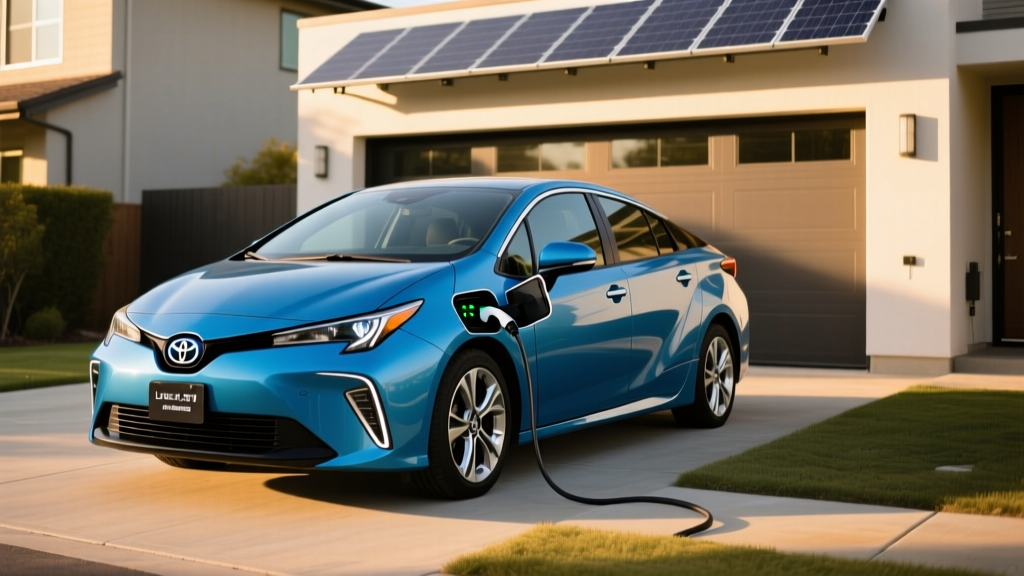
Home charging setup: Most Prius Prime owners charge successfully on a standard 120V outlet (Level 1), which adds roughly 4 miles of range per hour. Over a 10-hour overnight window, that yields about 40 miles — enough to refill the battery nearly completely. If you want faster Level 2 charging, expect to spend $500-$1,200 on a 240V home station plus $300-$800 for electrician installation, depending on your panel capacity and outlet proximity. A licensed electrician should evaluate your panel before installation.
Pricing, Trims & Federal Tax Credit Eligibility
| Trim | MSRP | Electric Range |
|---|---|---|
| SE | $33,445 | 44 miles |
| XSE | $36,695 | 40 miles |
| XSE Premium | $39,945 | 40 miles |
All prices include the $1,095 destination charge. The SE trim offers the best electric range and the lowest price, making it the value pick. The XSE adds 19-inch alloy wheels, a larger 12.3-inch infotainment screen, heated front seats, and additional driver-assist features — at the cost of 4 miles of electric range and roughly 3 MPG on the combined cycle.
Federal §30D Tax Credit
The 2026 Prius Prime may qualify for up to $3,750 under the federal §30D Clean Vehicle Credit, but eligibility depends on several conditions that change annually. Here is what the IRS requires as of 2026:
- Battery sourcing: A percentage of critical minerals and battery components must be sourced from the U.S. or free-trade-agreement countries. Toyota's supply chain determines the exact credit amount — $3,750 if one requirement is met, $7,500 if both are met.
- MSRP cap: The vehicle must have an MSRP below $55,000 (sedans). All Prius Prime trims qualify.
- Buyer income cap: Modified adjusted gross income must not exceed $150,000 (single), $225,000 (head of household), or $300,000 (joint filers).
- Point-of-sale transfer: As of 2024, you can transfer the credit to the dealer at purchase, reducing your out-of-pocket cost immediately rather than waiting for a tax refund.
- Final assembly: The vehicle must undergo final assembly in North America. The Prius Prime is assembled in Japan, which disqualifies it from the §30D new-vehicle credit under current rules.
Bottom line: Because the Prius Prime is manufactured in Japan, it does not qualify for the §30D new clean vehicle credit. Always verify current rules at IRS.gov before purchasing, as trade policy and sourcing requirements can shift.
Some states offer their own incentives for plug-in hybrids regardless of assembly location. California's CVRP program, for example, has historically offered rebates for PHEVs — check your state energy office for current availability and income requirements.
Battery Warranty, Reliability & Replacement Cost
- Coverage: 10 years / 150,000 miles (in states that follow California Air Resources Board standards, including CA, NY, MA, and 14+ additional states)
- Coverage (non-CARB states): 8 years / 100,000 miles
- Capacity retention threshold: Toyota warrants the battery against failure and abnormal capacity loss. The warranty covers replacement if the battery drops below a functional threshold that impairs hybrid operation.
- Hybrid system components: Inverter, electric motor, and related control electronics are covered under the same hybrid-system warranty.
Toyota's hybrid reliability record is among the strongest in the industry. The Prius platform has been in continuous production since 1997, and real-world data shows hybrid batteries frequently lasting 150,000-200,000+ miles before significant degradation. The larger PHEV battery experiences shallower daily cycles (you use 44 miles of range and recharge), which is gentler on cells than deep-discharge patterns.
Battery replacement cost: If the hybrid battery does require replacement outside of warranty, expect a cost between $4,000 and $6,500 for a Prius Prime battery pack, including labor. Third-party refurbished batteries are available for $2,000-$3,500. For comparison, the conventional Prius HEV battery replacement runs $2,000-$3,500 due to its smaller capacity.
According to NHTSA and IIHS, the Prius platform consistently earns top safety ratings, and Toyota's hybrid powertrain has one of the lowest warranty-claim rates in the segment.
Who Should Buy the 2026 Prius Prime — And Who Shouldn't
Choose the 2026 Prius Prime (PHEV) if:
- Your daily round-trip commute is under 40 miles and you can charge at home (even a 120V outlet works).
- You want to drive primarily on electricity during the week but need a gas engine for road trips, rural travel, or apartment living where charging access is uncertain.
- You want EV-like operating costs (~3-4 cents per mile on electricity) without committing to a full battery-electric vehicle.
- You live in a climate with extreme cold, where EV range loss is a concern — the gas engine eliminates that risk entirely.
Choose the conventional Prius (HEV) if:
- You cannot charge at home or at work.
- Your daily driving regularly exceeds 50 miles, making the PHEV's electric range less impactful.
- You want the lowest purchase price and the highest MPG without plugging in (57 combined vs. 52 combined in gas mode).
Choose a full battery-electric vehicle (BEV) if:
- You want zero tailpipe emissions and the lowest per-mile fuel cost.
- You have reliable home Level 2 charging and your daily driving is under 250 miles.
- You want to eliminate oil changes and gas-engine maintenance entirely.
Pros
- 44-mile electric range covers most daily commutes entirely on electricity
- 52 MPG combined after battery depletion — among the best of any PHEV
- 220 HP and 6.6-second 0-60 — genuinely quick for the segment
- Charges on a standard 120V outlet overnight — no expensive home install required
- 10-year/150,000-mile hybrid battery warranty in CARB states
- Proven Toyota reliability with decades of hybrid powertrain refinement
Cons
- Does not qualify for the federal §30D tax credit (assembled in Japan)
- No DC fast charging — road-trip charging requires Level 2 stops or gas
- XSE trims sacrifice 4 miles of electric range and 5 MPG for styling
- Rear cargo space is slightly reduced versus the conventional Prius due to larger battery placement
- 3.3 kW onboard charger limits Level 2 speed — acceptable for 13.6 kWh but slow by BEV standards
Frequently Asked Questions
How many MPG does the 2026 Prius PHEV get?
The 2026 Prius Prime achieves 52 MPG combined (50 city / 47 highway) once the battery is depleted. During electric-only operation, it achieves 126 MPGe. Real-world city driving often exceeds the EPA rating due to regenerative braking, while sustained highway speeds above 75 MPH may return 47-49 MPG.
How far can the 2026 Prius Prime go on electric only?
The SE trim delivers 44 miles of EPA-rated electric-only range. The XSE and XSE Premium trims deliver 40 miles due to larger wheels and added weight. In cold weather (below 35°F), expect a 20-30% reduction, yielding approximately 30-35 miles in the SE.
Hybrid vs PHEV vs EV — which is right for me?
A conventional hybrid (HEV) is best if you cannot charge at home and want maximum MPG without plugging in. A PHEV like the Prius Prime is ideal if you can charge at home and your commute is under 40 miles — you get EV-like daily driving with gas-engine backup. A full EV (BEV) is the right choice if you want zero tailpipe emissions, the lowest fuel cost, and have reliable charging access for your daily needs.
Is the Prius Prime reliable, and what does a battery replacement cost?
Toyota's hybrid powertrains are among the most reliable in the industry, with hybrid batteries frequently lasting 150,000-200,000+ miles. The Prius Prime battery is warrantied for 10 years/150,000 miles in CARB states and 8 years/100,000 miles elsewhere. Out-of-warranty replacement costs $4,000-$6,500 for the PHEV battery.
Does the 2026 Prius Prime qualify for a federal tax credit?
Under current IRS §30D rules, the Prius Prime does not qualify for the federal new clean vehicle credit because it is assembled in Japan, not North America. State incentives may still apply — check your state energy office or the Alternative Fuels Data Center for local programs. Always confirm eligibility with a tax professional before purchasing.
Can the Prius Prime use DC fast chargers?
No. The 2026 Prius Prime does not have a DC fast-charging port (CCS or NACS). It charges exclusively via AC Level 1 (120V) or Level 2 (240V) using the J1772 connector. A full Level 2 charge takes approximately 4 hours.
How much does it cost to charge the Prius Prime at home?
A full charge of the 13.6 kWh battery at the U.S. average electricity rate of $0.17/kWh costs approximately $2.31. That delivers roughly 40 miles of electric range, equating to about 5.8 cents per mile — compared to approximately 11 cents per mile for a 30 MPG gas car at $3.30/gallon.