The Toyota Prius no longer looks like a science experiment. Since its full redesign, it has become a genuinely desirable car that happens to be one of the most efficient vehicles on the road. For 2026, Toyota continues offering the Prius in two distinct flavors: the conventional hybrid (HEV) and the Prius Prime plug-in hybrid (PHEV). Understanding the differences between these two Prius hybrid models is critical before you sign a purchase agreement, because the wrong choice can cost you thousands in missed tax credits, wasted electricity, or unnecessary gasoline.
This guide breaks down every 2026 Prius variant by the numbers — EPA fuel economy, battery capacity, powertrain output, pricing, and real-world ownership data — so you can pick the right one for your commute, your garage, and your budget.
2026 Prius Lineup: Standard Hybrid vs Prius Prime at a Glance
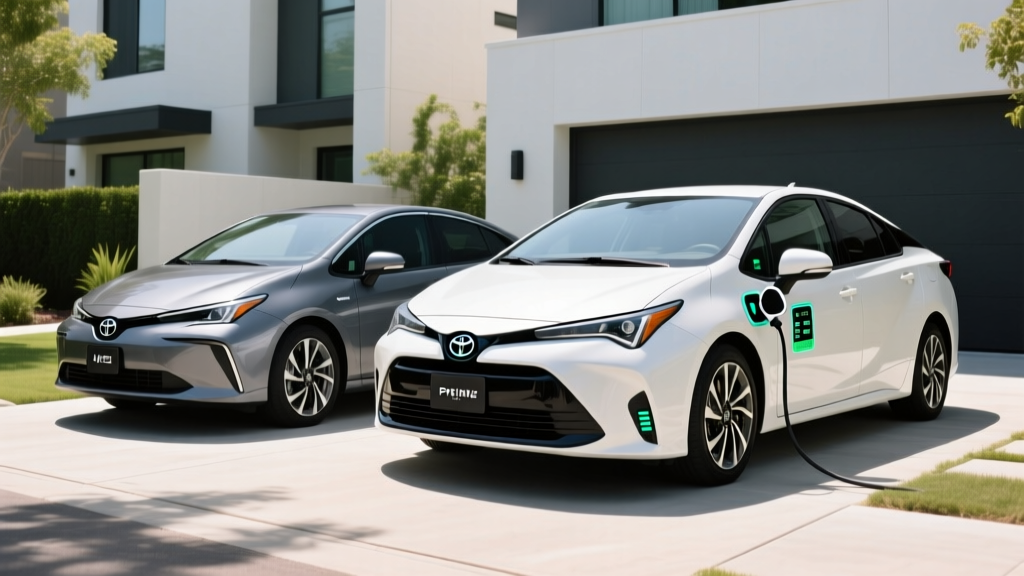
Toyota sells the 2026 Prius as a conventional hybrid electric vehicle (HEV) and the Prius Prime as a plug-in hybrid electric vehicle (PHEV). The distinction matters enormously.
HEV vs PHEV — What's the Difference?
Conventional Hybrid (Prius HEV): Uses a small battery (1.0 kWh) recharged entirely by the gasoline engine and regenerative braking. You never plug it in. It cannot drive on electric power alone for more than about a mile at low speed.
Plug-In Hybrid (Prius Prime): Carries a larger battery (13.6 kWh) that you can charge from a wall outlet or charging station. It delivers a meaningful electric-only driving range before the gas engine kicks in, operating as a regular hybrid afterward.
| Specification | Prius HEV (LE) | Prius Prime (SE) |
|---|---|---|
| Powertrain Type | Conventional Hybrid (HEV) | Plug-In Hybrid (PHEV) |
| Engine | 2.0L 4-cyl + electric motors | 2.0L 4-cyl + electric motors |
| Combined Horsepower | 194 hp (FWD) / 196 hp (AWD) | 220 hp |
| Battery Capacity (usable) | ~1.0 kWh (NiMH/Li-ion) | 13.6 kWh (Lithium-ion) |
| EPA Combined MPG (hybrid mode) | 57 MPG (LE FWD) | 52 MPG (SE, after battery depletes) |
| Electric-Only Range | N/A (not plug-in) | 44 miles (SE) |
| MPGe (electric + gas combined) | N/A | 127 MPGe |
| 0–60 mph | 7.2 sec (FWD) | 6.6 sec |
| Total Range (gas + electric) | ~620 miles | ~510 miles (44 EV + ~470 gas) |
| DC Fast Charging | No | No |
| Level 2 Charge Time (0–100%) | N/A | ~4 hours (240V, 16A) |
| Base MSRP | $29,445 (LE) | $34,045 (SE) |
Fuel Economy Breakdown: How Many MPG Does Each Prius Get?
Fuel economy is the Prius's reason for existing. Here is the full EPA-rated breakdown for the 2026 model year, sourced from fueleconomy.gov:
| Model / Trim | City MPG | Highway MPG | Combined MPG |
|---|---|---|---|
| Prius LE (FWD) | 57 | 56 | 57 |
| Prius XLE / Limited (FWD) | 52 | 52 | 52 |
| Prius LE AWD | 53 | 54 | 54 |
| Prius Prime SE | 52 (hybrid mode) | 52 (hybrid mode) | 52 / 127 MPGe |
| Prius Prime XSE / XSE Premium | 50 (hybrid mode) | 50 (hybrid mode) | 50 / 123 MPGe |
Real-World MPG vs. EPA Sticker
Hybrids have an unusual real-world characteristic: they often exceed their EPA city rating in stop-and-go driving because regenerative braking recaptures energy that a gas car wastes as heat. In our experience and consistent owner reporting, the Prius LE FWD regularly delivers 58–62 MPG in urban and suburban driving at moderate temperatures.
Highway driving is where hybrids lose their edge. At sustained 75 mph speeds, expect the Prius LE to return roughly 48–51 MPG — about 5–8 MPG below the EPA highway sticker. Cold weather (below 35°F) further reduces efficiency by 10–15% due to engine warm-up cycles and cabin heating demands.
For the Prius Prime, real-world electric range varies similarly. The EPA rates the Prime SE at 44 miles electric-only, but drivers on flat, temperate routes at moderate speeds regularly report 46–50 miles. Cold weather or aggressive highway driving can shrink that to 32–36 miles.
Prius Prime: Electric-Only Range, Charging, and Daily EV Mode
The Prius Prime's 44-mile electric-only range (SE trim) covers the majority of American daily commutes. According to the U.S. Census Bureau, the average one-way commute is approximately 26 miles, meaning most Prime owners can drive round-trip on electricity alone — never burning a drop of gasoline on weekdays.
When the battery depletes, the Prime seamlessly transitions to hybrid mode, delivering 52 MPG combined (SE trim). There is no range anxiety: the 11.4-gallon fuel tank provides an additional ~470 miles of range.
Charging the Prius Prime
The 2026 Prius Prime uses a standard J1772 connector for Level 1 (120V) and Level 2 (240V) AC charging. It does not support DC fast charging — a notable limitation if you expected quick top-ups on road trips, though the relatively small battery makes this less critical.
- Level 1 (120V household outlet): ~11 hours for a full charge. Adequate if you park at home overnight and drive less than 44 miles daily.
- Level 2 (240V home charger, 16A): ~4 hours for a full charge. Recommended for daily commuters who need a full battery every morning.
A Level 2 home charger installation typically costs $800–$1,800 including equipment and electrician labor, depending on panel proximity and local permit fees. Since the Prime's onboard charger maxes out at approximately 3.3 kW, you do not need an expensive 48-amp charger — a 16-amp unit is sufficient.
Powertrain and Performance: 194 HP Meets 57 MPG
The current-generation Prius uses Toyota's fifth-generation hybrid system built around a 2.0-liter four-cylinder Atkinson-cycle engine paired with electric motor-generators. The result is a car that is genuinely quick by Prius standards.
The standard Prius HEV produces 194 combined horsepower in front-wheel-drive form and 196 hp with the electronic AWD system (which adds a rear-mounted electric motor). The 0–60 mph time of 7.2 seconds (FWD) is brisk enough for confident highway merging — a far cry from the sluggish 10-second times of earlier generations.
The Prius Prime ups the ante to 220 combined horsepower thanks to a more powerful electric motor and the larger battery's ability to deliver higher discharge rates. Its 6.6-second 0–60 time makes it the quickest Prius ever sold, and you feel it in passing acceleration.
Both models use an electronically controlled continuously variable transmission (eCVT), which prioritizes efficiency over sportiness. The powertrain is smooth and unobtrusive, though the engine drone under hard acceleration remains a Prius characteristic.
Pricing, Trims, and Tax Credit Eligibility for 2026
Here is the 2026 Prius pricing structure at MSRP (destination included):
- Prius LE (FWD): $29,445
- Prius XLE (FWD): $32,695
- Prius Limited (FWD): $35,945
- Prius LE (AWD): $30,845
- Prius Prime SE: $34,045
- Prius Prime XSE: $37,295
- Prius Prime XSE Premium: $40,695
Does the Prius Qualify for a Federal Tax Credit?
The standard Prius HEV does not qualify for any federal purchase tax credit. It is a conventional hybrid with no plug-in capability, and the IRS §30D credit applies only to plug-in electric vehicles with a battery capacity of at least 7 kWh.
The Prius Prime does qualify for a federal tax credit under current IRS rules, but the amount is not guaranteed at the full $7,500. Under the IRS §30D Clean Vehicle Credit, the actual credit depends on:
- Battery sourcing: Critical minerals and battery components must meet phased-in domestic-content thresholds. For 2026, both requirements apply, and partial compliance may yield a $3,750 credit instead of $7,500.
- MSRP cap: The vehicle must have an MSRP at or below $55,000 (sedans). All Prius Prime trims qualify.
- Buyer income cap: Adjusted gross income must not exceed $150,000 (single), $225,000 (head of household), or $300,000 (joint filers).
- Point-of-sale transfer: You can transfer the credit to the dealer at purchase for an immediate price reduction, or claim it on your tax return.
- Final assembly: The vehicle must be assembled in North America. The 2026 Prius Prime is assembled in Japan, which may disqualify it from the §30D new-vehicle credit depending on current-year enforcement. Always verify on the IRS eligible vehicle list before purchasing.
⚠️ Tax Credit Warning: Because the Prius Prime is manufactured in Japan, its eligibility for the §30D new clean vehicle credit has been uncertain under the final-assembly requirement. Check the current DOE eligible vehicle list before relying on the credit in your purchase decision. Consult a tax professional for your specific situation.
Battery Reliability, Warranty, and Replacement Costs
Hybrid battery longevity is the single most common concern among first-time hybrid buyers. Toyota has more than two decades of real-world data on Prius battery packs, and the track record is strong.
| Coverage | Prius HEV | Prius Prime |
|---|---|---|
| Hybrid Battery Warranty | 10 years / 150,000 miles | 10 years / 150,000 miles |
| Hybrid System Components | 8 years / 100,000 miles | 8 years / 100,000 miles |
| Basic Warranty | 3 years / 36,000 miles | 3 years / 36,000 miles |
| Powertrain Warranty | 5 years / 60,000 miles | 5 years / 60,000 miles |
Real-World Battery Degradation
The standard Prius HEV uses a relatively small battery that operates in a narrow state-of-charge window (roughly 40–80%), which dramatically extends cycle life. Taxi fleets running Prius HEVs have logged 300,000+ miles on original batteries. For typical owners driving 12,000–15,000 miles annually, the hybrid battery should last the life of the car.
The Prius Prime's larger lithium-ion battery sees deeper cycles due to its EV-mode usage, but Toyota's thermal management system and conservative buffer design (the car never uses 100% or 0% of the pack) protect long-term health. After 100,000 miles, Prime owners typically report 5–10% electric-range degradation — meaning 44 miles new might become 39–41 miles.
Battery Replacement Cost
If your hybrid battery fails outside warranty, here is what to expect:
- Prius HEV battery replacement: $2,000–$4,000 for a new OEM pack, or $1,000–$2,000 for a refurbished unit from third-party suppliers.
- Prius Prime battery replacement: $4,500–$7,000 for a new OEM pack, reflecting the larger lithium-ion battery.
These are worst-case scenarios. The vast majority of Prius owners never replace the hybrid battery.
Who Should Choose Which Prius Hybrid Model?
Choose the Prius HEV If:
- You cannot charge at home (apartment, street parking, no garage outlet)
- Your budget is under $32,000
- You drive mostly city/suburban miles and want maximum MPG simplicity
- You want AWD availability (not offered on Prime)
- You don't want to think about plugging in — ever
Choose the Prius Prime If:
- You have home charging access (even a 120V outlet works)
- Your daily commute is under 44 miles round-trip
- You want EV-like daily driving with gas-engine road-trip freedom
- You value the 220 hp powertrain and 6.6-second 0–60
- You can benefit from a potential federal tax credit (verify eligibility first)
Hybrid vs PHEV vs Full EV — Which Fits You?
Choose the Prius HEV if you want dead-simple, ultra-efficient transportation with zero lifestyle change. No plugs, no range calculations, just 57 MPG.
Choose the Prius Prime if you want to drive on electricity most days but still need a gas engine for weekend road trips or apartment-to-cabin flexibility. It's the bridge vehicle for drivers not yet ready for a full BEV.
Choose a full EV (e.g., Tesla Model 3, Hyundai Ioniq 6) if you have reliable home charging, drive under 300 miles daily, and want to eliminate gasoline entirely. Full EVs have lower maintenance costs and higher fuel savings, but require more charging infrastructure planning.
Frequently Asked Questions
How many MPG does the 2026 Toyota Prius get?
The 2026 Prius LE (FWD) achieves an EPA-rated 57 MPG combined (57 city / 56 highway). The XLE and Limited trims drop to 52 MPG combined due to larger wheels and added weight. The AWD LE achieves 54 MPG combined. Real-world city driving often exceeds these numbers, while sustained highway speeds above 70 mph typically yield 48–51 MPG.
How far can the Prius Prime go on electric only?
The 2026 Prius Prime SE has an EPA-rated electric-only range of 44 miles. The heavier XSE and XSE Premium trims are rated at 40 miles. Real-world results range from about 32 miles in cold highway driving to 50 miles in ideal temperate city conditions. After the battery depletes, the Prime operates as a standard hybrid at 52 MPG combined (SE).
Is the Toyota Prius hybrid reliable?
Yes. The Prius has one of the strongest reliability records in the automotive industry. Toyota's hybrid system has been in continuous production since 1997 with proven longevity. The hybrid battery is warrantied for 10 years / 150,000 miles, and most batteries last well beyond that. IIHS and Consumer Reports consistently rate the Prius at or near the top for predicted reliability.
What does it cost to replace a Prius hybrid battery?
For the standard Prius HEV, a new OEM hybrid battery costs approximately $2,000–$4,000 installed. The Prius Prime's larger lithium-ion pack runs $4,500–$7,000. However, battery failure before 150,000 miles is rare, and the 10-year/150,000-mile warranty covers premature degradation. Third-party refurbished batteries offer a lower-cost alternative for out-of-warranty vehicles.
Does the 2026 Prius qualify for a federal tax credit?
The standard Prius HEV does not qualify for any federal tax credit — it is not a plug-in vehicle. The Prius Prime may qualify for up to $7,500 under the IRS §30D Clean Vehicle Credit, but eligibility depends on final assembly location (the Prius is built in Japan), battery sourcing requirements, buyer income limits, and MSRP caps. Always verify current eligibility on the IRS website and consult a tax professional before relying on the credit.
Can I charge the standard Prius at home?
No. The conventional Prius HEV has no charging port. Its small battery is recharged exclusively by the gasoline engine and regenerative braking during driving. Only the Prius Prime has a plug-in charging capability.
Does the Prius Prime support DC fast charging?
No. The 2026 Prius Prime only supports AC charging — Level 1 (120V) at about 11 hours for a full charge, or Level 2 (240V) at about 4 hours. There is no DC fast-charge port. Given the 13.6 kWh battery size, AC charging overnight is sufficient for most owners.
Bottom Line: Which 2026 Prius Hybrid Model Is Right for You?
The 2026 Toyota Prius HEV remains the benchmark for no-compromise hybrid efficiency at an accessible price. At $29,445 to start with 57 MPG, it is the rational choice for drivers who want maximum fuel savings with zero behavioral change.
The Prius Prime is the more interesting car. If you can plug in at home, its 44-mile electric range transforms weekday commuting into a near-EV experience while keeping the gas engine for longer trips. At $34,045 to start, the $4,600 premium over the HEV pays for itself in fuel savings within roughly 3–4 years for a 30-mile daily commuter — faster if a federal tax credit applies.
Either way, you are getting a car that is quicker, better-looking, and more refined than any Prius that came before it. The only wrong choice is buying one without understanding which type of hybrid matches your life.