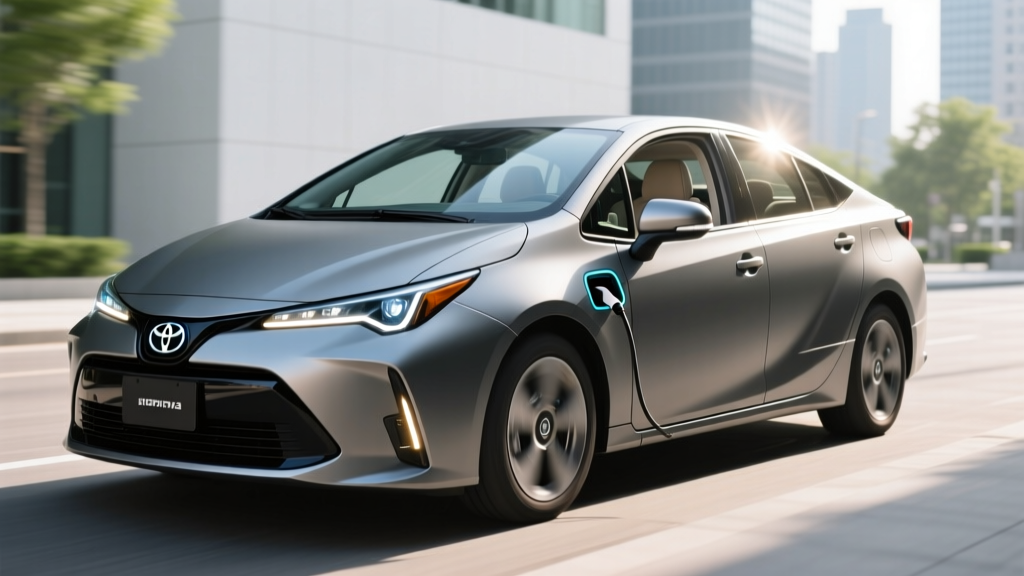
The fifth-generation Toyota Prius has shed its econobox reputation, delivering sharp styling, 196 available horsepower, and up to 57 MPG combined — all while remaining one of the most affordable hybrids on the market. For buyers who want maximum fuel efficiency without the commitment of purchasing outright, 2026 Toyota Prius hybrid lease deals present a compelling entry point. This guide breaks down current lease economics, real-world MPG expectations, powertrain specs, and whether the standard HEV or the plug-in Prius Prime better fits your daily routine.
2026 Toyota Prius Lease Pricing: What to Expect
Lease terms for the 2026 Prius vary by region, dealer inventory, and trim selection, but here is the current landscape based on manufacturer offers and market data as of early 2026:
| Trim | MSRP | Est. Monthly Lease | Due at Signing | Money Factor (est.) |
|---|---|---|---|---|
| LE (FWD) | $28,550 | $259–$299 | $2,500–$3,500 | ~0.00210 |
| XLE (FWD) | $31,995 | $309–$349 | $3,000–$3,500 | ~0.00210 |
| Limited (FWD) | $35,495 | $359–$399 | $3,000–$4,000 | ~0.00210 |
| LE AWD | $29,950 | $279–$319 | $2,500–$3,500 | ~0.00210 |
Toyota Financial Services periodically offers lease cash incentives, particularly on the LE trim, which can shave $500–$1,000 off the capitalized cost. AWD trims carry a modest premium. Always confirm the adjusted cap cost, residual percentage (typically 52–56% for 36 months), and any dealer-installed accessories rolled into the lease — these affect your true monthly payment more than the advertised sticker.
HEV vs PHEV: Standard Prius or Prius Prime?
Toyota sells two electrified Prius models. Confusing them is easy, so here is the core distinction:
Conventional Hybrid (HEV) — Toyota Prius
The standard Prius is a self-charging hybrid. It has a small 1.0 kWh lithium-ion battery that recovers energy from braking and the gas engine. You never plug it in. It simply runs on gasoline, using the electric motor to assist and boost efficiency.
Plug-In Hybrid (PHEV) — Toyota Prius Prime
The Prius Prime has a larger 13.6 kWh battery and a charge port. You can plug it into a standard 120V outlet or a 240V Level 2 charger. It drives up to 44 miles on electricity alone before the gas engine engages, functioning as a regular hybrid afterward.
| Spec | Prius (HEV) | Prius Prime (PHEV) |
|---|---|---|
| Powertrain | 2.0L I4 + electric motor | 2.0L I4 + electric motor |
| Combined HP | 196 hp | 220 hp |
| Battery (usable) | ~1.0 kWh Li-ion | 13.6 kWh Li-ion |
| Electric-only range | N/A | 44 miles (EPA) |
| EPA Combined MPG/MPGe | 57 MPG (LE FWD) | 52 MPG / 127 MPGe |
| Plug-in required? | No | Optional (but recommended) |
| DC fast charging | No | No |
| Level 2 charge time (0–100%) | N/A | ~4 hours (240V) |
| 0–60 mph | 7.0 sec (FWD) | 6.6 sec |
| Base MSRP | $28,550 | $33,445 |
Fuel Economy: EPA Numbers and Real-World MPG
The EPA rates the 2026 Prius LE FWD at 57 MPG city / 56 MPG highway / 57 MPG combined, per fueleconomy.gov. AWD trims drop slightly to 53 MPG combined. The Prius Prime achieves 52 MPG combined once the battery depletes, plus a 127 MPGe rating during electric operation.
| Trim | City | Highway | Combined |
|---|---|---|---|
| LE (FWD) | 57 | 56 | 57 |
| XLE / Limited (FWD) | 52 | 52 | 52 |
| LE (AWD-e) | 53 | 54 | 53 |
| Prime SE (PHEV) | 127 MPGe (electric) / 52 MPG (gas) | 44 mi EV range | |
Real-World MPG: What Owners Actually Report
Hybrids shine in stop-and-go traffic where regenerative braking recharges the battery constantly. In real-world city driving, many Prius owners report exceeding the EPA city estimate — 60+ MPG is achievable in warm-weather urban commutes. Highway driving at sustained 75+ MPH drops efficiency to roughly 48–52 MPG due to increased aerodynamic drag and reduced regen opportunity.
Cold weather (below 35°F) reduces MPG by approximately 10–15% as the engine runs longer for cabin heat and battery conditioning. Expect roughly 48–50 MPG combined from an LE FWD during winter months in northern climates. These are modest penalties compared to the 20–30% range loss battery-electric vehicles experience in similar conditions.
Powertrain and Performance
The 2026 Prius uses Toyota's fifth-generation hybrid system pairing a 2.0-liter Dynamic Force four-cylinder engine with a front-mounted electric motor. The FWD powertrain produces 196 combined horsepower — a massive upgrade from the 121 hp in the fourth-generation model. AWD-e trims add a rear-axle electric motor for all-weather traction, though output remains 196 hp.
The Prius Prime bumps combined output to 220 hp thanks to a more powerful drive motor and the larger battery's higher discharge rate. The 0–60 time of 6.6 seconds puts it in hot-hatch territory, making it the quickest Prius ever sold. The CVT-style e-CVT transmission delivers smooth, linear acceleration without the rubber-band sensation of older generations.
| Category | Specification |
|---|---|
| Engine | 2.0L DOHC 4-cyl, 150 hp / 139 lb-ft |
| Electric Motor (front) | 83 kW (111 hp) |
| Net System Power | 196 hp |
| Transmission | Electronically controlled CVT (e-CVT) |
| 0–60 mph | 7.0 seconds |
| Battery | ~1.0 kWh lithium-ion |
| EPA Combined MPG | 57 |
| Fuel Tank | 11.4 gallons |
| Total Driving Range | ~650 miles |
| Cargo Volume | 20.3 cu ft (rear seats up) |
| Curb Weight | ~3,097 lbs |
Hybrid Battery Warranty and Longevity
Battery lifespan remains the top concern for hybrid shoppers. Toyota covers the Prius hybrid battery for 10 years or 150,000 miles (whichever comes first) in all 50 states, reflecting the California Air Resources Board (CARB) standard that Toyota applies nationally. This warranty covers any defect or capacity loss that causes a malfunction — not normal, gradual degradation.
Toyota Hybrid Battery Warranty at a Glance
- Hybrid battery: 10 years / 150,000 miles
- Hybrid system components: 8 years / 100,000 miles
- Basic bumper-to-bumper: 3 years / 36,000 miles
- Powertrain: 5 years / 60,000 miles
How Long Does a Prius Battery Actually Last?
Real-world data from fleet operators and long-term owners shows that modern Toyota hybrid batteries routinely last 150,000–200,000+ miles before significant degradation. The lithium-ion pack in the fifth-generation Prius is more thermally stable than the older nickel-metal hydride units. If replacement is eventually needed out of warranty, a refurbished Prius hybrid battery costs approximately $2,000–$3,500 installed, while a new OEM battery runs $3,500–$5,000 at a dealership. Given the 10-year warranty and typical ownership cycles, most lessees will never face this expense.
Tax Credits and Incentives: HEV vs PHEV
Here is where the distinction between the standard Prius (HEV) and Prius Prime (PHEV) matters most for your wallet:
Standard Prius (HEV)
The conventional Prius does not qualify for the federal §30D clean vehicle tax credit. That credit applies only to plug-in vehicles with a minimum battery capacity of 7 kWh. No federal purchase or lease incentive applies. Some states offer modest hybrid rebates — check your state energy office for current programs.
Prius Prime (PHEV)
The 2026 Prius Prime, with its 13.6 kWh battery, may qualify for up to $3,750 under the IRS §30D credit, depending on critical-mineral and battery-component sourcing requirements that shift annually. Full $7,500 eligibility is unlikely due to component-sourcing restrictions. Key constraints per irs.gov:
- MSRP cap: Vehicle must be under $55,000 (sedans) — all Prius Prime trims qualify
- Buyer income cap: AGI must not exceed $150,000 (single) / $300,000 (joint)
- Battery sourcing: Critical mineral and component requirements phase in annually; check the IRS eligible-vehicle list at the time of purchase
- Point-of-sale transfer: The credit can be applied as a down-payment reduction at the dealer, if eligible
- Lease loophole: Leased PHEVs may benefit from the commercial clean vehicle credit (§45W) passed through as a lower lease payment, regardless of buyer income or sourcing — confirm with your dealer and tax professional
For lease deals specifically, the §45W commercial credit pathway is significant. When you lease a Prius Prime, the leasing company (Toyota Financial Services) technically owns the vehicle and may claim the commercial credit, often passing savings through as a reduced cap cost. This "lease loophole" can make a Prime lease more attractive than a purchase for buyers who exceed income caps or whose vehicles don't meet sourcing rules. Consult a tax professional before relying on this.
Prius Prime PHEV: Electric-Only Range and Charging
If you are considering the Prius Prime over the standard hybrid, the electric-only range and charging logistics matter:
The EPA rates the 2026 Prius Prime SE at 44 miles of electric-only range. The XSE and XSE Premium trims, with larger 19-inch wheels, drop to approximately 40 miles. This range covers most daily commutes entirely on electricity — the average American drives roughly 37 miles per day, per Federal Highway Administration data.
Charging the 13.6 kWh battery is straightforward:
| Level | Power | 0–100% Time | Notes |
|---|---|---|---|
| Level 1 (120V household) | ~1.4 kW | ~11 hours | Overnight top-up; sufficient for low-mileage drivers |
| Level 2 (240V) | ~3.3 kW (onboard limit) | ~4 hours | Home wall charger or public L2 |
| DC Fast Charge | N/A | N/A | Prius Prime does NOT support DC fast charging |
The lack of DC fast charging is a limitation for road-trip charging but irrelevant for daily use — most Prime owners charge at home overnight and rarely use public infrastructure. The 3.3 kW onboard charger is relatively slow by modern standards but adequate for a battery this size.
Who Should Choose the Prius HEV, Prius Prime, or a Full EV?
Choose the Standard Prius (HEV) If:
- You want the lowest possible monthly payment and simplest ownership
- You cannot charge at home or at work (apartment living, street parking)
- You drive a mix of city and highway with no predictable short commute
- You want proven, low-maintenance reliability with no plug-in routine
- Your budget starts around $28,500 MSRP or ~$259/month lease
Choose the Prius Prime (PHEV) If:
- You have home or workplace charging and a commute under 44 miles
- You want EV-like daily driving with gas-engine freedom for road trips
- You want to capture potential federal tax credits (via purchase or lease)
- You value the extra 24 hp and quicker acceleration
- You are willing to pay ~$4,900 more MSRP for electric-range capability
Choose a Full Battery EV (e.g., Tesla Model 3, Hyundai Ioniq 6) If:
- You have reliable home Level 2 charging
- You want zero tailpipe emissions and minimal moving parts
- Your daily driving exceeds 44 miles but stays under 300 miles
- You qualify for the full $7,500 federal EV tax credit on an eligible model
- You are ready to plan around DC fast charging for longer road trips
Prius HEV — Pros
- Best-in-class 57 MPG combined (LE trim)
- No charging infrastructure needed
- Lowest MSRP in the Prius lineup
- 10-year/150,000-mile hybrid battery warranty
- ~650-mile total range between fill-ups
- Strong reliability track record
Prius HEV — Cons
- No federal tax credit eligibility
- XLE/Limited trims drop to 52 MPG combined
- Rear-seat headroom tight for taller passengers
- No plug-in electric-only mode
- Cargo space reduced vs. prior generations (20.3 cu ft)
Reliability and Ownership Costs
The Prius nameplate carries one of the strongest reliability records in the automotive industry. Toyota's hybrid system has been refined over 25+ years of continuous production, with the e-CVT transmission containing no belts, clutches, or bands to wear out. The regenerative braking system significantly extends brake pad life — 80,000–100,000 miles on original pads is common.
According to IIHS, the current-generation Prius earns top marks in crashworthiness testing. Toyota Safety Sense 3.0 comes standard on every trim, including pre-collision braking, lane departure alert with steering assist, full-speed adaptive cruise control, and lane tracing assist. These are SAE Level 1–2 driver-assistance features — the driver must remain fully engaged at all times.
For a 36-month lease, maintenance costs are minimal: Toyota includes two years / 25,000 miles of complimentary maintenance (oil changes, tire rotations, inspections). After that, expect roughly $100–$150 per visit for basic hybrid service. Insurance premiums for the Prius tend to run 5–10% below the compact-car average due to the model's safety record and modest power output.
Frequently Asked Questions
How many MPG does the 2026 Toyota Prius get?
The EPA rates the Prius LE FWD at 57 city / 56 highway / 57 combined MPG. The XLE and Limited trims achieve 52 combined. AWD-e trims rate at 53 combined. Real-world city driving often exceeds EPA estimates, while sustained highway driving above 75 MPH and cold weather can reduce MPG by 10–15%.
How far can the Prius Prime go on electric only?
The EPA rates the 2026 Prius Prime SE at 44 miles of electric-only range. The XSE trims achieve approximately 40 miles due to larger wheels. Once the battery depletes, the Prime operates as a conventional hybrid achieving 52 MPG combined, giving a total range exceeding 500 miles.
Does the Toyota Prius qualify for any tax credit?
The standard Prius HEV does not qualify for the federal §30D clean vehicle credit — that applies only to plug-in vehicles. The Prius Prime PHEV may qualify for up to $3,750 depending on battery-sourcing rules and buyer income limits. Leased Primes may benefit from the §45W commercial credit passed through as a lower lease payment. Always verify current eligibility on irs.gov before committing.
Is the Prius hybrid battery reliable and what does replacement cost?
Toyota's hybrid batteries routinely last 150,000–200,000+ miles. The battery is warrantied for 10 years / 150,000 miles. If out-of-warranty replacement is eventually needed, expect $2,000–$3,500 for a refurbished unit or $3,500–$5,000 for a new OEM battery installed. Most lessees will never encounter this cost during a typical 3-year lease.
Should I lease the standard Prius or the Prius Prime?
If you have home or workplace charging and a commute under 44 miles, the Prius Prime lets you drive electric daily while keeping gas-engine flexibility — and may offer tax-credit advantages through leasing. If you cannot charge at home, want the lowest payment, or drive unpredictable long distances, the standard Prius HEV at 57 MPG combined is the simpler, more affordable choice.
Does the Prius hybrid need to be plugged in?
No. The standard Prius HEV charges its battery entirely through regenerative braking and the gasoline engine. You never plug it in. Only the Prius Prime PHEV has a charge port and benefits from plugging in — though it can still operate as a regular hybrid if you never charge it.