The Only Plug-In Hybrid Minivan: Is the Pacifica Hybrid Worth Leasing?
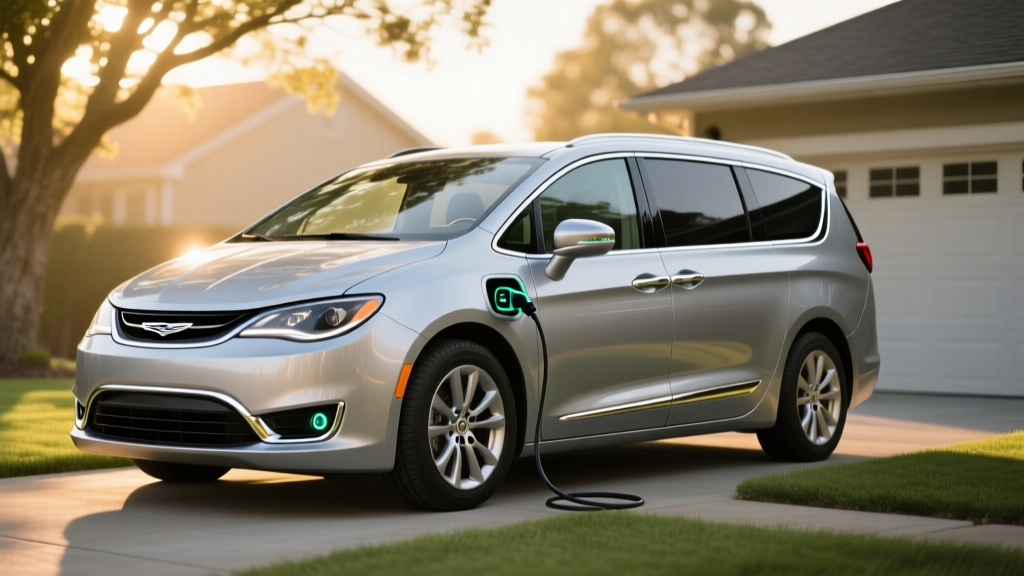
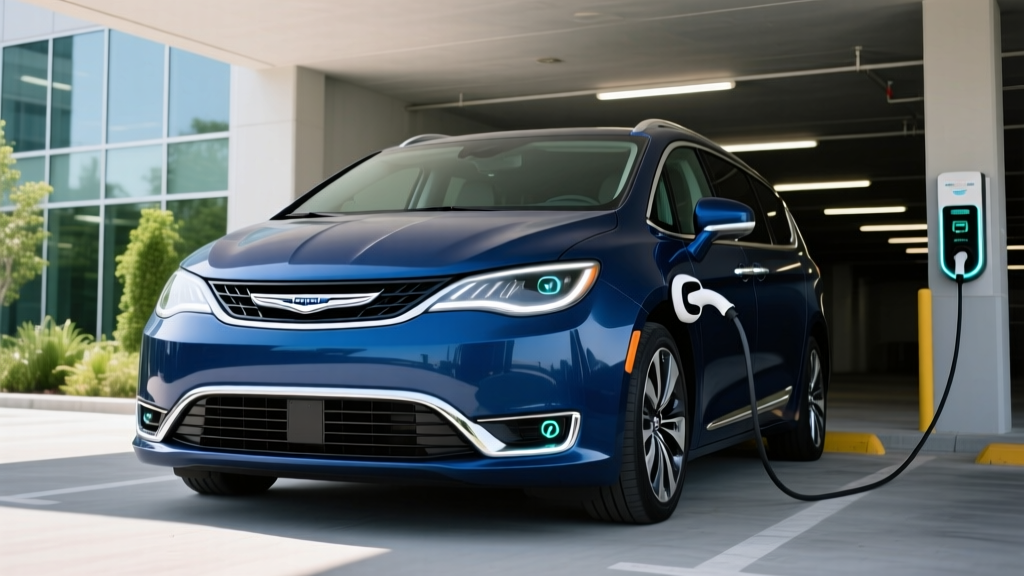
When you're researching Chrysler Pacifica Hybrid lease deals, you're looking at a vehicle that occupies a unique niche: the only plug-in hybrid minivan on the market. The 2026 Pacifica Hybrid pairs a 3.6-liter V6 with two electric motors and a 16 kWh battery pack, delivering 262 combined horsepower and an EPA-estimated 32 miles of electric-only driving. For families who want to handle school runs and grocery trips on electricity but need gas-powered flexibility for road trips, it's a compelling proposition. But lease deals require careful scrutiny — monthly payments, mileage caps, and residual values all matter, and the Pacifica Hybrid's premium pricing over its gas-only sibling changes the math.
| Attribute | Specification |
|---|---|
| Powertrain | 3.6L V6 + dual electric motors (eFlite CVT) |
| Combined Horsepower | 262 hp |
| Battery Capacity | 16 kWh (lithium-ion) |
| Electric-Only Range (EPA) | 32 miles |
| Total Combined Range | ~460 miles |
| EPA MPGe (EV mode) | 82 MPGe |
| EPA MPG (gas only, combined) | 30 MPG |
| DC Fast Charging | No — Level 2 AC only |
| Level 2 Charge Time (240V) | ~2 hours |
| Level 1 Charge Time (120V) | ~14 hours |
| Starting MSRP (Pinnacle) | ~$51,495 |
| Battery Warranty | 10 years / 100,000 miles |
Understanding the Pacifica Hybrid: PHEV vs. Conventional Hybrid
Before evaluating any lease deal, it's critical to understand what you're getting. The Pacifica Hybrid is a plug-in hybrid (PHEV), not a conventional hybrid (HEV) like a Toyota Sienna Hybrid. The distinction matters for your daily routine and your wallet.
| Feature | Pacifica Hybrid (PHEV) | Toyota Sienna (HEV) |
|---|---|---|
| Plug-in Charging | Yes — plug in to unlock 32-mi EV range | No — battery charges via regen/ICE only |
| Electric-Only Driving | 32 miles at up to ~75 mph | Less than 1 mile at low speeds |
| EPA Combined MPG (gas) | 30 MPG | 36 MPG |
| Battery Size | 16 kWh | ~1.6 kWh |
| Ideal For | Short daily commutes + long road trips | Consistent fuel savings without plugging in |
The conventional hybrid approach (HEV) is simpler — you never plug in, and the car manages the battery itself. The PHEV approach gives you a meaningful electric-only window, but only if you actually charge it. A Pacifica Hybrid that never gets plugged in is just a heavier, less efficient version of a regular minivan, delivering around 30 MPG combined instead of the Sienna's 36 MPG. If your lease deal doesn't come with a home charging plan, you're leaving money on the table.
Fuel Economy: Real-World MPG vs. EPA Estimates
| Driving Mode | City | Highway | Combined |
|---|---|---|---|
| Charge-Sustaining (Gas Only) | 29 MPG | 30 MPG | 30 MPG |
| Charge-Depleting (EV Mode) | 82 MPGe (32-mile range) | ||
The EPA rates the Pacifica Hybrid at 30 MPG combined when operating as a hybrid (battery depleted). In real-world driving, PHEVs like this one often exceed EPA estimates in city driving, where regenerative braking recaptures more energy. Expect 31–33 MPG in stop-and-go urban conditions, but closer to 27–29 MPG on sustained highway runs at 70+ mph, where the V6 is doing more of the work.
The 82 MPGe figure applies only when you're driving within the 32-mile electric window. MPGe (miles per gallon equivalent) converts electricity consumption into a gasoline-equivalent metric for comparison purposes. In practical terms, a full charge uses roughly 12–13 kWh from the wall, costing about $1.50–$2.50 depending on your local electricity rate — far cheaper than the gallon of gas that would give you equivalent range.
Charging the Pacifica Hybrid: What Leaseholders Need to Know
The Pacifica Hybrid's 16 kWh battery supports Level 1 (120V household outlet) and Level 2 (240V) AC charging. It does not support DC fast charging — a common limitation among PHEVs that prioritize cost and packaging over rapid recharge capability.
| Level | Power (kW) | Full Charge Time | Practical Notes |
|---|---|---|---|
| Level 1 (120V) | ~1.4 kW | ~14 hours | Adequate for overnight if you drive <25 mi/day |
| Level 2 (240V) | ~7.2 kW | ~2 hours | Recommended for daily charging; requires 240V outlet or home charger |
For leaseholders, the charging question is practical: do you have access to a 240V outlet at home or work? A standard Level 2 home charger installation typically costs $500–$1,800 including equipment and electrician labor, depending on panel capacity and run length. If your lease is 36 months, that installation cost amortizes to roughly $15–$50/month — a small premium for daily electric-only driving.
Level 1 charging from a standard outlet works, but 14 hours means you'll need to plug in immediately when you get home to ensure a full battery by morning. If your daily electric-only driving is under 25 miles, Level 1 may suffice, but Level 2 is the practical standard for PHEV ownership.
2026 Pacifica Hybrid Pricing and Lease Deal Economics
The 2026 Chrysler Pacifica Hybrid is offered in Select and Pinnacle trims, with MSRPs ranging from approximately $51,495 to $55,000+ with options. This represents a significant premium over the gas-only Pacifica, which starts in the low $40,000s.
Typical lease deals on the Pacifica Hybrid in early 2026 have been advertised in the $550–$750/month range for 36-month terms with 10,000–12,000 annual miles, depending on trim, down payment, and regional incentives. Stellantis periodically offers lease cash or loyalty bonuses that can reduce these figures. Always compare the total lease cost (monthly × term + down payment + disposition fee) rather than the headline monthly number.
Does the Pacifica Hybrid Qualify for Federal Tax Credits?
Under current IRS §30D Clean Vehicle Credit rules, the Pacifica Hybrid's eligibility for the full $7,500 federal tax credit depends on battery component sourcing and critical mineral requirements that have tightened significantly. As of 2026, many PHEVs have lost partial or full credit eligibility due to foreign entity of concern (FEOC) restrictions on battery components and critical minerals.
Key considerations for tax credit eligibility:
- The credit is subject to buyer income caps ($150K single / $300K joint AGI)
- MSRP must be under $80,000 for vans/SUVs (Pacifica Hybrid qualifies)
- Battery sourcing requirements may reduce or eliminate the credit amount
- Point-of-sale transfer is available if eligible, reducing your effective lease cost
- For leases, the credit technically goes to the lessor (Stellantis Financial), who may or may not pass savings through — ask your dealer explicitly
Always verify current eligibility on the fueleconomy.gov tax credit database before signing. Tax rules shift, and a credit that was available last quarter may not be today. Consult a tax professional for your specific situation.
Battery Longevity, Warranty, and Replacement Costs
For leaseholders, the battery warranty is largely an academic concern — a 36-month lease won't come close to exhausting a 10-year warranty. But if you're considering a longer lease (48–60 months) or planning to purchase at lease-end, it matters.
Pacifica Hybrid battery packs have shown reasonable durability in real-world use. Unlike full EVs with 80+ kWh batteries under heavy cycling demands, a PHEV's 16 kWh pack experiences shallower charge cycles and less thermal stress. Chrysler has not published official replacement costs, but industry estimates for PHEV battery replacements in this class range from $6,000–$9,000 if needed out of warranty. Given the 10-year coverage, this is a low-probability expense during typical ownership.
The conventional hybrid components (regenerative braking system, electric motors, eFlite transmission) carry the same powertrain warranty coverage and have proven reliable across Stellantis's hybrid fleet.
Who Should Lease the Pacifica Hybrid (and Who Shouldn't)?
- Only PHEV minivan available — no direct competitor
- 32-mile EV range covers most daily school/activity runs
- Stow 'n Go seating (second row only; battery eliminates third-row stow)
- AWD available on gas Pacifica, but Hybrid is FWD only — note this tradeoff
- Strong infotainment (Uconnect 5) and available rear-seat entertainment
- Significant fuel savings if charged daily (32 mi EV ≈ $1.50 vs $4+ for gas)
- No DC fast charging — irrelevant for home charging, limiting on road trips
- FWD only — no AWD option (gas Pacifica offers AWD)
- Third-row seats don't fold into the floor (battery occupies that space)
- Premium pricing: ~$8,000–$10,000 more than gas Pacifica
- 30 MPG gas-only is lower than Toyota Sienna Hybrid's 36 MPG
- Tax credit eligibility uncertain under current sourcing rules
- Your daily round-trip commute is under 30 miles and you can charge at home
- You need minivan space but want to minimize fuel costs on local driving
- You take 2–3 road trips per year and don't want to plan around EV charging
- You value being able to drive on electricity without full EV range anxiety
- You can install a Level 2 charger and your daily driving is under 250 miles
- You want the lowest operating costs and zero tailpipe emissions
- You're ready to plan road trips around DC fast-charging stops
- You can't charge at home or work (a PHEV you never plug in wastes money)
- You need AWD for snow-belt driving (gas Pacifica offers it; Hybrid does not)
- You want maximum cargo flexibility with full Stow 'n Go seating (gas Pacifica)
Real-World Ownership Costs: Pacifica Hybrid vs. Gas Pacifica
The lease payment is only part of the picture. Here's how the Pacifica Hybrid stacks up on operating costs over a typical 36-month, 36,000-mile lease, assuming daily charging and a 25-mile electric commute:
| Cost Factor | Pacifica Hybrid (Charged Daily) | Gas Pacifica (22 MPG) |
|---|---|---|
| Fuel / Electricity | ~$2,800 (mix of electricity + gas) | ~$5,900 (at $3.60/gal avg) |
| Oil Changes | ~$300 (fewer engine hours) | ~$540 |
| Insurance (est.) | ~$5,400 | ~$4,800 |
| Total Operating Cost | ~$8,500 | ~$11,240 |
| Savings | ~$2,740 over 3 years | |
The fuel savings are meaningful — roughly $2,700 over three years if you charge consistently. However, the Pacifica Hybrid's higher MSRP means lease payments will be proportionally higher than a gas Pacifica. If the monthly lease premium exceeds $75/month, the fuel savings may not fully offset the cost difference. Run the numbers with your specific dealer quote.
Frequently Asked Questions
How many MPG does the Pacifica Hybrid get?
The EPA rates the 2026 Pacifica Hybrid at 29 city / 30 highway / 30 combined MPG when running on gasoline. In electric mode, it achieves 82 MPGe over its 32-mile range. Real-world city driving often yields 31–33 MPG thanks to regenerative braking, while highway driving at 70+ mph typically returns 27–29 MPG.
How far can the Pacifica Hybrid go on electric only?
The EPA estimates 32 miles of electric-only range. In cold weather or sustained highway driving, expect 22–28 miles. For daily commutes under 25 miles round-trip, most owners can cover their driving entirely on electricity with nightly charging.
Is the Pacifica Hybrid reliable?
The Pacifica Hybrid's powertrain has been in production since the 2017 model year with iterative improvements. The eFlite transmission and dual-motor setup have proven durable, and the 10-year/100,000-mile battery warranty provides long-term protection. Some early model years (2017–2019) had software-related recalls for battery management; these were addressed via dealer updates. Current models benefit from those fixes.
What does a Pacifica Hybrid battery replacement cost?
Out-of-warranty replacement is estimated at $6,000–$9,000 including labor, though this is rare within the 10-year warranty period. The warranty covers capacity loss below ~70%, not just complete failure. For leaseholders on a 36-month term, battery replacement cost is effectively a non-issue.
Does the Pacifica Hybrid qualify for a federal tax credit?
Eligibility for the §30D Clean Vehicle Credit (up to $7,500) depends on current battery sourcing requirements under IRS rules. As of 2026, FEOC restrictions on critical minerals and battery components have reduced eligibility for many PHEVs. Check fueleconomy.gov for the latest status, and note that on a lease, the credit goes to the lessor — confirm with your dealer whether savings are passed through to your monthly payment.
Can the Pacifica Hybrid DC fast charge?
No. The Pacifica Hybrid supports only Level 1 (120V) and Level 2 (240V) AC charging. A full charge on Level 2 takes approximately 2 hours. This is typical for PHEVs — the smaller battery doesn't justify the cost and weight of DC fast-charging hardware.
Should I lease or buy the Pacifica Hybrid?
Leasing makes sense if you want lower monthly payments, plan to upgrade every 3 years, and want to stay well within the battery warranty period. Buying makes sense if you drive high annual miles (leases typically cap at 10K–15K/year), want to capture any available tax credit directly, or plan to keep the vehicle 7+ years. The Hybrid's fuel savings compound over time, favoring longer ownership.
Sources: EPA Fuel Economy — Chrysler Pacifica Hybrid, IRS §30D Clean Vehicle Credit, Chrysler Pacifica Hybrid Official Specifications.