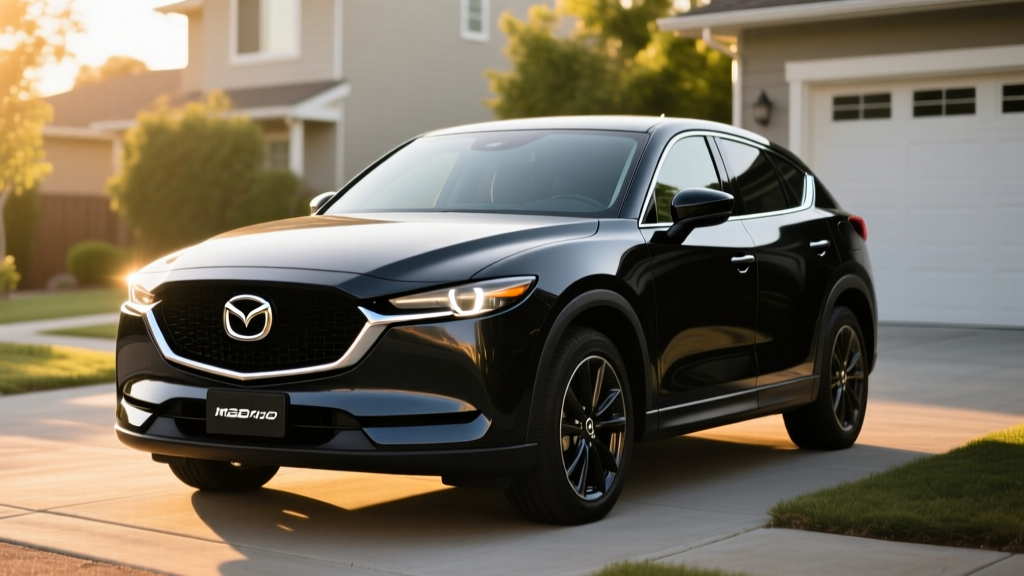
The Mazda CX-5 has long been a favorite compact SUV for driving enthusiasts who refuse to settle for numb steering and CVT drone. For 2026, Mazda adds a conventional hybrid powertrain to the lineup, borrowing Toyota's proven Hybrid Synergy Drive architecture while wrapping it in Mazda's premium interior and sharper sheet metal. The 2026 Mazda CX-5 Hybrid targets buyers who want better fuel economy without plugging in, trading the turbocharged punch of the CX-5 Turbo for meaningful gains at the pump.
This guide breaks down everything you need to know: real-world MPG versus the EPA sticker, the HEV versus PHEV distinction, battery longevity, pricing, tax-credit eligibility, and whether this hybrid compact SUV earns a spot in your driveway.
2026 Mazda CX-5 Hybrid: Powertrain and Performance Specs
The CX-5 Hybrid pairs a 2.5-liter Atkinson-cycle four-cylinder engine with an electric motor integrated into a planetary gearset — the same Toyota-sourced architecture found in the RAV4 Hybrid. Mazda tunes the system for a combined output of 215 horsepower and routes power through an electronically controlled CVT (eCVT) to standard i-Activ all-wheel drive.
| Specification | Value |
|---|---|
| Powertrain | 2.5L I4 Atkinson-cycle + electric motor (HEV) |
| Combined Horsepower | 215 hp |
| Transmission | eCVT (planetary gearset) |
| Drivetrain | AWD (standard) |
| EPA MPG (City / Hwy / Combined) | 38 / 34 / 36 |
| Hybrid Battery | 1.6 kWh nickel-metal hydride (NiMH) |
| 0–60 mph (est.) | 7.4 seconds |
| Towing Capacity | 1,500 lbs |
| Base MSRP (Select trim) | $32,950 |
| Warranty (Hybrid Battery) | 10 years / 150,000 miles |
Unlike the CX-5 Turbo (256 hp, 22 MPG combined), the Hybrid sacrifices some straight-line urgency for a 64% improvement in fuel economy. The eCVT eliminates shift shock entirely, and the electric motor fills in torque at low RPMs, making the CX-5 Hybrid feel surprisingly responsive around town despite its modest horsepower figure.
EPA MPG vs. Real-World Fuel Economy
The EPA rates the 2026 CX-5 Hybrid at 38 city / 34 highway / 36 combined MPG with standard AWD. These numbers align closely with the mechanically similar RAV4 Hybrid (41/38/39 FWD; 38/35/37 AWD), though Mazda's slightly heavier body and less aero-efficient profile trim a few MPG off the top.
| Model | City MPG | Highway MPG | Combined MPG |
|---|---|---|---|
| Mazda CX-5 Hybrid AWD | 38 | 34 | 36 |
| Toyota RAV4 Hybrid AWD | 38 | 35 | 37 |
| Honda CR-V Hybrid AWD | 40 | 34 | 37 |
| Hyundai Tucson Hybrid AWD | 37 | 36 | 37 |
| Mazda CX-5 Turbo AWD (gas) | 22 | 27 | 24 |
Source: fueleconomy.gov (EPA estimates).
HEV vs. PHEV vs. EV: Which Powertrain Fits You?
The CX-5 Hybrid is a conventional hybrid (HEV) — it cannot plug in, has no electric-only driving mode beyond brief low-speed assist, and refuels exclusively at a gas station. This is a deliberate choice by Mazda for buyers who lack home-charging access or who want electrified efficiency without lifestyle changes.
HEV vs. PHEV vs. BEV — Quick Comparison
| Feature | HEV (CX-5 Hybrid) | PHEV (e.g., RAV4 Prime) | BEV (e.g., Tesla Model Y) |
|---|---|---|---|
| Plug in to charge? | No | Yes | Yes |
| Electric-only range | None (motor assist only) | 30–42 mi typical | 250–330 mi typical |
| Fuel/energy source | Gasoline only | Gasoline + electricity | Electricity only |
| Home charging needed? | No | Recommended (Level 2) | Essential |
| Federal tax credit (§30D) | Not eligible | Up to $7,500* | Up to $7,500* |
| Maintenance | Oil changes + standard | Oil changes + standard | Minimal (no oil, fewer fluids) |
*§30D credit eligibility depends on MSRP caps, buyer income limits, and battery-component/critical-mineral sourcing rules. See IRS.gov for current-year requirements.
Choose the CX-5 Hybrid (HEV) if: You live in an apartment or street-park without charging access, you want better MPG without changing your refueling habits, and your daily driving is a mix of city and highway.
Consider a PHEV instead if: You can install a Level 2 home charger, your commute is under 40 miles round-trip, and you want to drive mostly on electricity while retaining a gas engine for road trips.
Go full BEV if: You have reliable home charging, your daily driving is under 250 miles, and you want the lowest per-mile energy cost and minimal maintenance.
Pricing, Trims, and Tax-Credit Eligibility
The 2026 Mazda CX-5 Hybrid launches in two trims:
- Select Hybrid: $32,950 MSRP (includes AWD, 10.25-inch infotainment, wireless CarPlay/Android Auto, power liftgate, heated front seats)
- Premium Hybrid: $37,400 MSRP (adds Bose 10-speaker audio, leather, heated steering wheel, head-up display, 360° camera, ventilated front seats)
Both trims include Mazda's i-Activsense safety suite (adaptive cruise, lane-keep assist, automatic emergency braking, blind-spot monitoring) as standard equipment.
Federal Tax Credit Status
The CX-5 Hybrid is a conventional hybrid (HEV) and does not qualify for the federal §30D Clean Vehicle Credit. That credit applies only to plug-in electric vehicles (PHEVs and BEVs) with battery capacities of at least 7 kWh. Since the CX-5 Hybrid uses a small 1.6 kWh NiMH pack solely for motor assist, it falls outside §30D eligibility entirely.
Some states offer rebates for conventional hybrids, but these are increasingly rare as incentive programs shift toward plug-in vehicles. Check your state energy office or AFDC state-law database for any local hybrid incentives.
Battery Longevity, Warranty, and Replacement Cost
The CX-5 Hybrid uses a 1.6 kWh nickel-metal hydride (NiMH) battery — the same chemistry that has powered millions of Toyota and Lexus hybrids over two decades. NiMH packs are less energy-dense than lithium-ion but are extremely tolerant of the shallow charge-discharge cycles that hybrids use (typically cycling between 40% and 80% state of charge).
Expected lifespan: Real-world data from Toyota's Hybrid Synergy Drive platform — which shares this architecture — shows hybrid batteries routinely lasting 150,000–200,000+ miles before any meaningful capacity loss. Complete failure within the warranty period is uncommon; gradual capacity fade (reducing MPG by 1–3 MPG over 10+ years) is more typical.
Replacement cost: If the hybrid battery does require replacement out of warranty, expect to pay $2,000–$3,500 for a new OEM pack, or $1,000–$1,800 for a refurbished unit from a reputable supplier. Independent hybrid shops can perform the swap in 2–3 hours. Given the 10-year/150,000-mile warranty and the NiMH pack's track record, most original owners will never face this expense.
Driving Impressions and Daily Ownership
Mazda's tuning philosophy carries over to the Hybrid: the steering is weighted and communicative, body roll is well-controlled for a compact SUV, and the cabin is noticeably quieter at highway speeds than rivals like the Tucson Hybrid or RAV4 Hybrid. The eCVT avoids the rubber-band feel of traditional belt-driven CVTs — the planetary gearset provides seamless power delivery without simulated "shifts."
The trade-off is a firmer ride than the Honda CR-V Hybrid, which prioritizes plushness. Mazda's choice of 19-inch wheels on the Premium trim adds some road harshness on rough pavement.
Cargo and practicality: The hybrid battery sits under the rear seats, preserving the CX-5's standard 30.8 cubic feet of cargo space behind the second row (59.3 cu ft with seats folded). No frunk — this is a conventional powertrain layout.
Pros
- 36 MPG combined with AWD — a 50% gain over the gas CX-5
- Premium interior materials rival entry-luxury SUVs
- Proven Toyota-sourced hybrid system with strong reliability data
- 10-year/150,000-mile hybrid battery warranty
- No charging infrastructure required
- Responsive low-speed torque from electric motor assist
Cons
- No federal tax credit (HEV, not PHEV/BEV)
- 1,500-lb towing capacity (vs. 2,000 lbs for gas CX-5)
- Only two trims available at launch — limited configuration
- Highway MPG drops at sustained 75+ mph
- No electric-only driving mode for zero-emission zones
- Firmer ride on 19-inch Premium wheels
Should You Buy the 2026 Mazda CX-5 Hybrid?
The 2026 CX-5 Hybrid fills a specific niche: drivers who want a premium-feeling compact SUV with strong fuel economy but who cannot (or will not) plug in. If you're cross-shopping the RAV4 Hybrid, CR-V Hybrid, and Tucson Hybrid, the Mazda wins on interior quality and driving dynamics while giving up 1–2 MPG to the most efficient rivals.
If you have access to home charging and a short commute, a PHEV like the RAV4 Prime (42 miles electric-only, 94 MPGe) will save more fuel and may qualify for the §30D credit. If you're ready to go fully electric, the Tesla Model Y or Hyundai Ioniq 5 offer dramatically lower per-mile energy costs. But for the plug-and-play hybrid buyer who values a premium cabin and a proven powertrain, the CX-5 Hybrid is a strong addition to Mazda's 2026 lineup.
Frequently Asked Questions
How many MPG does the 2026 Mazda CX-5 Hybrid get?
The EPA rates it at 38 city / 34 highway / 36 combined MPG with standard AWD. In real-world city driving with regenerative braking, owners commonly report 39–42 MPG. Highway fuel economy at 75+ mph typically falls to 32–33 MPG.
Does the CX-5 Hybrid need to be plugged in?
No. The CX-5 Hybrid is a conventional hybrid (HEV). It charges its small battery entirely through regenerative braking and the gasoline engine. You refuel only at a gas station, just like a standard car.
Is the CX-5 Hybrid reliable, and what does battery replacement cost?
The hybrid system is sourced from Toyota's Hybrid Synergy Drive, which has a two-decade reliability track record across millions of vehicles. Mazda covers the hybrid battery for 10 years/150,000 miles. Out-of-warranty replacement costs $2,000–$3,500 for a new OEM pack, though most packs last well beyond the warranty period.
Does the 2026 CX-5 Hybrid qualify for a federal tax credit?
No. The §30D Clean Vehicle Credit applies only to plug-in vehicles (PHEVs and BEVs) with battery capacities of at least 7 kWh. The CX-5 Hybrid's 1.6 kWh NiMH pack does not meet this threshold. Some states may offer separate hybrid rebates — check AFDC's state incentive database.
How does the CX-5 Hybrid compare to a PHEV or full EV?
An HEV like the CX-5 Hybrid requires no plug and improves MPG by ~50% over a gas-only model. A PHEV adds 30–42 miles of electric-only range but requires home charging to realize its benefits. A full BEV eliminates gasoline entirely but requires reliable charging access and a higher upfront investment. The CX-5 Hybrid is ideal for buyers without charging infrastructure who still want meaningful fuel savings.
What is the towing capacity of the CX-5 Hybrid?
The 2026 CX-5 Hybrid is rated to tow up to 1,500 pounds — adequate for a small utility trailer or a pair of dirt bikes, but less than the gas CX-5's 2,000-lb rating. If you tow regularly, the gas or turbo CX-5 may be a better fit.