Quick Verdict: Two Hybrids, Two Very Different Buyers
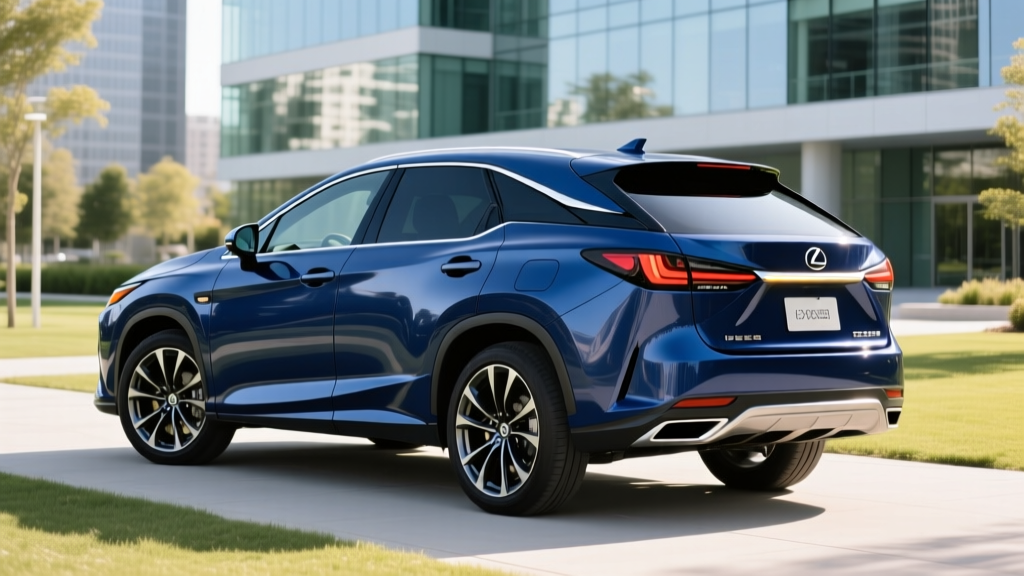
The 2026 Lexus RX Hybrid lineup splits into two distinct powertrains: the RX 350h, a conventional hybrid (HEV) that never needs plugging in, and the RX 450h+, a plug-in hybrid (PHEV) offering roughly 37 miles of electric-only driving before its gas engine kicks in. Both wear the same refined cabin and commanding road presence, but the math behind each purchase diverges sharply based on your commute, charging access, and whether you can capture federal tax incentives.
If you drive 30 miles round-trip and can charge at home, the RX 450h+ lets you burn almost no gasoline on weekdays while retaining 400+ miles of total range for road trips. If you live in an apartment, lack a garage outlet, or simply want set-it-and-forget-it efficiency, the RX 350h delivers an EPA-estimated 36 MPG combined with zero lifestyle change. Let's break down the numbers that matter.
HEV vs. PHEV: Which RX Hybrid Is Which?
Conventional Hybrid (HEV) — RX 350h: Uses a small battery (1.6 kWh) charged entirely by the gas engine and regenerative braking. You never plug it in. It simply sips less fuel than a gas-only SUV.
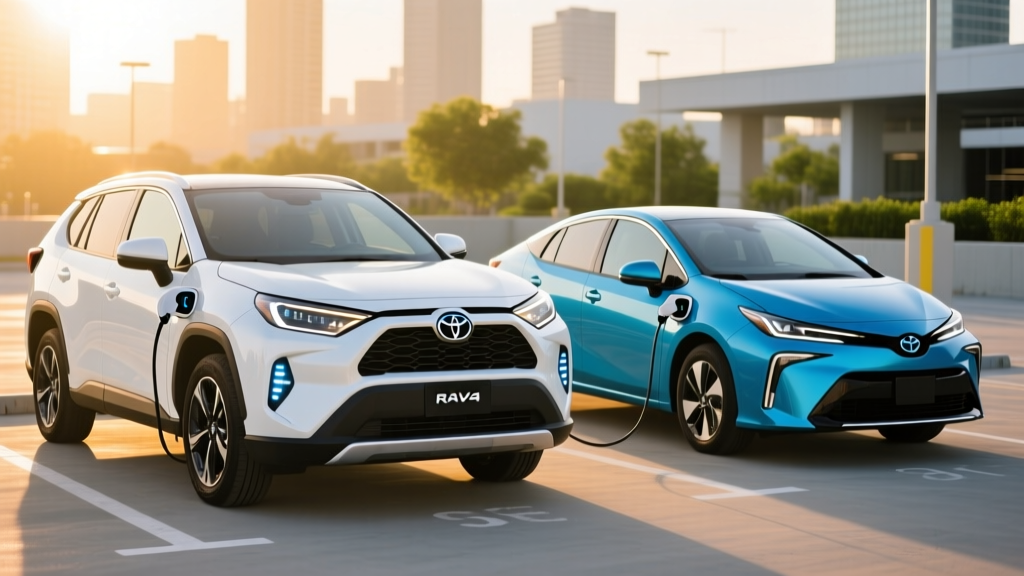
Plug-In Hybrid (PHEV) — RX 450h+: Carries a larger 18.1 kWh lithium-ion battery you can charge from a wall outlet or public charger. It drives ~37 miles on electricity alone before seamlessly switching to hybrid mode.
| Specification | RX 350h (HEV) | RX 450h+ (PHEV) |
|---|---|---|
| Powertrain | 2.5L 4-cyl + 2 electric motors (AWD) | 2.5L 4-cyl + 2 electric motors (AWD) |
| Combined Horsepower | 246 hp | 302 hp |
| 0–60 mph | 7.4 sec | 6.2 sec |
| Battery Capacity | 1.6 kWh (NiMH) | 18.1 kWh (Li-ion) |
| Electric-Only Range | N/A | 37 miles (EPA) |
| Total Range | ~560 miles | ~440 miles (elec + gas) |
| Plug-In Required? | No | Yes (for EV range benefit) |
| DC Fast Charging | N/A | No (Level 2 AC only) |
| Base MSRP | $52,710 | $64,660 |
Fuel Economy: EPA Numbers and Real-World MPG
The RX 350h posts an EPA-estimated 37 city / 34 highway / 36 combined MPG. The RX 450h+ is rated at 35 MPG combined once the battery depletes, but its real fuel-cost advantage comes from those first 37 electric miles — effectively 83 MPGe when running on battery.
| Model | City | Highway | Combined |
|---|---|---|---|
| RX 350h (HEV) | 37 MPG | 34 MPG | 36 MPG |
| RX 450h+ (PHEV, charge-depleted) | 35 MPG | 34 MPG | 35 MPG |
| RX 450h+ (charge-sustaining MPGe) | 83 MPGe (first 37 mi on battery) | ||
Real-World MPG Note: Toyota/Lexus hybrids consistently exceed EPA city estimates in stop-and-go traffic because regenerative braking recovers energy that gas cars waste as heat. Expect 38–40 MPG city in the RX 350h during warm-weather commuting. Highway efficiency drops to roughly 31–33 MPG at sustained 75+ mph speeds, where aerodynamic drag dominates and the electric motors contribute less. In winter, plan on a 3–5 MPG combined dip due to cold-start enrichment and cabin heating load.
RX 450h+ Electric-Only Range and Charging
The RX 450h+ stores 18.1 kWh of usable energy in its lithium-ion pack, good for an EPA-rated 37 miles of electric-only driving. That covers the median American one-way commute of roughly 16 miles with margin to spare — meaning many owners can complete weekday driving without the engine ever starting.
Charging is AC-only via the J1772 connector (CCS1 port). There is no DC fast-charge capability, which is typical for PHEVs in this class.
| Level | Power (kW) | 0–100% Time | Miles Added per Hour |
|---|---|---|---|
| Level 1 (120V household) | 1.4 kW | ~13 hours | ~3 mi/hr |
| Level 2 (240V, 16A) | 3.3 kW | ~5.5 hours | ~7 mi/hr |
| Level 2 (240V, 32A) | 6.6 kW | ~2.5 hours | ~15 mi/hr |
| DC Fast Charge | Not supported | ||
For most PHEV owners, overnight Level 2 charging at home is the sweet spot. A 32-amp, 240V home station fully replenishes the battery in about 2.5 hours — easily within any overnight window. If you only have a standard 120V outlet, Level 1 will still recover the full 37 miles overnight, but just barely.
Battery Warranty, Reliability, and Replacement Cost
Hybrid Battery Warranty: Lexus covers the hybrid battery in both the RX 350h and RX 450h+ for 10 years or 150,000 miles (whichever comes first) in all 50 states. This exceeds the federal minimum of 8 years/100,000 miles and is among the most generous in the segment.
Lexus (and parent company Toyota) has the longest track record of any automaker in hybrid production, dating to the 2004 RX 400h. The conventional hybrid system in the RX 350h uses proven nickel-metal hydride (NiMH) cells that are stress-tested to operate within a narrow state-of-charge window — typically 40% to 80% — which dramatically slows degradation. Failures before 150,000 miles are rare.
The RX 450h+ uses a lithium-ion pack with active thermal management. While lithium-ion chemistry is newer to Lexus hybrids, Toyota has deployed it in the RAV4 Prime since 2021 with strong durability data. The 10-year/150,000-mile warranty covers capacity loss below 70% of original.
Out-of-warranty replacement cost: If the hybrid battery does require replacement beyond the warranty period, expect roughly $3,000–$4,500 for the RX 350h NiMH pack (parts and labor) and $8,000–$12,000 for the RX 450h+ lithium-ion pack. Third-party refurbishment options for NiMH packs exist for as low as $1,500–$2,500, though these are not factory-backed.
Pricing, Trims, and Federal Tax Credit Eligibility
The 2026 RX 350h starts at $52,710 (Premium trim) and climbs to roughly $61,000 for a fully loaded Luxury model. The RX 450h+ begins at $64,660 (Premium) and tops out near $70,000.
| Trim | RX 350h MSRP | RX 450h+ MSRP |
|---|---|---|
| Premium | $52,710 | $64,660 |
| Premium+ | $54,710 | $66,660 |
| Luxury | $58,210 | $69,660 |
Does the 2026 RX Hybrid Qualify for a Federal Tax Credit?
Here's where the two powertrains diverge sharply:
- RX 350h (HEV): Conventional hybrids do not qualify for the federal §30D clean vehicle credit. That credit is reserved for plug-in vehicles with at least 7 kWh of battery capacity.
- RX 450h+ (PHEV): The RX 450h+ has an 18.1 kWh battery, exceeding the 7 kWh threshold. However, eligibility for the full $3,750–$7,500 credit depends on several IRS requirements that change frequently: critical-mineral sourcing, battery-component origin, buyer income caps ($150K single / $300K joint), and the $80,000 MSRP cap for SUVs. As of early 2026, the RX 450h+ qualifies for up to $3,750 under current critical-mineral sourcing rules. The point-of-sale transfer option lets you apply the credit directly at the dealership rather than waiting for a tax refund.
Tax Credit Caveat: Federal incentive rules under §30D are subject to legislative and regulatory changes. Always verify current eligibility on fueleconomy.gov and consult a tax professional before relying on credit amounts in your purchase decision. State incentives (e.g., California, Colorado, New York) may stack on top.
Hybrid vs. PHEV vs. Full EV: Which Fits Your Life?
Choose the RX 350h (HEV) if:
- You have no home charging access (apartment, street parking)
- You want zero behavior change — just fill up less often
- You drive 20,000+ highway miles per year (where EV range drops)
- You want the lowest entry price in the hybrid RX lineup
Choose the RX 450h+ (PHEV) if:
- You can install a Level 2 charger at home
- Your daily commute is under 40 miles round-trip
- You want EV-like silence and torque on weekdays, gas flexibility on weekends
- You qualify for the federal tax credit, narrowing the price gap with the 350h
Consider a Full EV (e.g., Lexus RZ 450e) if:
- You drive under 250 miles/day and have reliable home + public charging
- You want to eliminate oil changes, spark plugs, and transmission fluid forever
- You qualify for the full $7,500 federal credit on a qualifying BEV
Pros and Cons
Pros
- Class-leading 36 MPG combined (RX 350h) for a midsize luxury SUV
- 10-year/150,000-mile hybrid battery warranty in all states
- RX 450h+ covers most commutes on electricity alone (37 mi EPA)
- No range anxiety — gas tank provides 400+ total miles
- Proven Toyota hybrid reliability with decades of data
- Smooth, quiet electric assist in city driving
Cons
- RX 450h+ commands a $12,000 premium over the RX 350h
- No DC fast charging on the PHEV (AC only)
- Federal tax credit for RX 450h+ limited to $3,750 under current sourcing rules
- 246 hp in the RX 350h feels adequate, not quick, for a $53K SUV
- Cargo space slightly reduced in RX 450h+ due to larger battery
- Highway MPG advantage over non-hybrid RX 350 narrows significantly
Frequently Asked Questions
How many MPG does the 2026 Lexus RX Hybrid get?
The RX 350h achieves an EPA-estimated 37 city / 34 highway / 36 combined MPG. In real-world city driving with regenerative braking, owners frequently report 38–40 MPG. Highway cruising at 75+ mph yields roughly 31–33 MPG. The RX 450h+ posts 35 MPG combined once its battery is depleted, but most daily driving happens within its 37-mile electric range.
How far can the RX 450h+ go on electric only?
The EPA rates the RX 450h+ at 37 miles of electric-only range. In warm weather at city speeds, you may see 39–41 miles before the engine engages. In cold weather (below 32°F) or at sustained highway speeds, expect that to drop to 28–32 miles as cabin heating and aerodynamic drag consume more energy.
Is the Lexus RX Hybrid reliable, and what does battery replacement cost?
Lexus and Toyota have the strongest hybrid reliability record in the industry, with millions of hybrid vehicles on the road since 2004. The hybrid battery is warrantied for 10 years/150,000 miles. Out-of-warranty replacement runs $3,000–$4,500 for the RX 350h (NiMH) and $8,000–$12,000 for the RX 450h+ (lithium-ion). Most hybrid batteries last well beyond the warranty period.
Does the 2026 Lexus RX Hybrid qualify for a tax credit?
The conventional RX 350h does not qualify for any federal tax credit. The plug-in RX 450h+ may qualify for up to $3,750 under current IRS §30D rules, subject to buyer income limits, MSRP caps, and battery-sourcing requirements. The credit can be transferred at the point of sale. Check IRS.gov for the latest eligibility details.
Do I need to plug in the RX 350h?
No. The RX 350h is a conventional hybrid — it charges its own small battery through regenerative braking and the gas engine. You simply drive it like any other car and visit the gas station less often. Only the RX 450h+ requires plugging in to access its electric-only range.
How does the RX Hybrid compare to a full EV like the Lexus RZ?
A full EV like the Lexus RZ 450e (220-mile EPA range) offers lower per-mile energy costs, zero tailpipe emissions, and less maintenance. But it requires reliable charging infrastructure and accepts range limitations on long road trips. The RX Hybrid eliminates charging dependency entirely (350h) or reduces it to optional overnight convenience (450h+), making it the pragmatic choice for buyers who aren't ready to commit to a battery-electric vehicle.