The 2026 Lexus Hybrid Sedan Lineup at a Glance
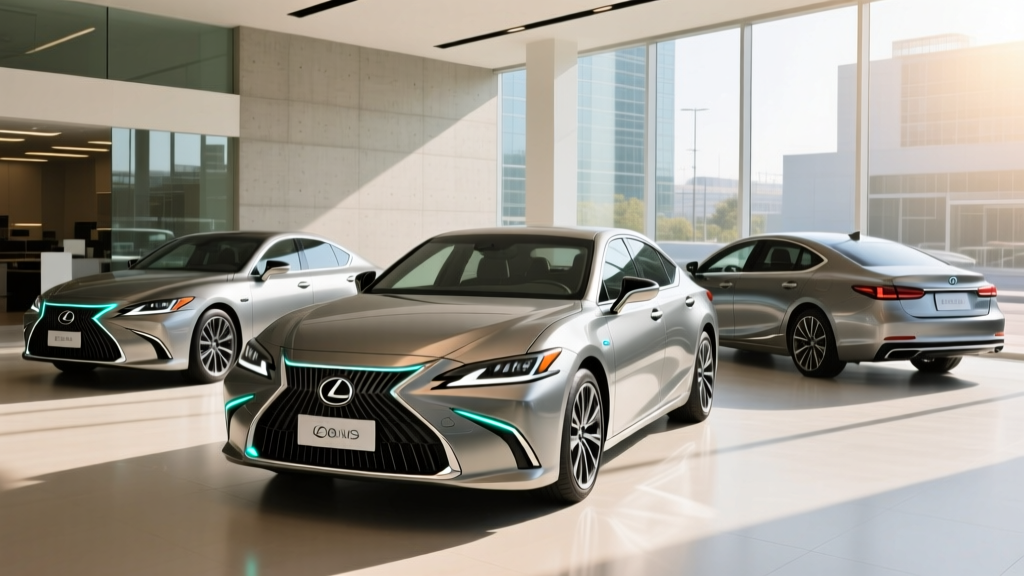
Lexus has built its hybrid sedan reputation on delivering luxury and fuel efficiency without the plug-in commitment. For 2026, the brand offers three core hybrid sedans in the U.S. market, all using conventional hybrid (HEV) powertrains — meaning no plug required, no range anxiety, and no dependency on charging infrastructure. The lineup spans from the midsize ES 350h to the flagship LS 500h, covering a wide range of budgets and use cases.
Unlike Toyota's growing PHEV offerings (such as the RAV4 Prime and Prius Prime), Lexus sedans in 2026 remain exclusively conventional hybrids. This matters for buyers cross-shopping: if you want electric-only commuting range, you'll need to look at a PHEV or BEV. But if you want set-it-and-forget-it fuel savings with Lexus reliability, these HEVs deliver.
2026 Lexus Hybrid Sedan Specs & MPG Comparison
| Spec | ES 350h | ES 500h AWD | LS 500h |
|---|---|---|---|
| Powertrain | 2.5L I4 + electric motor | 2.5L I4 + dual motors (AWD) | 3.5L V6 + dual motors |
| Combined HP | 215 hp | 240 hp | 354 hp |
| EPA City MPG | 43 mpg | 41 mpg | 25 mpg |
| EPA Highway MPG | 44 mpg | 40 mpg | 33 mpg |
| EPA Combined MPG | 44 mpg | 41 mpg | 28 mpg |
| Hybrid Battery | ~1.6 kWh NiMH | ~1.6 kWh NiMH | ~1.1 kWh Li-ion |
| 0–60 mph | 7.6 sec | 6.9 sec | 5.2 sec |
| Starting MSRP | $44,490 | $47,890 | $82,100 |
Source: EPA fueleconomy.gov and Lexus USA. Verify exact MSRP with your dealer — destination charges and options add to final price.
Real-World MPG: What Owners Actually See
One of the most pleasant surprises with Lexus hybrid sedans — particularly the ES 350h — is that real-world fuel economy often meets or exceeds the EPA estimate in city driving. The ES 350h's 43/44/44 city/highway/combined split reflects Toyota's hybrid synergy drive system, which relies heavily on electric motor assist at low speeds where gas engines are least efficient.
In mixed suburban and city driving, owners consistently report 42–47 mpg in the ES 350h, with some hypermilers pushing past 50 mpg in warm-weather city conditions. Highway cruising at 75+ mph tends to drop efficiency to 38–41 mpg because the smaller 2.5L engine works harder and aerodynamic drag increases — a pattern common to all hybrids.
The LS 500h tells a different story. Its 3.5L V6 and 354 combined horsepower prioritize performance over efficiency. Expect 26–30 mpg combined in real-world driving, with highway stretches yielding 30–34 mpg. For a 4,600-pound luxury flagship, that's impressive — but buyers comparing it to the ES 350h on pure fuel economy should note the 16 mpg combined gap.
- ES 350h: 42–47 mpg city, 38–41 mpg highway, 40–45 combined
- ES 500h AWD: 39–43 mpg city, 37–40 mpg highway, 38–41 combined
- LS 500h: 24–28 mpg city, 30–34 mpg highway, 26–30 combined
Hybrid Battery Longevity, Warranty & Replacement Cost
Hybrid battery lifespan is the single most common concern among first-time hybrid buyers. The data is reassuring: Lexus hybrid batteries are among the most durable in the industry, routinely lasting 150,000–200,000+ miles before significant capacity loss.
All 2026 Lexus hybrid models carry a 10-year / 150,000-mile hybrid battery warranty (whichever comes first). This covers battery capacity below 60% of original, plus all hybrid system components including the inverter, electric motors, and control modules. The standard new-vehicle warranty is 4 years / 50,000 miles, and the powertrain warranty is 6 years / 70,000 miles.
If a battery does need replacement outside warranty, the cost for a Lexus ES hybrid battery (remanufactured or new OEM) typically ranges from $2,500 to $4,500 installed. The LS 500h lithium-ion pack is more expensive, running $4,000 to $7,000 depending on sourcing. However, given that these batteries commonly last 15+ years and well past 150,000 miles, most original owners will never face this expense.
Individual cell module replacement (rather than the full pack) is an option some independent hybrid specialists offer, bringing costs down to $800–$1,500 for the ES models. This is worth investigating if you're buying a high-mileage used Lexus hybrid outside warranty.
Tax Credits & Incentives: What 2026 Buyers Qualify For
Here's where conventional hybrids differ sharply from PHEVs and BEVs: the 2026 Lexus hybrid sedan lineup does not qualify for the federal §30D clean vehicle tax credit. That credit, worth up to $7,500, applies only to plug-in vehicles with battery capacity of at least 7 kWh and meeting critical mineral and battery component sourcing requirements, per IRS guidelines.
The ES 350h, ES 500h, and LS 500h all use small hybrid batteries (~1.1–1.6 kWh) designed for regenerative braking assist, not plug-in electric driving. They are classified as conventional hybrids under federal tax law.
However, some states and utilities offer incentives for hybrid purchases:
- State-level rebates: A handful of states (e.g., Colorado, Maryland) have offered hybrid-specific rebates in prior years, though most have shifted focus to PHEVs and BEVs. Check your state's energy office for current programs.
- Utility company incentives: Some municipal utilities offer small rebates ($250–$500) for hybrid purchases as part of broader efficiency programs.
- Employer programs: A growing number of corporate sustainability programs offer $500–$1,000 rebates for employees purchasing hybrids or EVs.
If the federal tax credit is a priority for you, consider that the Lexus NX 450h+ (a PHEV SUV, not a sedan) may qualify depending on current-year sourcing rules and your income. For sedan buyers specifically, the BMW 5 Series PHEV or Chrysler Pacifica PHEV are among the few plug-in sedans/minivans that may still qualify — always verify current eligibility on the IRS clean vehicle credit page before purchasing.
HEV vs PHEV vs EV: Which Powertrain Fits Your Lifestyle?
Choosing between a conventional hybrid, plug-in hybrid, or full electric vehicle depends on three factors: your daily mileage, charging access, and willingness to adapt your routine.
| Factor | HEV (e.g., ES 350h) | PHEV (e.g., BMW 530e) | BEV (e.g., Tesla Model S) |
|---|---|---|---|
| Plug in required? | No | Yes (recommended) | Yes (required) |
| Electric-only range | 0 miles | 25–45 miles | 250–405 miles |
| Fuel cost (annual, 12K mi) | ~$870 (44 mpg) | ~$500–$800 | ~$480–$650 |
| Home charging needed? | No | Level 1 or 2 recommended | Level 2 strongly recommended |
| Federal tax credit | None | Up to $7,500* | Up to $7,500* |
| Maintenance | Low (oil, filters) | Low–Moderate | Very low (no oil changes) |
| Best for | No home charging, simplicity | Short commute + road trips | Home charging + daily driving |
* §30D credit eligibility depends on MSRP caps, buyer income limits, battery sourcing rules, and point-of-sale transfer availability. Verify at irs.gov.
Choose the Lexus HEV sedan if: You have no access to home or workplace charging, you want maximum simplicity, you value Lexus reliability and dealer support, and your priority is lowering fuel costs without changing your refueling habits. The ES 350h at 44 mpg combined will save roughly $600–$800 per year in fuel compared to a comparable gas-only luxury sedan getting 25 mpg combined.
Consider a PHEV instead if: You have Level 1 or Level 2 charging at home, your daily commute is under 35 miles, and you want to drive mostly on electricity during the week while retaining gas-engine flexibility for road trips. The tax credit may offset the PHEV price premium.
Consider a full EV if: You have reliable Level 2 home charging, your daily driving is under 250 miles, you want the lowest operating costs and zero tailpipe emissions, and you're comfortable planning road-trip charging stops.
Driving Impressions & Powertrain Character
The ES 350h uses Toyota's fourth-generation hybrid system, pairing a 2.5-liter Atkinson-cycle four-cylinder with a front-mounted electric motor for 215 combined horsepower. The result is smooth, linear acceleration from stops — the electric motor fills in the torque gap that small displacement engines typically have at low RPM. The CVT transmission keeps the engine in its most efficient range, which means the ES 350h is never going to feel sporty, but it's impressively refined for its class.
The ES 500h AWD adds a rear-axle electric motor, providing electronic all-wheel drive and bumping output to 240 hp. The AWD system is reactive rather than full-time — the rear motor engages when front-wheel slip is detected or during hard acceleration. This improves 0–60 to 6.9 seconds and provides confident traction in rain and light snow without the fuel-economy penalty of a mechanical AWD system.
The LS 500h is a fundamentally different vehicle. Its 3.5-liter V6 paired with dual electric motors produces 354 hp and delivers a 5.2-second 0–60 time. Lexus uses a four-speed automatic in series with the hybrid transaxle (branded as the "Multi-Stage Hybrid System"), which creates 10 simulated gear ratios. The result is a flagship that feels genuinely quick while still returning 28 mpg combined — a remarkable engineering achievement in a 4,600-pound sedan.
Pros & Cons: 2026 Lexus Hybrid Sedans
Pros
- ES 350h achieves 44 mpg combined — among the best of any luxury sedan
- No plug-in charging required; identical refueling routine to a gas car
- 10-year / 150,000-mile hybrid battery warranty
- Lexus reliability consistently ranks #1–3 in J.D. Power dependability studies
- Strong resale value; Lexus hybrids hold value better than most luxury competitors
- Smooth, quiet hybrid powertrain with seamless engine/motor transitions
Cons
- No federal tax credit eligibility (HEV, not PHEV/BEV)
- ES 350h CVT lacks engagement; not a sporty driving experience
- LS 500h starting price above $82,000 limits accessibility
- No plug-in hybrid sedan option in the 2026 Lexus lineup
- Small trunk-mounted battery slightly reduces cargo space vs gas models (ES: ~0.5 cu ft loss)
- Hybrid system adds ~150–200 lbs vs gas equivalent, marginally affecting handling
Frequently Asked Questions
How many MPG does the 2026 Lexus ES 350h get?
The EPA rates the 2026 Lexus ES 350h at 43 mpg city, 44 mpg highway, and 44 mpg combined. In real-world city driving, many owners report 42–47 mpg. Highway driving above 75 mph typically yields 38–41 mpg.
Do Lexus hybrid sedans need to be plugged in?
No. All 2026 Lexus hybrid sedans are conventional hybrids (HEVs). The battery charges through regenerative braking and the gas engine. You simply fill up at a gas station as you would with any other car.
Is the Lexus hybrid battery reliable, and what does replacement cost?
Lexus hybrid batteries are among the most reliable in the industry, commonly lasting 150,000–200,000+ miles. They're covered by a 10-year / 150,000-mile warranty. Out-of-pocket replacement costs $2,500–$4,500 for the ES series and $4,000–$7,000 for the LS 500h, but most owners never need a replacement.
Does the 2026 Lexus hybrid sedan qualify for any tax credit?
No. The federal §30D clean vehicle credit applies only to plug-in electric vehicles (PHEVs and BEVs) with battery capacity of at least 7 kWh. Lexus hybrid sedans use ~1.1–1.6 kWh batteries and are classified as conventional hybrids. Some state or utility incentives may apply — check your local programs.
Should I buy a Lexus hybrid or a full EV?
If you lack home charging access, frequently drive more than 300 miles between stops, or prefer not to change your refueling routine, the Lexus HEV is the better choice. If you have Level 2 home charging, a daily commute under 250 miles, and want the lowest operating costs plus federal tax credit eligibility, a full EV may serve you better.
What's the difference between the ES 350h and ES 500h AWD?
The ES 350h is front-wheel drive with 215 hp and 44 mpg combined. The ES 500h AWD adds a rear-axle electric motor for electronic all-wheel drive, 240 hp, a 6.9-second 0–60 time, and 41 mpg combined. The AWD model costs approximately $3,400 more and is the better choice for buyers in snowy or rainy climates.