Quick Verdict: The Luxury Hybrid That Doesn't Ask You to Plug In
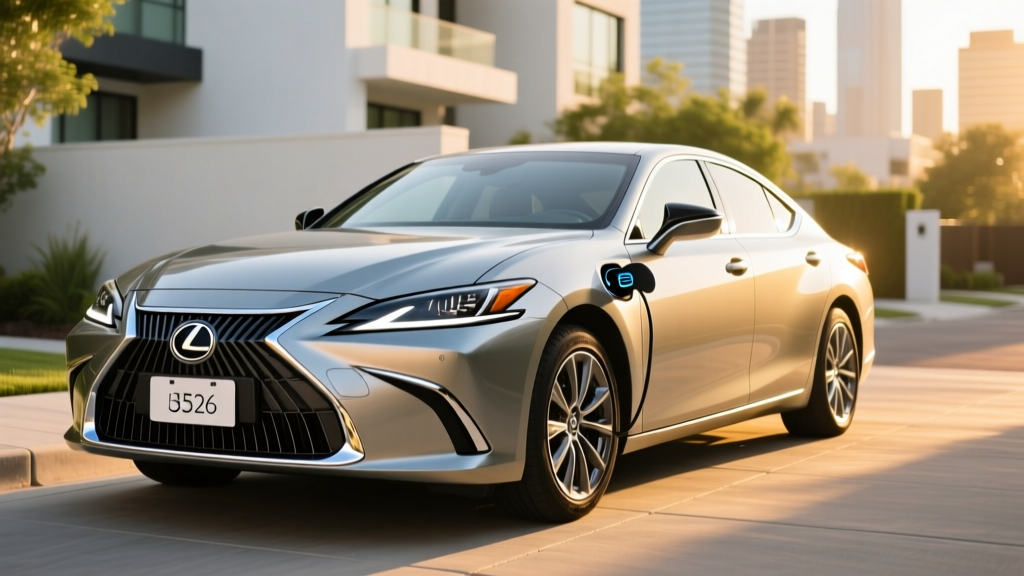
The 2026 Lexus ES 350h hybrid occupies a specific and increasingly rare niche: a midsize luxury sedan that delivers genuinely excellent fuel economy without requiring a charging cable, a home electrical upgrade, or any change in your daily routine. With an EPA-estimated 44 MPG combined and a starting MSRP of $44,490, it undercuts most luxury EVs on price while rivaling them on per-mile fuel cost — especially for city-dominant drivers.
This is a conventional hybrid (HEV), not a plug-in hybrid (PHEV). That distinction matters enormously, and we'll unpack exactly what it means for your wallet, your driving habits, and whether this car is the right bridge — or the right destination — in your electrification journey.
HEV vs PHEV vs EV: Where the ES 350h Fits
Before examining the ES 350h's numbers, it's worth clarifying the three electrification paths available to luxury sedan shoppers in 2026, because confusing them is the single most common mistake buyers make at the dealership.
Conventional Hybrid (HEV) — ES 350h
No plug required. The battery recharges via regenerative braking and the gasoline engine. You fuel it like any other car. The electric motor assists the engine to reduce fuel consumption, typically yielding 30-50% better MPG than a gas-only equivalent. Battery is small (~1-2 kWh), but it never needs external charging.
Plug-In Hybrid (PHEV) — e.g., BMW 550e xDrive
Plug required for full benefit. Larger battery (~15-25 kWh) provides 25-45 miles of electric-only driving before the gas engine kicks in. If you don't plug in regularly, you're just carrying dead weight and getting mediocre hybrid MPG. Qualifies for partial §30D federal tax credit in some cases.
Battery Electric Vehicle (BEV) — e.g., BMW i5, Mercedes EQE
No gas engine. 250-350+ miles of range from a large battery (75-100+ kWh). Requires home Level 2 charging for practical daily ownership. Eligible for up to $7,500 federal tax credit if sourcing and income requirements are met. Lowest per-mile energy cost if you charge at home.
The 2026 Lexus ES 350h is firmly in the HEV column. It cannot drive on electric power alone for meaningful distances (maybe a mile at very low speed), and it has no plug. This is a feature, not a bug, for buyers who lack home charging access or simply don't want to think about electrification infrastructure.
Fuel Economy: EPA Numbers and Real-World MPG
| Metric | EPA Estimate | Real-World Expectation |
|---|---|---|
| City MPG | 43 | 44-48 (hybrids excel in stop-and-go) |
| Highway MPG | 44 | 38-42 (less regen benefit at steady speed) |
| Combined MPG | 44 | 40-45 depending on driving mix |
| Annual Fuel Cost* | ~$1,350 | Varies by local gas prices |
| Total Range | ~590 miles | ~540-620 miles |
*Based on 15,000 miles/year and $3.50/gallon regular unleaded per fueleconomy.gov estimates. Check current local pricing.
The ES 350h's hybrid system is one of the rare powertrains where real-world city MPG can actually exceed the EPA sticker. This happens because hybrids recapture energy during braking and low-speed driving — exactly the conditions the EPA city cycle simulates, but which many conventional cars underperform on. If your commute is 70%+ city and suburban stop-and-go, expect to see 45-48 MPG on the trip computer regularly.
Highway driving tells a different story. At sustained 70-80 MPH, the electric motor contributes less, and the 2.5-liter four-cylinder engine does most of the work. Expect 38-42 MPG on long road trips. This is still excellent for a 3,600-pound luxury sedan, but it's not the 44 MPG the sticker promises. If your driving is overwhelmingly highway, a diesel or a very efficient gas turbo might close the gap — though neither offers the ES 350h's refinement.
Powertrain and Performance Specs
| Specification | 2026 Lexus ES 350h |
|---|---|
| Powertrain Type | Conventional Hybrid (HEV) |
| Engine | 2.5L 4-cylinder Atkinson cycle |
| Electric Motor | Permanent magnet synchronous (front axle) |
| Combined Horsepower | 215 hp |
| Transmission | eCVT (electronically controlled) |
| Drivetrain | Front-wheel drive |
| 0-60 MPH | ~7.7 seconds |
| Battery Capacity | ~1.6 kWh (nickel-metal hydride) |
| Plug-In Charging | No — self-charging via regen + engine |
| Curb Weight | ~3,670 lbs |
| Fuel Tank | 13.2 gallons (regular unleaded) |
The 215-horsepower combined output is adequate rather than thrilling. The eCVT eliminates shift shock and keeps the engine in its most efficient RPM band, which is great for fuel economy but produces the characteristic hybrid drone under hard acceleration. For passing and merging, there's sufficient power. For spirited driving, look to the ES 350 (gas V6) or a sport-tuned EV sedan.
Toyota/Lexus has used variations of this hybrid synergy drive system for over two decades, and the 2026 iteration is among the most refined. The transition between electric-motor assist and engine engagement is nearly imperceptible at part throttle — a marked improvement over earlier-generation hybrids that clunked and surged during mode switches.
Pricing, Trims, and Tax Credit Reality
| Trim | MSRP (2026) | Key Additions |
|---|---|---|
| ES 350h Base | $44,490 | 10-year Lexus Safety System+, 12.3" touchscreen, heated front seats |
| ES 350h Premium | $47,190 | Wood interior trim, power-folding mirrors, blind-spot monitor |
| ES 350h Luxury | $51,090 | Semi-aniline leather, ventilated front seats, 10-way power passenger |
| ES 350h F SPORT Design | $48,790 | F SPORT exterior, sport seats, unique 19" wheels |
Prices include destination charge. Source: Lexus USA.
Does the 2026 Lexus ES 350h Qualify for a Federal Tax Credit?
No. The ES 350h is a conventional hybrid (HEV), and the IRS §30D Clean Vehicle Credit applies only to plug-in electric vehicles — battery electric vehicles (BEVs) and plug-in hybrids (PHEVs) with battery capacities of at least 7 kWh. The ES 350h's ~1.6 kWh battery does not qualify.
Lexus provides a 10-year / 150,000-mile hybrid battery warranty (whichever comes first) on the 2026 ES 350h, transferable to subsequent owners. This covers defects and capacity loss below a specified threshold. The standard new-vehicle warranty is 4 years / 50,000 miles, and the powertrain warranty is 6 years / 70,000 miles.
Some states offer their own hybrid or clean-vehicle rebates that may apply to HEVs. Check your state's energy or environmental agency website — California's CVRP, for example, has historically focused on ZEVs (zero-emission vehicles), meaning conventional hybrids typically don't qualify. Always verify current state programs, as they change frequently.
Battery Longevity, Reliability, and Replacement Cost
Hybrid battery anxiety is the top concern for first-time hybrid buyers, and it deserves a direct, data-driven answer.
How Long Will the ES 350h Hybrid Battery Last?
Toyota/Lexus hybrid battery packs have demonstrated exceptional longevity in real-world use. The ES 350h uses a nickel-metal hydride (NiMH) battery — a chemistry with decades of proven durability in hybrid applications, including the Toyota Prius, many of which have exceeded 200,000 miles on the original battery pack.
Lexus's 10-year/150,000-mile hybrid battery warranty is one of the longest in the industry and reflects the company's confidence in NiMH durability. In practice, hybrid battery failures before 150,000 miles are uncommon based on owner-reported data across the Lexus hybrid fleet.
What Does Hybrid Battery Replacement Cost?
If you do need a replacement outside of warranty, expect to pay between $2,500 and $4,500 for a new OEM hybrid battery pack including labor at a Lexus dealership. Third-party reconditioned packs are available for $1,500-$2,500. This is dramatically less than a full EV battery replacement ($10,000-$20,000+) because the hybrid battery is small (~1.6 kWh vs 75-100 kWh in a BEV).
Overall Reliability
Lexus consistently ranks at or near the top of J.D. Power and Consumer Reports reliability surveys, and the ES line has been a cornerstone of that reputation. The eCVT transmission has no traditional gears or clutch packs to wear out — it's a planetary gearset with far fewer failure points than a conventional automatic. The 2.5L Atkinson-cycle engine is low-stress by design. For buyers prioritizing decade-long ownership with minimal surprise repair bills, the ES 350h is among the safest bets in the luxury segment.
Interior, Technology, and Daily Ownership
The 2026 ES 350h carries forward the current-generation interior: a 12.3-inch touchscreen running Lexus Interface with wireless Apple CarPlay and Android Auto, a 10-speaker audio system (Mark Levinson 17-speaker optional), and the full Lexus Safety System+ 2.5 suite — adaptive cruise control, lane-keeping assist, pre-collision braking, and road-sign assist.
Notable ownership practicalities:
- Cargo space: 13.9 cubic feet (trunk). The hybrid battery does not significantly intrude on cargo volume compared to the gas ES 350.
- Rear seat room: 38.0 inches of legroom — competitive with BMW 5 Series and Mercedes E-Class.
- ADAS classification: Lexus Safety System+ is a SAE Level 2 driver-assistance system. You must remain engaged with hands on the wheel and eyes on the road at all times. It is not self-driving.
- Insurance: Expect premiums comparable to the gas ES 350. Hybrid-specific insurance surcharges are rare for HEVs (unlike some EVs).
Pros
- 44 MPG combined EPA; often exceeds this in city driving
- No charging infrastructure needed — fuel at any gas station
- 10-year/150,000-mile hybrid battery warranty
- Proven Lexus reliability and strong resale value
- Quiet, refined ride quality with excellent rear-seat comfort
- Lower total cost of ownership than most luxury EVs when factoring insurance and depreciation
Cons
- 215 hp is adequate but not quick — 7.7s 0-60 trails sport sedans
- eCVT drone under hard acceleration
- No federal tax credit (HEV, not PHEV/BEV)
- Front-wheel drive only — no AWD option on the 350h
- Infotainment still lacks the polish of BMW iDrive or Mercedes MBUX
- Highway MPG drops to ~38-42, narrowing the advantage over efficient gas turbos
Who Should Buy the 2026 Lexus ES 350h — and Who Shouldn't?
Choose the ES 350h if:
- You want luxury-sedan comfort with sub-45-MPG fuel costs and zero charging hassle
- Your driving is predominantly city and suburban (where hybrids shine brightest)
- You plan to own the car 8-10+ years and prioritize long-term reliability
- You live in an apartment or lack access to home/workplace charging
- You want to reduce fuel costs without the upfront price premium of a luxury EV
Consider a PHEV instead if:
- You have home charging and a short commute (<30 miles) — a PHEV could eliminate most gas use
- You want partial electric-only driving for daily errands
- You want to reduce tailpipe emissions more aggressively than a hybrid allows
Consider a full EV (BEV) instead if:
- You have reliable home Level 2 charging
- Your daily driving is under 250 miles and you road-trip infrequently
- You want the lowest per-mile energy cost and qualify for the $7,500 §30D federal tax credit
- You want instant torque and silent, gearless acceleration
Frequently Asked Questions
How many MPG does the 2026 Lexus ES 350h get?
The EPA rates the 2026 ES 350h at 43 city / 44 highway / 44 combined MPG. In real-world city-dominant driving, many owners report 45-48 MPG thanks to regenerative braking. Highway-heavy trips typically yield 38-42 MPG.
Do I need to plug in the Lexus ES 350h?
No. The ES 350h is a conventional hybrid (HEV). Its small battery recharges through regenerative braking and the gasoline engine. You never plug it in — you simply refuel at any gas station with regular unleaded.
How far can the ES 350h go on electric power alone?
Effectively zero meaningful distance. The hybrid system uses the electric motor to assist the gasoline engine and enable brief low-speed electric-only creeping (under ~25 MPH for very short distances), but it is not designed for electric-only commuting. If you want 30+ miles of electric driving, you need a PHEV or BEV.
Is the hybrid battery reliable, and what does replacement cost?
Yes. Lexus covers the hybrid battery for 10 years or 150,000 miles. Toyota/Lexus NiMH hybrid batteries routinely last well beyond that in real-world use. Out-of-warranty replacement costs $2,500-$4,500 at a dealer — far less than EV battery replacement.
Does the 2026 Lexus ES 350h qualify for any federal tax credit?
No. The IRS §30D Clean Vehicle Credit requires a plug-in vehicle with a battery of at least 7 kWh. The ES 350h is a conventional hybrid with a ~1.6 kWh battery and no plug. It does not qualify for any federal EV tax credit. Check your state for any hybrid-specific incentives, though these are increasingly rare.
How does the ES 350h compare to the gas-only ES 350?
The gas ES 350 (302 hp V6) is significantly quicker (0-60 in ~6.1 seconds) but returns roughly 25-26 MPG combined. The 350h sacrifices acceleration for nearly double the fuel economy. If performance is your priority, the gas model wins. If fuel cost and long-term efficiency matter more, the 350h is the clear choice.
Is the ES 350h available with all-wheel drive?
No. The 2026 ES 350h is front-wheel drive only. If you need AWD in the Lexus ES lineup, check the ES 250 AWD (gas four-cylinder), though it sacrifices fuel economy. Lexus has not offered an AWD hybrid variant of the current-generation ES.