The 2026 Kia Sportage SX Prestige Hybrid sits at the top of Kia's compact hybrid SUV lineup, pairing a turbocharged 1.6-liter engine with an electric motor for 232 combined horsepower and an EPA-estimated 43 MPG combined. For buyers who want premium features without committing to a full battery-electric vehicle, this trim represents the intersection of efficiency, technology, and practicality. But does the real-world fuel economy match the sticker? And how does the Sportage Hybrid compare to its plug-in sibling or a pure EV? This guide breaks down every number that matters.
HEV vs PHEV: Which Sportage Hybrid Are We Talking About?
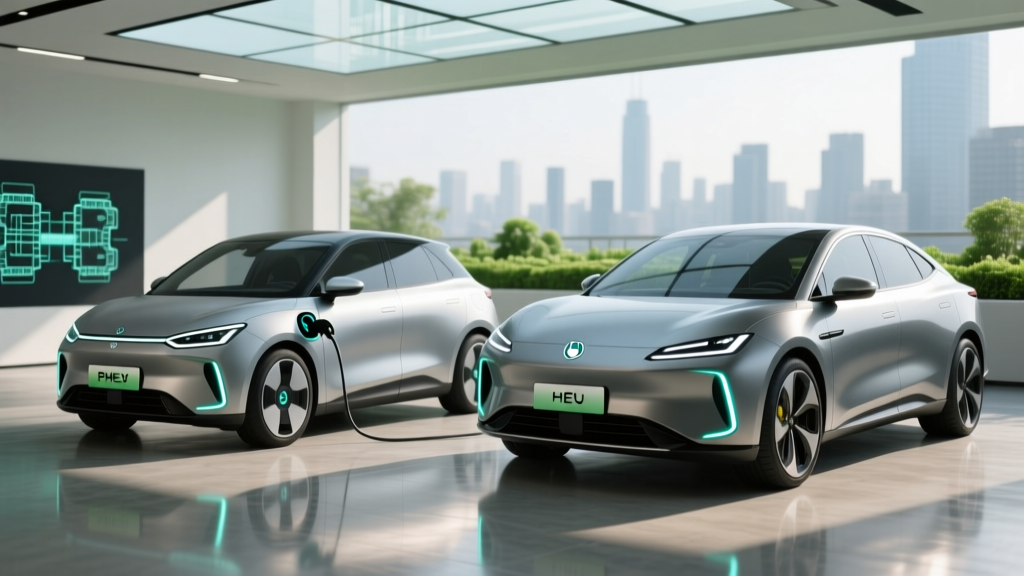
Kia offers the Sportage in three powertrains for 2026: a conventional gas model, a conventional hybrid (HEV), and a plug-in hybrid (PHEV). The SX Prestige Hybrid discussed here is the conventional hybrid — meaning it charges its small battery through regenerative braking and the gasoline engine. You never plug it in.
| Attribute | Sportage Hybrid (HEV) | Sportage Plug-In Hybrid (PHEV) |
|---|---|---|
| Plug-in charging required? | No | Yes (Level 1/Level 2) |
| Battery capacity | ~1.49 kWh (buffer-limited) | 13.7 kWh usable |
| Electric-only driving | Low-speed assist only (~1 mi) | EPA 34 miles electric-only |
| Combined horsepower | 232 hp | 261 hp |
| EPA combined fuel economy | 43 MPG (FWD) / 38 MPG (AWD) | 84 MPGe (electric+gas) / 35 MPG gas-only |
| Federal tax credit (§30D) | Not eligible | Eligible — up to $7,500 (rules apply) |
| Starting MSRP range (2026) | ~$33,090 – $38,590 | ~$40,490 – $44,590 |
The SX Prestige trim is available on both the HEV and PHEV. If you see "Sportage SX Prestige Hybrid" on a window sticker, confirm whether it says "Plug-In Hybrid" below the badge — the pricing and powertrain differ significantly.
Fuel Economy: EPA Ratings and Real-World MPG
The 2026 Kia Sportage Hybrid in FWD configuration carries an EPA rating of 44 MPG city / 42 MPG highway / 43 MPG combined, according to fueleconomy.gov. The AWD variant drops to 40 city / 36 highway / 38 combined.
| Configuration | City MPG | Highway MPG | Combined MPG |
|---|---|---|---|
| Sportage Hybrid FWD | 44 | 42 | 43 |
| Sportage Hybrid AWD | 40 | 36 | 38 |
| Sportage PHEV (gas-only after EV range) | 36 | 33 | 35 |
| Sportage Gas 1.5T AWD (baseline) | 25 | 28 | 26 |
Real-World MPG: What Owners Actually See
Hybrids tend to outperform their EPA city ratings in stop-and-go traffic because regenerative braking recovers energy that a gas car wastes as heat. In mixed suburban driving, many Sportage Hybrid owners report 40–46 MPG in warm weather. However, sustained highway driving at 75+ MPH can pull figures down to 35–38 MPG for the FWD model, as the electric motor contributes less at constant high speeds.
Cold weather (below 30°F) typically reduces hybrid efficiency by 5–10% due to increased engine warm-up time, cabin heating demands, and reduced battery efficiency. Expect 37–40 MPG combined from the FWD model in winter conditions — still dramatically better than the gas-only Sportage's ~23 MPG in the same conditions.
Powertrain Specs: Engine, Motor, and Combined Output
The 2026 Sportage Hybrid pairs a turbocharged 1.6-liter GDI four-cylinder engine with a 47.7 kW (64 hp) electric motor integrated into the 6-speed automatic transmission housing. Combined system output is 232 horsepower and 258 lb-ft of torque.
| Specification | 2026 Sportage Hybrid SX Prestige |
|---|---|
| Engine | 1.6L turbocharged GDI 4-cylinder |
| Engine output | 178 hp / 195 lb-ft |
| Electric motor | 47.7 kW (64 hp) / 195 lb-ft |
| Combined system output | 232 hp / 258 lb-ft |
| Transmission | 6-speed automatic |
| Drivetrain (SX Prestige) | AWD standard on SX Prestige Hybrid |
| 0-60 mph (est.) | ~7.4 seconds |
| Towing capacity | 2,000 lbs |
| Fuel tank | 13.7 gallons |
| Total driving range (AWD) | ~520 miles |
The SX Prestige Hybrid comes exclusively with AWD for the 2026 model year, which explains its 38 MPG combined rating rather than the FWD's 43 MPG. The electric motor provides instant torque fill at low RPMs, eliminating the turbo lag common in the gas-only 1.5T model. Acceleration feels responsive around town, though the 6-speed automatic (rather than a CVT or DCT) means you'll feel traditional shift points under hard acceleration.
Pricing, Trim Features, and Tax Credit Eligibility
The 2026 Kia Sportage SX Prestige Hybrid carries an MSRP of approximately $38,590 (including destination). This top trim includes:
- 12.3-inch dual panoramic displays (instrument cluster + infotainment)
- Harman Kardon premium audio system
- Heated and ventilated front seats, heated steering wheel
- Leather-trimmed seats with driver memory
- Highway Driving Assist 2 (HDA2) with adaptive cruise and lane centering
- Remote Smart Parking Assist
- Panoramic sunroof
- 360-degree surround-view monitor
- LED projection headlights with dynamic bending
Federal Tax Credit Status
The conventional Sportage Hybrid (HEV) does not qualify for the federal §30D Clean Vehicle Credit. That credit applies only to plug-in electric vehicles — meaning the Sportage PHEV or a full BEV. If the hybrid's fuel savings aren't enough to offset the higher MSRP versus a gas model, the PHEV's potential $7,500 credit (subject to IRS income, MSRP, and battery-sourcing requirements) could shift the math.
§30D Credit Quick Checklist (PHEV only — not this HEV):
- Buyer AGI limits: $150K single / $300K joint
- MSRP cap: $80,000 for SUVs
- Battery components and critical minerals must meet sourcing thresholds
- Credit can be transferred to dealer at point of sale for instant discount
- Consult a tax professional — rules are subject to legislative changes
At 38 MPG combined (AWD), the SX Prestige Hybrid saves approximately $850–$1,100 per year in fuel costs versus the gas-only Sportage AWD (26 MPG combined), assuming 15,000 miles/year and $3.30/gallon regular unleaded. Over five years, that's $4,250–$5,500 in fuel savings — partially offsetting the hybrid's price premium without any tax credit needed.
Battery Warranty, Reliability, and Replacement Costs
Hybrid battery longevity remains a top concern for buyers transitioning from conventional vehicles. Kia backs the 2026 Sportage Hybrid's battery pack with one of the strongest warranties in the segment.
| Coverage | Term |
|---|---|
| Hybrid battery warranty | 10 years / 100,000 miles (original owner) |
| Hybrid system components | 10 years / 100,000 miles |
| Basic vehicle warranty | 5 years / 60,000 miles |
| Powertrain warranty | 10 years / 100,000 miles |
Note: For second owners, the hybrid battery warranty typically transfers as 10 years/100,000 miles from original in-service date, but confirm with your dealer as terms can vary by state (California and CARB-adopting states may extend further).
How Long Will the Battery Actually Last?
The Sportage Hybrid uses a small ~1.49 kWh lithium-ion battery pack. Because the HEV system never fully charges or fully depletes this battery (operating in a narrow state-of-charge "buffer" between roughly 40–80%), degradation is minimal. Real-world data from Hyundai-Kia's hybrid platforms shows most packs retaining 90%+ capacity after 100,000 miles. Failure before 150,000 miles is uncommon.
If replacement is needed outside warranty, a hybrid battery pack for the Sportage typically costs $2,000–$3,500 (parts and labor) at a dealership — far less than a full EV battery replacement. Independent hybrid specialists may offer refurbished packs for $1,200–$2,000.
Reliability Track Record
Kia's 1.6T hybrid powertrain has been in production since the 2023 model-year refresh. The Sportage Hybrid shares its architecture with the Hyundai Tucson Hybrid, which has earned strong reliability marks. IIHS testing for the Sportage platform has yielded top safety ratings, and the hybrid variant adds no unique structural concerns. Check NHTSA.gov for the latest 5-star safety ratings as they are published for the 2026 model year.
Driving Impressions and the SX Prestige Experience
The SX Prestige Hybrid distinguishes itself from lower trims with a noticeably more refined cabin. The leather seats, ventilated front cushions, and Harman Kardon audio create an environment that punches above the compact SUV segment. Highway Driving Assist 2 (HDA2) provides competent SAE Level 2 driver assistance — adaptive cruise control with stop-and-go, lane-centering, and curve-speed adaptation — but requires your hands on the wheel and eyes on the road at all times. This is not autonomous driving.
Ride quality is compliant but controlled. The 232-hp powertrain makes merging and passing confident, even at altitude where turbocharged engines maintain their output better than naturally aspirated competitors. The 6-speed automatic avoids the "drone" of CVTs, though it sacrifices a fraction of efficiency in exchange for that more natural feel.
Cargo space measures 39.5 cubic feet behind the rear seats — identical to the gas model, since the hybrid battery is packaged under the rear seats rather than in the cargo floor. The AWD system (standard on SX Prestige Hybrid) uses an electronically controlled coupling to send torque rearward when slip is detected, suitable for rain and light snow but not serious off-road use.
Pros
- 38 MPG combined (AWD) — real-world often exceeds 40 in city driving
- 232 hp provides confident highway merging and passing
- 10-year/100,000-mile hybrid battery warranty
- SX Prestige trim features rival luxury compact SUVs at half the price
- No charging infrastructure needed — just fill up with regular unleaded
- Strong cargo capacity (39.5 cu ft) with no hybrid compromise
Cons
- AWD-only on SX Prestige reduces MPG vs FWD lower trims (43 MPG)
- No federal tax credit for conventional HEV
- Small EV battery means no meaningful electric-only driving range
- 2,000-lb towing capacity trails some turbo-gas competitors
- Infotainment learning curve with dual-screen layout
- AWD system is light-duty — not for off-road or heavy snow towing
Sportage Hybrid vs PHEV vs Full EV: Which Fits You?
Choose the Sportage Hybrid (HEV) if:
- You don't have access to home or workplace charging (apartment, street parking)
- You regularly take long road trips and don't want to plan around chargers
- You want maximum fuel savings with zero behavioral change
- Your budget tops out around $38K–$40K
Choose the Sportage Plug-In Hybrid (PHEV) if:
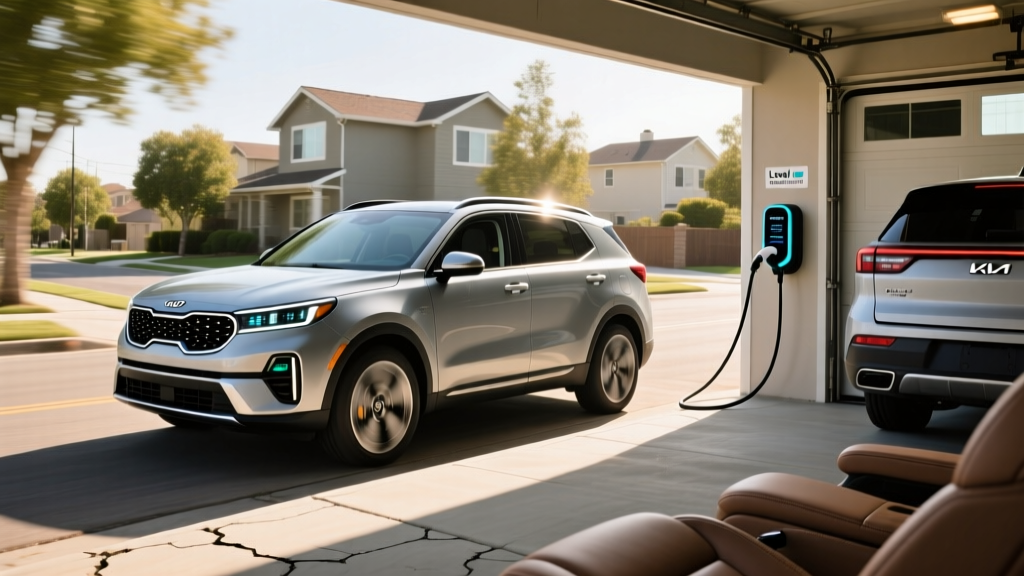
- You can install a Level 2 charger at home
- Your daily commute is under 34 miles (cover it entirely on electricity)
- You qualify for the §30D federal tax credit (income and sourcing rules apply)
- You want EV-like daily driving with gas backup for road trips
Choose a full EV (e.g., Hyundai Ioniq 5, Kia EV6) if:
- You have reliable home Level 2 charging
- You want the lowest per-mile energy cost (~$0.04–$0.06/mile vs $0.09/mile hybrid)
- You're eligible for the full $7,500 federal credit
- You want near-zero routine maintenance (no oil changes, no transmission fluid)
For a buyer who drives 12,000 miles/year, the Sportage Hybrid AWD at 38 MPG costs roughly $1,042/year in fuel (at $3.30/gal). A comparable full EV at 3.5 miles/kWh with $0.14/kWh home electricity costs about $480/year. The $562 annual savings of an EV adds up, but requires the upfront investment in a home charger ($500–$1,800 installed) and a higher vehicle purchase price before credits.
Frequently Asked Questions
How many MPG does the 2026 Kia Sportage SX Prestige Hybrid get?
The SX Prestige Hybrid comes with AWD and is EPA-rated at 40 city / 36 highway / 38 combined MPG. In real-world city and suburban driving, owners commonly report 38–44 MPG depending on traffic patterns and weather. Highway-only driving at 75+ MPH typically yields 34–37 MPG.
Does the Sportage Hybrid need to be plugged in?
No. The Sportage Hybrid (HEV) charges its battery entirely through regenerative braking and the gasoline engine. You fuel it like any conventional car. Only the Sportage Plug-In Hybrid (PHEV) requires or benefits from plug-in charging.
How far can the Sportage Hybrid drive on electric power alone?
The conventional hybrid can creep short distances (roughly 0.5–1 mile) at very low speeds on electric power, such as in a parking lot or heavy traffic crawl. It is not designed for meaningful electric-only driving. For that, the Sportage PHEV offers 34 miles of EPA-rated electric-only range.
Is the hybrid battery reliable and what does replacement cost?
Kia covers the hybrid battery for 10 years / 100,000 miles. The small ~1.49 kWh pack operates in a narrow charge buffer, minimizing degradation. Most Hyundai-Kia hybrid batteries retain 90%+ capacity past 100,000 miles. Out-of-warranty replacement costs $2,000–$3,500 at a dealer or $1,200–$2,000 through independent hybrid specialists.
Does the 2026 Sportage Hybrid qualify for a federal tax credit?
No. The conventional hybrid (HEV) is not eligible for the IRS §30D Clean Vehicle Credit, which applies only to plug-in vehicles (PHEVs and BEVs). The Sportage PHEV may qualify for up to $7,500 depending on buyer income, MSRP caps, and battery-sourcing requirements. Always verify current rules at IRS.gov and consult a tax professional.
What's the difference between the Sportage Hybrid LX, EX, and SX Prestige?
The LX is the base hybrid with FWD and cloth seats (~$33,090). The EX adds AWD availability, synthetic leather, and a power liftgate (~$35,590). The SX Prestige is the top trim with genuine leather, ventilated seats, Harman Kardon audio, HDA2, panoramic sunroof, and AWD standard (~$38,590). All share the same 232-hp hybrid powertrain.
How does the Sportage Hybrid compare to the Toyota RAV4 Hybrid?
The RAV4 Hybrid AWD is EPA-rated at 41/38/39 MPG — very close to the Sportage Hybrid AWD's 38 combined. The Sportage offers more horsepower (232 vs 219), a more modern interior on the SX Prestige, and a longer warranty (10yr/100K vs Toyota's 10yr/150K hybrid battery but 3yr/36K basic). The RAV4 Hybrid maintains a slight edge in long-term resale value and has a longer track record in the hybrid segment.