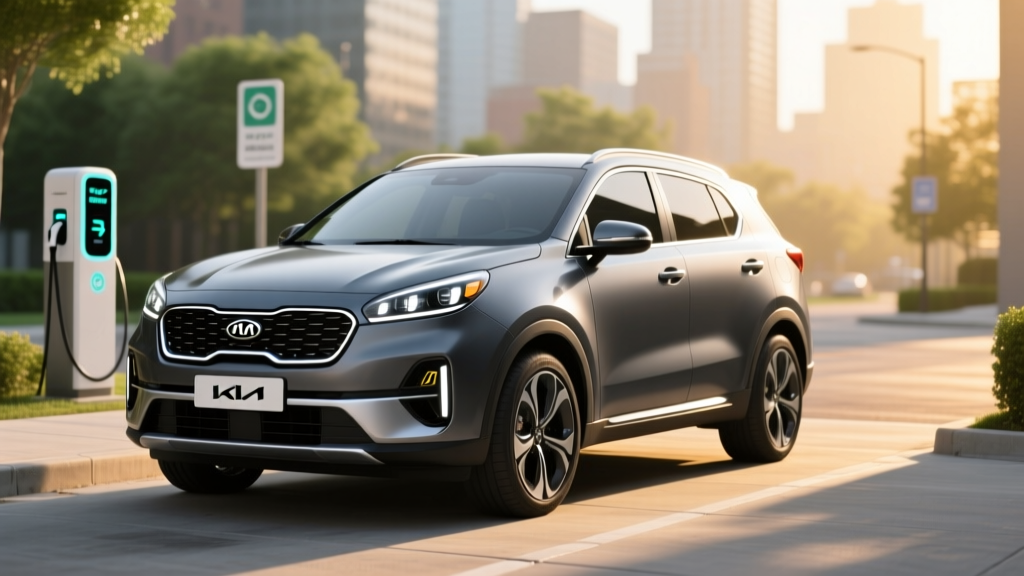
The compact hybrid SUV segment is crowded, but the 2026 Kia Sportage Hybrid continues to stand out by pairing a spacious cabin with genuine fuel-sipping credentials and a starting price that undercuts several key rivals. Whether you're eyeing the conventional hybrid (HEV) that requires no plug or the plug-in hybrid (PHEV) variant with over 30 miles of electric-only range, the Sportage lineup covers a wide swath of buyer needs. This guide breaks down every critical number — from EPA MPG to battery warranty to real-world efficiency — so you can decide which version fits your driving life.
2026 Kia Sportage Hybrid at a Glance: Key Specs
Before diving into the nuances, here's a consolidated look at the numbers that matter most for both the HEV and PHEV powertrains available in the 2026 Sportage.
| Specification | Sportage HEV (Hybrid) | Sportage PHEV (Plug-In) |
|---|---|---|
| Powertrain | 1.6L turbo 4-cyl + electric motor | 1.6L turbo 4-cyl + electric motor |
| Combined Horsepower | 232 hp | 268 hp |
| Transmission | 6-speed automatic | 6-speed automatic |
| Drivetrain | AWD (standard) | AWD (standard) |
| Battery Capacity | 1.49 kWh (lithium-ion) | 13.7 kWh (lithium-ion) |
| EPA Combined MPG / MPGe | 38–43 MPG | 84 MPGe (combined); 35 MPG gas-only |
| Electric-Only Range (PHEV) | N/A | 34 miles |
| Total Driving Range | ~430 miles | ~400 miles (gas + electric) |
| 0–60 mph | ~7.4 seconds | ~7.0 seconds |
| DC Fast Charge Capable | No | No (Level 2 AC only) |
| Level 2 Charge Time (PHEV) | N/A | ~3.5 hours (0–100%) |
| Starting MSRP | $30,290 (LX) | $40,090 (X-Line) |
| Battery Warranty | 10 yr / 100,000 mi | 10 yr / 100,000 mi |
HEV vs. PHEV: Which Sportage Hybrid Is Right for You?
Kia offers the Sportage in two distinct electrified flavors, and confusing them is one of the most common mistakes shoppers make. Here's the critical difference:
Conventional Hybrid (HEV)
No plug required. The Sportage HEV uses a small 1.49 kWh battery that recharges through regenerative braking and the gasoline engine. You simply fill up at a gas station like any other car and enjoy better fuel economy. It's ideal if you lack home charging access or want zero lifestyle change.
Plug-In Hybrid (PHEV)
Plug in to unlock its advantage. The Sportage PHEV carries a larger 13.7 kWh battery that delivers 34 miles of pure electric driving before the gas engine kicks in. If your daily commute is under 30 miles round-trip and you can charge at home (a standard 120V outlet works overnight, or a Level 2 charger fills it in about 3.5 hours), you may burn almost no gasoline on weekdays. It's a bridge solution for drivers not ready to commit to a full EV.
Fuel Economy: EPA Ratings and Real-World MPG
The headline number for the 2026 Sportage HEV is an EPA-estimated 43 MPG combined on the FWD LX trim, while AWD-equipped trims (which represent the vast majority of Sportage Hybrid sales) achieve 38 MPG combined — specifically 38 city / 38 highway per fueleconomy.gov.
| Trim / Drivetrain | City MPG | Highway MPG | Combined MPG |
|---|---|---|---|
| HEV LX (FWD) | 42 | 44 | 43 |
| HEV EX / SX-Prestige (AWD) | 38 | 38 | 38 |
| PHEV (AWD) — Gas Only | 35 | 35 | 35 |
| PHEV (AWD) — Combined MPGe | 84 MPGe | ||
Real-World MPG: What Owners Actually See
Hybrid powertrains tend to perform close to — or even slightly above — their EPA city estimates because stop-and-go driving maximizes regenerative braking. In real-world mixed driving, AWD Sportage HEV owners commonly report 36–40 MPG on combined routes. Highway-dominant commutes at speeds above 70 mph tend to pull the number down to around 34–36 MPG, since aerodynamic drag penalizes the boxy SUV shape.
For the PHEV, the 34-mile electric-only range is achievable in mild weather at moderate speeds. In cold conditions (below 35°F), expect that range to drop to roughly 25–28 miles as cabin heating and battery thermal losses reduce efficiency. Once the battery is depleted, the PHEV operates as a conventional hybrid at approximately 35 MPG combined — a few MPG below the HEV due to the added weight of the larger battery pack.
Pricing, Trims, and Tax Credit Eligibility
The 2026 Sportage Hybrid lineup spans from the value-oriented LX to the premium SX-Prestige, while the PHEV is offered exclusively in sportier X-Line and X-Line Prestige trims.
| Trim | Powertrain | MSRP |
|---|---|---|
| LX (FWD) | HEV | $30,290 |
| EX (AWD) | HEV | $33,590 |
| SX-Prestige (AWD) | HEV | $38,090 |
| X-Line (AWD) | PHEV | $40,090 |
| X-Line Prestige (AWD) | PHEV | $43,590 |
Federal Tax Credit: What Qualifies?
Under current IRS §30D rules, the Sportage PHEV may qualify for a partial federal tax credit, but eligibility hinges on several factors that change frequently:
- MSRP cap: SUVs must be under $80,000 — the Sportage PHEV clears this easily.
- Buyer income cap: Modified AGI must not exceed $150,000 (single) / $300,000 (joint).
- Battery sourcing & critical minerals: A percentage of battery components must be manufactured or assembled in North America, and critical minerals must meet sourcing thresholds. These requirements tighten annually. For 2026, the Sportage PHEV's eligibility for the full $7,500 is uncertain — it may qualify for $3,750 or the full amount depending on Kia's supply chain adjustments.
- Point-of-sale transfer: Eligible buyers can now transfer the credit to the dealer at purchase, reducing the out-of-pocket price directly rather than waiting for a tax refund.
The conventional HEV does not qualify for any federal tax credit. It's a pure gas-electric hybrid with no plug-in capability, so it falls outside §30D eligibility. Some states offer their own hybrid incentives — check your local DMV or energy office for details.
Battery Warranty, Reliability, and Replacement Cost
Kia's Hybrid Battery Warranty
Both the Sportage HEV and PHEV come with Kia's industry-leading 10-year / 100,000-mile hybrid battery warranty. This covers battery capacity loss beyond a defined threshold (typically below 70% of original capacity) and any manufacturing defects. The powertrain is similarly covered for 10 years / 100,000 miles, while the basic vehicle warranty runs 5 years / 60,000 miles.
Hybrid battery reliability has matured significantly. Modern lithium-ion hybrid packs are designed to last the life of the vehicle under normal use. The small 1.49 kWh pack in the HEV undergoes shallow charge cycles (it never fully charges or fully depletes), which dramatically extends its lifespan. Most hybrid batteries from major manufacturers are lasting 150,000–200,000+ miles before any meaningful degradation.
If replacement is eventually needed out of warranty, a Sportage HEV battery pack typically costs $2,000–$3,500 installed, while the larger PHEV battery runs $5,000–$8,000. These are rough estimates; actual costs depend on labor rates and parts availability at the time. Third-party refurbishment options are becoming more common and can reduce costs by 30–50%.
Charging the PHEV: What You Need to Know
The Sportage PHEV uses a standard J1772 connector for Level 1 and Level 2 AC charging. It does not support DC fast charging — a common limitation among compact PHEVs, since the relatively small 13.7 kWh battery doesn't justify the cost and weight of DC hardware.
| Charging Level | Power | Time (0–100%) | Setup |
|---|---|---|---|
| Level 1 (120V household) | ~1.4 kW | ~10 hours | Standard outlet; included cord |
| Level 2 (240V home/public) | ~7.2 kW | ~3.5 hours | Home wallbox or public station |
| DC Fast Charge | Not supported | N/A | N/A |
For most PHEV owners, Level 1 charging from a standard household outlet overnight is perfectly adequate — a 10-hour top-up easily replenishes the 34-mile range each night. A Level 2 home charger is a convenience upgrade, not a necessity, for PHEV driving patterns.
Performance and Driving Impressions
The Sportage HEV's 232 combined horsepower (from the 1.6-liter turbocharged engine and electric motor) provides confident acceleration for a compact SUV. The 0–60 mph time of approximately 7.4 seconds is competitive with rivals like the Toyota RAV4 Hybrid and Honda CR-V Hybrid. The PHEV bumps output to 268 hp, shaving the sprint to around 7.0 seconds — noticeable when merging onto highways.
The 6-speed automatic transmission is a deliberate choice by Kia over a CVT, and it pays dividends in driving feel. There are no rubber-band sensations; shifts are crisp and predictable. Standard AWD across most trims provides all-weather confidence, with the electric motor contributing torque to the rear axle.
Regenerative braking is adjustable via steering-wheel paddles, allowing you to dial in anything from mild coasting to near one-pedal driving in the HEV. The PHEV offers similar adjustability, though its stronger motor provides more pronounced regen at higher settings.
Who Should Buy the Sportage Hybrid — and Who Shouldn't
Choose the Sportage HEV if:
- You want better fuel economy with zero lifestyle change — no plugging in, no range planning.
- You lack access to home or workplace charging.
- Your budget is closer to $30,000–$35,000.
- You drive more than 15,000 miles per year and want consistent 38+ MPG across all conditions.
Choose the Sportage PHEV if:
- Your daily commute is under 34 miles round-trip and you can charge at home.
- You want to drive mostly on electricity during the week but need gas-engine range for weekend trips.
- You want 268 hp and the sportier X-Line styling.
- You may qualify for a partial federal tax credit, narrowing the price gap with the HEV.
Consider a Full EV Instead if:
- You have reliable home Level 2 charging and want to eliminate gasoline entirely.
- Your daily driving is predictable and under 250 miles.
- You want to maximize federal and state EV incentives (up to $7,500 federal + local rebates).
- You want near-zero drivetrain maintenance (no oil changes, no transmission fluid).
Pros
- Class-leading 43 MPG combined (HEV FWD)
- Spacious cabin with 39.6 cu ft cargo volume
- 10-year / 100,000-mile battery & powertrain warranty
- PHEV offers genuine 34-mile EV range for commutes
- Conventional 6-speed automatic (no CVT drone)
- Standard AWD on most trims
Cons
- AWD HEV drops to 38 MPG vs. FWD's 43 MPG
- PHEV starts above $40K — a steep premium over HEV
- No DC fast charging on PHEV
- PHEV tax credit eligibility uncertain for 2026
- Highway MPG doesn't exceed city MPG (unlike some rivals)
- Infotainment can be laggy compared to competitors
Frequently Asked Questions
How many MPG does the 2026 Kia Sportage Hybrid get?
The FWD HEV LX achieves an EPA-estimated 42 city / 44 highway / 43 combined MPG. The more popular AWD trims (EX, SX-Prestige) are rated at 38 city / 38 highway / 38 combined. The PHEV gets 35 MPG combined once the battery is depleted, plus 34 miles of electric-only driving rated at 84 MPGe.
How far can the Sportage PHEV go on electric only?
The EPA rates the Sportage PHEV at 34 miles of electric-only range. In real-world conditions, expect 28–34 miles in mild weather and 25–28 miles in cold weather (below 35°F) due to cabin heating demands and reduced battery efficiency.
Does the 2026 Sportage Hybrid qualify for a tax credit?
The conventional HEV does not qualify for any federal tax credit. The PHEV may qualify for a partial or full federal credit under §30D, depending on your income, the vehicle's battery sourcing compliance, and current-year rules. Check the latest eligibility details on IRS.gov or consult a tax professional before purchasing.
Is the Sportage Hybrid reliable, and what does a battery replacement cost?
Kia's hybrid system has proven reliable across multiple model years, and the 10-year / 100,000-mile battery warranty provides strong protection. Out-of-warranty replacement costs are estimated at $2,000–$3,500 for the HEV battery and $5,000–$8,000 for the PHEV battery, though most packs last well beyond 150,000 miles.
Do I need to plug in the Sportage Hybrid?
Only the PHEV variant benefits from plugging in. The conventional HEV never needs a plug — its small battery charges through regenerative braking and the gas engine. If you buy the HEV, you'll visit gas stations exactly as you would with any non-hybrid vehicle.
How does the Sportage Hybrid compare to the RAV4 Hybrid and CR-V Hybrid?
The Toyota RAV4 Hybrid achieves 41 MPG combined (AWD) and starts around $33,000, while the Honda CR-V Hybrid manages 40 MPG combined (AWD) from roughly $35,000. The Sportage HEV AWD at 38 MPG trails slightly on paper, but it offers more standard horsepower (232 vs. 219 for Toyota, 204 for Honda), a longer warranty, and a lower starting price on the FWD trim. The PHEV variant gives Kia an option neither rival currently matches in the U.S. market at this price point.