Quick Verdict: The Efficiency Bargain in the Compact Hybrid SUV Segment
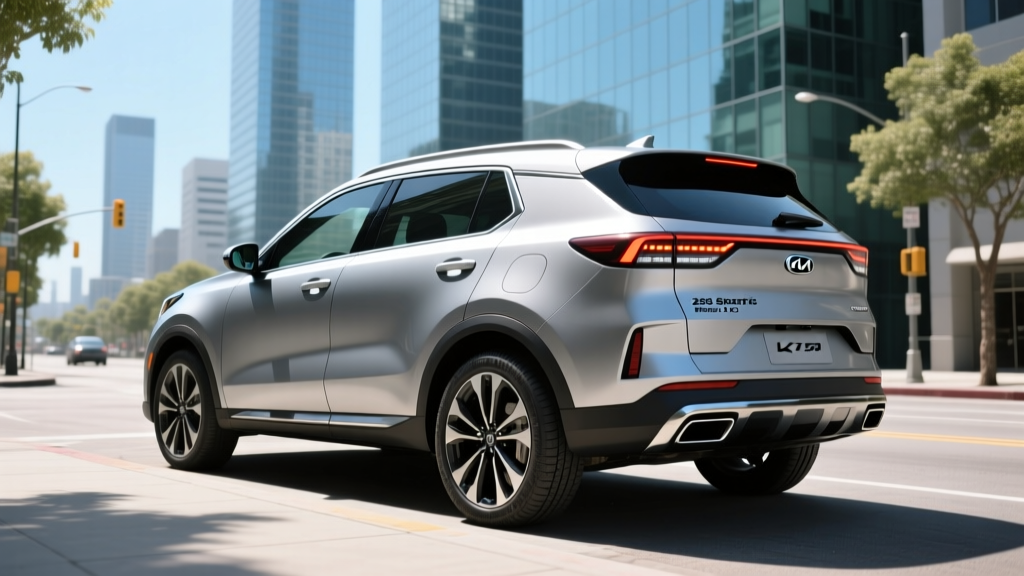
The 2026 Kia Sportage Hybrid LX FWD occupies a specific niche that a lot of buyers are hunting for: a compact SUV that sips fuel without requiring you to plug in, change your routine, or pay a steep premium. With an EPA-estimated 43 MPG combined, a 232-horsepower turbocharged hybrid powertrain, and a starting MSRP around $30,090, the base LX FWD trim is the value play in the Sportage Hybrid lineup. It skips the AWD system and higher-trim luxuries to deliver maximum fuel economy and minimum sticker shock.
But EPA numbers don't tell the whole story. Real-world hybrid efficiency depends heavily on your driving mix, and the Sportage Hybrid's turbocharged 1.6-liter engine behaves differently than the naturally aspirated setups in rivals like the Toyota RAV4 Hybrid or Honda CR-V Hybrid. This guide breaks down every spec that matters — fuel economy, powertrain details, battery warranty, pricing, and tax-credit reality — so you can decide whether this is the right electrified SUV for your garage.
Fuel Economy: EPA Ratings and Real-World MPG
The headline number for the 2026 Sportage Hybrid LX FWD is its EPA-estimated fuel economy. Because this is a conventional hybrid (HEV) — not a plug-in — there's no electric-only range or MPGe to decode. You fill it with gas, and the hybrid system handles the rest.
| Metric | EPA Estimate |
|---|---|
| City MPG | 42 MPG |
| Highway MPG | 44 MPG |
| Combined MPG | 43 MPG |
| Fuel Tank Capacity | 13.7 gallons |
| Total Driving Range | ~589 miles (EPA est.) |
How Many MPG Does This Hybrid Get?
The 2026 Kia Sportage Hybrid LX FWD achieves 42 city / 44 highway / 43 combined MPG per the EPA. For a compact SUV, that puts it among the top tier of non-plug-in hybrids. The FWD configuration is key here — adding AWD (available on higher trims) drops combined fuel economy to roughly 38 MPG due to the weight and drivetrain losses of the rear motor.
HEV vs. PHEV: What the Sportage Hybrid Lineup Actually Offers
Kia sells the Sportage in three powertrain flavors for 2026: a conventional gas model, a conventional hybrid (HEV), and a plug-in hybrid (PHEV). The LX FWD is exclusively a conventional hybrid. Here's the critical distinction:
Sportage Hybrid (HEV) — LX FWD
- No plug-in required
- 1.49 kWh battery (self-charging via regen + engine)
- 43 MPG combined
- No electric-only driving range
- Lower MSRP, no federal tax credit
Sportage Plug-In Hybrid (PHEV) — X-Line
- Plugs into a 120V or 240V outlet
- 13.8 kWh battery pack
- ~34 miles electric-only range (EPA est.)
- ~430 miles total combined range
- Higher MSRP, may qualify for partial incentives
The HEV generates all its electric energy internally. The small 1.49 kWh lithium-ion battery charges through regenerative braking and the gasoline engine — you never plug it in. The PHEV, by contrast, carries a much larger 13.8 kWh pack that you charge from a wall outlet or public charger, enabling roughly 34 miles of electric-only driving before the gas engine kicks in.
If you're cross-shopping the Sportage Hybrid LX FWD, you're almost certainly looking at the HEV. The PHEV is only offered in higher AWD-only trims (X-Line and above) and starts significantly higher. For buyers who want plug-in capability, the PHEV is worth the premium — but that's a different vehicle at a different price point.
Powertrain: 232 HP From a Turbo-Hybrid System
The 2026 Sportage Hybrid pairs a turbocharged 1.6-liter four-cylinder gasoline engine with a 47.7 kW (64 HP) electric motor mounted between the engine and the six-speed automatic transmission. Combined system output is 232 horsepower and 258 lb-ft of torque.
| Component | Specification |
|---|---|
| Engine | 1.6L turbocharged 4-cylinder (Smartstream G1.6T) |
| Engine Output | 178 HP / 195 lb-ft torque |
| Electric Motor | 47.7 kW (64 HP) permanent-magnet synchronous |
| Combined System Output | 232 HP / 258 lb-ft torque |
| Transmission | 6-speed automatic (torque-converter, not CVT) |
| Drivetrain | Front-wheel drive (FWD) |
| Hybrid Battery | 1.49 kWh lithium-ion polymer |
| 0–60 MPH | ~7.4 seconds (est.) |
Unlike the Toyota RAV4 Hybrid's e-CVT, which can drone under hard acceleration, the Sportage Hybrid uses a conventional six-speed automatic. This gives it a more natural, stepped shifting feel that most drivers prefer, though it sacrifices a small amount of efficiency in the process. The turbocharged engine also delivers stronger passing power at highway speeds compared to the naturally aspirated 2.5-liter in the RAV4 Hybrid.
The FWD layout in the LX trim means there's no rear electric motor — all propulsion comes from the front axle. This saves roughly 100 pounds versus the AWD Hybrid and is the reason the LX FWD achieves the highest MPG in the lineup. If you live in a region with mild winters or prioritize fuel economy over traction, FWD is the efficiency-maximizing choice.
Pricing, Tax Credits, and Ownership Costs
The 2026 Kia Sportage Hybrid LX FWD starts at an MSRP of approximately $30,090, including destination charge. That positions it competitively against the Toyota RAV4 Hybrid LE AWD (~$33,445) and Honda CR-V Hybrid Sport FWD (~$35,395), making the Sportage Hybrid one of the most affordable hybrid compact SUVs on the market.
| Trim | Drivetrain | Approx. MSRP |
|---|---|---|
| LX | FWD | $30,090 |
| EX | AWD | $33,590 |
| SX-Prestige | AWD | $38,490 |
| PHEV X-Line | AWD | $40,490 |
| PHEV X-Line Prestige | AWD | $44,090 |
Does the Sportage Hybrid LX FWD Qualify for Any Tax Credit?
No. The conventional Sportage Hybrid (HEV) does not qualify for the federal §30D Clean Vehicle Credit. That credit applies only to battery electric vehicles (BEVs) and plug-in hybrids (PHEVs) that meet battery-component and critical-mineral sourcing requirements, MSRP caps ($80,000 for SUVs), and buyer income limits. Since the HEV has no plug and a battery far too small to meet the 7 kWh minimum threshold, it is ineligible.
The Sportage PHEV trims may qualify for a partial or full federal credit depending on current-year battery sourcing rules, but eligibility shifts frequently. Always verify on the IRS's official qualifying vehicle list before purchasing. Some states offer additional hybrid rebates or HOV lane access — check your state's energy office for current programs.
Even without a tax credit, the Sportage Hybrid LX FWD's fuel savings are meaningful. At 43 MPG combined versus a typical gas-only compact SUV at 28 MPG, and with gas at $3.50/gallon, a driver covering 15,000 miles annually saves roughly $1,000 per year in fuel costs — paying back any hybrid premium in the first few years of ownership.
Reliability, Battery Warranty, and Long-Term Costs
Hybrid reliability is a top concern for buyers transitioning from conventional vehicles. The Sportage Hybrid's powertrain is now in its second generation of Kia's TMED-II (Transmission-Mounted Electric Device) architecture, which has proven durable in the Niro and Sorento Hybrid lineups since 2023.
- Hybrid Battery: 10 years / 100,000 miles (whichever comes first)
- Hybrid System Components: 10 years / 100,000 miles
- Powertrain (engine + transmission): 10 years / 100,000 miles
- Bumper-to-Bumper: 5 years / 60,000 miles
- Capacity Retention Threshold: Battery replacement covered if capacity falls below 70% during warranty period
Is This Hybrid Reliable and What Is Battery Replacement Cost?
Kia's 10-year/100,000-mile hybrid battery warranty is among the best in the industry and matches Hyundai's coverage. For context, Toyota covers its hybrid battery for 10 years/150,000 miles on models from 2020 onward. The Sportage Hybrid's 1.49 kWh battery is small and operates in a narrow state-of-charge window (roughly 40–80%), which minimizes degradation stress. Most hybrid batteries outlast their warranty periods by significant margins — data from Toyota's Prius fleet shows batteries commonly exceeding 200,000 miles before needing replacement.
If you do need a hybrid battery replacement out of warranty, expect a cost in the range of $2,000–$3,500 for the Sportage Hybrid's relatively small pack. This is significantly less than a full EV battery replacement ($8,000–$20,000+) because the HEV battery is a fraction of the size. Individual cell module replacement may be possible for less if only one section has degraded.
The conventional six-speed automatic transmission in the Sportage Hybrid is a reliability plus compared to CVT-based hybrids. CVTs in competitors have a mixed long-term track record, while Kia's torque-converter automatic is a proven, well-understood design.
Sportage Hybrid LX FWD vs. Alternatives: Which Fits You?
The decision between the Sportage Hybrid, a competing hybrid, a PHEV, or a full EV depends on your driving pattern, charging access, and budget.
| Vehicle | Combined MPG | HP | Drivetrain | Starting MSRP |
|---|---|---|---|---|
| Kia Sportage Hybrid LX | 43 MPG | 232 | FWD | ~$30,090 |
| Toyota RAV4 Hybrid LE | 39 MPG | 219 | AWD | ~$33,445 |
| Honda CR-V Hybrid Sport | 40 MPG | 204 | AWD | ~$35,395 |
| Hyundai Tucson Hybrid Blue | 38 MPG | 232 | AWD | ~$33,890 |
The Sportage Hybrid LX FWD wins on price and combined MPG, but note that every competitor in this table comes standard with AWD. If all-wheel drive is non-negotiable for your climate, the Sportage Hybrid EX AWD (~$33,590, ~38 MPG combined) is the trim to compare against those rivals directly.
Pros
- Best-in-class combined MPG (43) in FWD form
- Lowest starting MSRP among hybrid compact SUVs
- 232 HP is the most powerful in the segment
- Conventional 6-speed auto (no CVT drone)
- 10-year/100,000-mile hybrid battery warranty
- Generous cargo space: 39.5 cu ft behind rear seats
Cons
- LX trim is basic: cloth seats, smaller infotainment screen
- FWD only — AWD requires stepping up to EX trim
- No federal tax credit (HEV ineligible for §30D)
- Highway MPG drops at sustained 75+ mph speeds
- Turbo engine requires premium fuel for max output (regular acceptable)
- Hybrid brake feel can be grabby during regen transitions
Hybrid vs. PHEV vs. EV — Which Fits the Reader?
Choose the Sportage Hybrid (HEV) if: You don't have access to home or workplace charging, you want maximum simplicity (no plugs, no apps, no charging planning), and your priority is low cost of entry with strong fuel economy. The HEV works identically to a gas car in daily use — you just visit the gas station less often.
Choose the Sportage PHEV if: You can charge at home (even a standard 120V outlet works for overnight charging of the 13.8 kWh battery), your daily commute is under 34 miles round-trip, and you want the option of electric-only driving for weekday errands with gas-engine flexibility for road trips. The PHEV is the bridge between convenience and electrification.
Choose a full EV (like the Kia EV6 or Hyundai Ioniq 5) if: You have reliable Level 2 home charging, your daily driving is under 250 miles, you want zero tailpipe emissions, and you're ready to eliminate gas station visits entirely. A full EV offers the lowest per-mile energy cost (~$0.04/mile on average electricity vs. ~$0.08/mile in the Sportage Hybrid) but requires charging infrastructure and acceptance of 20–40 minute road-trip charging stops.
Frequently Asked Questions
Does the 2026 Sportage Hybrid LX FWD need to be plugged in?
No. The Sportage Hybrid is a conventional hybrid (HEV). Its 1.49 kWh battery charges entirely through regenerative braking and the gasoline engine. You fuel it like any other car — the hybrid system is invisible in daily operation.
How far can the Sportage Hybrid go on a full tank?
With a 13.7-gallon fuel tank and a 43 MPG combined EPA estimate, the Sportage Hybrid LX FWD delivers approximately 589 miles of total range. In real-world mixed driving, expect 520–580 miles between fill-ups depending on conditions and driving style.
Can the Sportage PHEV DC fast charge?
No. The Sportage PHEV charges via AC only — either a standard 120V household outlet (Level 1, ~10 hours for a full charge) or a 240V Level 2 charger (~2.5 hours at 7.2 kW). It does not have a DC fast-charging port. This is typical for PHEVs; only full EVs use DC fast charging.
Is the Sportage Hybrid good in snow and rain?
The FWD LX is adequate for light snow and rain, especially with all-season or winter tires. However, it lacks the rear electric motor that provides AWD traction in the EX and higher trims. If you regularly drive in heavy snow or on unplowed roads, the AWD Hybrid (EX trim, ~38 MPG combined) is the more appropriate choice.
How does the Sportage Hybrid compare to the Toyota RAV4 Hybrid?
The Sportage Hybrid LX FWD offers more horsepower (232 vs. 219), better combined MPG (43 vs. 39), and a lower starting price (~$30,090 vs. ~$33,445) than the RAV4 Hybrid LE. However, the RAV4 includes AWD standard, has a longer track record of hybrid reliability, and offers slightly more cargo room (41.0 vs. 39.5 cu ft). The RAV4 Hybrid also achieves 150,000 miles on its battery warranty vs. 100,000 for Kia.
What maintenance does the Sportage Hybrid require?
Routine maintenance is similar to a conventional gas car: oil changes (the turbo engine requires them on schedule, typically every 7,500–10,000 miles), tire rotations, brake fluid, and cabin air filter. One hybrid-specific advantage: regenerative braking significantly reduces wear on the friction brake pads, often lasting 80,000–100,000+ miles before replacement. There is no hybrid-specific maintenance required by the owner.
Sources: EPA Fuel Economy, Kia America Specifications, IRS §30D Clean Vehicle Credit. Pricing and specifications reflect 2026 model year data available at time of publication. Verify current figures with your dealer and the IRS before purchasing.