Quick Verdict: A Compact Hybrid SUV Built for Real-World Efficiency
The 2026 Kia Sportage Hybrid continues to occupy a compelling middle ground in the compact crossover segment. With two electrified variants — a conventional hybrid (HEV) and a plug-in hybrid (PHEV) — Kia offers buyers flexibility without forcing them into full battery-electric ownership. The 2026 model year carries forward the redesigned platform introduced for 2023, with incremental tech and interior refinements that keep it competitive against the Toyota RAV4 Hybrid, Honda CR-V Hybrid, and Ford Escape PHEV.
This guide covers everything a prospective buyer needs: the 2026 Kia Sportage Hybrid interior layout and materials, the HEV versus PHEV powertrain differences, EPA fuel economy, real-world efficiency, charging specs for the PHEV, pricing by trim, tax credit eligibility, and long-term battery reliability.
HEV vs. PHEV: Which Sportage Hybrid Is Which?
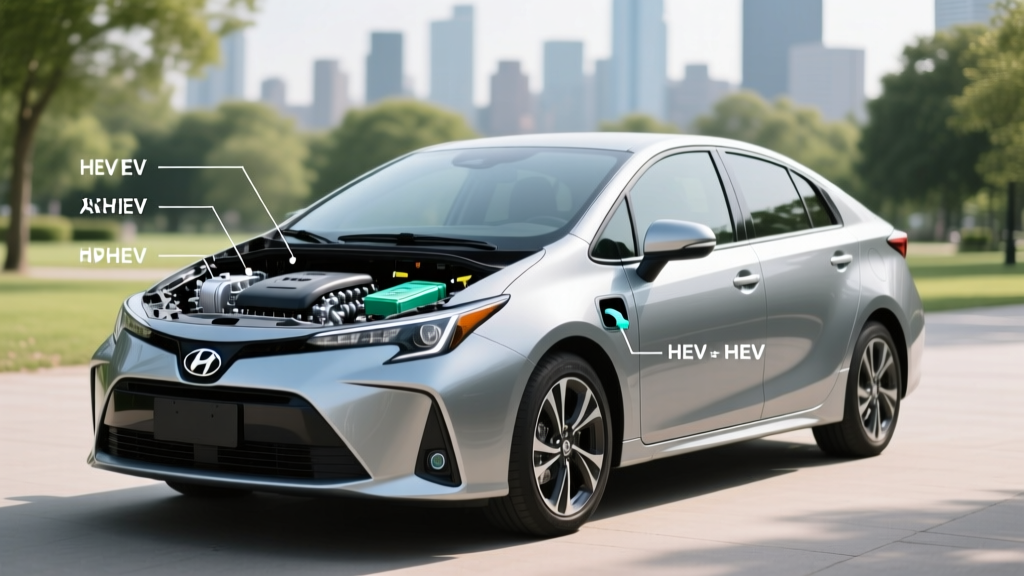
Before diving into specs, it's critical to understand the two distinct Sportage Hybrid models Kia sells. They share a nameplate but operate very differently.
| Attribute | Sportage Hybrid (HEV) | Sportage Plug-In Hybrid (PHEV) |
|---|---|---|
| Needs to be plugged in? | No — self-charging via engine and regen | Yes — plug in for electric-only driving |
| Electric-only range | Not applicable (electric assist only) | ~34 miles (EPA est.) |
| Battery size | ~1.49 kWh (small buffer) | 13.7 kWh usable |
| Combined horsepower | 226 hp | 261 hp |
| Drivetrain | AWD standard | AWD standard |
| DC fast charging | N/A | No — Level 2 AC only |
| Federal tax credit | Not eligible | Eligible — up to $7,500 (see rules below) |
The HEV is a traditional hybrid: you fill it with gas and never plug it in. The electric motor assists the gasoline engine and recaptures energy during braking. The PHEV has a substantially larger battery, enabling roughly 34 miles of pure electric driving before the gasoline engine engages. If you can charge at home or work, the PHEV effectively operates as a short-range EV for daily commutes, with a gas engine for longer trips.
Fuel Economy: EPA MPG and Real-World Numbers
Fuel efficiency is where the Sportage Hybrid justifies its existence over the standard gasoline Sportage (which returns roughly 28 MPG combined). Here's the EPA breakdown for 2026:
| Model | City MPG | Highway MPG | Combined MPG | MPGe (PHEV EV mode) |
|---|---|---|---|---|
| Sportage HEV (AWD) | 38 | 38 | 38 | N/A |
| Sportage PHEV (AWD, gas mode) | 36 | 35 | 35 | 84 MPGe |
Source: fueleconomy.gov
Real-World MPG: What Owners Actually Report
Hybrids tend to perform at or above their EPA city ratings because stop-and-go driving maximizes regenerative braking and electric-motor usage. In mixed suburban driving, many Sportage HEV owners report 39–42 MPG. Highway-only trips at 75+ mph typically yield 34–36 MPG, as the gasoline engine does more of the work at sustained speeds.
For the PHEV, real-world electric-only range varies with temperature and terrain. In mild conditions (55–75°F, flat terrain), expect the full 34 miles. In cold weather (below 35°F), that can drop to 25–28 miles due to cabin heating demands and reduced battery efficiency. The gasoline engine may activate briefly in very cold starts to provide heat, even with charge remaining.
2026 Kia Sportage Hybrid Interior: Cabin, Tech & Cargo
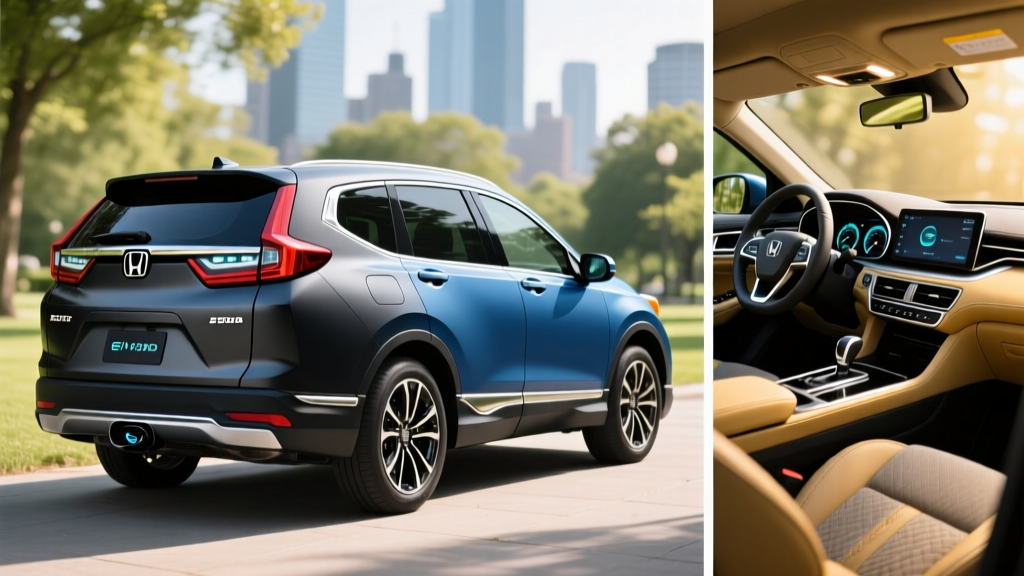
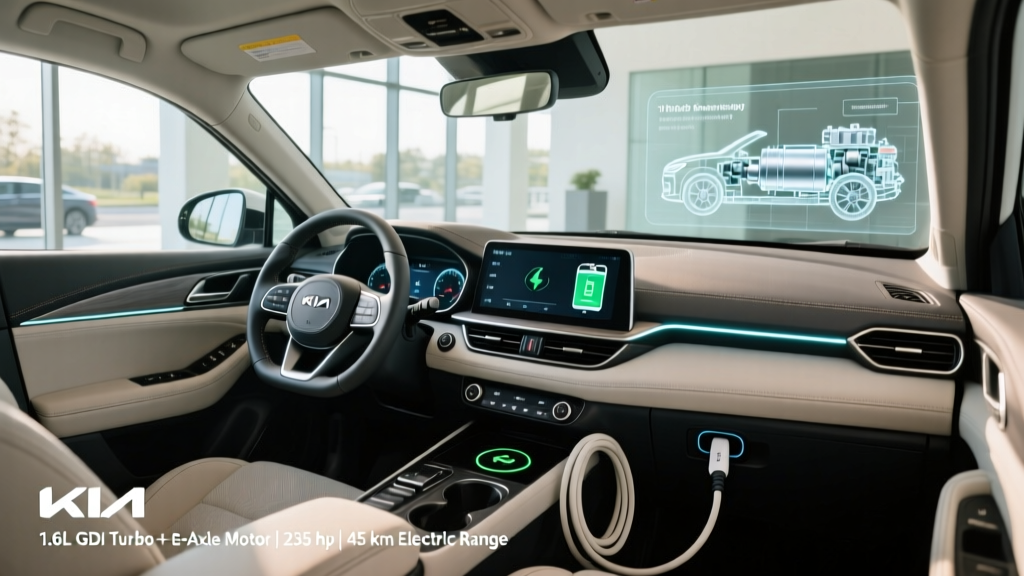
The 2026 Kia Sportage Hybrid interior receives subtle updates over the prior model year, maintaining the dual-screen dashboard layout that debuted with the current generation. Here's what buyers get across the trim range:
Display and Infotainment
Lower trims (LX, S) feature a 12.3-inch digital instrument cluster paired with an 8-inch touchscreen. EX and above step up to a curved panoramic display combining a 12.3-inch cluster with a 12.3-inch infotainment touchscreen in a single housing. The system runs Kia's latest Connect software with wireless Apple CarPlay and Android Auto across all trims — no cable required. Navigation with real-time traffic is standard from EX upward.
Materials and Comfort
Base LX trims use cloth upholstery with a leather-wrapped steering wheel. The EX adds SynTex (Kia's synthetic leather) in black or misty gray. The top-tier SX-Prestige (HEV) and X-Line (PHEV) feature genuine leather with heated and ventilated front seats and a heated steering wheel. Interior plastics are soft-touch on the dash and door uppers, with harder materials on the lower door panels and center console sides — typical for the segment.
Cargo Volume
The HEV's battery packaging is minimal, preserving 39.5 cubic feet of cargo space behind the rear seats and 73.7 cubic feet with the rear seats folded. The PHEV's larger battery reduces cargo slightly to approximately 36.5 cubic feet behind the second row, due to the raised load floor. Both models offer a modest under-floor storage compartment.
Driver Assistance Technology
All 2026 Sportage Hybrid trims include Kia's Highway Driving Assist (HDA), which combines adaptive cruise control with lane-centering. This is a SAE Level 2 driver-assistance system — the driver must remain attentive with hands on the wheel at all times. It is not autonomous or self-driving. Additional standard features include forward collision-avoidance assist, blind-spot monitoring, rear cross-traffic alert, and safe exit assist.
Powertrain, Performance & PHEV Charging Specs
| Specification | Sportage HEV | Sportage PHEV |
|---|---|---|
| Engine | 1.6L turbocharged 4-cylinder | 1.6L turbocharged 4-cylinder |
| Engine output | 178 hp / 195 lb-ft | 178 hp / 195 lb-ft |
| Electric motor | 47.7 kW (64 hp) | 72 kW (97 hp) |
| Combined system output | 226 hp / 258 lb-ft | 261 hp / 258 lb-ft |
| Transmission | 6-speed automatic | 6-speed automatic |
| 0–60 mph (est.) | ~7.5 sec | ~6.7 sec |
| Battery capacity | 1.49 kWh | 13.7 kWh (usable) |
| Battery chemistry | NMC lithium-ion | NMC lithium-ion |
| Electric-only range (EPA) | N/A | ~34 miles |
| Total range (gas + electric) | ~480 miles | ~430 miles |
| Level 2 charging (240V) | N/A | ~3 hrs (3.3 kW onboard charger) |
| DC fast charging | N/A | Not available |
| Drivetrain | AWD (electronic) | AWD (electronic) |
| Towing capacity | 2,000 lbs | 2,000 lbs |
PHEV Charging Reality
The Sportage PHEV uses a standard J1772 connector for Level 2 AC charging. With its 3.3 kW onboard charger, a full charge from empty takes roughly 3 hours on a 240V Level 2 home charger. On a standard 120V household outlet (Level 1), expect approximately 10–12 hours for a full charge — adequate for overnight replenishment if you drive less than the 34-mile electric range daily.
The absence of DC fast charging is typical for compact PHEVs. The 13.7 kWh battery is small enough that Level 2 replenishment is practical, and adding DC fast-charge hardware would increase cost and weight without meaningful benefit for the use case.
Pricing, Trims & Tax Credit Eligibility
The 2026 Kia Sportage Hybrid lineup is priced as follows (MSRP, before destination):
- Sportage HEV LX: ~$29,990
- Sportage HEV EX: ~$32,490
- Sportage HEV SX-Prestige: ~$37,090
- Sportage PHEV X-Line: ~$39,990
- Sportage PHEV X-Line Prestige: ~$44,490
Destination charge: ~$1,375. Prices are estimated based on 2025 carryover and may vary at launch.
Federal Tax Credit: PHEV Eligibility Under §30D
The Sportage PHEV may qualify for the federal clean vehicle credit under IRS §30D — but eligibility is not guaranteed for every buyer. Current rules require:
- MSRP cap: SUVs must be priced at or below $80,000 (both PHEV trims clear this)
- Buyer income cap: AGI must not exceed $150,000 (single), $225,000 (head of household), or $300,000 (joint)
- Battery sourcing: Critical minerals and battery components must meet phased-in sourcing thresholds that tighten annually
- Point-of-sale transfer: Eligible buyers can apply the credit as a down-payment reduction at the dealership rather than waiting for a tax refund
- Assembly: Final assembly must occur in North America (the Sportage PHEV is assembled in West Point, Georgia)
The Sportage HEV (conventional hybrid) does not qualify for the §30D credit, as it does not meet the minimum 4 kWh battery capacity and 15-mile electric-only range requirements for plug-in vehicles.
Source: IRS.gov — Clean Vehicle Tax Credits. Eligibility rules are subject to change. Consult a tax professional before relying on credit availability.
Battery Warranty, Reliability & Replacement Cost
| Coverage | Sportage HEV | Sportage PHEV |
|---|---|---|
| Hybrid battery warranty | 10 years / 100,000 miles | 10 years / 100,000 miles |
| Hybrid system components | 10 years / 100,000 miles | 10 years / 100,000 miles |
| Basic vehicle warranty | 5 years / 60,000 miles | 5 years / 60,000 miles |
| Powertrain warranty | 10 years / 100,000 miles | 10 years / 100,000 miles |
| Capacity retention threshold | Below ~70% (typical) | Below ~70% of original capacity |
How Long Will the Battery Last?
Kia's 10-year/100,000-mile hybrid battery warranty is among the longest in the industry. Modern NMC hybrid batteries in PHEV and HEV applications experience minimal degradation because the battery management system (BMS) keeps the state of charge within a narrow, protective window — the battery is never fully drained or fully saturated during normal operation.
Based on fleet data from similar Kia/Hyundai hybrid platforms, most owners report negligible range loss over the first 5–7 years. The 1.49 kWh HEV battery sees very shallow cycles and is unlikely to require replacement during typical ownership. The PHEV's 13.7 kWh pack undergoes deeper cycles but remains well within proven durability ranges.
Battery Replacement Cost
If replacement is needed outside warranty (rare but possible at high mileage), expect:
- HEV battery: $2,000–$3,500 (small pack, simple swap)
- PHEV battery: $6,000–$9,000 (larger pack, more complex integration)
These figures are estimates based on current parts pricing for the NQ platform. Independent hybrid battery refurbishment shops may offer lower-cost options as the fleet ages.
Who Should Buy the Sportage Hybrid — And Who Shouldn't?
Pros
- Strong combined MPG (38 HEV) with no plug-in requirement
- Class-leading 10-year/100k-mile hybrid battery warranty
- PHEV covers most daily commutes on electricity alone (34 mi)
- Spacious interior with segment-competitive cargo volume
- Standard AWD across all hybrid trims
- Wireless CarPlay/Android Auto standard
Cons
- PHEV lacks DC fast charging (3.3 kW onboard charger only)
- PHEV price premium over HEV is ~$8,000–$10,000
- Highway MPG drops below city MPG (hybrid-typical)
- HEV does not qualify for federal tax credit
- SynTex and hard plastics on lower trims feel budget-tier at this price
- 261 hp PHEV is brisk but not class-leading (RAV4 Prime: 302 hp)
Decision Framework: HEV, PHEV, or Full EV?
Choose the Sportage HEV if: You want better fuel economy than a gas car but cannot charge at home or work. You drive a mix of city and highway and want zero behavior change — just fill up with gas and go.
Choose the Sportage PHEV if: You can install a Level 2 charger at home, your daily commute is under 35 miles round-trip, and you want EV-like operating costs for daily driving while retaining gas-engine range for road trips. The federal tax credit (if eligible) narrows the price gap significantly.
Choose a full EV (e.g., Kia EV6, Hyundai Ioniq 5) if: You have reliable home charging, your typical trips fall within 250–300 miles, and you want zero gasoline expenses, minimal maintenance, and access to the full $7,500 federal credit without PHEV battery-size caveats.
Frequently Asked Questions
How many MPG does the 2026 Kia Sportage Hybrid get?
The Sportage HEV (AWD) achieves an EPA-estimated 38 MPG combined (38 city / 38 highway). The Sportage PHEV returns 35 MPG combined once the battery is depleted, plus 84 MPGe when operating in electric mode. Real-world city driving often exceeds EPA estimates by 2–4 MPG in the HEV due to regenerative braking efficiency.
How far can the Sportage PHEV go on electric only?
The EPA estimates 34 miles of electric-only range for the 2026 Sportage PHEV. In real-world conditions, expect 30–34 miles in mild weather and 25–28 miles in cold weather (below 35°F) when cabin heating draws additional energy.
Does the 2026 Sportage Hybrid qualify for any tax credit?
The Sportage PHEV may qualify for up to $7,500 under the federal §30D clean vehicle credit, subject to buyer income limits, MSRP caps, and battery-sourcing requirements. The conventional HEV does not qualify. Some states offer additional rebates for PHEVs — check your state's energy office or fueleconomy.gov for current incentives.
Is the Sportage Hybrid reliable? What about battery replacement?
Kia's hybrid system has proven reliable across multiple model generations. The 10-year/100,000-mile hybrid battery warranty provides strong coverage. Out-of-warranty PHEV battery replacement is estimated at $6,000–$9,000; HEV replacement at $2,000–$3,500. However, most hybrid batteries outlast 150,000+ miles with minimal degradation due to protective BMS management.
Do I need to plug in the Sportage Hybrid HEV?
No. The conventional Sportage Hybrid (HEV) charges its small battery through regenerative braking and the gasoline engine. It has no plug and no electric-only driving mode. Only the Sportage PHEV requires plug-in charging to access its 34-mile electric range.
How does the Sportage Hybrid compare to the RAV4 Hybrid and CR-V Hybrid?
The Sportage HEV's 38 MPG combined matches the Honda CR-V Hybrid AWD and trails the Toyota RAV4 Hybrid AWD slightly (39–41 MPG combined). The Sportage PHEV's 34-mile electric range is competitive with the Ford Escape PHEV (37 mi) but trails the RAV4 Prime (42 mi). Where Kia leads is warranty coverage — 10 years versus Toyota's 10 years/150,000 miles on hybrid components (varies by state) and Honda's 8 years/100,000 miles.
Specifications and pricing in this article are based on available 2026 model-year data and manufacturer disclosures. Final EPA certifications and MSRP figures may vary at launch. Always verify current specifications with your local Kia dealer and consult IRS.gov for the latest tax credit eligibility rules.