Quick Verdict: The 2026 Kia Niro Plug-In Hybrid at a Glance
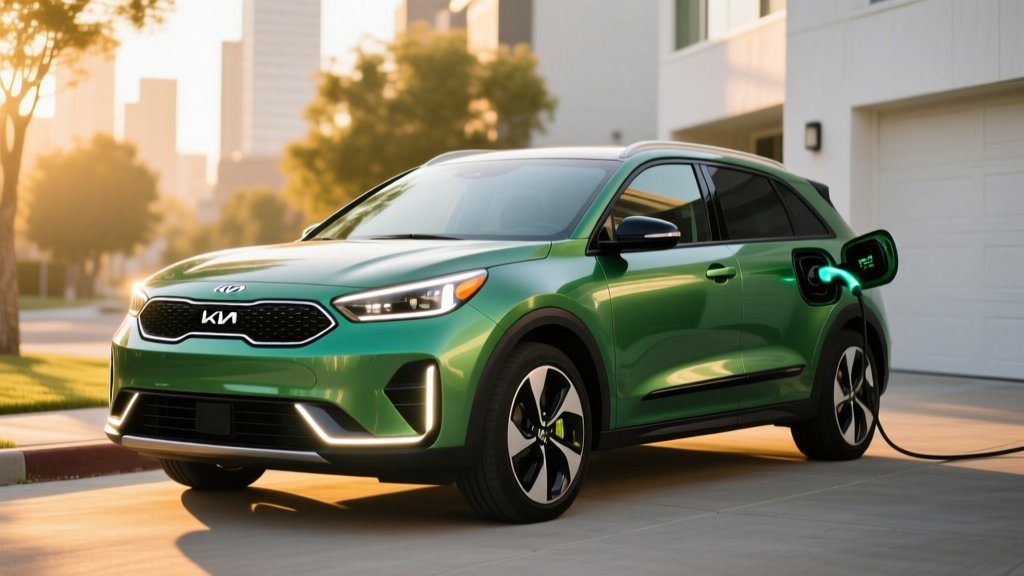
The 2026 Kia Niro Plug-In Hybrid occupies a narrow but practical lane: it gives you enough electric-only range to handle most daily commutes without burning a drop of gasoline, then seamlessly switches to a highly efficient hybrid powertrain for longer trips. With an EPA-rated 33 miles of all-electric driving and 48 MPG combined once the battery depletes, it's one of the most efficient PHEVs in its class — and it starts under $35,000 before any incentives.
For buyers who can charge at home but aren't ready to commit to a full battery-electric vehicle, the Niro PHEV removes range anxiety entirely. You get EV-like daily driving costs with the fallback of a gas tank for road trips. The trade-offs are modest: no DC fast charging capability, a small frunk-less cargo area compared to some rivals, and a powertrain that prioritizes efficiency over thrill.
| Spec | Value |
|---|---|
| Powertrain | 1.6L 4-cyl + electric motor (PHEV) |
| Combined Horsepower | 180 hp |
| Battery Capacity (usable) | 11.1 kWh (lithium-ion polymer) |
| EV-Only Range (EPA) | 33 miles |
| Total Combined Range | ~440 miles |
| EPA MPGe (EV mode) | 108 MPGe |
| EPA MPG (hybrid mode) | 48 combined (50 city / 46 hwy) |
| Level 1 Charge Time (120V) | ~11 hours (0–100%) |
| Level 2 Charge Time (240V, 3.3 kW) | ~3 hours (0–100%) |
| DC Fast Charging | Not available |
| 0–60 mph | ~7.2 seconds |
| Starting MSRP | $34,490 (EX trim) |
| Battery Warranty | 10 years / 100,000 miles |
HEV vs. PHEV: Which Niro Is Right for You?
Kia sells the 2026 Niro in two electrified flavors, and confusing them is one of the most common buyer mistakes. Here's the breakdown:
| Attribute | Niro Hybrid (HEV) | Niro Plug-In Hybrid (PHEV) |
|---|---|---|
| Needs to be plugged in? | No — charges via regen and engine | Yes — plug in to access EV range |
| EV-only range | None (electric motor assists only) | 33 miles (EPA) |
| Battery size | 1.56 kWh | 11.1 kWh |
| Combined MPG | 53 MPG combined | 48 MPG combined (after EV range) |
| Combined HP | 139 hp | 180 hp |
| Starting MSRP | $28,290 | $34,490 |
| Federal tax credit (§30D) | Not eligible | Potentially eligible (see below) |
| Best for | No home charging access; budget-first | Home chargers wanting EV-like daily driving |
The conventional Niro HEV never needs a plug. Its small battery recovers energy through regenerative braking and the gasoline engine, delivering outstanding 53 MPG combined without any behavior change. If you can't charge at home — apartment living, street parking, no garage outlet — the HEV is the smarter pick.
The PHEV's advantage is the 33-mile electric envelope. If your round-trip commute is under 30 miles and you charge nightly, you could go weeks without visiting a gas station. The trade-off is a higher purchase price and a slightly lower hybrid-mode MPG (48 vs. 53) due to the heavier battery pack. Once the battery is depleted, the PHEV operates exactly like a conventional hybrid — no range anxiety, no behavior change required.
Fuel Economy and Electric-Only Range
The 2026 Niro PHEV posts strong numbers across every efficiency metric. According to EPA data on fueleconomy.gov, the official ratings break down as follows:
| Mode | City | Highway | Combined |
|---|---|---|---|
| EV-only (MPGe) | 120 MPGe | 97 MPGe | 108 MPGe |
| Hybrid (MPG) | 50 MPG | 46 MPG | 48 MPG |
Real-world MPG vs. EPA: Hybrid powertrains typically exceed their EPA city ratings in stop-and-go traffic because regenerative braking recovers more energy at lower speeds. In mixed real-world driving, owners commonly report 48–52 MPG in hybrid mode. Highway driving at 75+ mph tends to land closer to 42–44 MPG, where aerodynamic drag dominates and regen opportunities are fewer. Cold weather (below 35°F) can reduce both EV range and hybrid efficiency by 15–25% due to cabin heating demands and reduced battery performance — expect roughly 25–28 miles of EV range in winter conditions.
EPA EV-only range: 33 miles. Real-world expectation: 28–33 miles in mild weather, 25–28 miles in cold weather (below 35°F), and up to 35 miles in gentle city driving at moderate temperatures. Total combined range (EV + gas tank): approximately 440 miles.
Powertrain and Performance
The Niro PHEV pairs a 1.6-liter naturally aspirated 4-cylinder engine (producing 104 hp on its own) with a 62-kW electric motor integrated into a 6-speed dual-clutch automatic transmission. Combined system output is 180 horsepower and 195 lb-ft of torque, routed to the front wheels.
This is notably more power than the conventional Niro HEV's 139 hp, and it shows in everyday driving. The 0–60 mph sprint takes roughly 7.2 seconds — not sporty, but adequate for highway merging and confident passing. The dual-clutch transmission avoids the rubber-band feel of the CVTs found in some competitors (like the Toyota Prius Prime), giving the Niro PHEV a more natural acceleration character.
Driving modes include EV (electric-only), Hybrid (automatic blending), and a driver-selectable HEV mode that preserves battery charge for later use — useful if you're heading into a city zone after a highway stretch.
Charging: What You Need to Know
The 2026 Niro PHEV uses a standard J1772 connector for AC charging and comes with a Level 1 (120V) charging cable in the box. Here's what to expect at each charging level:
| Level | Voltage | Power (kW) | Full Charge Time | Miles Added/Hour |
|---|---|---|---|---|
| Level 1 | 120V AC | ~1.4 kW | ~11 hours | ~3 mi/hr |
| Level 2 | 240V AC | 3.3 kW (onboard max) | ~3 hours | ~11 mi/hr |
| DC Fast Charge | — | — | Not supported | |
Critical note on DC fast charging: The Niro PHEV cannot accept DC fast charging. This is standard for most PHEVs — their smaller batteries (11.1 kWh) don't justify the cost and weight of DC-FC hardware, and a 3-hour Level 2 charge is typically sufficient for overnight replenishment. If you need rapid public charging, a full BEV is the better fit.
Home charging setup: Level 1 charging from a standard 120V outlet works if you drive under 30 miles daily and can leave the car plugged in overnight. However, a Level 2 home charger (240V, requiring a NEMA 14-50 outlet or hardwired installation) cuts charge time to 3 hours and is strongly recommended. Budget $500–$1,500 for a quality Level 2 EVSE (ChargePoint Home Flex, Emporia Vue, or similar) and $300–$1,200 for electrician installation, depending on your panel capacity and run distance. A licensed electrician should evaluate your panel before installation — a 200-amp service is typically sufficient, but older homes with 100-amp panels may need an upgrade ($1,500–$3,000).
Pricing, Trims, and Federal Tax Credit
The 2026 Niro Plug-In Hybrid is available in three trims:
- EX: $34,490 — 8-inch display, wireless Apple CarPlay/Android Auto, heated front seats, highway driving assist
- EX Touring: $36,790 — adds sunroof, leatherette upholstery, power driver seat, upgraded interior trim
- X-Line: $38,090 — rugged styling package, synthetic leather, roof rails, unique 18-inch wheels
All trims include Kia's suite of ADAS features (forward collision avoidance, lane-keeping assist, blind-spot monitoring, rear cross-traffic alert) as standard equipment.
Federal Tax Credit Eligibility (§30D)
The 2026 Kia Niro PHEV may qualify for up to $3,750 under the IRS §30D Clean Vehicle Credit, though eligibility depends on several factors that change with supply-chain sourcing. Here's the current checklist based on IRS guidelines:
- Vehicle MSRP cap: Must be under $80,000 (SUVs/vans/pickups) or $55,000 (sedans). The Niro PHEV classifies as an SUV and all trims fall well under $80,000. ✓
- Buyer income cap: Modified AGI must not exceed $150,000 (single), $225,000 (head of household), or $300,000 (joint). ✓ Verify with a tax professional.
- Battery sourcing (critical minerals): A percentage of critical minerals must be sourced from the U.S. or FTA partners. This threshold increases annually. The $3,750 partial credit (critical minerals half only) is more commonly achievable than the full $7,500.
- Battery component assembly: A percentage of battery components must be manufactured or assembled in North America. If this requirement is not met, the $3,750 component-manufacturing half of the credit is forfeited.
- Point-of-sale transfer: As of 2024, eligible buyers can transfer the credit to the dealer at purchase, reducing the sale price directly rather than waiting for a tax refund.
Important caveat: Battery sourcing and component-assembly rules tighten each year. Confirm the Niro PHEV's current eligibility on the fueleconomy.gov tax credit lookup before purchasing, and consult a tax professional for your specific situation. State-level incentives (California, Colorado, New York, and others) may stack on top — check your state's energy office for current programs.
Reliability, Battery Warranty, and Long-Term Costs
Kia backs the 2026 Niro PHEV's high-voltage battery with one of the industry's strongest warranties:
Reliability outlook: The Niro PHEV's powertrain is a carryover design that Kia has refined since the 2017 model year. The 1.6L engine and dual-clutch transmission have proven durable across the Hyundai/Kia PHEV lineup (Ioniq PHEV, Sorento PHEV, Sportage PHEV). PHEV batteries in this class typically retain 85–92% of original capacity after 8–10 years based on fleet data from similar Hyundai/Kia platforms.
Battery replacement cost: If the high-voltage battery requires replacement out of warranty, expect a parts-and-labor cost in the $4,000–$7,000 range based on current Kia PHEV battery pricing. However, most PHEV batteries outlast the vehicle's economic life — the 11.1 kWh pack has a relatively gentle duty cycle compared to full BEVs, and the 10-year/100,000-mile warranty covers the vast majority of ownership scenarios.
Insurance and maintenance: The Niro PHEV's insurance premiums typically run 5–12% higher than the conventional Niro HEV due to the higher MSRP and high-voltage system, but remain moderate compared to full EVs. Maintenance costs are lower than a gas-only vehicle (no starter motor, less brake wear from regen, no traditional transmission fluid changes) but include the same oil changes and engine service as any combustion vehicle.
Pros and Cons
✓ Pros
- 33 miles EV range covers most commutes gas-free
- 48 MPG combined in hybrid mode — top of class
- No range anxiety — gas tank for long trips
- 10-year / 100,000-mile battery warranty
- More power (180 hp) than the HEV variant
- Standard ADAS suite across all trims
- Sub-$35k starting price before incentives
✗ Cons
- No DC fast charging capability
- 3.3 kW onboard charger is slow for public Level 2
- Cargo space reduced vs. Niro HEV (battery pack)
- EV range drops to ~25–28 mi in cold weather
- Federal tax credit may be only $3,750, not full $7,500
- Front-wheel drive only — no AWD option
- Infotainment interface feels dated vs. rivals
Who Should Buy the Niro PHEV — and Who Shouldn't
Choose the Niro PHEV if:
- Your daily round-trip drive is under 30 miles and you can charge at home
- You want EV-like daily costs but need gas flexibility for road trips
- You're not ready for a full BEV due to apartment living limitations on long trips or charging-desert concerns
- You value a long battery warranty and proven PHEV powertrain
Choose the Niro HEV instead if:
- You cannot plug in at home (no garage, street parking, no outlet access)
- You want the lowest purchase price and simplest ownership
- Your driving is mostly highway (where the HEV's 53 MPG advantage matters)
Choose a full EV (like the Kia EV6 or Hyundai Ioniq 5) if:
- You want zero tailpipe emissions and minimal maintenance
- You have reliable home charging and access to DC fast chargers for road trips
- You want the full $7,500 federal tax credit (more likely on qualifying BEVs)
- You want 250+ miles of range and DC fast charging for long-distance travel
Frequently Asked Questions
How many MPG does the 2026 Kia Niro Plug-In Hybrid get?
The EPA rates the Niro PHEV at 48 MPG combined (50 city / 46 highway) once the battery is depleted and it operates as a conventional hybrid. In EV-only mode, it achieves 108 MPGe combined. Real-world hybrid-mode MPG typically ranges from 44–52 depending on driving style, temperature, and terrain.
How far can the Niro PHEV go on electric only?
The EPA rates the 2026 Niro PHEV at 33 miles of all-electric range. In real-world conditions, expect 28–33 miles in mild weather and 25–28 miles in cold weather (below 35°F). Gentle city driving at moderate temperatures can push this to 35 miles.
Does the 2026 Niro PHEV qualify for a federal tax credit?
It may qualify for up to $3,750 under the IRS §30D Clean Vehicle Credit, depending on battery sourcing compliance and your income level. The full $7,500 credit is less likely due to critical-mineral and component-assembly sourcing requirements that tighten annually. Confirm eligibility on fueleconomy.gov and consult a tax professional before purchasing. The credit can be transferred to the dealer at point of sale.
Is the Niro PHEV reliable, and what does battery replacement cost?
The Niro PHEV's powertrain has been in production since 2017 and has a strong reliability track record across the Hyundai/Kia PHEV lineup. The high-voltage battery is warranted for 10 years / 100,000 miles. Out-of-warranty replacement typically costs $4,000–$7,000, but PHEV batteries in this class rarely need replacement within the vehicle's useful life.
Can I charge the Niro PHEV at a public DC fast charger?
No. The 2026 Niro PHEV does not support DC fast charging. It charges via AC only — Level 1 (120V, ~11 hours) or Level 2 (240V, ~3 hours at its 3.3 kW onboard maximum). This is typical for PHEVs with smaller battery packs.
How does the Niro PHEV compare to the Toyota Prius Prime?
The Prius Prime offers more EV range (44 miles EPA) and slightly higher combined MPG, plus available DC-adjacent rapid charging on some trims. The Niro PHEV counters with a more spacious interior (especially rear headroom and cargo), a longer 10-year battery warranty (Toyota offers 10yr/150k in CARB states, 8yr/100k federally), and a lower starting MSRP. Your choice depends on whether EV range (Prius Prime) or interior space and warranty (Niro PHEV) matters more.
Does the Niro PHEV need to be plugged in to work?
No. If you never plug it in, the Niro PHEV operates as a conventional hybrid — the gasoline engine and regenerative braking keep the battery charged. You'll simply miss out on the 33-mile EV-only range and the associated fuel savings. Plugging in is optional but strongly recommended to maximize efficiency and minimize fuel costs.