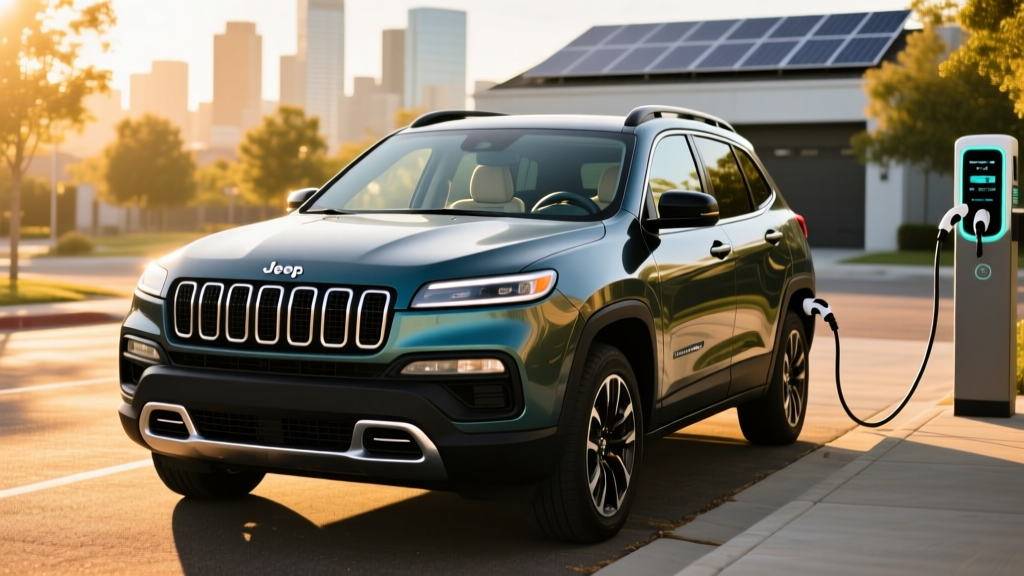
The compact SUV segment is overdue for an electrified Cherokee. After the Cherokee nameplate went on hiatus following the 2021 model year, Jeep parent company Stellantis has signaled a next-generation return — and a hybrid variant is central to that plan. The 2026 Jeep Cherokee Hybrid is shaping up to be the brand's answer to the Toyota RAV4 Hybrid, Ford Escape Hybrid, and Honda CR-V Hybrid: a compact crossover that blends off-road credibility with meaningful fuel savings.
As of early 2026, Jeep has not published final EPA-certified specifications for the Cherokee Hybrid. What follows is a synthesis of confirmed Stellantis platform details, spy-shot evidence, regulatory filings, and the hybrid powertrains already deployed across the Stellantis portfolio. We will update this guide as official figures are released. Until then, treat all specs as preliminary estimates.
What Is the 2026 Jeep Cherokee Hybrid? HEV vs. PHEV Explained
Before diving into specs, it is essential to understand the two hybrid flavors Jeep is expected to offer — and the difference matters enormously for your daily routine and your wallet.
Conventional Hybrid (HEV)
- How it works: A gasoline engine paired with one or more electric motors and a small battery (typically 1–2 kWh). The battery recharges through regenerative braking and the engine — you never plug it in.
- Best for: Drivers without home charging access, apartment dwellers, or anyone who wants better MPG with zero behavior change.
- Real-world expectation: Seamless, gas-and-go. Just fill up at any station.
Plug-In Hybrid (PHEV)
- How it works: A larger battery (typically 15–20 kWh) and more powerful electric motor give you a meaningful electric-only driving range before the gas engine kicks in. You plug in to recharge — at home or at public chargers.
- Best for: Drivers with home or workplace charging who want EV-like commuting with gas-engine road-trip flexibility.
- Real-world expectation: 25–40 miles electric for daily errands, then unlimited range on gas for longer trips.
Stellantis already deploys a proven PHEV system in the Jeep Wrangler 4xe and Jeep Grand Cherokee 4xe. Industry analysts and regulatory filings suggest the 2026 Cherokee will offer at minimum a conventional HEV, with a PHEV (likely badged Cherokee 4xe) following either at launch or shortly after.
Estimated Powertrain Specs and Performance
The next-generation Cherokee is expected to ride on Stellantis's STLA Medium platform, which was engineered from the ground up to accommodate hybrid, PHEV, and battery-electric powertrains. Here is what we anticipate based on the platform's confirmed capabilities and existing Stellantis hybrid architectures:
| Spec | Cherokee HEV (Est.) | Cherokee 4xe PHEV (Est.) |
|---|---|---|
| Engine | 1.6L turbocharged I-4 | 1.6L turbocharged I-4 |
| Electric Motor | Integrated starter-generator + e-axle | Rear-axle e-motor (AWD capable) |
| Combined Horsepower | ~200–215 hp | ~275–300 hp |
| Transmission | 6-speed automatic / e-DCT | 8-speed automatic |
| Battery Capacity | ~1.5 kWh (NiMH or Li-ion) | ~17–20 kWh (Li-ion NMC) |
| Drivetrain | FWD / AWD available | AWD standard (e-motor rear) |
| Towing Capacity | ~1,500–2,000 lbs | ~2,000–3,500 lbs |
The PHEV's rear-mounted electric motor is a Stellantis hallmark — it provides electric AWD without a mechanical driveshaft, improving both efficiency and traction. If the Cherokee 4xe follows the Wrangler 4xe playbook, expect strong low-end torque for light off-road use and a combined output that makes this one of the quicker compact hybrid SUVs on the market.
Fuel Economy: Estimated EPA MPG and Real-World Expectations
Fuel economy is the primary reason most buyers consider a hybrid. Based on the Cherokee's projected weight, aerodynamics, and comparable Stellantis hybrid efficiency data, here are our estimates:
| Configuration | City MPG | Highway MPG | Combined MPG |
|---|---|---|---|
| Cherokee HEV (FWD, est.) | 38–41 | 33–36 | 36–38 |
| Cherokee HEV (AWD, est.) | 35–38 | 31–34 | 34–36 |
| Cherokee 4xe PHEV (charge-sustaining, est.) | 30–33 | 28–31 | 29–32 |
| Cherokee 4xe PHEV (MPGe, combined, est.) | 80–95 MPGe (electric + gas combined) | ||
PHEV Electric-Only Range and Charging Details
For the Cherokee 4xe PHEV variant, electric-only range is the headline number. Based on the 17–20 kWh battery pack estimate and the vehicle's projected efficiency:
- Estimated electric-only range: 28–37 miles (EPA)
- Total combined range (electric + gas): 400–450+ miles
- Level 1 charging (120V household outlet): ~8–10 hours for a full charge — adequate for overnight top-ups
- Level 2 charging (240V home or public): ~2.5–3.5 hours with a 7.2 kW onboard charger
- DC fast charging: Not expected. Most Stellantis PHEVs (Wrangler 4xe, Grand Cherokee 4xe) do not support DC fast charging. The Cherokee 4xe will likely follow this pattern, relying on Level 2 as its fastest charge method.
This is a critical ownership consideration: if you need rapid public charging for road trips, a PHEV without DC fast charging means you will be running on the gas engine for long-distance travel. That is by design — the PHEV's electric range is optimized for daily commuting, not cross-country drives.
Pricing, Trims, and Tax Credit Eligibility
Official MSRP figures have not been announced. Based on competitive positioning and Stellantis's current pricing strategy, here are our estimates:
- Cherokee HEV (base Sport/Latitude): ~$33,000–$36,000 MSRP
- Cherokee HEV (Trailhawk/Limited): ~$38,000–$43,000 MSRP
- Cherokee 4xe PHEV (base): ~$40,000–$44,000 MSRP
- Cherokee 4xe PHEV (Trailhawk/High trim): ~$46,000–$52,000 MSRP
Federal Tax Credit: Does the Cherokee Hybrid Qualify?
This is where HEV and PHEV diverge sharply under current IRS rules:
- Conventional HEV: Does not qualify for the federal §30D clean vehicle credit. The credit requires a minimum battery capacity of 7 kWh and plug-in capability — criteria that only PHEVs and BEVs meet.
- Cherokee 4xe PHEV: May qualify for up to $7,500 under IRS §30D, but eligibility depends on multiple conditions that change frequently.
- Vehicle MSRP must not exceed $80,000 for SUVs (Cherokee should clear this easily)
- Buyer adjusted gross income must not exceed $150,000 (single) / $300,000 (joint)
- Battery components must meet escalating domestic-content and critical-mineral sourcing thresholds — these tighten annually
- Credit can now be transferred to the dealer at point of sale as an immediate price reduction
- Vehicle must undergo final assembly in North America
Always verify current eligibility at fueleconomy.gov and consult a tax professional before relying on credit estimates. Sourcing rules have disqualified several previously eligible models.
Battery Warranty, Reliability, and Replacement Cost
Hybrid battery longevity is consistently a top concern for first-time hybrid buyers. Here is what the data shows:
How Long Will the Battery Actually Last?
Modern lithium-ion hybrid batteries are engineered for 150,000–200,000+ miles of service life. The HEV's small battery (~1.5 kWh) undergoes shallow charge-discharge cycles, which dramatically reduces wear. PHEV batteries see deeper cycles but benefit from active thermal management. Real-world data from Toyota, Honda, and Ford hybrids shows battery replacement rates below 2% within the warranty period.
Replacement Cost If Needed
- HEV battery replacement: $2,000–$4,000 (small pack, lower cost)
- PHEV battery replacement (out of warranty): $6,000–$10,000 depending on pack size and labor
These are worst-case scenarios. Most hybrid batteries outlast the vehicle itself, and refurbished/remanufactured packs are increasingly available at 40–60% of new-pack cost.
Overall Reliability Outlook
Stellantis's hybrid systems in the Wrangler 4xe and Grand Cherokee 4xe have accumulated millions of real-world miles. The powertrain architecture is proven, though Jeep's overall brand reliability scores from IIHS and Consumer Reports have historically been mid-pack. The new STLA Medium platform is designed for improved build quality, but first-model-year vehicles often carry higher defect risk. Buyers prioritizing reliability may want to wait for the 2027 model year or extended real-world data.
Who Should Choose the Cherokee Hybrid vs. a Full EV or Gas SUV?
Choose the Cherokee HEV If:
- You cannot charge at home (apartment, street parking, no garage)
- You want 35+ MPG without changing any habits — just buy gas as usual
- You drive a mix of city and highway and want a simpler ownership experience
- Your budget is tighter and you do not need electric-only commuting
Choose the Cherokee 4xe PHEV If:
- You have Level 2 home or workplace charging
- Your daily commute is under 35 miles round-trip (you could drive months without using gas)
- You want EV-like quietness and instant torque for daily driving but need gas-engine range for road trips
- You want to potentially claim the $7,500 federal tax credit
Choose a Full BEV (e.g., Tesla Model Y, Hyundai Ioniq 5) If:
- You have reliable home charging and your typical trips are under 250 miles
- You want zero tailpipe emissions and minimal maintenance (no oil changes, no gas engine)
- You are ready to plan around DC fast charging for road trips
Stick With a Gas-Only SUV If:
- You drive fewer than 8,000 miles per year (fuel savings may not offset the hybrid premium)
- You frequently tow heavy loads beyond the hybrid's rated capacity
- Upfront cost is your absolute priority and you cannot access tax credits
Pros (Estimated)
- Jeep's off-road DNA in a hybrid package — Trailhawk trim likely
- Significant fuel savings vs. gas-only compact SUVs (35–40 MPG combined)
- PHEV variant offers 30+ miles of electric commuting
- STLA Medium platform is modern, lightweight, and efficient
- Federal tax credit potential on 4xe PHEV model
- Strong combined HP, especially on the PHEV
Cons (Estimated)
- Final EPA specs and pricing are not yet confirmed
- PHEV likely will not support DC fast charging
- Jeep brand reliability has been inconsistent historically
- First-year model risk — potential for early-build quality issues
- HEV variant will not qualify for federal EV tax credit
- Cargo space may be slightly reduced vs. gas-only rivals due to battery packaging
Competitive Landscape: How Does It Stack Up?
The compact hybrid SUV segment is fiercely competitive. The 2026 Cherokee Hybrid will need to contend with established players:
- Toyota RAV4 Hybrid: ~39 MPG combined, proven reliability, ~$32,000 starting — the segment benchmark
- Toyota RAV4 Prime (PHEV): 42 miles electric, 94 MPGe, ~$44,000 — the PHEV to beat
- Ford Escape Hybrid: ~37 MPG combined, strong value, ~$34,000 starting
- Honda CR-V Hybrid: ~40 MPG combined, refined ride, ~$35,000 starting
- Hyundai Tucson PHEV: 33 miles electric, ~$38,000 starting, DC fast charge capable
The Cherokee's differentiator will be off-road capability. No rival in this segment offers anything close to Jeep's Trail Rated credential. If you need hybrid efficiency and genuine trail capability, the Cherokee Hybrid may be the only option in its class.
Frequently Asked Questions
How many MPG does the 2026 Jeep Cherokee Hybrid get?
Official EPA numbers are pending. Based on platform data and competitive benchmarks, we estimate the conventional HEV will achieve 36–38 MPG combined (FWD), with city MPG potentially reaching 38–41 thanks to regenerative braking. The PHEV will deliver 80–95 MPGe when combining electric and gas operation, and roughly 29–32 MPG combined once the battery is depleted.
How far can the Cherokee 4xe PHEV go on electric only?
We estimate 28–37 miles of electric-only range, depending on battery size confirmation and driving conditions. This is enough for most daily commutes. Cold weather and highway speeds will reduce this figure by 15–25%.
Does the Cherokee Hybrid need to be plugged in?
The conventional HEV does not need to be plugged in — it recharges its small battery through regenerative braking and the engine. The PHEV (4xe) should be plugged in to take advantage of its electric range, but it will operate as a regular hybrid if you never plug it in.
Is the 2026 Cherokee Hybrid reliable?
Stellantis's 4xe hybrid system has proven durable in the Wrangler and Grand Cherokee over millions of miles. However, Jeep's overall brand reliability scores remain mid-tier, and first-year models carry additional risk. The hybrid battery is federally warranted for 8 years / 100,000 miles (10 years / 150,000 miles in CARB states).
What does it cost to replace the hybrid battery?
Out-of-warranty replacement is estimated at $2,000–$4,000 for the HEV battery and $6,000–$10,000 for the larger PHEV pack. In practice, modern hybrid batteries rarely need replacement within the first 150,000 miles.
Does the 2026 Jeep Cherokee Hybrid qualify for a tax credit?
The conventional HEV does not qualify for the federal §30D credit. The 4xe PHEV may qualify for up to $7,500, subject to buyer income limits, vehicle MSRP caps, battery sourcing requirements, and North American final assembly rules. Check current eligibility at fueleconomy.gov and consult a tax professional.
When will the 2026 Jeep Cherokee Hybrid be available?
Stellantis has not confirmed an exact on-sale date. Industry expectations point to a reveal in late 2025 or early 2026, with deliveries beginning in the first half of the 2026 calendar year. The PHEV 4xe variant may follow several months after the HEV launch.
This article is based on available information as of early 2026. Specifications, pricing, and tax credit eligibility are subject to change. We will update this guide when Jeep publishes official EPA-certified figures and MSRP data. Always verify details with your local Jeep dealer and IRS.gov before making a purchase decision.