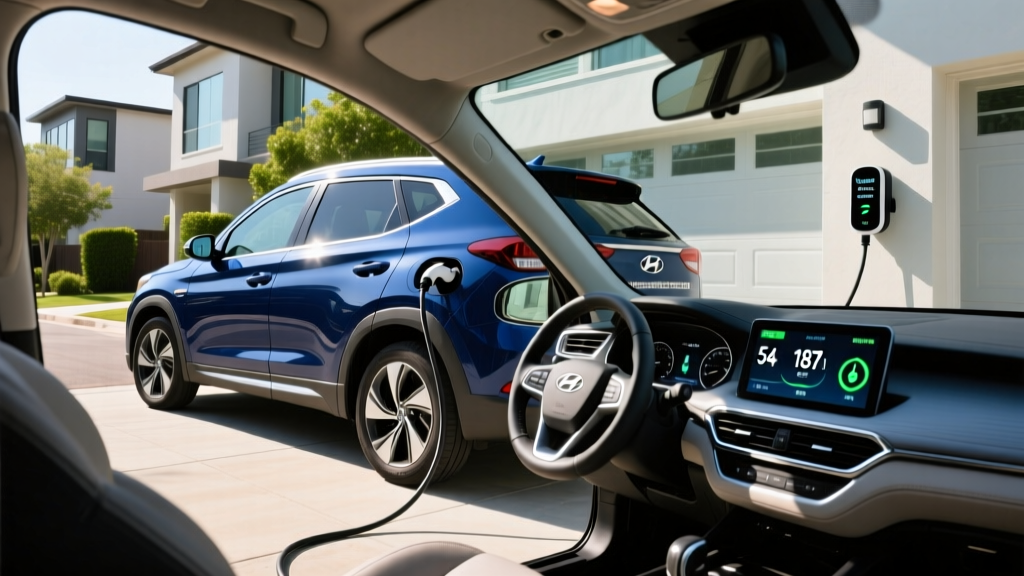
The 2026 Hyundai Tucson Plug-In Hybrid occupies a specific niche: buyers who want electric-only commuting without surrendering the flexibility of a gas engine for road trips. With an EPA-estimated 33 miles of electric range, 268 combined horsepower, and a starting MSRP around $39,090, it competes directly with the Toyota RAV4 Prime and Ford Escape PHEV. But specs on paper don't tell the full story — real-world efficiency, charging practicality, and long-term battery costs determine whether this PHEV actually saves you money.
This guide breaks down every number that matters, from the 13.8 kWh battery's usable capacity to the nuances of federal tax credit eligibility under current IRS §30D rules. We'll also clarify where the Tucson PHEV fits against the conventional Tucson Hybrid and a full battery-electric alternative.
HEV vs PHEV: Which Tucson Is Right for You?
Hyundai sells the Tucson in three powertrains for 2026: a conventional gas model, a standard hybrid (HEV), and the plug-in hybrid (PHEV). Confusing them at the dealership is easy — and costly. Here's the fundamental difference:
Conventional Hybrid (HEV)
- No plug — the battery charges via regenerative braking and the engine
- Smaller battery (~1.5 kWh), assists the engine for better MPG
- EPA combined: ~38 MPG
- No electric-only driving beyond very low-speed creep
- No federal tax credit eligibility
Plug-In Hybrid (PHEV)
- Plugs in to charge — Level 1 (120V) or Level 2 (240V)
- Larger battery (13.8 kWh), enables 33 miles of electric-only driving
- EPA combined (gas-only after battery depleted): ~35 MPG
- Electric-only range covers most daily commutes
- May qualify for federal or state incentives (see tax section below)
The bottom line: If you can charge at home and your round-trip commute is under 30 miles, the PHEV lets you drive almost entirely on electricity on weekdays while keeping a 380+ mile total range for weekend trips. If you lack home charging access, the conventional HEV delivers strong MPG without any plug-in hassle.
EPA MPG, MPGe, and Real-World Efficiency
| Metric | EPA Estimate | Real-World Expectation |
|---|---|---|
| MPGe (electric + gas combined) | 80 MPGe | 70–85 MPGe (depends on charge frequency) |
| Gas-only combined MPG | 35 MPG | 32–37 MPG |
| Gas-only city MPG | 35 MPG | 33–38 MPG (regen helps in stop-and-go) |
| Gas-only highway MPG | 35 MPG | 30–34 MPG (aerodynamic drag at 70+ mph) |
| Electric-only range | 33 miles | 27–33 miles (cold weather reduces to ~24–28 mi) |
| Total combined range | ~410 miles | ~370–410 miles |
The Tucson PHEV's 80 MPGe rating is meaningful only if you charge regularly. MPGe (miles per gallon equivalent) measures how far the vehicle travels on a mix of electricity and gasoline, converting kWh consumption into a gasoline-equivalent figure. If you never plug in, you're driving a slightly heavier conventional hybrid and should expect roughly 33–35 MPG combined — respectable, but not the headline number.
Hybrids and PHEVs in gas-only mode often exceed EPA city estimates in real-world stop-and-go driving because regenerative braking recaptures energy that friction brakes would waste. Highway driving is the opposite: sustained high speeds reduce efficiency, and the added weight of the PHEV battery (roughly 250 lbs over the HEV) works against you once the battery is depleted.
In cold weather (below 35°F), expect the electric-only range to drop 15–25%. Battery chemistry becomes less efficient at low temperatures, and cabin heating draws from the traction battery unless you precondition while plugged in. This is normal for all PHEVs and BEVs alike.
Battery, Charging, and Powertrain Specs
| Specification | 2026 Tucson PHEV |
|---|---|
| Battery capacity (total / usable) | 13.8 kWh / ~11.5 kWh usable |
| Battery chemistry | Lithium-ion polymer (NMC) |
| Electric-only range (EPA) | 33 miles |
| Combined horsepower | 268 hp (180 hp engine + 100 kW motor) |
| Engine | 1.6L turbocharged 4-cylinder |
| Transmission | 6-speed automatic |
| Drivetrain | HTRAC AWD (standard) |
| 0–60 mph | ~7.0 seconds |
| Level 1 charging (120V) | ~11 hours (0–100%) |
| Level 2 charging (240V, 7.2 kW) | ~2 hours (0–100%) |
| DC fast charging | Not available |
| Charge port | J1772 (Level 2) |
The 13.8 kWh battery pack uses NMC (nickel manganese cobalt) chemistry, which offers higher energy density than LFP but is more sensitive to sustained high or low states of charge. Hyundai includes a buffer — you'll never see the full 13.8 kWh available — to protect long-term battery health.
Charging tops out at 7.2 kW on a Level 2 home charger, filling the battery from empty in roughly two hours. There is no DC fast-charging capability, which is typical for PHEVs in this class. The smaller battery means you don't need 150 kW highway chargers; overnight Level 2 or even a standard 120V outlet handles daily needs. On a 120V outlet (Level 1), expect about 4–5 miles of range added per hour of charging — sufficient if you park for 10+ hours overnight.
The 1.6L turbo engine paired with a 100 kW electric motor delivers 268 combined horsepower, making this the quickest Tucson variant short of the N Line's sport tuning. The 6-speed automatic is a conventional torque-converter unit, not a CVT, which gives it a more natural acceleration feel than some competitors.
Pricing, Trims, and Tax Credit Eligibility
The 2026 Hyundai Tucson Plug-In Hybrid starts at approximately $39,090 (including destination) for the SEL trim and climbs to around $46,790 for the fully loaded Limited. Key trim differences include leather seating, panoramic sunroof, highway driving assist, and premium audio on upper trims.
Federal Tax Credit Eligibility (§30D — Current Rules)
- Credit amount: The Tucson PHEV battery meets the minimum 7 kWh threshold, potentially qualifying for up to $3,750 or $7,500 depending on critical-mineral and battery-component sourcing requirements.
- MSRP cap: The Tucson PHEV is classified as an SUV — MSRP must not exceed $80,000 (all trims qualify).
- Buyer income cap: AGI must not exceed $150,000 (single), $225,000 (head of household), or $300,000 (joint).
- Battery sourcing: Critical-mineral and battery-component requirements phase in annually. Hyundai's supply chain has been adjusting to meet these thresholds, but eligibility can change mid-year.
- Point-of-sale transfer: If eligible, you can transfer the credit to the dealer at purchase for an immediate price reduction.
Source: IRS §30D Clean Vehicle Credit. Verify eligibility at purchase — rules and sourcing requirements update frequently. Consult a tax professional.
Many states also offer additional PHEV incentives — California's CVRP, Colorado's innovative motor vehicle credit, and various utility rebates for charger installation. These stack with the federal credit in some cases but have their own income and residency requirements. Check your state energy office or utility provider for current programs.
Battery Warranty, Reliability, and Replacement Cost
Hyundai PHEV Battery Warranty
- Hybrid/EV battery: 10 years / 100,000 miles (original owner); may reduce to 10yr/100k in CARB states for second owners
- Capacity retention threshold: Hyundai replaces or repairs if the battery falls below approximately 70% of original capacity during the warranty period
- Powertrain warranty: 10 years / 100,000 miles
- Basic vehicle warranty: 5 years / 60,000 miles
Hyundai's 10-year/100,000-mile powertrain and hybrid battery warranty is among the longest in the industry, and it addresses the top concern for PHEV buyers: what happens when the battery degrades?
Based on data from earlier-generation Hyundai/Kia PHEVs and NMC battery behavior broadly, expect the Tucson's 13.8 kWh pack to retain roughly 85–90% of its capacity after 5 years and 60,000 miles under normal use. NMC chemistry degrades faster than LFP when routinely charged to 100% or deeply discharged, but the relatively small battery means most owners cycle it daily (shallow cycles), which is actually gentler on the cells than the deep cycles in a full BEV.
If the battery does require out-of-warranty replacement, current estimates for Hyundai PHEV packs run $5,000–$8,000 including labor. This figure has been trending downward as battery costs fall, but it remains a real long-term ownership cost to factor in if you plan to keep the vehicle past 10 years.
On reliability broadly, the Tucson PHEV's powertrain is well-proven — the 1.6T engine and 6-speed automatic are shared across Hyundai's lineup, and the electric motor adds fewer moving parts than a conventional transmission. IIHS has rated the Tucson a Top Safety Pick in prior model years; check for updated 2026 crash-test results as they publish.
Who Should Choose the Tucson PHEV vs a Full EV or Gas Car?
Pros
- 33-mile EV range covers most commutes gas-free
- 410+ mile total range eliminates road-trip anxiety
- 268 hp with standard AWD — confident acceleration and traction
- 2-hour Level 2 charge time; no DC fast charger needed
- 10-year/100,000-mile battery warranty
- Practical cargo space (only minor floor height increase over gas model)
Cons
- No DC fast charging — irrelevant for daily use, limiting on rare long EV-only legs
- Premium over conventional Tucson Hybrid (~$5,000–$7,000)
- Federal tax credit eligibility uncertain due to sourcing rules
- Electric range drops to ~24–28 miles in freezing weather
- Heavy for its size — ~4,100 lbs affects tire wear and braking
Choose the Tucson PHEV If:
- You have Level 2 (or even 120V) charging at home or work
- Your daily round-trip commute is 20–35 miles
- You take 4+ road trips per year and don't want to plan around chargers
- You want AWD and quick acceleration without a full-EV price premium
Choose the Conventional Tucson Hybrid If:
- You cannot charge at home or work
- Your commute exceeds 40 miles one way (the PHEV battery won't cover it)
- You want the lowest upfront cost and don't care about electric-only driving
Choose a Full EV (e.g., Hyundai Ioniq 5) If:
- You want zero gas station visits and lower per-mile fuel cost
- You have reliable home charging and access to DC fast chargers for road trips
- You qualify for the full $7,500 federal credit, narrowing the price gap
Ownership Costs: Tucson PHEV vs the Alternatives
Let's put numbers to the ownership equation. Assuming 15,000 miles/year, $3.50/gallon gas, and $0.14/kWh home electricity:
| Cost Factor (5 yr / 75k mi) | Tucson PHEV | Tucson HEV | Tucson Gas (AWD) |
|---|---|---|---|
| Fuel cost | ~$5,200 | ~$6,900 | ~$9,300 |
| Estimated maintenance | ~$2,800 | ~$3,000 | ~$3,500 |
| Purchase price (base MSRP) | $39,090 | $33,390 | $31,590 |
| Est. federal tax credit | $0–$7,500 | $0 | $0 |
| 5-year net cost (no credit) | ~$47,090 | ~$43,290 | ~$44,390 |
| 5-year net cost (w/ $7,500 credit) | ~$39,590 | ~$43,290 | ~$44,390 |
The PHEV's fuel savings are substantial — roughly $1,700 less than the HEV and $4,100 less than the gas model over five years — but the purchase premium means you need the federal tax credit to break even against the conventional hybrid. Without the credit, the HEV is the more economical choice for pure cost-per-mile. With the full $7,500 credit applied at point of sale, the PHEV becomes the cheapest option to own over five years while offering the most versatile powertrain.
Insurance premiums for the Tucson PHEV tend to run 5–12% higher than the gas model due to the higher replacement cost of the battery and powertrain electronics. Get quotes before purchasing — your insurer, driving record, and zip code will determine the actual delta.
Frequently Asked Questions
How many MPG does the 2026 Hyundai Tucson Plug-In Hybrid get?
The EPA rates the Tucson PHEV at 80 MPGe when combining electric and gas driving, and 35 MPG combined in gas-only mode (35 city / 35 highway). In real-world driving, expect 32–37 MPG gas-only depending on conditions, and significantly higher effective efficiency if you charge daily and stay within the 33-mile electric range.
How far can the Tucson PHEV go on electric only?
The EPA-estimated electric-only range is 33 miles. In real-world conditions, expect 27–33 miles in mild weather and 24–28 miles in freezing temperatures. Highway speeds above 65 mph and aggressive acceleration will also reduce this figure.
Does the Tucson PHEV qualify for a federal tax credit?
It may qualify for up to $7,500 under IRS §30D, depending on battery-component and critical-mineral sourcing requirements that update annually. The Tucson PHEV's MSRP is under the $80,000 SUV cap, and buyer income limits apply ($150K single / $300K joint). Check the IRS clean vehicle credit page and verify with your dealer at the time of purchase. The credit can be transferred to the dealer for a point-of-sale price reduction.
Is the Tucson PHEV reliable, and what does a battery replacement cost?
The Tucson PHEV's powertrain components are well-established, and Hyundai backs the hybrid battery with a 10-year/100,000-mile warranty covering replacement if capacity drops below ~70%. Out-of-warranty replacement currently costs an estimated $5,000–$8,000. NMC battery degradation data from similar Hyundai/Kia PHEVs suggests 85–90% capacity retention at 5 years/60,000 miles under normal use.
Can I charge the Tucson PHEV on a regular household outlet?
Yes. A standard 120V outlet (Level 1) charges the battery in approximately 11 hours, adding about 4–5 miles of range per hour. For most owners who park overnight, this is sufficient to replenish the 33-mile electric range by morning. A 240V Level 2 charger reduces charge time to about 2 hours.
Hybrid vs PHEV vs EV — which should I choose?
Choose the conventional hybrid (HEV) if you can't charge at home and want maximum MPG with zero behavior change. Choose the PHEV if you can charge at home, commute under 35 miles round-trip, and still want gas flexibility for road trips. Choose a full EV if you want the lowest operating cost, have home charging, and are comfortable with DC fast charging on road trips. The PHEV is the bridge option — it rewards charging access without penalizing you when you don't have it.
Sources: EPA Fuel Economy (fueleconomy.gov), IRS §30D Clean Vehicle Credit, Hyundai Motor America specifications.