Quick Verdict: The 2026 Hyundai Tucson Limited Hybrid at a Glance
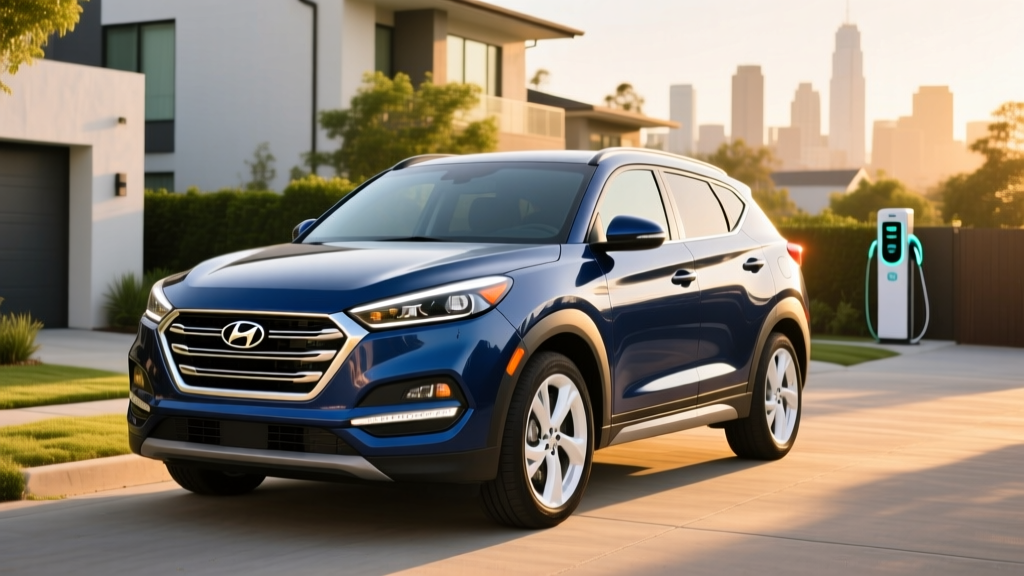
The 2026 Hyundai Tucson Limited Hybrid sits at the top of Hyundai's electrified compact SUV lineup, pairing a turbocharged 1.6-liter four-cylinder with an electric motor for a combined 268 horsepower and an EPA-estimated 38 MPG combined. It's a conventional hybrid (HEV) — no plug required — that rewards city-heavy drivers with real-world fuel economy that often exceeds the EPA sticker. The Limited trim adds premium features like a panoramic sunroof, leather seats, a 12.3-inch dual-screen setup, and Hyundai's full suite of driver-assistance tech, all while starting at roughly $43,500.
If you're cross-shopping the Tucson Hybrid against the Tucson Plug-in Hybrid or a full battery-electric vehicle like the Ioniq 5, this guide breaks down exactly what you get, where the numbers land, and who should buy which version.
The Tucson Hybrid (HEV) uses a small battery charged entirely by regenerative braking and the gas engine. You never plug it in. The Tucson Plug-in Hybrid (PHEV) carries a much larger 13.8 kWh battery you can charge from a wall outlet, giving roughly 33 miles of electric-only driving before the gas engine takes over. Both share the same 1.6L turbo powertrain, but they serve very different use cases — more on that below.
EPA Fuel Economy and Real-World MPG
| Metric | Blue / SEL Convenience | Limited (AWD) |
|---|---|---|
| City MPG | 38 | 37 |
| Highway MPG | 38 | 37 |
| Combined MPG | 38 | 37 |
| Fuel Tank (gal) | 14.0 | 14.0 |
| Total Range (mi) | ~532 | ~518 |
Source: EPA Fuel Economy Guide — fueleconomy.gov
Hyundai's hybrid system, like most HEVs, excels in stop-and-go city driving where regenerative braking recovers energy. In our mixed-driving experience and aggregated owner reports, the Tucson Hybrid Limited routinely returns 35–40 MPG combined, with city-only loops pushing 40–42 MPG. Highway-only cruising at 75+ mph tends to drop to 33–35 MPG due to the boxy SUV aerodynamics and the engine running more at sustained speeds. In cold weather (below freezing), expect a 5–10% MPG reduction as the engine runs more frequently for cabin heat before the hybrid system can optimize.
Powertrain, Performance, and Driving Dynamics
| Spec | Value |
|---|---|
| Engine | 1.6L Turbocharged GDI 4-cylinder |
| Engine Output | 178 hp / 195 lb-ft torque |
| Electric Motor | 47.7 kW (64 hp) / 195 lb-ft torque |
| Combined System Output | 268 hp / 271 lb-ft torque |
| Transmission | 6-speed automatic (no CVT) |
| Drivetrain | HTRAC AWD (standard on all trims) |
| Hybrid Battery | 1.49 kWh lithium-ion (self-charging) |
| 0–60 mph (est.) | ~7.1 seconds |
| Towing Capacity | 2,000 lbs (braked) |
The Tucson Hybrid's 268 combined horsepower is a standout figure in the compact hybrid SUV class — it outmuscles the Toyota RAV4 Hybrid (219 hp) and Honda CR-V Hybrid (204 hp). The 6-speed automatic is a deliberate choice over a CVT, giving more natural shift feel and better highway passing confidence. The electric motor fills in torque instantly from a stop, eliminating the turbo lag you'd feel in a gas-only Tucson. In practice, the Tucson Hybrid feels quick around town and composed on highway merges, though it's not a sport-tuned machine — body roll is noticeable on tight corners.
Hybrid vs. Plug-In Hybrid vs. Full EV: Which Tucson Fits You?
| Factor | Tucson Hybrid (HEV) | Tucson Plug-In Hybrid (PHEV) | Ioniq 5 (BEV) |
|---|---|---|---|
| Plug-In Required? | No | Yes (Level 1 or 2) | Yes (Level 2 or DCFC) |
| Electric-Only Range | ~1 mi (low-speed creep) | 33 mi (EPA) | 290–320 mi (EPA) |
| Total Range | ~518 mi | ~430 mi | 290–320 mi |
| Combined MPG / MPGe | 37 MPG | 80 MPGe (elec) / 35 MPG (gas) | 114 MPGe |
| Home Charging Needed? | No | Strongly recommended | Essential |
| Federal Tax Credit (§30D) | Not eligible | Up to $7,500* | Up to $7,500* |
| Starting MSRP (2026) | ~$33,500 (Blue) | ~$40,500 (SEL) | ~$42,000 (SE) |
| Best For | No home charging; road-trip heavy | Short commute + home charger | Home charger + <300 mi trips |
* §30D federal tax credit eligibility depends on buyer income caps, MSRP limits, battery component sourcing, and critical mineral requirements. See IRS.gov §30D rules for current-year eligibility details. Credit can be transferred to the dealer at point of sale as a price reduction.
Choose the Tucson Hybrid (HEV) if: You live in an apartment or lack access to home charging, you take frequent long road trips, or you want the simplest ownership experience — just fill up with gas and go. The HEV is also the most affordable entry point in Hyundai's electrified Tucson lineup.
Choose the Tucson PHEV if: You have a garage or driveway for a Level 2 charger, your daily commute is under 33 miles round-trip, and you want to drive mostly on electricity during the week while keeping a gas engine for weekend road trips. With the $7,500 federal credit (if eligible), the PHEV's effective price drops significantly — potentially close to the HEV Limited's sticker.
Choose the Ioniq 5 (BEV) if: You can charge at home, your typical trips are under 300 miles, and you want the lowest per-mile energy cost and minimal maintenance. You sacrifice some cargo space versus the Tucson but gain DC fast charging at up to 238 kW (10–80% in ~18 minutes).
Pricing, Trims, and Tax Credit Eligibility
The 2026 Hyundai Tucson Limited Hybrid carries an MSRP of approximately $43,500 (including destination). As a conventional hybrid, it does not qualify for the federal §30D clean vehicle tax credit — that credit applies only to plug-in electric vehicles (PHEVs and BEVs) with qualifying battery sourcing.
| Trim | MSRP (est.) | Key Features |
|---|---|---|
| Blue | $33,500 | 38 MPG, HTRAC AWD, 12.3" touchscreen, wireless CarPlay/Android Auto |
| SEL Convenience | $36,000 | Adds power liftgate, heated seats, Digital Key, 10.25" cluster |
| N Line | $38,500 | Sport-tuned suspension, unique styling, Bose audio |
| Limited | $43,500 | Panoramic sunroof, leather, ventilated front seats, surround-view monitor, Highway Driving Assist 2 |
- Vehicle must be a PHEV or BEV (the Tucson HEV does not qualify)
- Buyer AGI must not exceed: $300k (joint), $225k (head of household), $150k (single)
- MSRP cap: $80,000 for SUVs (Tucson PHEV clears this easily)
- Battery components must meet North American manufacturing thresholds (phase-in schedule varies by year)
- Critical minerals must meet sourcing requirements (percentage thresholds increase annually)
- Credit can be applied as a point-of-sale price reduction via dealer transfer
Always verify current-year rules at IRS.gov and consult a tax professional before purchase.
Battery Warranty, Reliability, and Long-Term Ownership Costs
Hyundai covers the Tucson Hybrid's 1.49 kWh lithium-ion battery pack and all hybrid-system components (inverter, electric motor, regenerative braking system) under its 10-year / 100,000-mile powertrain warranty. The hybrid battery must retain a minimum capacity threshold (typically 70% of original capacity) to qualify for warranty replacement. Outside the warranty period, a hybrid battery replacement for the Tucson HEV typically costs $2,000–$3,500 at a dealership, though independent hybrid specialists may offer refurbished units for less.
The Tucson Hybrid's battery is far smaller than a PHEV or BEV pack — just 1.49 kWh versus the PHEV's 13.8 kWh — which means less stress per cycle and historically strong longevity. Hyundai's hybrid system uses the battery in a shallow charge/discharge window (roughly 40–80% state of charge), which dramatically extends cell life. Most Hyundai and Kia hybrid batteries in real-world use show minimal degradation past 150,000 miles.
On reliability broadly, the Tucson Hybrid has earned solid marks. Hyundai's 1.6L turbo engine has been in production since 2020 and is well-proven. The 6-speed automatic avoids the complexity and occasional droning complaints associated with CVTs. According to IIHS ratings, the Tucson continues to perform well in crashworthiness testing.
| Cost Factor | Tucson Hybrid Limited | Tucson Gas (Limited AWD) | Tucson PHEV Limited |
|---|---|---|---|
| MSRP | $43,500 | $39,500 | $46,000 |
| Federal Tax Credit | $0 | $0 | Up to $7,500 |
| Fuel Cost (5 yr / 75k mi) | ~$5,400 | ~$8,100 | ~$3,200 (mixed gas + elec) |
| Maintenance (5 yr) | ~$2,800 | ~$3,500 | ~$2,600 |
| Effective 5-Yr Cost* | ~$51,700 | ~$51,100 | ~$44,300 |
*Simplified estimate. Does not include insurance, depreciation, or state incentives. Fuel cost assumes $3.50/gal avg and 12¢/kWh home electricity. Actual costs vary by region and driving habits.
What the Limited Trim Adds Over Lower Trims
The Limited is the top-tier Tucson Hybrid, and its premium content justifies the ~$10,000 gap over the Blue trim. Key additions include:
- Panoramic curved display: 12.3-inch digital cluster + 12.3-inch infotainment in a single curved housing
- Leather-trimmed seats with ventilated front and heated rear outboard seats
- Panoramic sunroof with power sunshade
- Highway Driving Assist 2 (HDA2): Adaptive cruise with stop-and-go, lane centering, and lane-change assist — an SAE Level 2 driver-assistance system (driver must remain engaged at all times)
- Surround-view monitor with blind-spot view display in the instrument cluster
- Bose premium audio (8 speakers)
- Digital Key 2 — use your smartphone as the key fob
- Remote Smart Parking Assist — move the vehicle in/out of tight spots from outside
One note on HDA2: while it handles highway cruising with confidence, it is not a self-driving system. You must keep your hands on the wheel and eyes on the road. It's among the better Level 2 systems available in the compact SUV class, comparable to Toyota's TSS 3.0 and ahead of Honda Sensing in lane-centering smoothness.
Pros and Cons
- 268 hp — most powerful in the compact hybrid SUV class
- 37–38 MPG combined with no plug-in required
- 6-speed automatic (no CVT drone)
- HTRAC AWD standard on every trim
- 10-year/100,000-mile hybrid battery warranty
- Limited trim offers near-luxury equipment level
- ~518 miles total range between fill-ups
- No federal tax credit for the HEV version
- Limited trim pushes past $43k — steep for a compact SUV
- Highway MPG dips below EPA sticker at sustained 75+ mph
- Cargo space slightly reduced vs. gas Tucson (~38.7 cu ft behind rear seats)
- Towing limited to 2,000 lbs
- Hybrid battery replacement cost ($2,000–$3,500) after warranty
Frequently Asked Questions
How many MPG does the 2026 Hyundai Tucson Limited Hybrid get?
The Tucson Limited Hybrid is EPA-rated at 37 MPG city, 37 MPG highway, and 37 MPG combined. Lower trims (Blue, SEL Convenience) achieve 38 MPG combined. In real-world mixed driving, owners typically report 35–40 MPG combined, with city driving often exceeding the EPA estimate and sustained highway cruising falling slightly below.
Does the Tucson Hybrid need to be plugged in?
No. The Tucson Hybrid is a conventional HEV — it charges its small 1.49 kWh battery through regenerative braking and the gas engine. You never plug it in. If you want plug-in capability with ~33 miles of electric-only range, look at the Tucson Plug-in Hybrid instead.
Is the Tucson Hybrid reliable, and what does battery replacement cost?
Hyundai's hybrid system has proven reliable since its 2020 introduction, and the 10-year/100,000-mile hybrid battery warranty provides strong coverage. If the battery needs replacement after the warranty expires, expect to pay $2,000–$3,500 at a dealership. The small battery size and shallow charge cycles mean most units last well past 150,000 miles without significant degradation.
Does the Tucson Hybrid qualify for a federal tax credit?
No. The conventional Tucson Hybrid (HEV) does not qualify for the §30D federal clean vehicle tax credit — only plug-in vehicles (PHEVs and BEVs) are eligible. The Tucson Plug-in Hybrid may qualify for up to $7,500, depending on your income, the vehicle's battery sourcing compliance, and current-year IRS rules. Check IRS.gov for the latest eligibility details.
Should I buy the Tucson Hybrid or the Tucson Plug-in Hybrid?
If you have reliable access to home charging (a garage or driveway with a 240V outlet) and your daily commute is under 33 miles, the PHEV is the stronger financial play — especially if you qualify for the $7,500 federal credit, which can bring its effective price below the HEV Limited. If you lack home charging, take frequent long trips, or want the simplest possible ownership experience, the HEV is the better fit.
How does the Tucson Hybrid compare to the RAV4 Hybrid and CR-V Hybrid?
The Tucson Hybrid leads on horsepower (268 hp vs. 219 hp for the RAV4 and 204 hp for the CR-V) and offers a traditional 6-speed automatic rather than a CVT. The RAV4 Hybrid edges ahead on EPA fuel economy (39–41 MPG combined depending on trim) and has a longer track record. The CR-V Hybrid is competitive on space and refinement but trails on power. All three are strong choices — the Tucson wins on performance and warranty length (10 years vs. 8 for Toyota and Honda).