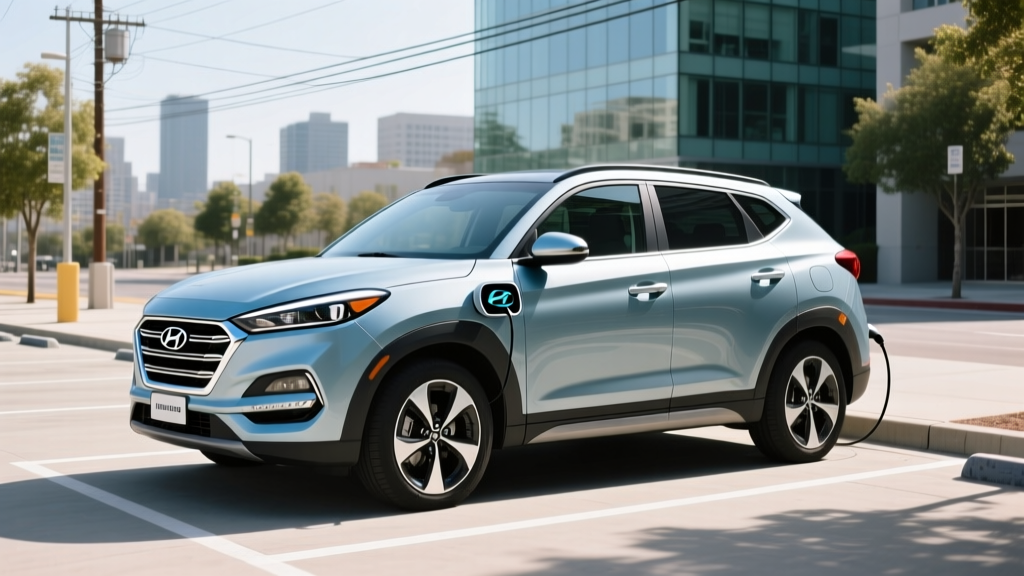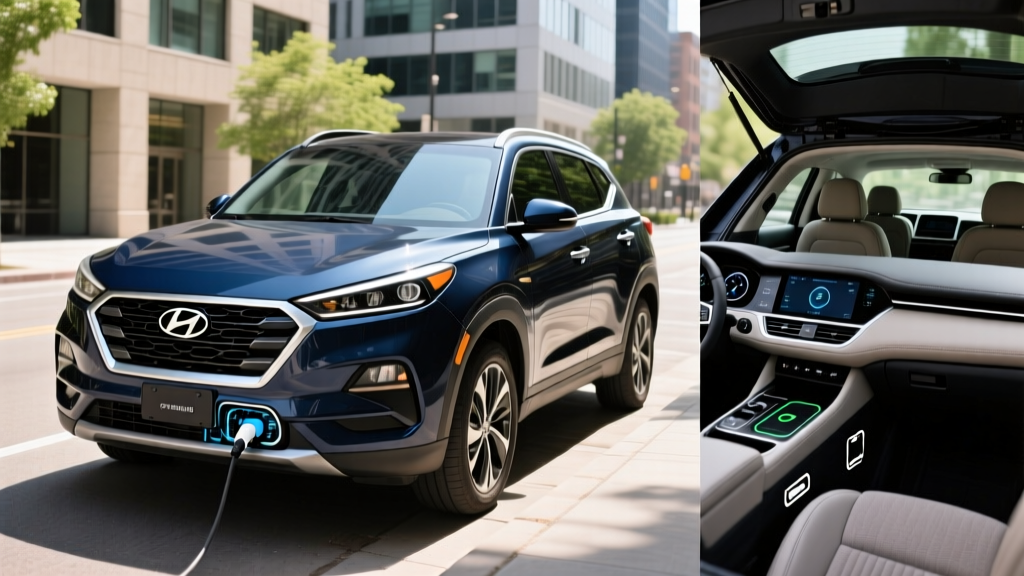
The 2026 Hyundai Tucson Hybrid SEL occupies a specific niche that a growing number of compact-SUV buyers are targeting: meaningful fuel savings without the plug-in commitment or the range anxiety of a full EV. As a conventional hybrid (HEV), it never needs to be plugged in, yet it delivers a combined EPA rating that undercuts its gasoline-only counterpart by a substantial margin. This guide breaks down the exact numbers—MPG, powertrain output, pricing, battery warranty, and tax credit reality—so you can decide whether the Tucson Hybrid SEL is the right electrified choice for your daily driving.
HEV vs. PHEV: What the Tucson Hybrid SEL Actually Is
Before examining specs, it's critical to distinguish the two Tucson electrified variants Hyundai offers, because confusing them leads to wrong purchase expectations.
| Attribute | Tucson Hybrid (HEV) | Tucson Plug-In Hybrid (PHEV) |
|---|---|---|
| Plug-in required? | No — charges via regenerative braking and engine | Yes — plug in to access electric-only driving |
| Electric-only range | None (motor always assists engine) | ~33 miles (EPA est.) |
| Battery capacity | 1.49 kWh (small buffer) | 13.8 kWh usable |
| Combined output | 231 hp / 271 lb-ft | 268 hp / 271 lb-ft |
| DC fast charging | N/A | No — Level 2 AC only |
| Federal tax credit | Not eligible | Not eligible under current §30D rules |
| Base MSRP (SEL) | ~$34,235 | ~$40,635 |
The 2026 Tucson Hybrid SEL reviewed here is the HEV. It uses a small lithium-ion polymer battery paired with a 1.6-liter turbocharged four-cylinder and a 47.7 kW electric motor integrated into the six-speed automatic transmission. You never plug it in. The engine and regenerative braking handle all battery charging automatically.
Fuel Economy: EPA Ratings and Real-World MPG
Hyundai's turbocharged hybrid powertrain delivers strong EPA figures for a compact AWD SUV. Here's the official breakdown:
| Driving Cycle | EPA Rating |
|---|---|
| City | 38 MPG |
| Highway | 38 MPG |
| Combined | 38 MPG |
Real-world MPG expectation: Hyundai's hybrid system, like most HEVs, tends to match or slightly exceed its EPA city rating in stop-and-go traffic where regenerative braking recaptures the most energy. Expect 39–42 MPG in mixed city driving. Highway cruising at 70+ mph typically yields 34–36 MPG due to the turbo engine carrying more load without electric assist benefit at sustained speed. In cold weather (below 30°F), plan for a 5–8% drop as the engine runs more frequently for cabin heat. Source: fueleconomy.gov.
The Tucson Hybrid's flat city/highway EPA split is a hallmark of Hyundai's TMED (Transmission-Mounted Electric Device) architecture, which allows the electric motor to handle low-speed propulsion while the turbo engine provides highway passing power. Compared to the gas-only Tucson AWD (26 MPG combined), the hybrid saves roughly 3.2 gallons per 100 miles—a meaningful reduction for high-mileage commuters.
Powertrain, Performance, and Drivetrain Specs
| Specification | 2026 Tucson Hybrid SEL |
|---|---|
| Engine | 1.6L turbocharged GDI 4-cylinder |
| Electric motor | 47.7 kW (64 hp) permanent-magnet synchronous |
| Combined system output | 231 hp / 271 lb-ft torque |
| Transmission | 6-speed automatic (with integrated motor) |
| Drivetrain | HTRAC All-Wheel Drive (standard) |
| 0–60 mph | ~7.1 seconds (manufacturer est.) |
| Towing capacity | 2,000 lbs |
| Fuel tank | 13.7 gallons |
| Total driving range | ~520 miles (combined EPA) |
| Battery type | Lithium-ion polymer, 1.49 kWh |
The 231 combined horsepower places the Tucson Hybrid ahead of most compact hybrid SUV competitors, including the Toyota RAV4 Hybrid (219 hp). The six-speed automatic, rather than a CVT, gives the Tucson a more traditional driving feel with defined shift points—something buyers transitioning from gas cars tend to prefer. HTRAC AWD is standard on every Hybrid SEL, using an electronically controlled coupling to send torque rearward when front-wheel slip is detected.
Pricing, Trims, and Tax Credit Reality
The 2026 Hyundai Tucson Hybrid is available in three trims. The SEL is the volume seller and the focus of this review:
- SEL Convenience: ~$34,235 MSRP (includes destination)
- Limited: ~$38,725 MSRP
- N Line: ~$39,485 MSRP
Federal tax credit status: The Tucson Hybrid (HEV) does not qualify for the federal §30D Clean Vehicle Credit. That credit applies only to plug-in electric vehicles (BEVs and qualifying PHEVs) with sufficient battery capacity and compliant critical-mineral sourcing. Conventional hybrids are excluded by statute. The Tucson PHEV also currently does not qualify due to battery-sourcing requirements under the Inflation Reduction Act. Always verify current rules at irs.gov before purchasing.
Some states offer their own hybrid or clean-vehicle rebates independent of federal rules. California's Clean Fuel Reward program, for example, has historically offered modest incentives for HEVs, though availability varies by year and funding. Check your state energy office or dealer for current local programs.
Battery Warranty, Reliability, and Replacement Cost
Hybrid battery longevity remains the top concern for first-time hybrid buyers. Hyundai addresses this with one of the strongest warranty packages in the segment:
- Hybrid battery warranty: 10 years / 100,000 miles (whichever comes first)
- Hybrid system components warranty: 10 years / 100,000 miles (includes electric motor, inverter, and related control modules)
- Powertrain warranty: 10 years / 100,000 miles
- New vehicle limited warranty: 5 years / 60,000 miles
The 1.49 kWh lithium-ion polymer battery in the Tucson Hybrid operates within a narrow state-of-charge window—typically between 40% and 60% SoC—managed by the vehicle's battery management system. This shallow cycling dramatically reduces degradation compared to full EV batteries that cycle from 10% to 90%. Real-world data from Hyundai's hybrid fleet (Ioniq Hybrid, Sonata Hybrid) shows less than 5% capacity loss over 150,000 miles in most cases.
Should the battery require replacement outside warranty, current dealer pricing for a Tucson Hybrid battery pack falls in the $2,000–$3,500 range (parts and labor), significantly less than full EV battery replacements. The smaller capacity means lower material cost and simpler swap procedures.
Hybrid vs. PHEV vs. Full EV: Which Fits Your Situation?
Choose the Tucson Hybrid (HEV) if:
- You lack access to home or workplace charging (apartment, street parking)
- You want fuel savings with zero behavior change—just fill up with gas
- You regularly drive 300+ miles between fill-ups and don't want to plan charging stops
- Your budget is under $38,000 and you need AWD
Choose the Tucson Plug-In Hybrid (PHEV) if:
- You have Level 2 home charging and a commute under 33 miles round-trip
- You want to drive most weekday miles on electricity but need gas flexibility for road trips
- You're willing to pay ~$6,400 more upfront for electric-only operation
Choose a full EV (e.g., Hyundai Ioniq 5) if:
- You have reliable home Level 2 charging
- Your daily driving is under 250 miles and you can plan DC fast-charging stops for road trips
- You want the lowest per-mile energy cost and zero tailpipe emissions
- You qualify for the $7,500 federal tax credit, which can offset the higher EV purchase price
The Tucson Hybrid SEL makes the most sense for the buyer who wants electrified efficiency without infrastructure dependency. If you can charge at home, the math shifts—compare the PHEV's electric-only commuting cost (roughly $0.04–$0.06 per mile on residential electricity) against the HEV's gasoline cost (roughly $0.09–$0.11 per mile at 38 MPG and $3.50/gallon).
What the SEL Trim Includes (and What It Doesn't)
The SEL Convenience trim, as Hyundai positions it for 2026, adds meaningful content over a base model while keeping the price accessible:
- 12.3-inch dual displays (digital cluster + infotainment)
- Wireless Apple CarPlay and Android Auto
- Heated front seats and heated steering wheel
- Smart power liftgate
- Hyundai SmartSense ADAS suite: forward collision-avoidance assist, lane keeping assist, blind-spot collision-avoidance, rear cross-traffic collision-avoidance, and highway driving assist
- Digital key (NFC smartphone-based)
- 18-inch alloy wheels
Notable omissions at the SEL level include ventilated front seats, leather upholstery, the panoramic sunroof, and the Highway Driving Assist 2 system with lane-change assist—those features require stepping up to the Limited trim. The SmartSense suite represents SAE Level 1 driver assistance; the driver must remain fully engaged at all times.
Pros, Cons, and the Final Verdict
Pros
- 38 MPG combined with AWD standard—competitive with FWD-only rivals
- 231 hp provides confident merging and highway passing
- 10-year/100,000-mile hybrid battery and powertrain warranty
- No charging infrastructure required—drop-in replacement for a gas SUV
- Conventional 6-speed automatic avoids CVT drone
- ~520 miles total range on a single tank
Cons
- No federal tax credit eligibility (HEV exclusion under §30D)
- 2,000-lb towing capacity limits utility vs. body-on-frame SUVs
- Highway MPG drops to ~34 at sustained 70+ mph speeds
- SEL trim lacks premium features found in Limited (ventilated seats, leather)
- Hybrid system adds ~200 lbs over gas Tucson, slightly affecting cargo payload
Frequently Asked Questions
How many MPG does the 2026 Hyundai Tucson Hybrid SEL get?
The EPA rates it at 38 MPG city, 38 MPG highway, and 38 MPG combined. In real-world mixed city driving, owners commonly report 39–42 MPG thanks to regenerative braking. Sustained highway driving at 70+ mph typically yields 34–36 MPG.
Does the Tucson Hybrid need to be plugged in?
No. The Tucson Hybrid (HEV) charges its small battery entirely through regenerative braking and the gasoline engine. You fuel it like any conventional vehicle at a gas station. Only the Tucson Plug-In Hybrid (PHEV) variant requires or benefits from plugging in.
Does the 2026 Tucson Hybrid qualify for any tax credit?
No. Under current IRS §30D rules, only plug-in electric vehicles (BEVs and qualifying PHEVs) are eligible for the federal Clean Vehicle Credit. Conventional hybrids like the Tucson HEV are excluded by law. Some states may offer separate hybrid incentives—check your state energy office for details. Verify current rules at irs.gov.
Is the Tucson Hybrid reliable, and how long will the battery last?
Hyundai covers the hybrid battery for 10 years or 100,000 miles. The battery operates in a shallow charge window (roughly 40–60% SoC), which minimizes degradation. Based on data from Hyundai's existing hybrid fleet, expect less than 5% capacity loss over 150,000 miles. Out-of-warranty replacement costs range from $2,000 to $3,500.
How does the Tucson Hybrid compare to the RAV4 Hybrid?
The Tucson Hybrid produces 231 hp versus the RAV4 Hybrid's 219 hp, and both achieve similar combined EPA ratings (38 vs. 39–41 MPG depending on RAV4 trim). The Tucson offers a longer powertrain warranty (10yr/100k vs. Toyota's 8yr/100k hybrid battery coverage) and a conventional automatic transmission rather than Toyota's eCVT. Cargo space is comparable at approximately 38.7 cu ft behind the second row.
Can the Tucson Hybrid run on electric power alone?
Only at very low speeds (under ~15 mph) for short distances, such as creeping through a parking lot. The 1.49 kWh battery cannot sustain electric-only driving at meaningful speeds. For substantial electric-only range, you would need the Tucson PHEV (~33 miles EPA electric) or a full EV.