Quick Verdict: The 2026 Hyundai Sonata Hybrid Limited at a Glance
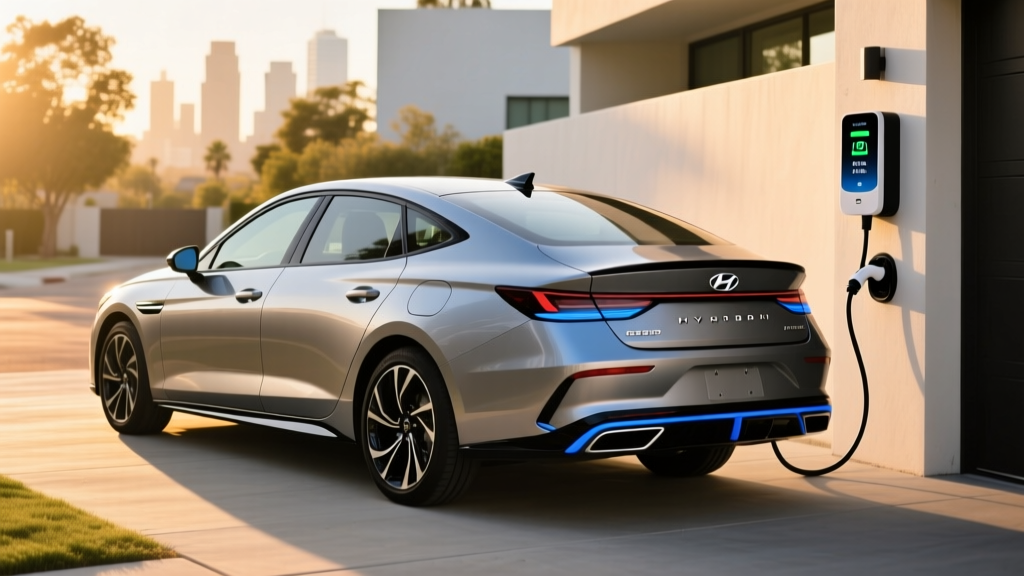
The 2026 Hyundai Sonata Hybrid Limited sits at the top of Hyundai's midsize hybrid sedan lineup, pairing a turbocharged 1.6-liter four-cylinder with an electric motor for a combined 192 horsepower and an EPA-estimated 47 MPG combined. It is a conventional hybrid (HEV) — no plug required — making it an ideal bridge for buyers who want EV-like efficiency without charging infrastructure. The Limited trim adds premium features like leather seats, a panoramic sunroof, and Hyundai's full Digital Key suite, pushing the MSRP to approximately $38,250 before destination.
| Specification | 2026 Sonata Hybrid Limited |
|---|---|
| Powertrain | 1.6L Turbo GDI 4-cyl + electric motor (HEV) |
| Combined Horsepower | 192 hp |
| Transmission | 6-speed automatic |
| EPA MPG (City / Hwy / Combined) | 50 / 43 / 47 |
| Fuel Tank Capacity | 13.2 gallons |
| Total Driving Range | ~620 miles |
| 0–60 mph | ~7.5 seconds (est.) |
| Drivetrain | Front-wheel drive |
| Base MSRP (Limited Trim) | $38,250 + $1,195 destination |
| Federal Tax Credit (§30D) | Not eligible (HEV, not PHEV/BEV) |
| Hybrid Battery Warranty | 10 years / 100,000 miles |
HEV vs. PHEV: Why the Sonata Hybrid Doesn't Need a Plug
Before diving deeper, it's critical to distinguish between the two hybrid architectures Hyundai offers across its lineup:
- Conventional Hybrid (HEV): The Sonata Hybrid uses a small battery (approximately 1.6 kWh) charged entirely by regenerative braking and the gasoline engine. You never plug it in. It delivers high MPG across all driving conditions but has no meaningful electric-only range.
- Plug-In Hybrid (PHEV): Vehicles like the Hyundai Tucson PHEV carry a larger battery (13.8 kWh) that can be charged from a wall outlet or public charger, providing 25–35 miles of electric-only driving before the gas engine engages. PHEVs qualify for partial or full federal tax credits under IRS §30D if they meet battery-sourcing and MSRP requirements.
The 2026 Sonata is offered exclusively as an HEV in the U.S. market. Hyundai discontinued the Sonata Plug-In Hybrid after the 2020 model year. If you need plug-in capability in a Hyundai sedan, you'll need to look at SUVs (Tucson PHEV, Santa Fe PHEV) or consider the all-electric Ioniq 6.
Fuel Economy: EPA Numbers vs. Real-World MPG
| Driving Condition | EPA Estimate | Real-World Expectation |
|---|---|---|
| City | 50 MPG | 48–54 MPG (hybrids excel in stop-and-go) |
| Highway | 43 MPG | 39–44 MPG (less regen benefit at steady speed) |
| Combined | 47 MPG | 44–50 MPG depending on driving mix |
| Cold Weather (below 32°F) | — | 40–44 MPG combined (engine runs more for cabin heat) |
Hybrids have a unique efficiency characteristic: they often exceed their EPA city estimate in real-world stop-and-go traffic. That's because regenerative braking recovers kinetic energy that a gas car would waste as brake heat, and the electric motor handles low-speed propulsion where gasoline engines are least efficient. On the highway, the advantage narrows — the Sonata Hybrid's 43 MPG highway rating is excellent but won't dramatically overshoot the sticker the way city driving can.
According to fueleconomy.gov, the Sonata Hybrid's 47 MPG combined places it among the most efficient non-plug-in midsize sedans available. For context, a comparable gasoline-only midsize sedan averages 28–32 MPG combined, meaning the Sonata Hybrid cuts fuel consumption roughly in half.
Real-world ownership note: If your commute is predominantly city driving with frequent stops, expect to see 50+ MPG regularly. Highway-heavy commuters at 75+ mph should plan for low-to-mid 40s. In winter months, the gasoline engine runs more frequently to provide cabin heating (the Sonata Hybrid uses engine waste heat rather than an electric heat pump), which drops efficiency by roughly 10–15%.
Powertrain Deep Dive: 192 HP from a Turbo-Hybrid System
The 2026 Sonata Hybrid Limited pairs Hyundai's Smartstream 1.6-liter turbocharged GDI four-cylinder engine with a 39 kW (52 hp) electric motor integrated into the transmission housing. Combined system output is 192 horsepower and 271 lb-ft of torque, routed to the front wheels through a 6-speed automatic transmission.
This is not a CVT or e-CVT like you'll find in the Toyota Camry Hybrid. Hyundai's conventional automatic gives the Sonata Hybrid a more natural acceleration feel — shifts are perceptible, and there's no rubber-band drone under hard acceleration. The trade-off is marginally lower efficiency compared to e-CVT designs, but at 47 MPG combined, the gap is negligible.
The 0–60 mph time of approximately 7.5 seconds is adequate for merging and passing but won't thrill enthusiasts. The electric motor's instant torque fills in the low-end gap before the turbo spools, resulting in smooth, linear acceleration from a stop. The Sonata Hybrid Limited also includes paddle shifters for drivers who want manual gear selection on winding roads.
Pricing, Trims, and Tax Credit Reality
The 2026 Hyundai Sonata Hybrid is offered in three trims:
- Blue (base): ~$30,250 — 51 MPG combined (slightly lighter, smaller wheels)
- SEL: ~$33,750 — 47 MPG combined
- Limited (top trim): ~$38,250 — 47 MPG combined, adds leather, panoramic sunroof, Digital Key 2, ventilated front seats, heated rear seats, Bose audio, Highway Driving Assist 2
All prices are MSRP before the $1,195 destination charge.
Federal Tax Credit: Not Eligible
Under IRS §30D rules, the federal clean vehicle credit (up to $7,500) applies only to battery electric vehicles (BEVs) and plug-in hybrids (PHEVs) with a minimum battery capacity of 7 kWh. The Sonata Hybrid's ~1.6 kWh battery classifies it as a conventional HEV, making it ineligible for the federal tax credit.
Some states offer separate incentives for conventional hybrids, but these are increasingly rare as state programs shift focus to zero-emission vehicles. Check your state's energy office or DMV for current programs.
Battery Warranty, Lifespan, and Replacement Costs
| Component | Warranty Coverage |
|---|---|
| Hybrid Battery Pack | 10 years / 100,000 miles |
| Hybrid System Components (motor, inverter) | 10 years / 100,000 miles |
| Powertrain (engine, transmission) | 10 years / 100,000 miles |
| New Vehicle Limited | 5 years / 60,000 miles |
Hyundai's 10-year/100,000-mile hybrid battery warranty is among the longest in the industry and applies to the original owner. Under this warranty, Hyundai will repair or replace the battery if its capacity falls below a specified threshold (typically around 70% state of health) during the coverage period.
How long do hybrid batteries actually last? Modern lithium-ion hybrid battery packs from Hyundai use conservative charge/discharge windows — the system never fully charges or fully depletes the battery, which dramatically reduces degradation. Real-world data from Hyundai's earlier hybrid models (Ioniq Hybrid, earlier Sonata Hybrid generations) shows most packs retain 85–95% capacity after 150,000 miles. Failure before 200,000 miles is uncommon.
Replacement cost if out of warranty: A replacement hybrid battery pack for the Sonata Hybrid typically ranges from $2,500 to $4,000 including labor at a dealership. Independent hybrid specialists may offer refurbished packs for $1,500–$2,500. For context, this is significantly less than a BEV traction battery replacement ($8,000–$20,000) because the hybrid pack is much smaller (~1.6 kWh vs. 60–100 kWh).
Who Should Buy the Sonata Hybrid Limited — and Who Shouldn't
Choose the Sonata Hybrid Limited If:
- You drive 15,000+ miles per year and want to cut fuel costs without changing your habits
- You lack access to home or workplace charging (apartment, street parking)
- You want premium features (leather, panoramic roof, ADAS) in an efficient sedan under $40K
- You frequently take long road trips and don't want to plan around charging stops
- You value a 620-mile total range between fill-ups
Look Elsewhere If:
- You want electric-only driving for short commutes (consider a PHEV like the Tucson PHEV or Toyota Prius Prime)
- You want to qualify for the $7,500 federal tax credit (requires a BEV or eligible PHEV)
- You want AWD (the Sonata Hybrid is FWD only; consider the Toyota Camry Hybrid AWD)
- You want sub-6-second acceleration (look at the Hyundai Ioniq 6 or Tesla Model 3)
- You want zero tailpipe emissions (HEVs still burn gasoline)
Hybrid vs. PHEV vs. EV: Which Powertrain Fits You?
| Factor | HEV (Sonata Hybrid) | PHEV | BEV |
|---|---|---|---|
| Home Charging Needed? | No | Recommended (120V works, 240V ideal) | Yes (240V Level 2 strongly recommended) |
| Electric-Only Range | None | 25–45 miles | 220–400+ miles |
| Fuel Cost per Mile | ~$0.07–$0.09 | ~$0.04 (electric) / $0.08 (gas) | ~$0.03–$0.05 |
| Federal Tax Credit | None | Up to $7,500 (if eligible) | Up to $7,500 (if eligible) |
| Upfront Cost | Lowest | Mid-range | Highest |
| Best For | No charging access, high-mileage drivers | Short commute + road trips, home charging available | Home charging available, daily commute under 300 mi |
The Sonata Hybrid Limited makes the strongest case for drivers who cannot install a home charger. If you park on the street, live in an apartment without EV infrastructure, or simply don't want to think about plugging in, the HEV architecture gives you 47 MPG without any behavioral change. The total cost of ownership remains compelling: at 15,000 miles per year and $3.40/gallon fuel, you'd spend roughly $1,085 annually on gasoline — compared to $1,875 for a 27 MPG gas-only sedan.
If you do have home charging access and a commute under 35 miles, a PHEV lets you drive most days on electricity alone while keeping the gas engine for road trips. The trade-off is higher upfront cost and the need to plug in nightly to maximize the electric benefit.
Frequently Asked Questions
How many MPG does the 2026 Hyundai Sonata Hybrid Limited get?
The EPA rates the 2026 Sonata Hybrid Limited at 50 MPG city, 43 MPG highway, and 47 MPG combined. In real-world city driving with frequent stops, owners commonly report 48–54 MPG. Highway driving at 75+ mph typically yields 39–44 MPG. Cold weather reduces combined efficiency to roughly 40–44 MPG due to increased engine runtime for cabin heating.
Does the Sonata Hybrid have a plug-in version?
No. The 2026 Sonata is offered only as a conventional hybrid (HEV) in the United States. Hyundai discontinued the Sonata Plug-In Hybrid after the 2020 model year. If you want a Hyundai PHEV, the Tucson PHEV and Santa Fe PHEV are the current options, both SUVs.
Is the 2026 Sonata Hybrid reliable?
Hyundai's hybrid powertrain has demonstrated strong reliability across recent model years. The 1.6L turbo-hybrid system is well-proven, and Hyundai backs it with a 10-year/100,000-mile hybrid battery and powertrain warranty. The hybrid battery uses conservative charge management to minimize degradation, and real-world data from prior-generation models shows most packs last well beyond 150,000 miles without significant capacity loss.
What does a Sonata Hybrid battery replacement cost?
Out-of-warranty hybrid battery replacement typically costs $2,500–$4,000 at a dealership, including labor. Refurbished packs from independent hybrid specialists may be available for $1,500–$2,500. This is far less expensive than a full EV battery replacement because the Sonata Hybrid's pack is only ~1.6 kWh. Most owners will never need a replacement within the 10-year/100,000-mile warranty window.
Does the 2026 Sonata Hybrid qualify for any tax credit?
The Sonata Hybrid does not qualify for the federal §30D clean vehicle tax credit, which requires a minimum 7 kWh battery and plug-in capability. As a conventional HEV with a ~1.6 kWh battery, it is ineligible. Some states may offer minor hybrid incentives, but these are becoming uncommon. Check IRS.gov for current federal rules and your state energy office for local programs.
How does the Sonata Hybrid compare to the Toyota Camry Hybrid?
The 2026 Camry Hybrid (all trims now hybrid-only) achieves 51 MPG combined with FWD or 49 MPG with AWD. The Sonata Hybrid Limited matches the Camry on efficiency but offers a more conventional automatic transmission feel (vs. Toyota's e-CVT) and Hyundai's longer 10-year powertrain warranty. The Camry Hybrid offers AWD, which the Sonata does not. Both are excellent choices; the decision often comes down to AWD needs, styling preference, and dealer proximity.
How far can the Sonata Hybrid go on a full tank?
With a 13.2-gallon fuel tank and 47 MPG combined, the Sonata Hybrid delivers approximately 620 miles of total range. In city-heavy driving at 50+ MPG, some drivers report exceeding 650 miles between fill-ups. This is one of the longest ranges of any non-diesel passenger sedan on the market.