Quick Verdict: The Efficiency Champion of the Midsize Sedan Segment
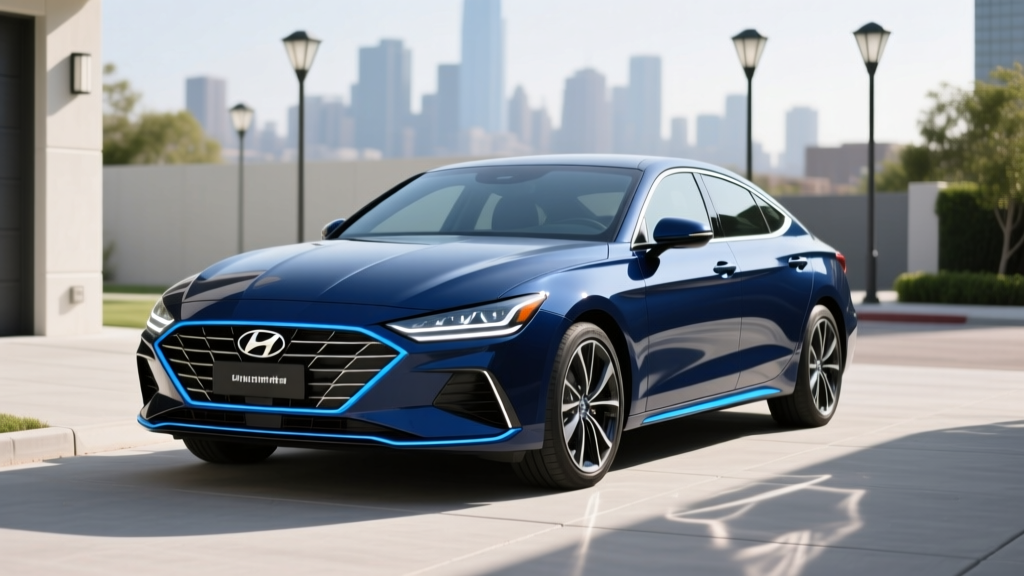
The 2026 Hyundai Sonata Blue Hybrid occupies a specific niche that full EVs and gas-only sedans cannot fill: a no-compromise commuter that requires zero behavioral change. You never plug it in, never hunt for a charger, and never calculate remaining range on a road trip. The Blue trim specifically is Hyundai's efficiency-optimized variant, trading some performance hardware for maximum miles per gallon — and at an EPA-estimated 51 MPG combined, it delivers.
But EPA stickers only tell part of the story. This guide breaks down what the Sonata Blue Hybrid actually returns in real-world driving, how its powertrain works, what ownership costs look like over five years, and whether it's the right electrified choice for your commute — or whether a PHEV or full BEV would serve you better.
| Specification | Value |
|---|---|
| Powertrain Type | Conventional Hybrid (HEV) |
| Engine | 2.0L GDI 4-cylinder + electric motor |
| Combined System Horsepower | 192 hp |
| Transmission | 6-speed automatic |
| EPA Fuel Economy (City / Hwy / Combined) | 51 / 58 / 51 MPG |
| Fuel Tank Capacity | 13.2 gallons |
| Estimated Total Range | ~673 miles |
| 0-60 mph | ~7.5 seconds |
| Drivetrain | Front-wheel drive |
| Starting MSRP (Blue trim) | ~$30,250 |
| Hybrid Battery Warranty | 10 years / 100,000 miles |
HEV vs. PHEV vs. EV: What the Sonata Blue Actually Is
Hyundai's electrified lineup spans three distinct architectures, and confusing them leads to bad purchase decisions. The Sonata Blue is a conventional hybrid (HEV). It has a small lithium-ion battery (approximately 1.5 kWh usable) that charges exclusively through regenerative braking and the gasoline engine. There is no charging port. You cannot plug it in. You fuel it at any gas station and drive.
| Feature | HEV (Sonata Blue Hybrid) | PHEV (e.g., Tucson PHEV) | BEV (e.g., Ioniq 6) |
|---|---|---|---|
| Plug-in Required? | No | Yes (optional — runs on gas if depleted) | Yes (mandatory) |
| Electric-Only Range | ~1 mile at low speed | 30-40 miles typical | 250-360+ miles |
| Fuel/Charging Infra Needed | Gas station only | Home outlet ideal; gas backup | Home Level 2 or public DC network |
| Federal Tax Credit (§30D) | Not eligible | Up to $3,750-$7,500 (varies) | Up to $7,500 (varies) |
| Best For | No home charging access; long commutes | Short commutes + road trip flexibility | Home charging + lower operating cost |
The distinction matters because Hyundai also sells the Sonata in non-hybrid and (in prior model years) PHEV configurations. The Blue Hybrid's value proposition is simplicity: no charging infrastructure, no range calculations, no dependency on electrical access. If you live in an apartment without charging, park on the street, or regularly drive 400+ miles between fuel stops, the HEV architecture eliminates friction that PHEVs and BEVs introduce.
Fuel Economy: EPA Numbers and Real-World MPG
The 2026 Sonata Blue Hybrid carries EPA estimates of 51 MPG city, 58 MPG highway, and 51 MPG combined, according to fueleconomy.gov. These are class-leading numbers for a midsize sedan, enabled by several Blue-trim-specific engineering choices: low-rolling-resistance tires, aerodynamic underbody panels, a lighter wheel design, and aggressive regenerative braking calibration.
| Driving Scenario | Expected MPG | Notes |
|---|---|---|
| EPA Combined (sticker) | 51 MPG | 55% city / 45% highway test cycle |
| City / Stop-and-Go Commute | 52-56 MPG | Hybrids often exceed EPA city; regen braking recovers energy |
| Highway (70-80 mph sustained) | 44-49 MPG | Aerodynamic drag dominates; less regen benefit |
| Cold Weather (below 35°F) | 42-47 MPG | Engine runs more for cabin heat; battery less efficient |
| Mountainous / Hilly Terrain | 38-45 MPG | Climbs consume fuel; descents recover some via regen |
The real-world advantage of Hyundai's hybrid system shows up in urban driving. Because the electric motor handles low-speed propulsion and the engine shuts off at stops, city commutes with frequent braking actually return higher MPG than highway cruising — the opposite of a conventional gas car. Owners with predominantly city routes regularly report 53-56 MPG on forums and fuel-tracking apps. Highway-heavy drivers should plan on the mid-to-upper 40s.
Cold weather impacts all electrified vehicles. In the Sonata Blue Hybrid, the gasoline engine must run more frequently in winter to provide cabin heat (there is no electric heat pump as in a BEV) and to maintain battery temperature. Expect a 5-10 MPG penalty in sustained sub-freezing conditions. This is still far less severe than the 20-30% range loss a full EV experiences in cold weather.
Powertrain Deep Dive: How 192 HP Gets 51 MPG
The Sonata Blue Hybrid pairs a 2.0-liter GDI inline-4 gasoline engine (producing approximately 150 hp on its own) with a permanent-magnet synchronous electric motor integrated into the transmission housing. Combined system output is 192 horsepower. Power routes to the front wheels through a 6-speed automatic transmission — not a CVT, which Hyundai reserved for earlier hybrid generations.
The conventional 6-speed automatic is a deliberate choice that affects the driving experience. Unlike the rubber-band feel of a CVT, the Sonata Blue Hybrid shifts through defined gears, providing more natural acceleration feedback. The trade-off is marginally lower efficiency than a CVT could theoretically achieve, though Hyundai's calibration narrows this gap significantly.
The hybrid system operates in several modes seamlessly:
- EV Mode: At low speeds (typically under 25 mph) with light throttle input, the car propels itself on electric power alone. Range in this mode is roughly 1 mile — this is not a PHEV, and the battery is too small for meaningful electric-only driving.
- Hybrid Mode: The engine and motor work together, with the system deciding the optimal power split in real time. During gentle acceleration, the motor supplements the engine to keep RPM low and fuel consumption minimal.
- Regenerative Braking: Lift off the accelerator or press the brake pedal, and the electric motor reverses direction, converting kinetic energy into electricity to recharge the hybrid battery. The Sonata Blue offers adjustable regen levels via steering-wheel paddles.
- Engine Charging: When the battery state of charge drops below a threshold, the gasoline engine generates electricity to replenish it — even while driving at steady speed.
Performance is adequate rather than quick. The 0-60 mph time of approximately 7.5 seconds places the Sonata Blue Hybrid behind sportier rivals but in line with efficiency-focused competitors. Highway passing power is sufficient, with the electric motor providing immediate torque fill before the transmission downshifts.
Pricing, Trims, and Tax Credit Eligibility
The 2026 Sonata Blue Hybrid starts at an MSRP of approximately $30,250 (including destination). This positions it roughly $3,000-$4,000 above the base gasoline Sonata SE but below most PHEV and BEV alternatives in the midsize segment.
Pros
- Class-leading 51 MPG combined EPA
- No charging infrastructure required
- 10-year / 100,000-mile hybrid battery warranty
- ~673 miles total range on a single tank
- Natural 6-speed automatic (no CVT drone)
- Strong resale value for hybrid sedans
Cons
- No federal §30D tax credit eligibility
- Electric motor assist limited to ~1 mile EV mode
- Blue trim has fewer premium features than SEL/Limited
- Higher upfront cost vs. gas-only Sonata
- FWD only — no AWD option
Federal tax credit: The Sonata Blue Hybrid does not qualify for the IRS §30D Clean Vehicle Credit. That credit applies only to plug-in electric vehicles (PHEVs and BEVs) meeting battery capacity, critical-mineral sourcing, MSRP, and buyer income requirements. Because the Sonata Blue is a conventional HEV with no plug, it falls outside IRS eligibility rules. Some states offer separate incentives for hybrids, but these vary widely by jurisdiction — check your state's energy or DMV website for current programs.
The absence of a federal credit stings on paper, but the math still works for high-mileage drivers. At 51 MPG versus a comparable gas sedan at 30 MPG, a driver covering 15,000 miles annually saves approximately $600-$750 per year in fuel costs (at $3.40/gallon). Over a five-year ownership period, that's $3,000-$3,750 in fuel savings — effectively recovering the premium over the gas-only Sonata without any tax incentive.
Battery Longevity, Warranty, and Replacement Cost
Hybrid Battery Warranty
Coverage: 10 years or 100,000 miles (whichever comes first) for the hybrid battery pack and related components. In California-emission states (CARB states), coverage extends to 10 years / 150,000 miles.
What's Covered: Battery capacity loss below a defined threshold (typically ~60-70% of original capacity), cell failure, inverter, and hybrid control module defects.
Transferability: The 10/100k hybrid warranty is transferable to subsequent owners, which supports resale value.
Hybrid battery degradation is the single most common concern among first-time hybrid buyers. Here's what the data shows: Hyundai's lithium-ion hybrid battery packs in the Sonata have demonstrated strong longevity in real-world use. The battery is small (~1.5 kWh usable) and operates in a narrow state-of-charge window — typically between 40% and 80% — which dramatically reduces stress on the cells compared to a BEV battery that cycles from 10% to 90% or higher.
Taxi fleets and high-mileage commuters using Hyundai/Kia hybrid systems have reported batteries lasting 150,000-200,000+ miles with minimal capacity loss. The 10-year/100,000-mile warranty provides a strong floor, but real-world failure rates within that window are low based on owner surveys and IIHS reliability data.
If the battery does need replacement outside of warranty, expect a cost between $2,000 and $3,500 for a new OEM pack, plus labor. Third-party remanufactured batteries are available for $1,200-$2,000. This is significantly less than BEV battery replacement ($8,000-$20,000+) because the hybrid pack is far smaller. For most owners who trade or sell within 8-10 years, battery replacement is unlikely to be a personal expense.
Five-Year Ownership Cost Snapshot
| Cost Category | Sonata Blue Hybrid | Comparable Gas Sedan (30 MPG) |
|---|---|---|
| Purchase Price (MSRP) | $30,250 | $26,500 |
| Fuel Cost (75,000 mi @ $3.40/gal) | $5,000 | $8,500 |
| Maintenance (oil, brakes, tires) | $2,800 | $3,400 |
| Insurance (avg) | $7,200 | $6,800 |
| Estimated Depreciation | $11,000 | $12,500 |
| Total 5-Year Cost | $56,250 | $57,700 |
The hybrid's lower fuel consumption and stronger resale value offset its higher purchase price and slightly elevated insurance premiums. Brake wear is notably lower on the hybrid thanks to regenerative braking handling much of the deceleration — expect brake pads to last 60,000-80,000 miles versus 30,000-50,000 on a conventional sedan. Oil change intervals are the same (every 7,500-10,000 miles with synthetic), so maintenance savings are modest but real.
Who Should Choose the Sonata Blue Hybrid — And Who Shouldn't
Decision Framework
Choose the Sonata Blue Hybrid if:
- You drive 12,000+ miles per year, especially in city or mixed commuting
- You cannot install a home charger (apartment, street parking, no garage)
- You regularly take road trips exceeding 300 miles and don't want to plan charging stops
- You want electrified efficiency with zero lifestyle adjustment
- You plan to own the car 7-10+ years and want warranty-backed battery longevity
Look at a PHEV instead if:
- Your daily commute is under 35 miles round-trip and you can charge at home
- You want to drive most days on electricity but need gas for weekend road trips
- You want to qualify for a federal tax credit (up to $3,750-$7,500 depending on the model)
Look at a full BEV instead if:
- You have reliable home Level 2 charging access
- Your daily driving is under 250 miles and you can plan DC fast-charge stops for road trips
- You want to eliminate gasoline entirely and minimize per-mile operating cost
- You want access to the full $7,500 federal tax credit (subject to income, MSRP, and sourcing rules)
Frequently Asked Questions
How many MPG does the 2026 Hyundai Sonata Blue Hybrid get?
The EPA rates the Sonata Blue Hybrid at 51 MPG city, 58 MPG highway, and 51 MPG combined. In real-world city driving, many owners report 52-56 MPG thanks to frequent regenerative braking. Highway-only driving at 75+ mph typically returns 44-49 MPG.
Do I need to plug in the Sonata Blue Hybrid?
No. The Sonata Blue Hybrid is a conventional hybrid (HEV), not a plug-in. It has no charging port. The small hybrid battery charges through regenerative braking and the gasoline engine. You fuel it exclusively at gas stations.
Does the Sonata Blue Hybrid qualify for a federal tax credit?
No. The IRS §30D Clean Vehicle Credit applies only to plug-in vehicles (PHEVs and BEVs). The Sonata Blue Hybrid is not eligible. Some states may offer separate hybrid incentives — check your state's energy office for current programs.
How long will the hybrid battery last?
Hyundai covers the hybrid battery for 10 years or 100,000 miles (150,000 miles in CARB states). Real-world data from Hyundai/Kia hybrid platforms shows many batteries lasting 150,000-200,000+ miles. Replacement cost, if needed out of warranty, is approximately $2,000-$3,500.
Is the Sonata Blue Hybrid reliable?
Hyundai's hybrid powertrain has demonstrated strong reliability in owner surveys and fleet use. The 2.0L engine is a proven design, and the 6-speed automatic is a conventional, well-understood transmission (no CVT complexity). The hybrid system adds components but reduces wear on brakes and the engine's start cycles. Hyundai's 10-year/100,000-mile powertrain warranty provides additional backing.
How does the Blue trim differ from other Sonata Hybrid trims?
The Blue trim prioritizes fuel economy over features. It uses low-rolling-resistance tires, lighter wheels, and aerodynamic enhancements to achieve its 51 MPG combined rating. Higher trims (SEL, Limited) may offer more luxury features, larger wheels, and all-season tires, but their EPA ratings drop to approximately 44-47 MPG combined due to increased weight and rolling resistance.
Hybrid vs. PHEV vs. EV — which should I buy?
It depends on your charging access and driving patterns. If you can't charge at home and drive long distances, the HEV (Sonata Blue) is ideal. If you can charge at home and commute under 35 miles, a PHEV lets you drive mostly electric while keeping gas for road trips. If you have home charging and want the lowest operating cost with zero gas, a BEV is the answer — but requires planning for longer trips.