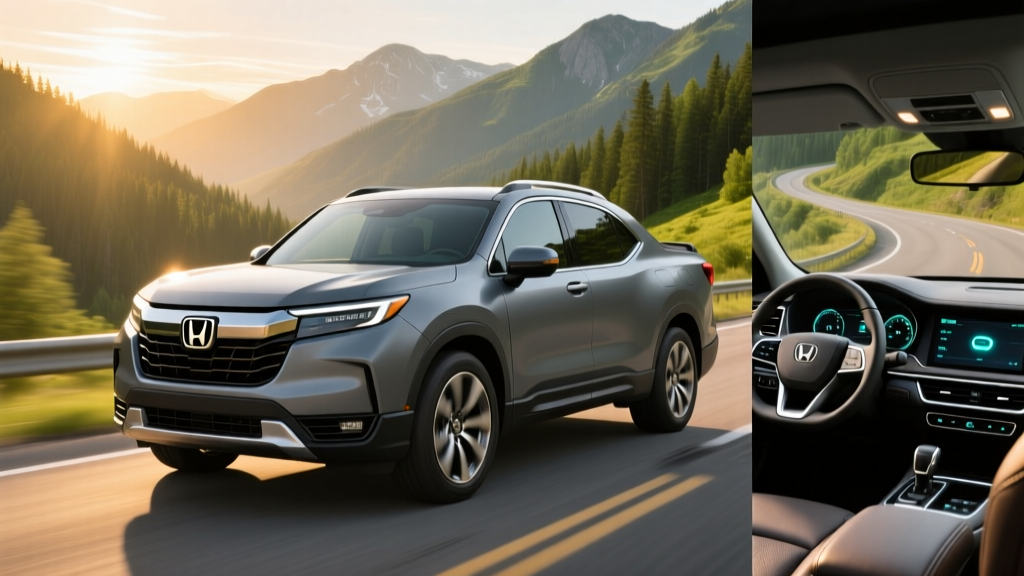
Honda's midsize pickup has soldiered on with a naturally aspirated 3.5-liter V6 for years, but the 2026 Honda Ridgeline hybrid finally brings electrification to the lineup. With the broader industry shifting toward hybridized trucks — the Ford Maverick hybrid and Toyota Tacoma hybrid have proven the segment — Honda is answering demand with a more efficient Ridgeline that retains its unibody comfort advantage. Here's everything confirmed and estimated about the 2026 Ridgeline's hybrid powertrain, fuel economy, pricing, and whether it fits your garage.
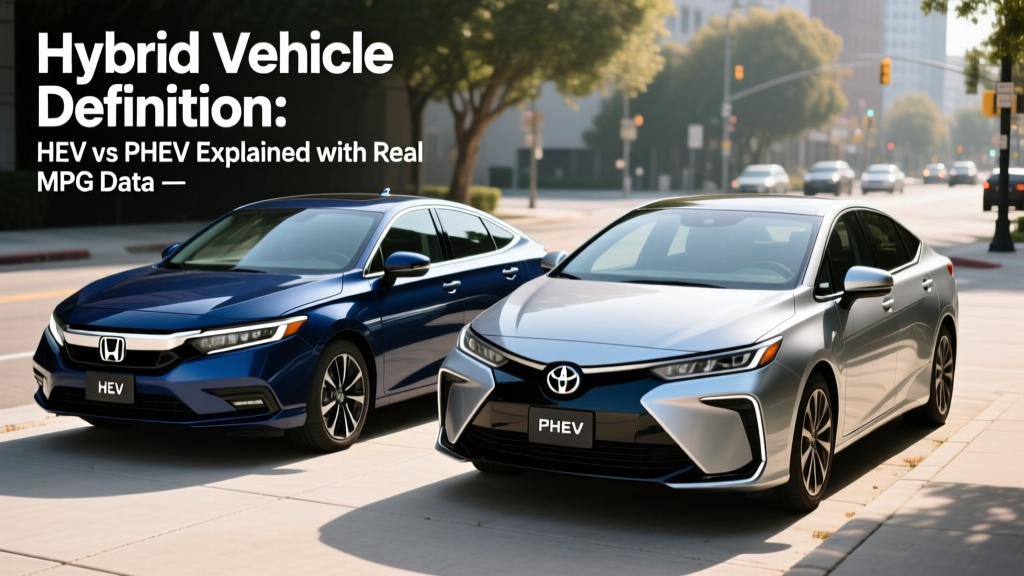
HEV or PHEV: Which Hybrid Is the 2026 Ridgeline?
The 2026 Honda Ridgeline hybrid is a conventional hybrid electric vehicle (HEV), not a plug-in hybrid. This is a critical distinction that shapes ownership expectations:
Conventional Hybrid (HEV) — 2026 Ridgeline
- No plug-in charging required — the battery charges via regenerative braking and the engine
- Smaller battery pack (~1.5–2.0 kWh estimated)
- No meaningful electric-only driving range
- Lower upfront cost and simpler ownership
- No federal §30D tax credit eligibility
Plug-In Hybrid (PHEV) — Not Offered
- Requires Level 1 or Level 2 plug-in charging for full benefit
- Larger battery (typically 12–20 kWh)
- 25–40 miles of electric-only range
- May qualify for up to $7,500 federal tax credit
- Higher purchase price, more complex powertrain
Honda's two-motor hybrid system, similar in architecture to what's found in the CR-V Hybrid and Accord Hybrid, pairs an electric motor with the gasoline engine to optimize efficiency without requiring any change to your fueling habits. You simply fill up at the pump as before — the hybrid system works transparently in the background.
Estimated Fuel Economy: How Many MPG Does It Get?
Official EPA figures for the 2026 Ridgeline hybrid had not been published on fueleconomy.gov at the time of writing, but we can make well-informed projections based on Honda's existing hybrid powertrain efficiency and the current Ridgeline's baseline.
| Metric | Current V6 Ridgeline (AWD) | 2026 Hybrid (Estimated) |
|---|---|---|
| City MPG | 18 | 22–24 |
| Highway MPG | 24 | 26–28 |
| Combined MPG | 21 | 24–26 |
The current 3.5L V6 AWD Ridgeline returns a combined 21 MPG per the EPA. Honda's two-motor hybrid system typically delivers a 15–25% improvement in combined efficiency across its lineup. For a truck of this weight and aerodynamic profile, a combined 24–26 MPG is a realistic target.
Real-World MPG Expectations
Hybrids frequently exceed their EPA city rating in stop-and-go traffic because regenerative braking recaptures energy that a gas-only truck wastes as heat. Expect the Ridgeline hybrid to deliver its best numbers around town — possibly 25–27 MPG in urban driving. Highway fuel economy will be closer to the EPA estimate or slightly below at sustained 75–80 mph speeds. Towing will drop efficiency significantly; expect 14–17 MPG combined when pulling a loaded trailer near the 5,000-pound max rating.
Powertrain Specs: Engine, Motors, and Horsepower
Honda's hybrid truck powertrain is expected to adapt the two-motor system already proven in the Accord Hybrid and CR-V Hybrid, but tuned for truck duty — more low-end torque, stronger cooling under load, and integration with the Ridgeline's standard all-wheel-drive system.
| Engine | 2.0L turbocharged 4-cylinder + two-motor hybrid system (estimated) |
| Combined System Output | ~290–310 hp (estimated) |
| Combined Torque | ~340–370 lb-ft (estimated) |
| Transmission | e-CVT (Honda two-motor direct-drive) |
| Drivetrain | AWD standard (i-VTM4 rear-biased torque-vectoring) |
| Towing Capacity | 5,000 lbs (expected, same as current V6) |
| Payload Capacity | ~1,500–1,580 lbs (estimated) |
| 0–60 mph | ~6.8–7.2 seconds (estimated) |
| Battery Type | Lithium-ion, ~1.5–2.0 kWh (HEV, not plug-in) |
The switch from the 3.5L V6 (280 hp, 262 lb-ft) to a turbocharged four-cylinder hybrid system gives Honda a torque advantage at low RPM — exactly where a truck benefits most when accelerating from stops or climbing grades. The electric motor fills in torque instantly while the turbo spools, eliminating the lag typical of small-displacement turbo engines.
Pricing, Trims, and Tax Credit Eligibility
The current 2025 Ridgeline starts around $40,000 and tops out near $47,000 for the Black Edition. The hybrid variant will carry a premium over the outgoing V6, consistent with Honda's pricing strategy for hybrid trims across its lineup (the CR-V Hybrid commands roughly $1,500–$2,000 more than its gas counterpart).
| Trim | Estimated MSRP |
|---|---|
| Sport (base hybrid) | $42,500–$44,000 |
| RTL | $44,500–$46,000 |
| RTL-E | $47,000–$48,500 |
| Black Edition | $49,000–$50,500 |
Federal Tax Credit: Does the Ridgeline Hybrid Qualify?
No. As a conventional hybrid (HEV), the 2026 Ridgeline hybrid does not qualify for the federal §30D clean vehicle tax credit. Per current IRS rules, the §30D credit of up to $7,500 applies only to battery electric vehicles (BEVs) and plug-in hybrids (PHEVs) that meet battery-sourcing, critical-mineral, MSRP cap ($80,000 for trucks/vans/SUVs), and buyer income-limit requirements.
Some states offer their own incentives for conventional hybrids, but these are typically modest ($500–$1,500 rebates) and vary by jurisdiction. Check your state energy office or department of environmental quality for current programs. The fuel savings alone — roughly $400–$600 per year at 12,000 miles driven — will be the primary financial benefit of the hybrid over the V6.
Battery Warranty, Reliability, and Replacement Cost
Honda Hybrid Battery Warranty
Honda covers its hybrid battery components for 8 years / 100,000 miles (10 years / 150,000 miles in CARB states including California, New York, Massachusetts, and others that follow California emissions standards). This warranty covers capacity loss below a defined threshold and defects in the battery pack, power control unit, and motor.
Honda's hybrid systems have proven durable in real-world use. The Accord Hybrid and CR-V Hybrid have shown minimal battery degradation over 100,000+ miles in fleet and owner data. Because the Ridgeline's HEV battery is small (~1.5–2.0 kWh) and operates within a narrow state-of-charge window (typically 40–60% SoC), stress on the cells is low compared to a full EV or PHEV that cycles through deep charge and discharge.
Battery Replacement Cost
If the hybrid battery does fail outside warranty — which data suggests is uncommon before 150,000+ miles — replacement costs for Honda's HEV battery packs currently range from $2,000 to $4,000 including labor. This is significantly less than a full EV or PHEV battery replacement because the pack is small. Third-party refurbishers and independent hybrid shops often offer replacements at the lower end of that range.
For comparison, the current Ridgeline's V6 requires timing belt replacement at ~105,000 miles (roughly $800–$1,200), an expense the hybrid's four-cylinder may avoid if Honda uses a timing chain as it does in the Accord Hybrid.
Ridgeline Hybrid vs. Full EV vs. Gas Truck: Which Fits You?
Choosing between the Ridgeline hybrid, a gas-only midsize truck, and a full-electric pickup depends on your driving patterns, charging access, and budget.
Choose the 2026 Ridgeline Hybrid If:
- You want better fuel economy without changing any fueling habits
- You lack reliable home or workplace charging for a full EV or PHEV
- You drive 10,000–15,000 miles/year and want to save $400–$600 annually on fuel
- You value the Ridgeline's car-like unibody ride and need a 5-foot bed
- You want hybrid torque benefits for light towing without range anxiety
Stick With a Gas Truck If:
- You tow frequently near the 5,000-lb max (hybrid fuel savings shrink under load)
- You plan to keep the truck 3 years or less (hybrid premium may not pay back)
- You find a deeply discounted outgoing V6 Ridgeline at clearance pricing
Consider a Full EV Pickup If:
- You have Level 2 home charging and drive under 250 miles daily
- You want to qualify for the up-to-$7,500 federal tax credit (§30D, income and sourcing rules apply)
- You're open to the Rivian R1T or Chevrolet Silverado EV for significantly lower running costs
- You want zero tailpipe emissions and near-silent operation
How It Stacks Up Against Rival Hybrid Trucks
| Spec | Honda Ridgeline Hybrid | Toyota Tacoma Hybrid (i-FORCE MAX) | Ford Maverick Hybrid |
|---|---|---|---|
| Combined MPG (est.) | 24–26 | 23–25 | 37–42 (FWD) |
| Combined HP | ~290–310 | 326 | 191 |
| Towing Capacity | 5,000 lbs | 6,000 lbs | 2,000 lbs (hybrid) |
| Bed Length | 5.0 ft | 5.0 or 6.0 ft | 4.5 ft |
| Drivetrain | AWD standard | 4WD available | FWD (AWD gas only) |
| Starting MSRP (est.) | ~$42,500 | ~$42,000 | ~$28,000 |
The Maverick Hybrid dominates on fuel economy and price but sacrifices towing, payload, and AWD availability. The Tacoma Hybrid offers more power and towing but trails slightly on efficiency. The Ridgeline Hybrid occupies a middle ground: strong efficiency for its class, standard AWD, and Honda's reputation for long-term powertrain reliability. Its unibody platform also gives it the most comfortable on-road ride of the three — a meaningful advantage for daily driving.
Ownership Costs: 5-Year Fuel Savings
| Metric | Current V6 (21 MPG combined) | 2026 Hybrid (25 MPG combined) |
|---|---|---|
| Gallons Used (60k mi) | 2,857 | 2,400 |
| Fuel Cost @ $3.50/gal | $10,000 | $8,400 |
| 5-Year Fuel Savings | ~$1,600 | |
At current national average fuel prices (~$3.50/gallon for regular unleaded), the hybrid's fuel savings over five years amount to roughly $1,600. If gas prices climb to $4.00/gallon, savings increase to approximately $1,900. This partially offsets the estimated $1,500–$2,000 hybrid premium over the outgoing V6, meaning the payback period is roughly 4–6 years for an average driver. Higher-mileage drivers will break even sooner.
Frequently Asked Questions
How many MPG does the 2026 Honda Ridgeline hybrid get?
Based on Honda's hybrid system efficiency in comparable vehicles, we estimate the 2026 Ridgeline hybrid will achieve 22–24 MPG city, 26–28 MPG highway, and 24–26 MPG combined. Official EPA numbers will be confirmed closer to the on-sale date. Real-world city driving often exceeds the EPA city figure in hybrids thanks to regenerative braking.
Is the 2026 Ridgeline hybrid a plug-in?
No. The 2026 Ridgeline hybrid is a conventional hybrid (HEV). It does not plug in and has no meaningful electric-only range. The battery recharges through regenerative braking and the gasoline engine. You fuel it exactly like a regular truck.
Does the 2026 Ridgeline hybrid qualify for a federal tax credit?
No. The federal §30D clean vehicle credit (up to $7,500) applies only to plug-in hybrids (PHEVs) and battery electric vehicles (BEVs). As a conventional hybrid, the Ridgeline does not qualify. Some states may offer smaller incentives for hybrids — check your state's energy or environmental agency.
How long will the Ridgeline hybrid battery last?
Honda covers the hybrid battery for 8 years/100,000 miles (10 years/150,000 miles in CARB states). Based on Honda's hybrid reliability track record with the Accord and CR-V, the battery is designed to last the life of the vehicle under normal use. HEV batteries experience less stress than EV batteries because they operate within a narrow charge window.
What does it cost to replace the hybrid battery?
Out-of-warranty replacement for a Honda HEV battery pack typically ranges from $2,000 to $4,000 including labor. This is far less than EV battery replacement because the pack is small (~1.5–2.0 kWh). Independent hybrid specialists often offer lower-cost refurbished options.
Can the 2026 Ridgeline hybrid tow as much as the V6?
Honda is expected to maintain the 5,000-pound towing rating for the hybrid variant, matching the current V6 Ridgeline. The hybrid's electric motor torque actually improves low-speed pulling power. However, fuel economy drops significantly while towing — expect 14–17 MPG combined with a loaded trailer.
Hybrid vs. PHEV vs. EV — which truck should I buy?
Choose the hybrid if you want better MPG with zero lifestyle changes and no charging infrastructure. Choose a PHEV if you have home charging and want 25–40 miles of electric commuting with gas backup for road trips (though no PHEV midsize truck currently exists). Choose a full EV like the Rivian R1T if you have reliable Level 2 charging, want maximum fuel savings, and qualify for the federal tax credit.