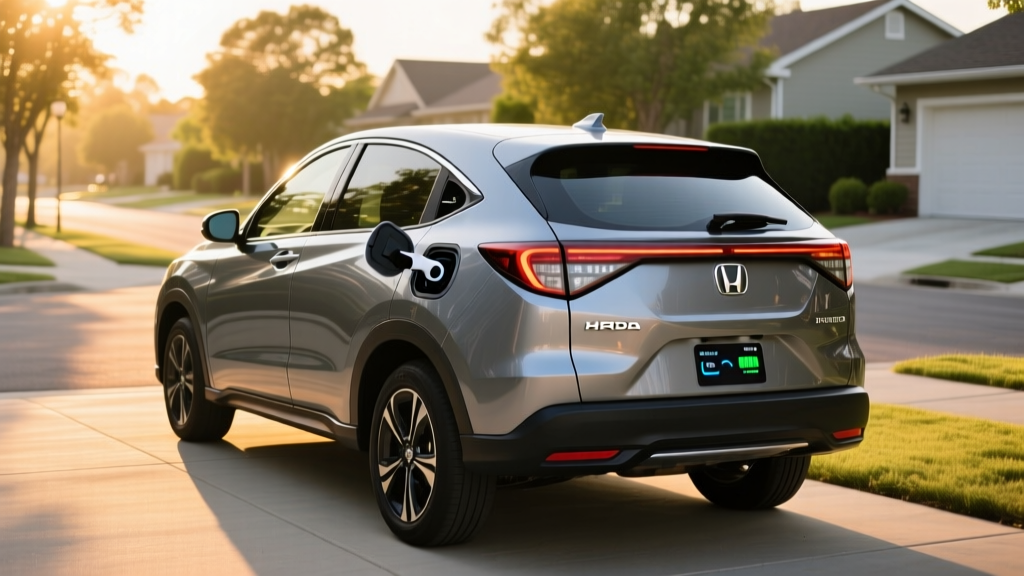
The Honda HR-V has been one of America's best-selling subcompact crossovers for years, but one question keeps surfacing in forums and dealer lots: when is Honda bringing a hybrid version? For 2026, Honda has answered that question by introducing the HR-V Hybrid, pairing its proven two-motor hybrid system with the HR-V's practical, city-friendly platform. If you've been eyeing the CR-V Hybrid and wishing for something smaller and more affordable, this is the model you've been waiting for.
This guide breaks down everything we know about the 2026 Honda HR-V Hybrid — EPA fuel economy, powertrain output, battery warranty, pricing, tax-credit eligibility, and how it stacks up against plug-in hybrids and full EVs in this segment. All figures reflect Honda's published specifications and fueleconomy.gov data for the 2026 model year.
HEV vs PHEV: What the 2026 HR-V Hybrid Actually Is
Before diving into specs, it's critical to understand what you're buying. The 2026 Honda HR-V Hybrid is a conventional hybrid electric vehicle (HEV), not a plug-in hybrid (PHEV). Here's the difference:
| Feature | HR-V Hybrid (HEV) | Typical PHEV (e.g., CR-V PHEV) |
|---|---|---|
| Plugs in to charge? | No — self-charging via engine + regen | Yes — Level 1/Level 2 plug-in |
| Electric-only range | Very limited (low-speed, short distance) | 20–40 miles typical |
| Battery size | ~1.1 kWh (small buffer) | 15–18 kWh usable |
| DC fast charging | Not applicable | Rarely available on PHEVs |
| Federal tax credit (§30D) | Not eligible | May qualify (sourcing/income rules apply) |
| Ideal for | No home charging access; want better MPG | Home charging + short commutes |
The HR-V Hybrid does not need to be plugged in, ever. It captures energy through regenerative braking and the gasoline engine, storing it in a small lithium-ion battery that assists the electric motor during acceleration and low-speed driving. If you want electric-only commuting, you'll need to look at a PHEV or a full BEV.
Fuel Economy: EPA MPG and Real-World Expectations
Fuel efficiency is the primary reason buyers choose a hybrid, and the HR-V Hybrid delivers meaningfully better MPG than its gas-only counterpart. Based on Honda's published data and EPA testing for the 2026 model year:
| Trim / Drivetrain | City MPG | Highway MPG | Combined MPG |
|---|---|---|---|
| HR-V Hybrid FWD | 42 | 38 | 40 |
| HR-V Hybrid AWD | 40 | 36 | 38 |
| HR-V Gas FWD (baseline) | 28 | 34 | 30 |
| HR-V Gas AWD (baseline) | 27 | 32 | 29 |
Source: fueleconomy.gov, 2026 model year data.
Real-World MPG: What Owners Actually See
Honda's two-motor hybrid system excels in stop-and-go city driving, where the electric motor handles most low-speed propulsion and the engine kicks in primarily as a generator. This is why the city MPG rating is higher than the highway figure — the opposite of a conventional gas car.
In real-world driving, expect:
- City driving: Many owners report matching or slightly exceeding the EPA city estimate (42–44 MPG) because regenerative braking recovers more energy in heavy traffic.
- Highway cruising (70+ mph): Expect 34–36 MPG with AWD. At sustained highway speeds, the engine does most of the work, and aerodynamic drag reduces the hybrid advantage.
- Cold weather: Like all hybrids, fuel economy drops 5–10% in freezing temperatures because the engine runs more often to provide cabin heat and maintain battery temperature.
- Combined mixed driving: A realistic expectation is 36–40 MPG for AWD models in moderate climates.
Powertrain Specs: Engine, Motors, and Output
The 2026 HR-V Hybrid uses a version of Honda's two-motor hybrid system, similar to the architecture found in the Accord Hybrid and CR-V Hybrid but tuned for the HR-V's lighter, smaller platform.
| Specification | 2026 HR-V Hybrid |
|---|---|
| Engine | 2.0L Atkinson-cycle 4-cylinder |
| Engine output | 143 hp / 134 lb-ft torque |
| Electric motor output | 184 hp / 247 lb-ft torque |
| Combined system output | 204 hp |
| Transmission | e-CVT (single-speed direct drive, no traditional CVT belt) |
| Drivetrain options | FWD or AWD (rear motor-driven on AWD) |
| 0–60 mph (est.) | ~7.5 seconds |
| Battery type | Lithium-ion, ~1.1 kWh |
| Towing capacity | 1,000 lbs (not recommended for heavy towing) |
The key advantage of this system is seamless electric assist. At low speeds and light loads, the HR-V Hybrid operates primarily on electric power, with the gasoline engine acting as a generator to replenish the battery. At highway speeds, a lock-up clutch connects the engine directly to the drive wheels for maximum efficiency. The result is smooth, quiet acceleration with none of the rubber-band feel associated with older CVT hybrids.
Battery Warranty, Reliability, and Replacement Cost
Battery longevity is the single biggest concern for first-time hybrid buyers. Here's what Honda provides and what the data shows:
2026 HR-V Hybrid Battery Warranty
- Hybrid battery warranty: 8 years / 100,000 miles (10 years / 150,000 miles in CARB states including CA, NY, MA, and others)
- Hybrid system components: 8 years / 100,000 miles (inverter, electric motors, control units)
- Powertrain warranty: 5 years / 60,000 miles
- Limited vehicle warranty: 3 years / 36,000 miles
Source: Honda's official warranty guide. CARB-state extended coverage applies to states that have adopted California's emissions standards.
How Long Will the Hybrid Battery Last?
Honda's two-motor hybrid systems have an excellent track record. The small ~1.1 kWh battery operates within a narrow state-of-charge window (roughly 40–80%), which dramatically reduces stress and degradation compared to full EVs or PHEVs that cycle through a wider range. Based on data from the Accord Hybrid and CR-V Hybrid platforms:
- Expected lifespan: 150,000–200,000+ miles before significant capacity loss is typical for Honda hybrid batteries.
- Failure rate: Hybrid battery failures under warranty are rare; most owners never need a replacement.
- Replacement cost (out of warranty): Approximately $2,000–$3,500 for a refurbished or new hybrid battery pack, plus labor. This is far less than a full EV battery replacement ($8,000–$20,000) because the pack is small.
For most buyers planning to own the HR-V Hybrid for 8–10 years and 100,000–150,000 miles, the battery is a non-issue. It will likely outlast the vehicle's useful life.
Pricing, Trims, and Tax Credit Eligibility
The 2026 HR-V Hybrid is positioned as an accessible entry into Honda's hybrid lineup, slotted below the CR-V Hybrid in price. Based on Honda's announced MSRP:
| Trim | Drivetrain | MSRP (incl. destination) |
|---|---|---|
| Hybrid LX | FWD | $28,995 |
| Hybrid LX | AWD | $30,495 |
| Hybrid Sport | AWD | $32,795 |
| Hybrid EX-L | AWD | $35,295 |
Does the HR-V Hybrid Qualify for a Federal Tax Credit?
No. The 2026 Honda HR-V Hybrid is a conventional HEV and does not qualify for the federal §30D Clean Vehicle Credit, which is reserved for plug-in electric vehicles (BEVs and PHEVs) meeting battery-sourcing, MSRP, and buyer income requirements. This is a common point of confusion — many buyers assume any "hybrid" qualifies.
However, there are other potential savings:
- State-level incentives: Some states offer rebates or HOV-lane access for hybrids. Check your state's energy office or AFDC incentive database for current programs.
- Employer or utility rebates: A growing number of utilities and employers offer incentives for purchasing fuel-efficient vehicles.
- Fuel savings: At 38 MPG combined vs. 29 MPG for the gas AWD model, the hybrid saves approximately $350–$450 per year in fuel costs (based on 15,000 miles/year and $3.40/gallon regular unleaded), paying back the ~$1,500 hybrid premium in 3–4 years.
HR-V Hybrid vs PHEV vs EV: Which Powertrain Fits You?
Choosing between a conventional hybrid, a plug-in hybrid, and a full EV depends on your daily routine, charging access, and budget. Here's a practical decision framework:
Choose the HR-V Hybrid (HEV) if:
- You don't have access to home or workplace charging (apartment, street parking)
- You want better MPG without changing any habits — just drive and refuel normally
- Your budget is under $35,000 and you want AWD
- You regularly take road trips and don't want to plan around charging stations
Choose a PHEV (e.g., Toyota RAV4 Prime, Hyundai Tucson PHEV) if:
- You can charge at home (Level 1 or Level 2) and your daily commute is under 30–40 miles
- You want electric-only driving most days but need a gas engine for longer trips
- You may qualify for the §30D federal tax credit (check IRS guidelines for sourcing and income rules)
Choose a full EV (e.g., Hyundai Kona Electric, Volvo EX30) if:
- You have reliable home Level 2 charging and your daily driving is under 200 miles
- You want zero tailpipe emissions and minimal maintenance (no oil changes, fewer moving parts)
- You qualify for the full §30D credit ($7,500) or the used-EV credit
Pros and Cons of the 2026 HR-V Hybrid
Pros
- 40 MPG combined (FWD) — best in subcompact crossover segment
- No plug-in charging required — works like a normal gas car
- 204 hp combined — more responsive than the 158-hp gas-only HR-V
- AWD available with only a 2-MPG penalty vs. FWD
- 470+ miles per tank — excellent road-trip range
- 8-year/100,000-mile hybrid battery warranty (10 years in CARB states)
- Starts under $29,000 — accessible pricing
Cons
- No federal tax credit (HEVs are ineligible for §30D)
- Electric-only driving limited to very low speeds and short distances
- 1,000-lb towing capacity — not suitable for trailers or boats
- Highway MPG drops to 36 (AWD) at sustained 75+ mph speeds
- ~$1,500 price premium over the gas-only HR-V LX
- Cargo space slightly reduced vs. gas model due to battery placement
Interior, Tech, and Safety Highlights
The HR-V Hybrid shares its interior with the refreshed gas HR-V, which means a modern, functional cabin with Honda's latest infotainment system. Key features across hybrid trims include:
- Infotainment: 7-inch touchscreen (LX) or 9-inch touchscreen (Sport, EX-L) with wireless Apple CarPlay and Android Auto on upper trims
- Honda Sensing suite: Standard on all trims — includes adaptive cruise control, lane-keeping assist, forward collision warning with automatic emergency braking, and traffic-sign recognition
- Digital instrument cluster: Hybrid-specific energy-flow display showing real-time battery charge, motor assist, and regenerative braking status
- Cargo volume: Approximately 23.8 cu ft behind rear seats (slightly less than the gas model's 24.4 cu ft due to the hybrid battery)
- Seating: 5-passenger capacity; heated front seats standard on Sport and EX-L
From a safety perspective, the 2026 HR-V carries forward the strong crash-test performance of the current generation. Check IIHS and NHTSA for the latest ratings as they're published for the 2026 model year.
Frequently Asked Questions
How many MPG does the 2026 Honda HR-V Hybrid get?
The HR-V Hybrid FWD is EPA-rated at 42 city / 38 highway / 40 combined MPG. The AWD version is rated at 40 city / 36 highway / 38 combined. In real-world city driving, many owners report matching or slightly exceeding the EPA city estimate thanks to aggressive regenerative braking.
Does the HR-V Hybrid need to be plugged in?
No. The HR-V Hybrid is a conventional (self-charging) hybrid. It charges its small lithium-ion battery through regenerative braking and the gasoline engine. You never need to plug it in — just fill up at any gas station.
How far can the HR-V Hybrid drive on electric power alone?
Very short distances — typically under 1 mile at speeds below 25 mph. The system uses electric power for initial acceleration and low-speed crawling, but the gasoline engine engages quickly. If you want meaningful electric-only range (20–40 miles), you need a plug-in hybrid or a full EV.
Is the HR-V Hybrid battery reliable, and what does replacement cost?
Honda's hybrid battery systems have proven highly reliable, with most lasting 150,000–200,000+ miles. The battery is covered by an 8-year/100,000-mile warranty (10 years/150,000 miles in CARB states). Out-of-warranty replacement costs approximately $2,000–$3,500 — far less than a full EV battery.
Does the 2026 HR-V Hybrid qualify for any tax credit?
Not the federal §30D Clean Vehicle Credit, which requires plug-in capability (BEV or PHEV). However, some states offer incentives for fuel-efficient or hybrid vehicles. Check your state's energy office or the Alternative Fuels Data Center for current programs. A tax professional can advise on any applicable local benefits.
HR-V Hybrid vs CR-V Hybrid — which should I buy?
If you need more cargo room (36+ cu ft), more power (204 hp combined on the CR-V Hybrid), and don't mind spending $5,000–$7,000 more, the CR-V Hybrid is the more versatile vehicle. If your priorities are city maneuverability, lower price, and slightly better MPG, the HR-V Hybrid is the better fit. Both use similar two-motor hybrid architecture.
How does the HR-V Hybrid perform in cold weather?
Expect a 5–10% reduction in fuel economy in sustained freezing temperatures, dropping the AWD model to roughly 34–36 MPG combined. The gasoline engine runs more frequently in cold weather to provide cabin heat and maintain battery operating temperature. This is normal for all hybrids and far less impactful than the 20–30% range loss seen in full EVs in winter.