Quick Verdict: The Touring Trim's Efficiency Promise
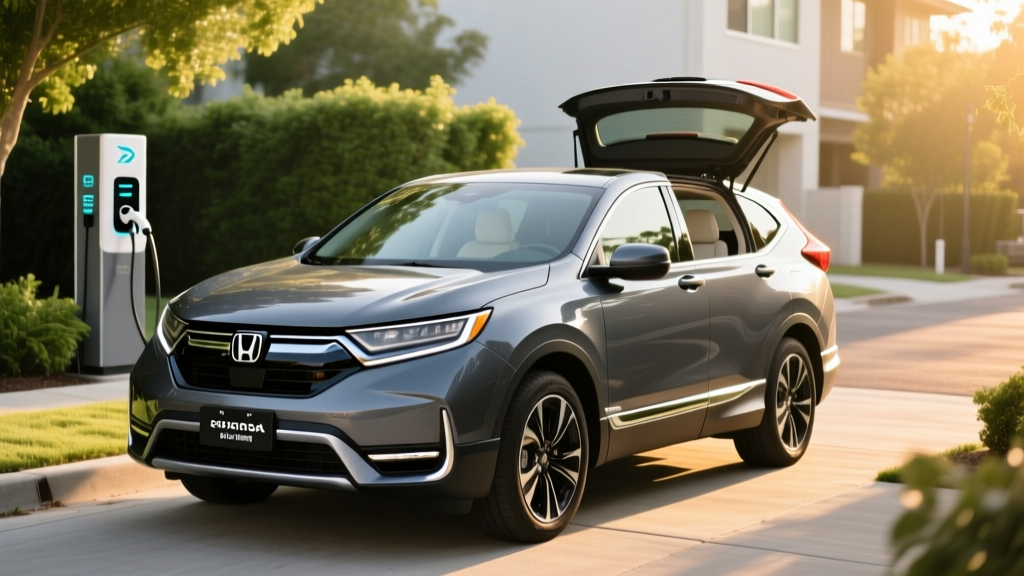
The 2026 Honda CR-V Touring Hybrid sits at the apex of Honda's compact SUV lineup, pairing a 2.0-liter Atkinson-cycle four-cylinder with a two-motor hybrid system to deliver an EPA-rated 40 MPG combined (43 city / 36 highway) in front-wheel-drive form. The Touring trim exclusively comes with Real Time AWD, which adjusts those figures to 39 MPG combined (40 city / 34 highway). At a starting MSRP of approximately $40,795 (including destination), the Touring Hybrid is the most expensive CR-V you can buy — but its combination of premium features, proven hybrid reliability, and strong real-world fuel economy makes it a compelling daily driver for buyers who want electrification without plugging in.
This is a conventional hybrid (HEV), not a plug-in hybrid (PHEV). You will never need to search for a charging station or install a home charger. The system recovers energy through regenerative braking and the gasoline engine, storing it in a compact lithium-ion battery that operates seamlessly in the background.
HEV vs. PHEV: Where the CR-V Fits
Conventional Hybrid (HEV) — Honda CR-V Hybrid: No plug required. Battery recharges via regenerative braking and the gas engine. You simply fuel up at any gas station. Typical electric-only driving is limited to brief low-speed bursts (under ~1 mile). The CR-V Hybrid uses this architecture.
Plug-in Hybrid (PHEV): Features a larger battery (typically 15–20 kWh) that can be plugged in to provide 25–50 miles of pure electric range before the gas engine engages. Honda does not currently offer a CR-V PHEV in the U.S. market for the 2026 model year. If you need electric-only commuting range, you would look at competitors like the Toyota RAV4 Prime or Hyundai Tucson PHEV.
Battery Electric Vehicle (BEV): Zero gasoline, zero tailpipe emissions. Requires access to charging infrastructure. Models like the Hyundai Ioniq 5 or Tesla Model Y fall in this category.
Spec Table: 2026 Honda CR-V Touring Hybrid at a Glance
| Specification | Detail |
|---|---|
| Powertrain | 2.0L Atkinson-cycle I4 + two-motor hybrid system |
| Combined System Horsepower | 204 hp (184 hp engine + 181 hp drive motor peak) |
| Combined System Torque | 247 lb-ft (drive motor) |
| Transmission | e-CVT (direct-drive with lockup clutch) |
| Drivetrain (Touring) | Real Time AWD (standard on Touring) |
| EPA MPG (AWD) | 40 city / 34 highway / 39 combined |
| Fuel Tank Capacity | 14.0 gallons |
| Total Driving Range | ~546 miles (estimated) |
| 0–60 mph | ~7.6 seconds (independent testing) |
| Cargo Volume | 36.3 cu ft (behind rear seats) / 76.5 cu ft (max) |
| Towing Capacity | 1,000 lbs |
| Hybrid Battery | ~1.06 kWh lithium-ion (nominal) |
| Touring MSRP (2026) | $40,795 (incl. destination) |
| Federal Tax Credit | Not eligible (§30D requires plug-in capability) |
Sources: EPA Fuel Economy, Honda CR-V Hybrid Specifications.
Fuel Economy: EPA Ratings vs. Real-World MPG
| Driving Scenario | City | Highway | Combined |
|---|---|---|---|
| EPA Rating (AWD) | 40 MPG | 34 MPG | 39 MPG |
| Real-World Expectation | 38–44 MPG | 31–36 MPG | 36–41 MPG |
Honda's two-motor hybrid system is one of the most efficient in the compact SUV segment, and real-world results generally track close to EPA estimates — with an important caveat about driving style and conditions.
City driving is where this hybrid shines. The system operates primarily on the electric drive motor at low speeds, with the gasoline engine acting as a generator to keep the battery charged. Stop-and-go traffic actually improves hybrid efficiency because regenerative braking recaptures kinetic energy that a conventional vehicle wastes as heat. Owners who drive predominantly in urban or suburban environments frequently report 42–44 MPG on the dashboard display, exceeding the EPA city estimate. This is a well-documented pattern with Honda's e-CVT hybrid architecture.
Highway driving is the weak point — but it's relative. At sustained speeds above 70 mph, aerodynamic drag dominates, and the gasoline engine must directly drive the wheels through a lockup clutch (a single fixed gear ratio). Expect 31–34 MPG on the highway depending on speed, terrain, and wind. Drivers who cruise at 80+ mph on flat interstates may see figures dip to the low 30s. Cold weather compounds this: winter gasoline blends contain less energy per gallon, and cold air increases drag. Expect a 3–5 MPG combined penalty in sub-freezing temperatures.
Touring trim weight penalty: The Touring is the heaviest CR-V Hybrid trim, adding roughly 100–150 lbs over the Sport-L Hybrid due to features like the panoramic moonroof, premium audio system, heated rear seats, and hands-free power tailgate. This mass is already factored into the EPA rating, but it does mean the Touring sits at the lower bound of the CR-V Hybrid's efficiency envelope.
Powertrain Deep Dive: How Honda's Two-Motor System Works
The 2026 CR-V Touring Hybrid uses Honda's fourth-generation two-motor hybrid system, which operates in three distinct modes without driver intervention:
- EV Drive: The gasoline engine is off. The 181-hp drive motor propels the vehicle using battery energy alone. This mode activates during low-speed cruising, gentle acceleration, and coasting. Range in pure EV mode is very short — typically under one mile — because the battery is small (~1.06 kWh usable). This is normal for conventional hybrids.
- Hybrid Drive: The gasoline engine runs but does NOT drive the wheels. Instead, it spins the generator motor to produce electricity, which powers the drive motor. This is the dominant mode during moderate acceleration and city driving. It provides the smooth, linear torque delivery of an EV without range limitations.
- Engine Drive: At steady highway speeds (roughly 45–80 mph), a lockup clutch engages, mechanically connecting the gasoline engine directly to the front wheels through a single fixed ratio. This is more efficient than running the engine as a generator at constant speed. The drive motor can still add torque for passing.
The system's combined output of 204 horsepower and 247 lb-ft of torque (the torque figure comes entirely from the electric motor, available from near-zero RPM) gives the CR-V Hybrid confident acceleration for merging and passing. The 0–60 mph time of approximately 7.6 seconds is competitive with turbocharged rivals like the Hyundai Tucson Hybrid and noticeably quicker than the Toyota RAV4 Hybrid's ~7.4-second benchmark.
The Real Time AWD system on the Touring uses a rear-mounted electric motor that engages the rear axle when slip is detected or under hard acceleration. Unlike mechanical AWD systems, there is no driveshaft connecting the front and rear axles — the rear motor is powered by the hybrid battery. This keeps weight down and packaging efficient, though it does not provide the same continuous torque-vectoring capability as a full-time AWD system.
Pricing, Tax Credits, and Ownership Economics
The 2026 Honda CR-V Touring Hybrid carries an MSRP of $40,795 including destination charges. This positions it roughly $4,200 above the Sport-L Hybrid ($36,595) and approximately $8,500 above the base gas-powered CR-V LX.
Federal Tax Credit Eligibility
Important: The 2026 Honda CR-V Hybrid does NOT qualify for the IRS §30D federal clean vehicle tax credit (up to $7,500). That credit is reserved for plug-in electric vehicles — both battery-electric (BEV) and plug-in hybrid (PHEV) models — with a minimum battery capacity of 7 kWh and plug-in charging capability. The CR-V Hybrid's ~1.06 kWh battery and lack of a charge port disqualify it entirely.
If the federal tax credit is a decisive factor in your purchase, you would need to consider a PHEV like the Toyota RAV4 Prime or a BEV like the Tesla Model Y. However, those vehicles carry significantly higher MSRPs ($43,000–$50,000+), and PHEV credit eligibility depends on battery sourcing and MSRP caps under current IRS rules. Always verify eligibility at IRS.gov or with a qualified tax professional before purchase.
Total Cost of Ownership: Hybrid vs. Gas CR-V
Here is where the Touring Hybrid earns its premium. Assuming 15,000 miles/year, $3.50/gallon regular unleaded, and the EPA combined 39 MPG (AWD):
| Metric | CR-V Gas (AWD, 28 MPG comb.) | CR-V Touring Hybrid (AWD, 39 MPG comb.) |
|---|---|---|
| Annual fuel consumption | 536 gallons | 385 gallons |
| Annual fuel cost | $1,876 | $1,348 |
| Annual savings | ~$528/year | |
| 5-year fuel savings | ~$2,640 | |
The hybrid's $4,200 premium over the Sport-L Hybrid is not fully recovered through fuel savings alone within five years. However, the Touring trim includes features (panoramic moonroof, Bose premium audio, heated rear seats, wireless charging, hands-free tailgate) that would cost significantly more as dealer-installed accessories on a lower trim. The value equation depends on whether you want those features regardless of powertrain.
Battery Warranty, Reliability, and Replacement Costs
Honda Hybrid Battery Warranty
Coverage: 8 years / 100,000 miles (10 years / 150,000 miles in CARB states including California, New York, Massachusetts, and others that follow California emissions standards).
What it covers: Defects in materials and workmanship, and capacity loss below a defined threshold (typically ~60–70% of original capacity, though Honda does not publish an exact percentage).
Real-world longevity: Honda's hybrid battery packs in the CR-V, Accord, and Civic have demonstrated strong durability. Failures within the first 150,000 miles are uncommon based on owner reports and repair databases. The small ~1.06 kWh battery operates within a narrow state-of-charge window (roughly 40–80%), which significantly reduces degradation stress compared to the deep cycling seen in BEVs.
Battery replacement cost: If the hybrid battery does require replacement out of warranty, expect to pay between $2,000 and $4,000 for a new OEM battery pack including labor at a Honda dealer. Third-party refurbished units are available for $1,200–$2,000. This is substantially less than the $10,000–$20,000+ replacement costs for large BEV battery packs, because the CR-V Hybrid's battery is small and relatively simple.
Overall reliability: Honda's fourth-generation two-motor hybrid system has been in production since the 2023 CR-V redesign and carries forward Honda's long track record with hybrid powertrains dating to the 2000 Insight. The e-CVT design eliminates the conventional transmission — there are no gears, bands, or torque converters to wear out. The most common maintenance items remain standard: oil changes, brake fluid, cabin air filter, and tire rotation. Regenerative braking significantly reduces brake pad wear; many hybrid owners report original brake pads lasting 80,000–100,000+ miles.
Touring Trim Features: What You Get for the Premium
The Touring Hybrid is the top-of-line CR-V, and Honda loads it with features that justify the price for buyers who want a fully equipped compact SUV:
- Panoramic moonroof with power sunshade
- Bose 12-speaker premium audio system
- Heated front and rear outboard seats
- Heated steering wheel
- Wireless Apple CarPlay and Android Auto (9-inch touchscreen)
- Wireless phone charging pad
- Hands-free power tailgate with walk-away close
- Low-speed braking control and front/rear parking sensors
- Traffic Jam Assist (low-speed adaptive cruise with lane centering)
- 19-inch alloy wheels
- LED headlights with auto high-beam
- Honda Sensing suite (adaptive cruise control, lane-keeping assist, collision mitigation braking, road departure mitigation, traffic sign recognition)
Note that Honda Sensing on the CR-V is a SAE Level 2 driver-assistance system — it provides steering and speed support but requires the driver to remain fully engaged and hands on the wheel at all times. This is not autonomous driving.
Pros and Cons: The Honest Assessment
✓ Pros
- Strong real-world city MPG (often exceeds EPA estimate)
- Smooth, linear electric-motor torque delivery
- No charging infrastructure required — gas up anywhere
- Excellent Honda Sensing safety suite standard
- Generous cargo space unaffected by hybrid battery placement
- Proven hybrid reliability with strong warranty coverage
- Low brake wear thanks to regenerative braking
- Premium Touring features at a reasonable price point
✗ Cons
- Highway MPG drops noticeably above 70 mph
- No federal tax credit eligibility (not a plug-in)
- Touring trim is the heaviest — lowest efficiency in the Hybrid range
- 1,000-lb towing capacity (lower than some turbocharged rivals)
- Cabin noise under hard acceleration (engine drone from e-CVT)
- No PHEV option from Honda for electric-only commuting
- Infotainment system lacks the speed/responsiveness of best-in-class
Hybrid vs. PHEV vs. EV: Which Powertrain Fits Your Life?
Choose the CR-V Touring Hybrid (HEV) if:
- You lack access to home or workplace charging (apartment, street parking, no garage outlet)
- You take frequent long road trips and don't want to plan around charging stops
- You want lower fuel costs without changing your refueling habits at all
- You live in a cold climate where EV range loss is a concern
- You want a proven, low-maintenance powertrain with a long warranty
- Your daily commute is under 40 miles but includes highway driving
Consider a PHEV (e.g., Toyota RAV4 Prime) if:
- You can install a Level 2 charger at home and your daily commute is under 40 miles
- You want to drive on electricity most days but need gas flexibility for road trips
- You want to qualify for the §30D federal tax credit (if eligible by income and sourcing)
- You're willing to pay a $5,000–$8,000 premium over a conventional hybrid
Consider a BEV (e.g., Tesla Model Y, Hyundai Ioniq 5) if:
- You have reliable home Level 2 charging
- Your daily driving is predictable and within the vehicle's range
- You want zero tailpipe emissions and the lowest per-mile fuel cost
- You want to maximize federal and state incentive eligibility
- You're comfortable with long-term battery degradation considerations
Frequently Asked Questions
How many MPG does the 2026 Honda CR-V Touring Hybrid get?
The EPA rates the AWD Touring Hybrid at 40 city / 34 highway / 39 combined MPG. In real-world driving, city-heavy commuters frequently see 42–44 MPG, while sustained highway driving at 75+ mph may yield 31–33 MPG. Cold weather reduces combined efficiency by roughly 3–5 MPG.
Can I plug in the CR-V Hybrid to charge it?
No. The CR-V Hybrid is a conventional hybrid (HEV), not a plug-in hybrid (PHEV). It has no charge port. The battery recharges automatically through regenerative braking and the gasoline engine. You only ever need to fill the gas tank.
How far can the CR-V Hybrid drive on electric power alone?
Under a mile in most conditions. The hybrid system uses electric-only mode for brief low-speed maneuvers, coasting, and stoplight creep — not for meaningful distances. This is standard behavior for conventional hybrids with small (~1 kWh) batteries. If you need 25–40 miles of electric-only range, you need a PHEV.
Is the CR-V Hybrid reliable, and what does battery replacement cost?
Yes. Honda's hybrid system has a strong reliability record spanning two decades. The hybrid battery is covered by an 8-year/100,000-mile warranty (10 years/150,000 miles in CARB states). Out-of-warranty replacement costs $2,000–$4,000 for a new OEM pack. Most hybrid batteries outlast 150,000+ miles without significant issues.
Does the 2026 CR-V Hybrid qualify for any tax credit?
No. The IRS §30D Clean Vehicle Credit requires a plug-in vehicle with a minimum 7 kWh battery. The CR-V Hybrid's ~1.06 kWh battery and lack of a charge port make it ineligible. Some states offer small rebates for high-efficiency hybrids — check your state's energy office or fueleconomy.gov for current programs.
How does the CR-V Hybrid compare to the Toyota RAV4 Hybrid?
Both are strong choices. The RAV4 Hybrid offers slightly more combined horsepower (219 hp), a higher towing capacity (1,750 lbs), and a PHEV variant (RAV4 Prime). The CR-V Hybrid counters with a more refined interior, a slightly more intuitive e-CVT feel, and comparable fuel economy. The RAV4 Hybrid AWD is rated at 41/38/39 MPG (city/highway/combined), giving it a small highway advantage. Drive both before deciding — the differences are incremental, not transformational.
What is the towing capacity of the CR-V Touring Hybrid?
The 2026 CR-V Hybrid is rated for 1,000 lbs of towing capacity across all trims. This is adequate for a small utility trailer or a pair of dirt bikes, but insufficient for most boat trailers or campers. If you need 3,500+ lbs of towing, you will need to look at a midsize SUV or truck.
Data sourced from EPA Fuel Economy, Honda's official CR-V Hybrid specifications, and IRS §30D Clean Vehicle Credit guidelines. Pricing and specifications reflect 2026 model year information available at time of publication. Always confirm final pricing and eligibility with your local Honda dealer and a qualified tax professional.