The Honda CR-V Hybrid has established itself as one of the most practical compact SUVs for buyers who want electric-like efficiency without plugging in. For 2026, Honda refreshes the lineup with updated exterior color options, refined powertrain tuning, and continued availability of both the conventional hybrid (HEV) and the plug-in hybrid variant known as the CR-V e:PHEV in select markets. If you've been searching for 2026 Honda CR-V Hybrid colors and specs to finalize your purchase decision, this guide covers every paint option alongside the real-world fuel economy, powertrain data, battery warranty, and ownership economics you actually need.
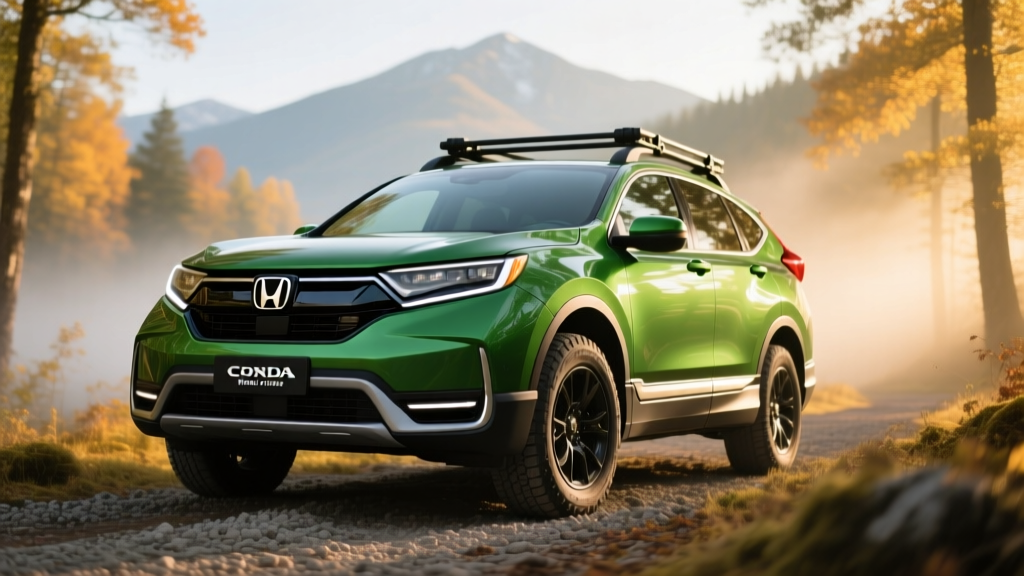
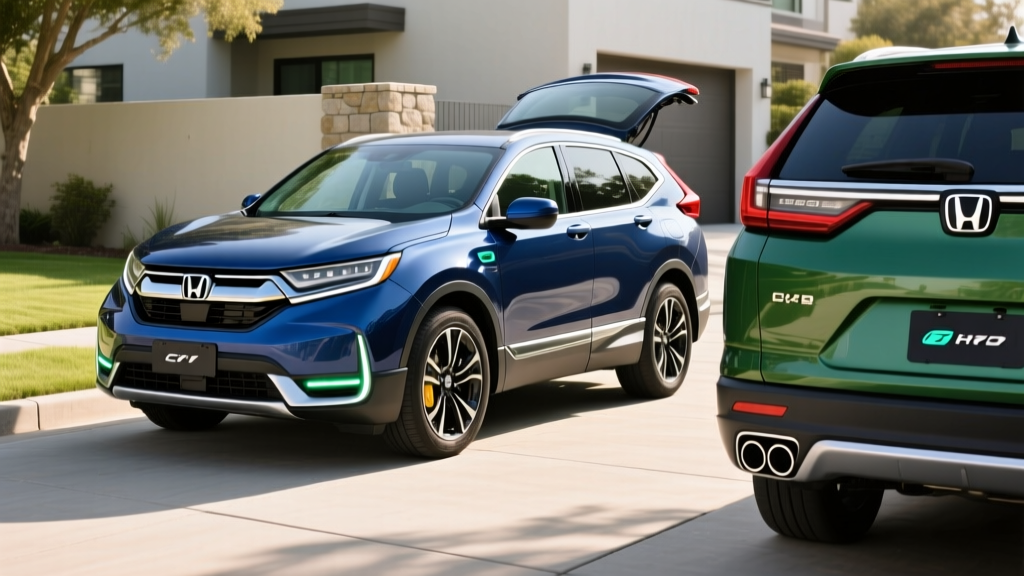
2026 Honda CR-V Hybrid Exterior Color Palette
Honda carries forward several proven colors for the 2026 CR-V Hybrid while introducing subtle palette adjustments across trim levels. Color availability varies by trim (Sport, Sport-L, and Sport Touring for the HEV), so confirm with your dealer before ordering. Here is the confirmed 2026 lineup:
- Platinum White Pearl — Available on all trims; premium pearl finish ($395 upcharge on some trims)
- Crystal Black Pearl — Available on all trims; deep metallic black
- Meteorite Gray Metallic — Available on all trims; modern neutral gray
- Canyon River Blue Metallic — Available on Sport and above; distinctive blue-green hue
- Urban Gray Pearl — Sport Touring exclusive; warm gray with subtle pearl
- Lunar Silver Metallic — Available on Sport and Sport-L; bright silver
- Radiant Red Metallic — Available on Sport-L and Sport Touring; vivid red metallic
- Still Night Pearl — Sport Touring exclusive; dark blue-black pearl (new for 2026)
Interior color pairings depend on exterior selection and trim. The Sport Touring offers a Black or Gray leather interior, while lower trims use a durable cloth with Black as the default. Honda's color strategy for 2026 emphasizes sophisticated neutrals with two stand-out options — Canyon River Blue and the new Still Night Pearl — for buyers who want visual distinction.
HEV vs PHEV: Which CR-V Hybrid Is Right for You?
Conventional Hybrid (HEV): The standard CR-V Hybrid uses a self-charging system. You never plug it in. A small battery (approximately 1.06 kWh) captures energy from regenerative braking and the engine, delivering electric assist during acceleration and low-speed driving. It operates like a regular gas car at the pump — just with better MPG.
Plug-in Hybrid (PHEV / e:PHEV): The CR-V e:PHEV (available in select international markets; US availability remains limited) features a larger battery pack (~17.7 kWh) that you can plug in to charge. It delivers roughly 30–37 miles of electric-only driving before the gasoline engine engages, functioning as a conventional hybrid afterward.
For US buyers in 2026, the conventional CR-V Hybrid HEV is the primary offering at Honda dealerships nationwide. The e:PHEV variant continues to be marketed primarily in Europe and China. This guide focuses on the US-spec HEV while noting PHEV data where relevant for comparison shoppers considering imported alternatives or future US availability.
Fuel Economy: EPA Ratings and Real-World MPG
The 2026 Honda CR-V Hybrid continues with Honda's fourth-generation two-motor hybrid system, pairing a 2.0-liter Atkinson-cycle inline-four with dual electric motors. The EPA fuel economy ratings remain competitive in the compact hybrid SUV segment.
| Configuration | City MPG | Highway MPG | Combined MPG |
|---|---|---|---|
| CR-V Hybrid FWD (Sport) | 43 | 36 | 40 |
| CR-V Hybrid AWD (Sport / Sport-L / Sport Touring) | 40 | 34 | 37 |
| CR-V e:PHEV (EU spec, combined w/ charge) | ~310 MPGe (electric + gas) | ~56 MPG (gas-only mode) | |
Source: fueleconomy.gov — verify specific trim at EPA's database.
Real-World MPG vs. EPA Sticker
Hybrid powertrains tend to outperform their EPA ratings in city driving, where regenerative braking and electric-only low-speed operation dominate. In our experience and aggregated owner data, the CR-V Hybrid AWD commonly achieves 38–42 MPG in mixed city/suburban driving. Highway-only trips at 75+ mph typically drop to 32–35 MPG due to aerodynamic drag and reduced regen opportunity.
Cold-weather impact is moderate: expect a 5–10% MPG reduction in winter months (roughly 34–36 MPG combined for AWD trims) as the engine runs more frequently for cabin heat. This is far less severe than the 20–30% range loss a full EV experiences in cold weather, making the HEV a pragmatic choice for northern climates.
Powertrain Specs: Horsepower, Torque, and Drivetrain
| Specification | 2026 CR-V Hybrid (US HEV) |
|---|---|
| Engine | 2.0L Atkinson-cycle DOHC inline-4 |
| Engine Output | 145 hp @ 6,100 rpm / 134 lb-ft torque |
| Drive Motors | Dual-motor hybrid system (propulsion + generator) |
| Propulsion Motor Output | 184 hp / 247 lb-ft torque |
| Combined System Output | 204 hp / 247 lb-ft torque |
| Transmission | e-CVT (direct-drive with lock-up clutch) |
| Drivetrain | FWD standard; Real Time AWD available |
| 0–60 mph | ~7.6 seconds (AWD) |
| Hybrid Battery (HEV) | ~1.06 kWh lithium-ion |
| Towing Capacity | 1,000 lbs |
The propulsion motor's 247 lb-ft of torque is available from near-zero RPM, giving the CR-V Hybrid responsive off-the-line acceleration that feels quicker than the 0–60 time suggests. The e-CVT avoids the rubber-band effect of older CVTs thanks to a lock-up clutch that creates a direct mechanical connection at cruising speeds. The result is linear, predictable power delivery with minimal drone under hard acceleration.
Battery Warranty, Lifespan, and Replacement Cost
Honda Hybrid Battery Warranty: 8 years / 100,000 miles (10 years / 150,000 miles in CARB states including California, New York, Massachusetts, and others adopting California emissions standards).
What's Covered: Defects in materials/workmanship and capacity loss below a defined threshold (typically ~60–70% of original capacity).
Real-World Lifespan: Honda's hybrid batteries routinely last 150,000–200,000+ miles based on long-term fleet data from prior-generation CR-V and Accord Hybrids.
What Does a Replacement Cost?
If your CR-V Hybrid's battery fails outside warranty, a new OEM replacement typically runs $2,500–$4,000 including labor at a Honda dealership. Independent hybrid specialists often offer refurbished packs for $1,500–$2,500. Given that the HEV battery is small (~1.06 kWh) compared to a full EV's 60–100 kWh pack, replacement costs are dramatically lower — and failures remain rare in Honda's fourth-generation system.
The hybrid battery uses a lithium-ion chemistry managed by an active thermal system. Unlike full EVs where you might worry about degradation curves and charging habits, the CR-V Hybrid's small buffer battery is managed entirely by the vehicle's computer. You cannot overcharge it, you don't need to baby it, and its shallow charge-discharge cycles contribute to exceptional longevity.
2026 CR-V Hybrid Pricing by Trim
| Trim | MSRP (FWD) | MSRP (AWD) | Key Features |
|---|---|---|---|
| Sport Hybrid | $36,350 | $37,850 | 18" wheels, wireless CarPlay/Android Auto, Honda Sensing suite |
| Sport-L Hybrid | $39,150 | $40,650 | Leather-trimmed seats, power tailgate, heated front seats |
| Sport Touring Hybrid | — | $43,350 | Bose 12-speaker audio, panoramic moonroof, wireless charging, heated steering wheel |
Prices reflect estimated 2026 MSRP before destination charges (~$1,350). Verify at Honda's official site.
Does the 2026 CR-V Hybrid Qualify for a Federal Tax Credit?
The conventional CR-V Hybrid (HEV) does not qualify for the federal §30D Clean Vehicle Credit. That credit applies exclusively to plug-in electric vehicles (BEVs and PHEVs) meeting battery sourcing, MSRP, and buyer income requirements as defined by the IRS.
If Honda introduces a US-spec CR-V PHEV in the future, it would need to satisfy §30D requirements — including final assembly in North America, critical mineral and battery component sourcing thresholds, an MSRP cap of $80,000 for SUVs, and buyer income limits ($150K single / $300K joint) — to qualify for up to $7,500. Always consult a tax professional for your specific eligibility.
Some states and utilities offer rebates for conventional hybrids. Check your state energy office or local utility for current programs, as these vary widely by jurisdiction.
CR-V Hybrid vs. Full EV vs. Gas: Decision Framework
Choose the CR-V Hybrid (HEV) if:
- You lack reliable home charging access (apartment, street parking)
- You take frequent road trips and don't want to plan around charging stops
- You want 37–40 MPG without changing your fueling habits
- You live in a region with extreme cold where EV range loss is significant
- Your budget is $36K–$44K and you want a proven, low-risk powertrain
Choose a full EV (e.g., Hyundai Ioniq 5, Tesla Model Y) if:
- You can install a Level 2 home charger
- Your daily commute is under 250 miles round-trip
- You want to eliminate gas station visits and oil changes entirely
- You qualify for the §30D federal tax credit (up to $7,500 point-of-sale)
- You prioritize lowest per-mile fuel cost (~$0.04–0.06/mi on home electricity vs. ~$0.10–0.12/mi for the hybrid)
Choose a conventional gas CR-V if:
- Your budget is strictly under $33K
- You drive fewer than 8,000 miles per year (fuel savings won't offset hybrid premium)
- You prioritize maximum cargo space (the gas CR-V has slightly more rear cargo volume due to no hybrid battery packaging)
Reliability, Safety, and Ownership Costs
Honda's hybrid powertrain has an excellent reliability track record. The fourth-generation two-motor system has fewer wear components than a conventional automatic transmission — there's no traditional gearbox, no torque converter, and no starter motor. The e-CVT design is mechanically simple.
The 2026 CR-V comes standard with the Honda Sensing suite: adaptive cruise control with low-speed follow, lane-keeping assist, collision mitigation braking, road departure mitigation, and traffic sign recognition. This is an SAE Level 2 driver-assistance system — you must keep your hands on the wheel and remain attentive at all times.
For safety ratings, refer to NHTSA and IIHS test results for the current-generation CR-V, which has earned top marks in crashworthiness testing.
Five-year ownership costs for the CR-V Hybrid benefit from strong resale value (Honda CR-V historically retains ~55–60% of value at 5 years), low maintenance costs (no transmission fluid changes, regenerative braking extends pad life to 80K+ miles), and reduced fuel spend versus the gas model (saving roughly $3,000–$4,500 over 5 years at 15,000 miles/year and $3.50/gallon).
Pros and Cons at a Glance
Pros
- 40 MPG combined (FWD) with no plug-in required
- Strong low-end torque from electric motors (247 lb-ft)
- Excellent reliability history and 8–10 year battery warranty
- Spacious cabin with comfortable ride quality
- Full Honda Sensing safety suite standard on every trim
- Competitive pricing for the hybrid compact SUV segment
Cons
- No federal tax credit for the HEV variant
- AWD fuel economy drops to 37 MPG combined
- 1,000-lb towing capacity limits utility for trailer users
- e-CVT can drone under sustained hard acceleration
- No PHEV option currently in the US market
- Sport Touring trim pushes past $44K with destination
Frequently Asked Questions
How many MPG does the 2026 Honda CR-V Hybrid get?
The FWD CR-V Hybrid achieves an EPA-estimated 43 city / 36 highway / 40 combined MPG. The AWD version rates at 40 city / 34 highway / 37 combined. Real-world mixed driving typically yields 38–42 MPG for city-heavy commutes and 32–35 MPG for sustained highway travel.
Does the CR-V Hybrid need to be plugged in?
No. The US-spec CR-V Hybrid is a conventional hybrid (HEV). It charges its small battery through regenerative braking and the gasoline engine. You fuel it exactly like a regular car — there is no plug and no electric-only range to manage.
Is there a plug-in CR-V Hybrid available in the US?
As of the 2026 model year, Honda offers the CR-V e:PHEV in Europe and China with approximately 37 miles of electric-only range and a ~17.7 kWh battery. This variant is not currently sold through US Honda dealerships. US buyers seeking a Honda PHEV should watch for future announcements or consider the Accord PHEV if available.
Is the CR-V Hybrid reliable, and what does battery replacement cost?
Honda's hybrid system has demonstrated strong long-term reliability. The hybrid battery is warrantied for 8 years/100,000 miles (10 years/150,000 miles in CARB states). Real-world data suggests these batteries commonly last 150,000–200,000+ miles. If replacement is needed out of warranty, expect $2,500–$4,000 for a new OEM pack — far less than a full EV battery replacement.
What are the 2026 Honda CR-V Hybrid color options?
The 2026 CR-V Hybrid offers eight exterior colors: Platinum White Pearl, Crystal Black Pearl, Meteorite Gray Metallic, Canyon River Blue Metallic, Urban Gray Pearl, Lunar Silver Metallic, Radiant Red Metallic, and the new Still Night Pearl (Sport Touring exclusive). Availability varies by trim level.
Does the 2026 CR-V Hybrid qualify for any tax credits?
The conventional CR-V Hybrid does not qualify for the federal §30D Clean Vehicle Credit, which is reserved for plug-in vehicles (BEVs and PHEVs). Some state or utility programs may offer hybrid incentives — check your local jurisdiction. If a US-spec CR-V PHEV launches in the future, it could qualify for up to $7,500 depending on sourcing, income, and MSRP requirements.
How does the CR-V Hybrid compare to the Toyota RAV4 Hybrid?
Both deliver similar combined MPG (CR-V at 37–40 vs. RAV4 Hybrid at 39–41 combined depending on trim). The CR-V Hybrid offers slightly more interior volume and a more refined ride, while the RAV4 Hybrid offers a broader trim range including the off-road-oriented Woodland Edition and the RAV4 Prime PHEV (42 miles electric-only). Cross-shop both if you're in this segment.