Quick Verdict: The CR-V Hybrid's Cabin Is Its Strongest Selling Point
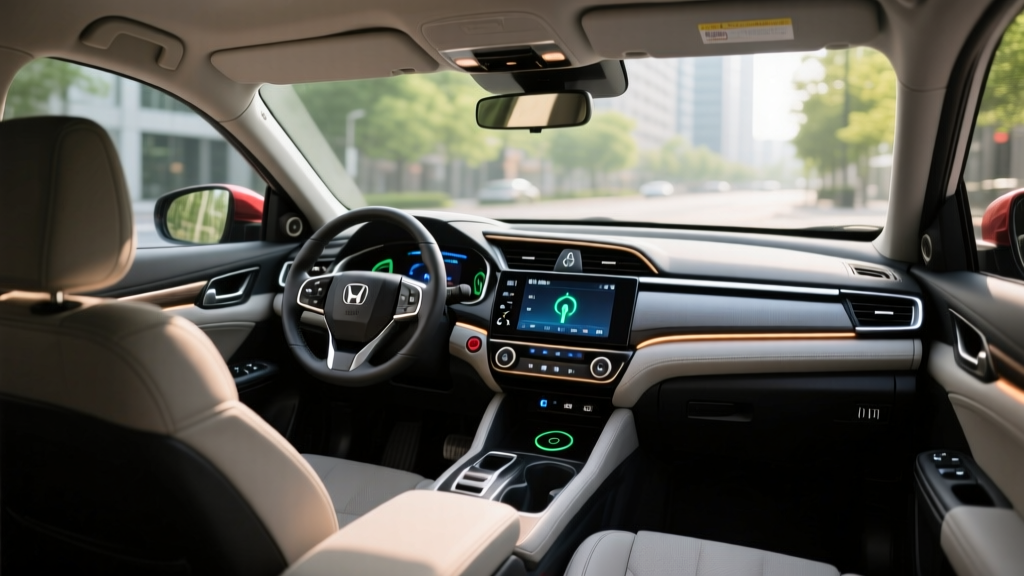
If you're researching the 2026 Honda CR-V Hybrid interior, you've likely noticed that Honda has carried over the generational redesign that debuted for the 2023 model year with only minor trim shuffles for 2026. That's a good thing. The CR-V Hybrid's cabin remains one of the most practical, well-finished, and space-efficient in the compact SUV segment — and the two-motor hybrid powertrain underneath it delivers real-world fuel economy that frequently beats the EPA sticker in city driving.
The 2026 CR-V Hybrid is a conventional hybrid (HEV), not a plug-in hybrid (PHEV). You never plug it in. It self-charges through regenerative braking and the gasoline engine. This distinction matters because Honda does not currently sell a PHEV version of the CR-V in the United States, and the tax-credit implications are very different between the two.
HEV (Hybrid Electric Vehicle): Small battery (~1-2 kWh), recharged by the engine and regen braking. No plug. Typical fuel economy: 37-43 MPG combined.
PHEV (Plug-in Hybrid): Larger battery (~12-20 kWh), plug-in capable, 25-40 miles of electric-only range before the gas engine kicks in. Examples: Toyota RAV4 Prime, Ford Escape PHEV.
Interior Dimensions and Cargo Capacity
The 2026 CR-V Hybrid shares its cabin with the non-hybrid CR-V, but the hybrid battery pack is mounted low and flat under the rear cargo floor, meaning you don't lose meaningful cargo space compared to the gas model. Here's how the numbers break down:
| Measurement | Specification |
|---|---|
| Front headroom | 40.0 in |
| Rear headroom | 38.2 in |
| Front legroom | 41.3 in |
| Rear legroom | 41.0 in |
| Front shoulder room | 57.8 in |
| Rear shoulder room | 55.3 in |
| Cargo volume (behind 2nd row) | 36.3 cu ft |
| Cargo volume (2nd row folded) | 76.5 cu ft |
| Seating capacity | 5 passengers |
The rear legroom figure of 41.0 inches is genuinely generous — it exceeds what you'll find in the Toyota RAV4 Hybrid and is close to midsize SUV territory. The near-flat load floor when the 60/40 split rear seats fold makes hauling bulky items straightforward. One thing to note: the hybrid system's battery placement means there is no spare tire; Honda includes a tire-repair kit instead.
Powertrain Specs: Two-Motor Hybrid System
The 2026 CR-V Hybrid uses Honda's fourth-generation two-motor hybrid system, pairing a 2.0-liter Atkinson-cycle four-cylinder engine with two electric motors. This is a series-parallel hybrid — at low speeds, the electric motor does most of the driving, while at highway speeds, the engine can directly drive the wheels through a lockup clutch for better efficiency.
| Spec | Value |
|---|---|
| Engine | 2.0L Atkinson-cycle I-4 |
| Combined system horsepower | 204 hp |
| Combined system torque | 247 lb-ft |
| Drive motor output | 181 hp / 247 lb-ft |
| Transmission | Direct-drive (no traditional CVT) |
| Drivetrain (Sport/L Sport) | FWD |
| Drivetrain (Sport Touring/L Touring) | AWD (standard) |
| 0-60 mph (est.) | ~7.6 seconds |
| Hybrid battery type | Lithium-ion |
| Hybrid battery capacity | ~1.06 kWh (usable) |
The 204-hp combined output is competitive with the RAV4 Hybrid's 219 hp, and the 247 lb-ft of torque — available almost instantly from the electric drive motor — makes the CR-V Hybrid feel noticeably quicker off the line than its gas-only sibling. Honda's AWD system on upper trims uses a rear-mounted electric motor rather than a mechanical driveshaft, which improves packaging and response.
EPA Fuel Economy and Real-World MPG
Per fueleconomy.gov, the 2026 CR-V Hybrid's EPA ratings depend on drivetrain:
| Configuration | City | Highway | Combined |
|---|---|---|---|
| FWD (Sport, Sport L) | 43 MPG | 36 MPG | 40 MPG |
| AWD (Sport Touring) | 40 MPG | 34 MPG | 37 MPG |
Real-world expectations: Honda's two-motor hybrid system tends to perform well in mixed suburban driving. Many owners report matching or slightly exceeding the EPA city figure (43 MPG FWD) in stop-and-go traffic, where the electric motor handles most propulsion and regenerative braking recaptures energy. Highway driving at sustained 75+ mph will typically yield 32-35 MPG for AWD models — somewhat below the EPA highway sticker. In cold weather (below freezing), expect a 5-10% fuel-economy reduction as the engine runs more frequently to provide cabin heat and warm the battery.
EPA 40 MPG combined (FWD). Expect ~38-43 MPG in city/suburban driving, ~32-36 MPG on sustained highway trips. Cold-weather penalty: roughly 2-4 MPG in sub-freezing conditions.
Pricing, Trims, and Tax Credit Eligibility
For 2026, the CR-V Hybrid is available in four trims. Pricing reflects Honda's MSRP before destination charges:
| Trim | Drivetrain | MSRP (approx.) |
|---|---|---|
| Sport | FWD | $35,395 |
| Sport L | FWD | $37,895 |
| Sport Touring | AWD | $41,295 |
| Sport-L (AWD option) | AWD | $39,395 |
Federal tax credit: The CR-V Hybrid (HEV) does not qualify for the federal §30D clean vehicle credit. Under current IRS rules, only battery electric vehicles (BEVs) and plug-in hybrids (PHEVs) with sufficient battery capacity (≥7 kWh for PHEVs) are eligible — and even then, they must meet critical-mineral sourcing, battery-component, MSRP cap ($80,000 for SUVs), and buyer income limits. The CR-V Hybrid's ~1 kWh battery falls far short of the threshold.
Some states and municipalities offer smaller incentives for conventional hybrids, but these vary widely. Check your state's energy office or the Alternative Fuels Data Center for local programs.
Interior Technology and Features by Trim
The 2026 CR-V Hybrid's interior technology varies meaningfully across trims. Here's what you get:
Sport (base hybrid): 7-inch touchscreen, wireless Apple CarPlay and Android Auto, 4-speaker audio, dual-zone automatic climate control, push-button start, 60/40 split rear seatback, USB-A ports front and rear.
Sport L: Adds leather-trimmed seats, heated front seats, 8-way power driver's seat, leather-wrapped steering wheel, wireless phone charger, power liftgate.
Sport Touring (top trim): Upgraded 9-inch touchscreen with built-in navigation, Bose 12-speaker premium audio, wireless CarPlay/Android Auto, heated rear seats, heated steering wheel, ventilated front seats, hands-free power tailgate, ambient LED lighting, and a 10.2-inch digital instrument cluster.
Across all trims, Honda includes the Honda Sensing suite as standard: adaptive cruise control with low-speed follow, lane-keeping assist, road-departure mitigation, forward collision warning with automatic emergency braking, and traffic-sign recognition. This is a Level 2 driver-assistance system per SAE definitions — the driver must remain fully engaged at all times. It is not autonomous driving.
Battery Warranty, Reliability, and Replacement Cost
Honda covers the CR-V Hybrid's lithium-ion battery pack for 8 years / 100,000 miles (10 years / 150,000 miles in CARB states including California, New York, Massachusetts, and others that follow California emissions standards). The powertrain warranty also covers the hybrid motors and inverter for the same period.
Hybrid battery reliability has proven strong across Honda's lineup. The two-motor system is now in its fourth generation, and real-world data from earlier CR-V Hybrid model years (2020-2025) shows very low battery failure rates within the warranty period. Unlike early-generation hybrids from the 2000s, modern lithium-ion hybrid packs are designed to last the life of the vehicle under normal use.
Replacement cost: If the hybrid battery fails outside of warranty, a replacement pack for the CR-V Hybrid typically costs between $2,000 and $4,000 including labor. This is considerably less than a full EV battery replacement ($8,000-$20,000+) because the pack is small (~1 kWh). Many dealerships and third-party shops also offer refurbished or reconditioned packs at lower cost.
The conventional powertrain warranty covers 5 years / 60,000 miles, and the limited vehicle warranty is 3 years / 36,000 miles. Honda's overall reliability ratings from sources like Consumer Reports and J.D. Power have been strong for the CR-V line, though individual model-year scores vary.
CR-V Hybrid vs RAV4 Hybrid vs PHEV Alternatives
If you're cross-shopping the 2026 CR-V Hybrid, you're likely also looking at the Toyota RAV4 Hybrid and possibly PHEV options. Here's how they compare:
| Spec | 2026 CR-V Hybrid AWD | 2026 RAV4 Hybrid AWD | 2026 RAV4 Prime (PHEV) |
|---|---|---|---|
| Combined HP | 204 hp | 219 hp | 302 hp |
| EPA Combined MPG | 37 MPG | 39 MPG | 38 MPG (gas) / 94 MPGe |
| Electric-Only Range | N/A (HEV) | N/A (HEV) | 42 miles |
| Plug Required? | No | No | Yes (optional) |
| Federal Tax Credit | None | None | Up to $7,500* |
| Starting MSRP (AWD) | ~$35,395 | ~$34,000 | ~$44,500 |
| Cargo (rear seats up) | 36.3 cu ft | 37.5 cu ft | 33.5 cu ft |
*RAV4 Prime tax credit eligibility depends on battery sourcing, buyer income, and MSRP caps per IRS §30D rules. Verify current-year eligibility at irs.gov.
Choose the CR-V Hybrid if: You prioritize rear-seat legroom and interior refinement, want strong city MPG without plugging in, and prefer Honda's driving dynamics and Honda Sensing safety suite.
Choose the RAV4 Hybrid if: Maximum fuel economy (39 MPG combined AWD) and cargo volume are your top priorities, and you want the widest trim selection.
Choose a PHEV (RAV4 Prime, etc.) if: You have home charging access, want 30-40+ miles of electric-only commuting, and may qualify for the federal tax credit to offset the higher MSRP.
Choose a full BEV if: Your daily driving is under 250 miles, you have reliable home Level 2 charging, and you want zero tailpipe emissions with lower per-mile energy cost.
Who Should Buy the 2026 CR-V Hybrid?
The CR-V Hybrid is the right call for buyers who:
- Drive 10,000-15,000 miles per year in mixed suburban and city conditions
- Want a fuel-efficient SUV but don't have access to home charging (apartment dwellers, street parkers)
- Value a quiet, refined interior with above-average rear-seat space
- Don't want the complexity or cost premium of a PHEV or BEV
- Prefer a proven hybrid system with strong warranty coverage and low battery-replacement risk
It's not the right pick if you want electric-only commuting range, need to qualify for the federal EV tax credit, or tow more than 1,000 pounds (the CR-V Hybrid is rated for 1,000 lbs; the gas CR-V can tow up to 1,500 lbs).
Frequently Asked Questions
How many MPG does the 2026 CR-V Hybrid get?
The FWD CR-V Hybrid is rated at 43 city / 36 highway / 40 combined MPG. The AWD version drops to 40 city / 34 highway / 37 combined. In real-world city driving, many owners report matching or slightly exceeding the EPA city figure thanks to the two-motor system's electric-dominant low-speed operation.
Does the 2026 CR-V Hybrid need to be plugged in?
No. The CR-V Hybrid is a conventional hybrid (HEV). Its small lithium-ion battery recharges through regenerative braking and the gasoline engine. There is no plug, no charging cable, and no electric-only driving range to manage.
Is there a plug-in hybrid (PHEV) version of the CR-V?
Not in the United States. Honda sells a CR-V e:PHEV in China and Europe, but it is not offered in the U.S. market for the 2026 model year. If you want a Honda PHEV, the Clarity Plug-in Hybrid was discontinued after 2021, and Honda's current U.S. electrified strategy focuses on conventional hybrids and upcoming BEVs.
What is the CR-V Hybrid battery warranty and replacement cost?
Honda covers the hybrid battery for 8 years / 100,000 miles (10 years / 150,000 miles in CARB states). Out-of-warranty replacement typically costs $2,000-$4,000 including labor — far less than a full EV battery replacement due to the small ~1 kWh pack size.
Does the 2026 CR-V Hybrid qualify for a federal tax credit?
No. The federal §30D clean vehicle credit applies only to plug-in electric vehicles (BEVs and PHEVs) with battery packs of at least 7 kWh. The CR-V Hybrid's ~1 kWh battery does not qualify. Some state or local utility programs may offer small hybrid incentives — check the Alternative Fuels Data Center for your area.
How does the CR-V Hybrid interior compare to the gas CR-V?
The interior dimensions, cargo space (36.3 cu ft behind the second row), and feature content are nearly identical between the hybrid and gas models. The hybrid battery is packaged under the cargo floor without significantly impacting volume. The main difference is the hybrid's slightly different instrument cluster display showing energy flow and battery state of charge.