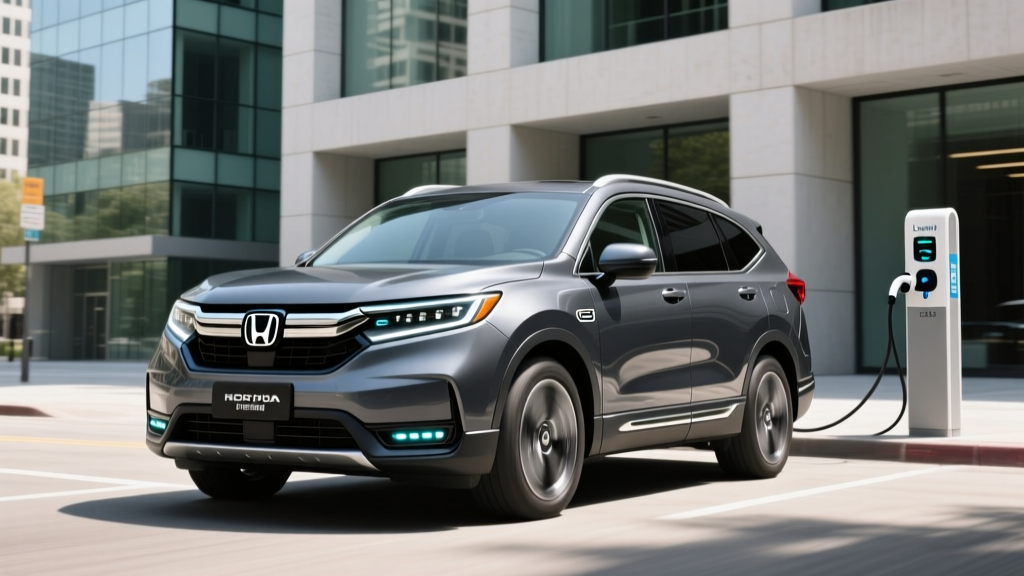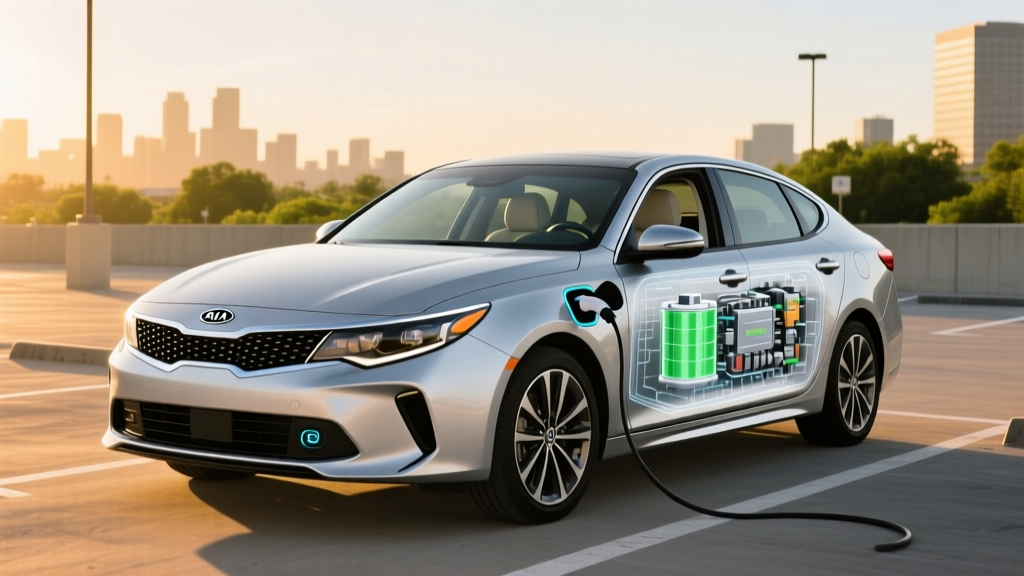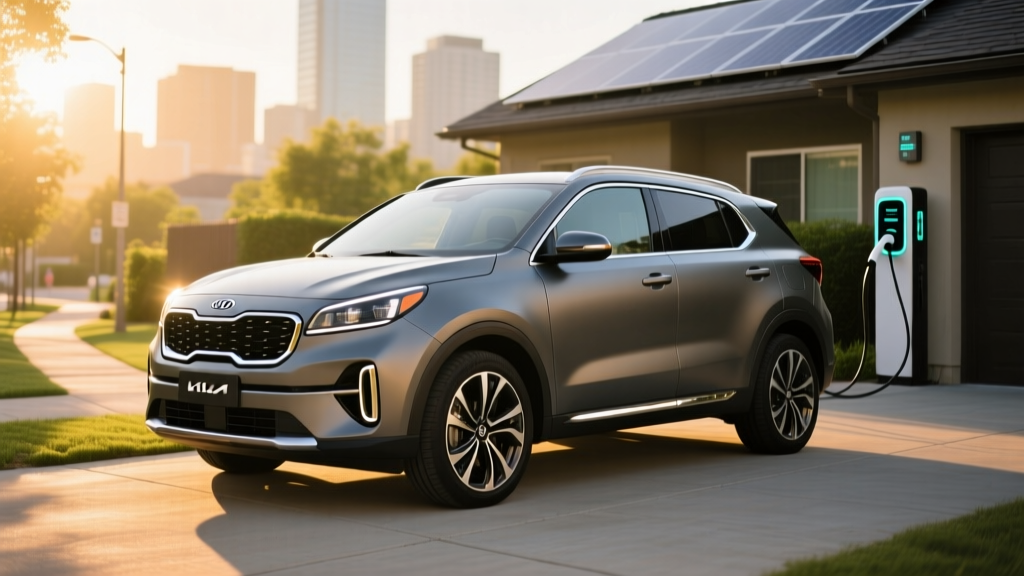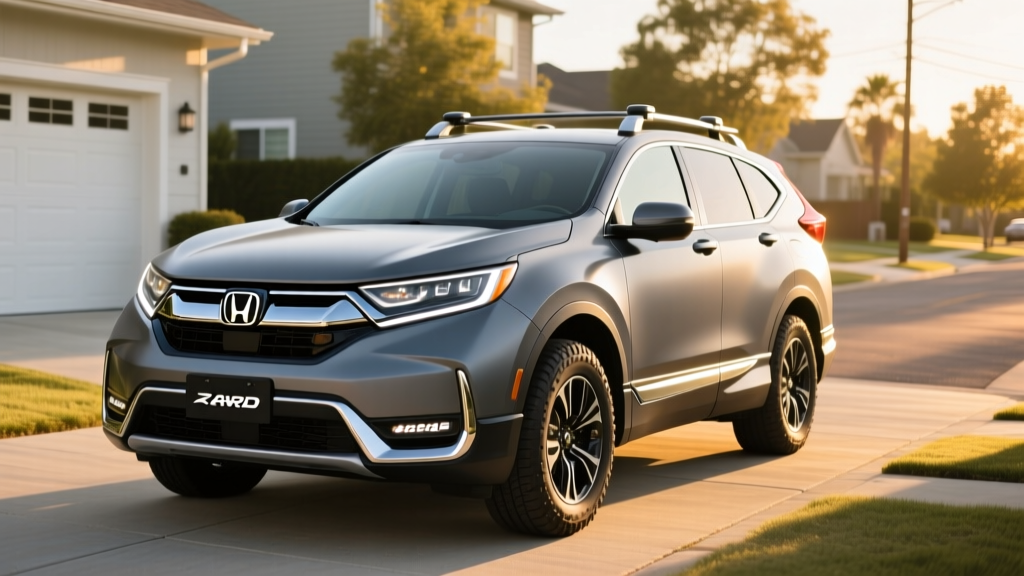
The 2026 Honda CR-V Hybrid AWD occupies a specific niche: buyers who want the cargo space and ride height of a compact SUV, the fuel savings of electrification, and zero lifestyle changes. No plug, no range anxiety, no charging-app gymnastics. You fill it with gas and drive. But with Honda pricing the Hybrid trim only a modest premium over the turbo-gas model, the math increasingly favors the two-motor hybrid system — especially for city-heavy commuters who'll see real-world MPG exceed the EPA sticker.
This guide covers the 2026 CR-V Hybrid AWD powertrain, exact EPA and real-world fuel economy, battery longevity, pricing by trim, and how it stacks up against plug-in hybrids and full EVs in the same segment.
2026 Honda CR-V Hybrid AWD: Powertrain and Specifications
The CR-V Hybrid uses Honda's fourth-generation two-motor hybrid system. It pairs a 2.0-liter Atkinson-cycle four-cylinder engine with two electric motors — one primarily for propulsion, one for generation and engine starting. There is no traditional transmission; instead, the system operates mostly in series-hybrid mode at low and moderate speeds (engine generates electricity, motor drives the wheels) and switches to direct engine drive via a lockup clutch at highway cruising speeds.
| Specification | Value |
|---|---|
| Powertrain | 2.0L Atkinson 4-cyl + 2-motor hybrid system |
| Combined Horsepower | 204 hp |
| Combined Torque | 247 lb-ft (electric motor peak) |
| Drivetrain | AWD (rear-mounted electric motor) |
| Hybrid Battery | Lithium-ion, ~1.1 kWh (self-charging HEV) |
| 0–60 mph | ~7.6 seconds (est.) |
| Towing Capacity | 1,000 lbs |
| Cargo Volume (behind rear seats) | 36.3 cu ft |
| Cargo Volume (rear seats folded) | 76.5 cu ft |
The AWD system is fully electric — there's no mechanical driveshaft to the rear axle. Instead, a dedicated rear electric motor provides torque to the rear wheels when slip is detected or during hard acceleration. This is simpler and lighter than a traditional mechanical AWD system, and it allows the CR-V Hybrid to operate as a front-wheel-drive vehicle during steady cruising for maximum efficiency.
EPA Fuel Economy and Real-World MPG
For the 2026 model year, the EPA rates the Honda CR-V Hybrid AWD at:
| Driving Cycle | MPG |
|---|---|
| City | 40 MPG |
| Highway | 34 MPG |
| Combined | 37 MPG |
The city-highway split is the hallmark of a series-dominant hybrid system. In stop-and-go driving, the engine runs only to recharge the small buffer battery while the electric motor does all the propulsion work — regenerative braking recovers energy that a gas car would waste as heat. On the highway, the system relies more on direct engine drive, which is inherently less efficient at the Atkinson cycle's power output.
In mixed suburban and city driving, owners commonly report 38–42 MPG — the hybrid system rewards gentle, consistent driving and frequent stops. On sustained highway trips at 70–75 mph, expect 32–35 MPG. In cold weather (below freezing), the engine runs more frequently to provide cabin heat and maintain battery temperature, dropping city MPG to roughly 34–36 until the system warms up. Short-trip, cold-climate owners will see the lowest figures; long-commute, moderate-climate drivers will see the highest.
Compared to the non-hybrid 2026 CR-V AWD (turbo 1.5L, EPA-rated 28 city / 32 highway / 29 combined), the hybrid delivers roughly 28% better combined fuel economy — a gap that widens significantly in city driving.
HEV vs. PHEV vs. Full EV: Which Powertrain Fits You?
The CR-V Hybrid is a conventional hybrid (HEV). It does not plug in. It does not have a meaningful electric-only range. If you're cross-shopping electrified SUVs, here's how the three powertrain types differ in practice:
| Factor | HEV (CR-V Hybrid) | PHEV (e.g., Toyota RAV4 Prime) | BEV (e.g., Hyundai Ioniq 5) |
|---|---|---|---|
| Plug-in required? | No | Yes (for max benefit) | Yes |
| Electric-only range | ~1 mi (low-speed creep) | 35–42 mi typical | 250–320 mi (EPA) |
| Home charging needed? | No | Strongly recommended | Yes (Level 2 ideal) |
| Best for | No home charging access, mixed driving | Home charging + short commute | Home charging + daily driving under 250 mi |
| Fuel cost per mile | ~$0.10–0.12 | ~$0.04 electric / $0.10 gas | ~$0.03–0.05 (home charging) |
| Maintenance complexity | Engine + hybrid system | Engine + hybrid + larger battery | Minimal (no engine) |
| Federal tax credit | None (§30D requires plug-in) | Up to $7,500 (if eligible) | Up to $7,500 (if eligible) |
The CR-V Hybrid is the right choice if you lack reliable home or workplace charging, drive a mix of city and highway miles, and want fuel savings without any behavioral change. If you have a garage with a 120V or 240V outlet and a commute under 40 miles round-trip, a PHEV like the RAV4 Prime can run almost entirely on electricity for daily driving while retaining gas-engine range for road trips. If you have Level 2 home charging and want the lowest per-mile operating cost, a full BEV is the long-term efficiency winner — but requires accepting current public-charging limitations on road trips.
Pricing, Trims, and Tax Credit Eligibility
The 2026 Honda CR-V Hybrid is available in three trims, all with AWD standard:
| Trim | MSRP (incl. destination) |
|---|---|
| Sport | $36,395 |
| Sport-L | $38,695 |
| Sport Touring | $41,895 |
The Hybrid Sport starts approximately $2,700 above the equivalent gas-only CR-V EX AWD. At 37 MPG combined vs. 29 MPG combined, and assuming 15,000 miles/year at $3.40/gallon, the hybrid saves roughly $530/year in fuel. That puts the payback period at about five years for an average driver — shorter for high-mileage city commuters, longer for low-mileage highway drivers.
The CR-V Hybrid is a conventional HEV, not a plug-in vehicle. It does not qualify for the IRS §30D Clean Vehicle Credit, which requires a minimum 7 kWh battery and plug-in capability. Some states offer modest rebates for high-MPG hybrids, but these vary by jurisdiction — check your state energy office or the Alternative Fuels Data Center for current state incentives. The only Honda currently eligible for partial federal credit is a PHEV model, not the standard hybrid.
Battery Warranty, Longevity, and Replacement Cost
Honda covers the CR-V Hybrid's high-voltage battery under its hybrid system warranty:
- Hybrid Battery: 8 years / 100,000 miles (10 years / 150,000 miles in CARB states including CA, NY, MA, and others that follow California emissions standards)
- Hybrid System Components: 8 years / 100,000 miles (inverters, control units, electric motors)
- Capacity Threshold: Honda does not publish a specific State of Health percentage for warranty replacement, but dealers typically replace under warranty if capacity drops below ~70% or if a cell failure triggers a diagnostic trouble code
The CR-V Hybrid's battery is small (~1.1 kWh) and operates in a narrow state-of-charge window — typically between 40% and 80%. Honda's battery management system avoids deep discharges and full charges, which are the primary drivers of lithium-ion degradation. Based on historical data from Honda's hybrid fleet (Accord Hybrid, Insight, CR-V Hybrid since 2020), the battery rarely requires replacement within the first 150,000 miles. When it does, out-of-warranty replacement currently costs between $2,000 and $3,500 including labor — substantially less than a full EV battery replacement due to the small pack size.
For context, the most common hybrid system failure in Honda's two-motor design is not the battery but the power control unit (PCU), which manages the flow of electricity between engine, motors, and battery. This is also covered under the hybrid system warranty.
Driving Impressions and Practical Ownership Notes
The two-motor system gives the CR-V Hybrid a distinct driving character compared to turbo-gas competitors. Off the line, the electric motor delivers immediate torque (247 lb-ft), making the vehicle feel quicker than its 7.6-second 0–60 time suggests in urban driving. There's no turbo lag, no transmission hunting for gears. The transition between electric propulsion, series-hybrid generation, and direct engine drive is nearly imperceptible in normal driving — you may notice a slight drone under hard acceleration when the engine revs to its optimal RPM to generate electricity, but it's brief.
The AWD system engages the rear motor quickly in wet or slippery conditions, but this is a traction-assist system, not an off-road platform. Ground clearance is 8.2 inches, adequate for snow and gravel roads but not technical trails. Towing is limited to 1,000 lbs — if you need to tow a small trailer, the gas CR-V (1,500 lbs) or a body-on-frame SUV is the better choice.
Inside, the Sport Touring trim includes a 9-inch touchscreen with wireless Apple CarPlay and Android Auto, a 12-speaker Bose audio system, heated rear seats, and Honda's full Honda Sensing ADAS suite (adaptive cruise, lane-keeping, blind-spot monitoring, rear cross-traffic). Note that Honda Sensing is an SAE Level 2 driver-assistance system — it requires continuous driver attention and hands-on-wheel supervision. It is not a self-driving system.
Pros, Cons, and Who Should Buy
- 40 MPG city / 37 combined EPA — exceeds sticker in real-world city driving
- No plug-in required — works with existing fueling habits
- AWD standard on all Hybrid trims
- Strong electric torque for responsive city acceleration
- 8yr/100k-mi hybrid battery warranty (10yr/150k in CARB states)
- 36.3 cu ft cargo space — competitive with gas CR-V
- No federal tax credit (HEV, not PHEV)
- Highway MPG (34) trails city MPG — less advantage on road trips
- 1,000-lb towing limit (gas CR-V: 1,500 lbs)
- Engine drone under hard acceleration
- ~$2,700 premium over gas AWD trim; payback depends on mileage
- Not eligible for HOV lane access in most states
Look at a PHEV instead if: You have a garage with a 240V outlet, your daily round-trip commute is under 40 miles, and you want to drive mostly on electricity while keeping gas-engine flexibility.
Look at a full EV instead if: You have Level 2 home charging, your daily driving is under 250 miles, and you want the lowest per-mile energy cost and zero tailpipe emissions.
Frequently Asked Questions
How many MPG does the 2026 Honda CR-V Hybrid AWD actually get?
The EPA rates it at 40 city / 34 highway / 37 combined. In real-world city and suburban driving, many owners report 38–42 MPG. Highway-only driving at 70+ mph typically yields 32–35 MPG. Cold weather and short trips reduce these figures.
Does the CR-V Hybrid need to be plugged in?
No. The CR-V Hybrid is a conventional (self-charging) hybrid. Its small lithium-ion battery is charged by the gasoline engine and regenerative braking. You simply fill it with gasoline like any other car.
Does the 2026 CR-V Hybrid qualify for any tax credit?
No federal tax credit applies — the IRS §30D credit requires plug-in capability and a minimum 7 kWh battery. The CR-V Hybrid has neither. Some states may offer small rebates for high-efficiency vehicles; check your state's energy office for current programs.
How long will the CR-V Hybrid battery last, and what does replacement cost?
Honda warrants the hybrid battery for 8 years/100,000 miles (10 years/150,000 miles in CARB states). Based on Honda's hybrid fleet history, the battery typically lasts 150,000+ miles without requiring replacement. Out-of-warranty replacement costs approximately $2,000–$3,500.
Is the CR-V Hybrid AWD system good in snow?
The electric AWD system engages the rear motor quickly when front-wheel slip is detected, and combined with 8.2 inches of ground clearance, the CR-V Hybrid performs competently in moderate snow. It's not a dedicated off-road or heavy-tow vehicle, but for typical winter commuting with snow tires, it's well-suited.
How does the CR-V Hybrid compare to the Toyota RAV4 Hybrid?
The 2026 RAV4 Hybrid AWD is EPA-rated at 41 city / 38 highway / 39 combined — slightly better highway efficiency due to Toyota's series-parallel planetary gearset design. The CR-V Hybrid offers slightly more cargo space (36.3 vs. 37.6 cu ft is comparable) and a more refined interior, while the RAV4 Hybrid has a modest fuel-economy edge and a longer track record in the hybrid SUV segment. Both are strong choices; test-drive both and compare pricing at your local dealers.