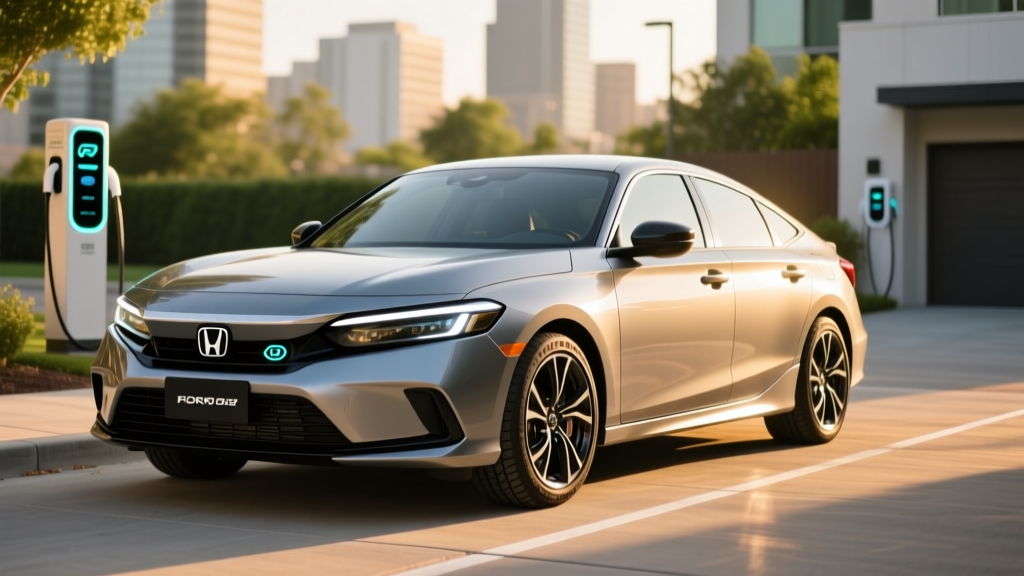
The 2026 Honda Civic Sedan Hybrid Sport occupies a narrow but compelling lane in the compact-car market: it delivers hybrid efficiency without requiring you to plug in, while offering more power than most gas-only rivals in its class. For buyers weighing a conventional hybrid against a plug-in hybrid (PHEV) or a full battery-electric vehicle (BEV), the Civic Hybrid Sport makes a strong case as the lowest-friction path to better fuel economy.
This guide breaks down the exact EPA fuel-economy numbers, the two-motor hybrid powertrain, real-world MPG expectations, battery longevity, and whether any tax credits apply. We'll also clarify where this HEV fits relative to PHEVs and EVs so you can make a spec-driven decision.
HEV vs PHEV: What the Civic Hybrid Sport Actually Is
Before examining the numbers, it's critical to distinguish the two hybrid architectures, because buyers frequently confuse them:
Conventional Hybrid (HEV)
Example: 2026 Honda Civic Sedan Hybrid Sport
- No plug — the battery charges via regenerative braking and the gas engine
- Small battery (~1.1 kWh usable)
- Electric motor assists the engine; cannot drive on electric power alone for meaningful distances
- Primary benefit: improved MPG, especially in city driving
Plug-In Hybrid (PHEV)
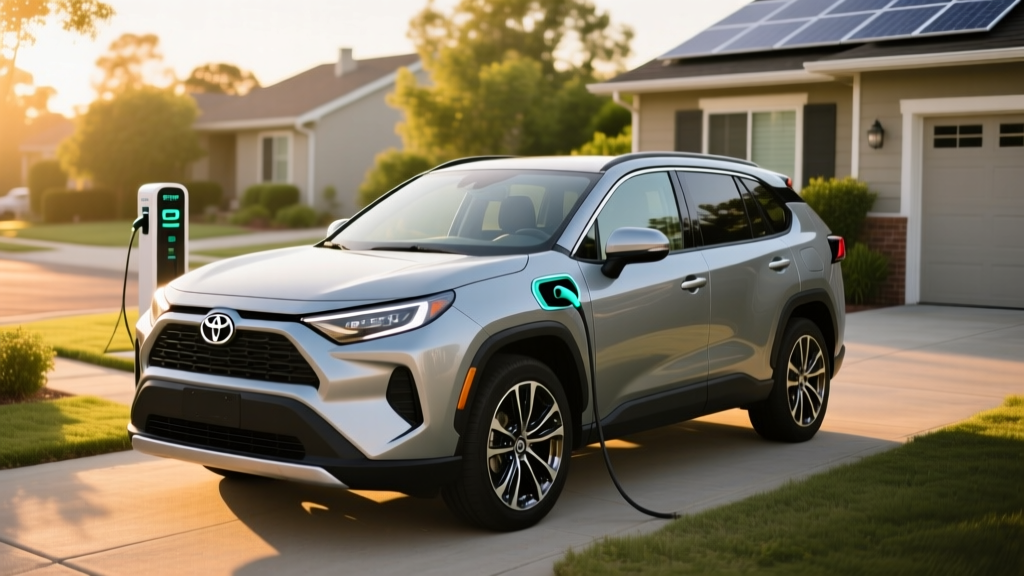
Example: Toyota Prius Prime, Hyundai Tucson PHEV
- Has a plug — charges from a wall outlet or public charger
- Larger battery (typically 10–20 kWh)
- 25–45 miles of electric-only range before the gas engine kicks in
- Primary benefit: daily EV commuting with gas-engine backup for road trips
The 2026 Civic Sedan Hybrid Sport is a conventional hybrid (HEV). You never plug it in. You fuel it with regular unleaded gasoline. The hybrid system simply makes that gasoline go further — significantly further than the non-hybrid Civic.
Fuel Economy: EPA Ratings and Real-World MPG
The EPA rates the 2026 Honda Civic Sedan Hybrid Sport at 50 mpg city / 47 mpg highway / 49 mpg combined according to fueleconomy.gov. These figures represent a meaningful improvement over the gas-only Civic Sport, which returns roughly 31 city / 40 highway / 34 combined.
| Driving Scenario | EPA Estimate | Real-World Expectation |
|---|---|---|
| City | 50 mpg | 48–54 mpg (hybrids often beat EPA in stop-and-go) |
| Highway (70 mph cruise) | 47 mpg | 42–46 mpg (aerodynamic drag and sustained engine load) |
| Combined | 49 mpg | 46–51 mpg depending on driving mix |
| Cold weather (below 32°F) | — | 40–44 mpg (engine runs more for cabin heat, battery less efficient) |
Why hybrids often exceed EPA in the city: Honda's two-motor hybrid system can propel the Civic on electric power alone at low speeds and during light acceleration. Every stop-light brake event regenerates energy back into the battery. The more stop-and-go your commute, the harder the electric motor works relative to the gas engine — and the better your MPG. Highway driving is the opposite: the engine does most of the work at sustained speed, and aerodynamic drag dominates.
On a 340-mile mixed-driving road trip in moderate temperatures, expect roughly 46–48 mpg combined if you drive at or near speed limits. Short-trip city errands in warm weather can push the trip computer above 52 mpg.
Powertrain: 200 Horsepower from Two Motors and a 2.0L Engine
The Civic Hybrid Sport uses Honda's fourth-generation two-motor hybrid system, which pairs a 2.0-liter Atkinson-cycle four-cylinder engine with two electric motors integrated into the transmission assembly.
| Specification | 2026 Civic Sedan Hybrid Sport |
|---|---|
| Combined System Horsepower | 200 hp |
| Combined System Torque | 232 lb-ft |
| Gas Engine | 2.0L Atkinson-cycle inline-4 (146 hp / 134 lb-ft) |
| Drive Motor | 184 hp / 232 lb-ft (primary propulsion motor) |
| Transmission | e-CVT (no traditional gears; motor-ratio management) |
| Drivetrain | Front-wheel drive |
| 0–60 mph | ~7.1 seconds (estimated) |
| Hybrid Battery | ~1.1 kWh lithium-ion (not plug-in) |
| Fuel Tank | 12.4 gallons |
| Total Driving Range | ~607 miles (at 49 mpg combined) |
The 232 lb-ft of torque is available nearly instantly from the electric drive motor, which gives the Civic Hybrid Sport a responsive, punchy feel off the line — noticeably quicker than the 158-hp gas-only Civic. Honda's e-CVT manages the blend between electric and gas power seamlessly; there is none of the "rubber-band" drone associated with older Toyota hybrid CVTs.
Pricing, Trims, and Tax Credit Eligibility
The 2026 Honda Civic Sedan Hybrid Sport carries a starting MSRP of approximately $29,845 (including destination charge). The Hybrid Sport Touring, which adds leather, a Bose audio system, wireless charging, and upgraded wheels, starts around $32,845.
Federal tax credit: The Civic Hybrid Sport is a conventional HEV — it does not qualify for the IRS §30D Clean Vehicle Credit. That credit, which offers up to $7,500, applies only to plug-in electric vehicles (BEVs and PHEVs) that meet battery-sourcing, MSRP, and buyer-income requirements per IRS guidelines. Because the Civic Hybrid has no plug and a battery far below the 7 kWh threshold, no federal purchase incentive applies.
State incentives: A handful of states offer modest rebates or HOV-lane access for conventional hybrids, but these vary by jurisdiction and change frequently. Check your state's energy or DMV website for current programs. Do not assume a state credit applies until you verify it directly.
Battery Longevity, Warranty, and Replacement Cost
Hybrid battery anxiety is the single most common concern we hear from first-time hybrid buyers. Here's what the data says about Honda's system:
Honda Hybrid Battery Warranty
- Coverage: 8 years / 100,000 miles (10 years / 150,000 miles in CARB states including CA, CT, ME, MA, NJ, NY, OR, RI, VT, WA)
- What's covered: Defects and capacity loss below functional threshold
- Battery type: Lithium-ion, approximately 1.1 kWh
Real-world degradation: Honda's hybrid batteries are small and never deeply cycled — the system keeps the state of charge in a narrow middle band (roughly 40–60%), which dramatically reduces wear. Data from third-generation Civic and Accord Hybrids shows negligible capacity loss over 150,000+ miles in normal use. Unlike a BEV battery that cycles through 80–90% of its capacity daily, the Civic Hybrid's battery is essentially a power buffer, not an energy store.
Replacement cost: If the hybrid battery fails outside warranty, a replacement from Honda typically runs $2,000–$4,000 including labor. Independent hybrid specialists can sometimes refurbish or replace individual cells for $1,000–$2,000. Given the warranty length and the battery's shallow-cycle design, out-of-pocket replacement is uncommon within the vehicle's normal lifespan.
Real-World Ownership: What It's Like to Live With
The Civic Hybrid Sport asks almost nothing of its owner compared to a BEV or PHEV:
- No charging infrastructure needed. No Level 2 home charger, no 240V outlet, no electrical panel upgrade. You fuel it at any gas station.
- Maintenance mirrors the gas Civic. Oil changes (every 7,500–10,000 miles), tire rotations, brake fluid, cabin air filter. Regenerative braking actually extends brake-pad life — many hybrid owners report original pads lasting 80,000+ miles.
- Insurance costs are typically comparable to the gas Civic Sport, though some carriers surcharge 3–5% for hybrid powertrains. Get quotes before purchasing.
- Cold-weather behavior: The gas engine runs more frequently in winter to provide cabin heat, which drops MPG to the low 40s. This is normal for all hybrids without a dedicated heat pump (which only BEVs typically have).
On the downside, the Civic Hybrid Sport is FWD only — no AWD option is available, unlike the Toyota Prius (which offers AWD). If you live in heavy snow country, that may matter. Cargo volume is approximately 14.8 cubic feet in the trunk, competitive with the segment but less than a hatchback.
Hybrid vs PHEV vs EV: Which Should You Choose?
Choose the Civic Hybrid Sport (HEV) if:
- You cannot charge at home (apartment, street parking, no garage)
- You want better MPG without changing any habits
- Your budget is under $31,000 and you want a proven powertrain
- You drive a mix of city and highway and want 600+ miles between fill-ups
Choose a PHEV (e.g., Prius Prime, Hyundai Elantra PHEV) if:
- You can install a Level 2 charger at home
- Your daily commute is under 40 miles round-trip (you'd rarely use gas)
- You want EV-like daily driving with gas-engine road-trip flexibility
- You qualify for the §30D federal tax credit (up to $7,500, income and sourcing rules apply)
Choose a full BEV (e.g., Chevy Equinox EV, Tesla Model 3) if:
- You have reliable home charging and your daily drive is under 250 miles
- You want zero tailpipe emissions and minimal maintenance
- You can absorb a higher purchase price offset by the $7,500 federal credit and lower per-mile energy cost
- You're comfortable planning around DC fast charging on road trips
The Civic Hybrid Sport's strongest competitive advantage is zero lifestyle change. You buy it, you drive it, you fuel it like any other car — and you get nearly 50 mpg doing it. For buyers who aren't ready for plug-in life but want to cut fuel costs by 30–40% compared to a gas-only Civic, it's the pragmatic choice.
Reliability and Safety Ratings
Honda's two-motor hybrid system has been in production since 2014 (Accord Hybrid) and has proven highly reliable. The system eliminates the traditional starter motor and alternator — two common failure points in gas cars — and the e-CVT has no belt, chain, or friction bands to wear out. IIHS has historically rated the Civic sedan as a Top Safety Pick; check for the 2026 rating update as crash-test results are published.
The Honda Sensing suite comes standard on the Hybrid Sport: adaptive cruise control, lane-keeping assist, forward-collision warning with automatic emergency braking, and traffic-sign recognition. Note that these are SAE Level 1–2 driver-assistance features — they do not constitute self-driving, and the driver must remain fully engaged at all times.
Pros and Cons
Pros
- 49 mpg combined EPA; real-world city MPG can exceed 50
- 200 hp and 232 lb-ft — quicker and torquier than the gas Civic
- No plug, no charging infrastructure, no behavior change required
- 600+ mile total range on a 12.4-gallon tank
- 8-year/100,000-mile hybrid battery warranty (10/150k in CARB states)
- Strong resale value and Honda reliability reputation
Cons
- No federal tax credit (HEV, not a plug-in)
- FWD only — no AWD option unlike some competitors
- Highway MPG drops to low-to-mid 40s at sustained 75+ mph
- Cold-weather MPG penalty (engine runs for cabin heat)
- Trunk slightly smaller than some hatchback competitors
- Sport trim lacks premium features (leather, Bose) found on Touring
Frequently Asked Questions
How many MPG does the 2026 Honda Civic Sedan Hybrid Sport get?
The EPA rates it at 50 mpg city, 47 mpg highway, and 49 mpg combined. In real-world city driving, many owners report 48–54 mpg. Highway driving at 70+ mph typically yields 42–46 mpg. Cold weather reduces these figures by roughly 10–15%.
Do I need to plug in the Civic Hybrid Sport?
No. The 2026 Civic Sedan Hybrid Sport is a conventional hybrid (HEV), not a plug-in hybrid (PHEV). The battery charges entirely through regenerative braking and the gas engine. You fuel it with regular gasoline at any station.
Does the 2026 Civic Hybrid Sport qualify for a federal tax credit?
No. The IRS §30D Clean Vehicle Credit applies only to plug-in vehicles (BEVs and PHEVs) with battery capacities of at least 7 kWh. The Civic Hybrid's ~1.1 kWh battery does not meet this threshold. No federal purchase incentive is available for conventional HEVs.
How long will the hybrid battery last, and what does replacement cost?
Honda warranties the hybrid battery for 8 years/100,000 miles (10 years/150,000 miles in CARB states). Because the battery is small and never deeply discharged, real-world degradation is minimal — many Honda hybrid batteries exceed 200,000 miles without issue. Out-of-warranty replacement typically costs $2,000–$4,000, though refurbishment options exist for less.
Is the Civic Hybrid Sport faster than the gas-only Civic?
Yes, meaningfully so. The hybrid system produces 200 hp and 232 lb-ft of combined torque, versus 158 hp and 138 lb-ft for the 2.0L gas Civic. The electric motor's instant torque delivery makes the Hybrid Sport feel notably quicker in city and suburban driving, with an estimated 0–60 mph time of around 7.1 seconds versus roughly 8.5 seconds for the gas model.
Should I get the Civic Hybrid or a plug-in hybrid like the Prius Prime?
If you can charge at home and your commute is under 40 miles, a PHEV like the Prius Prime lets you drive mostly on electricity, potentially using almost no gasoline on weekdays — and it may qualify for a federal tax credit. If you can't charge at home, or you want a lower purchase price and simpler ownership, the Civic Hybrid Sport is the better fit.