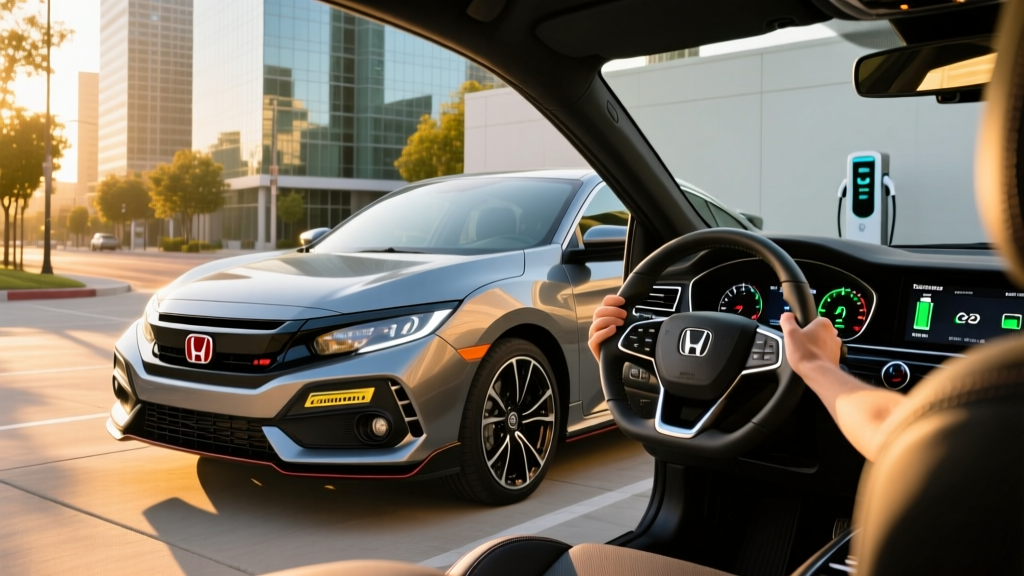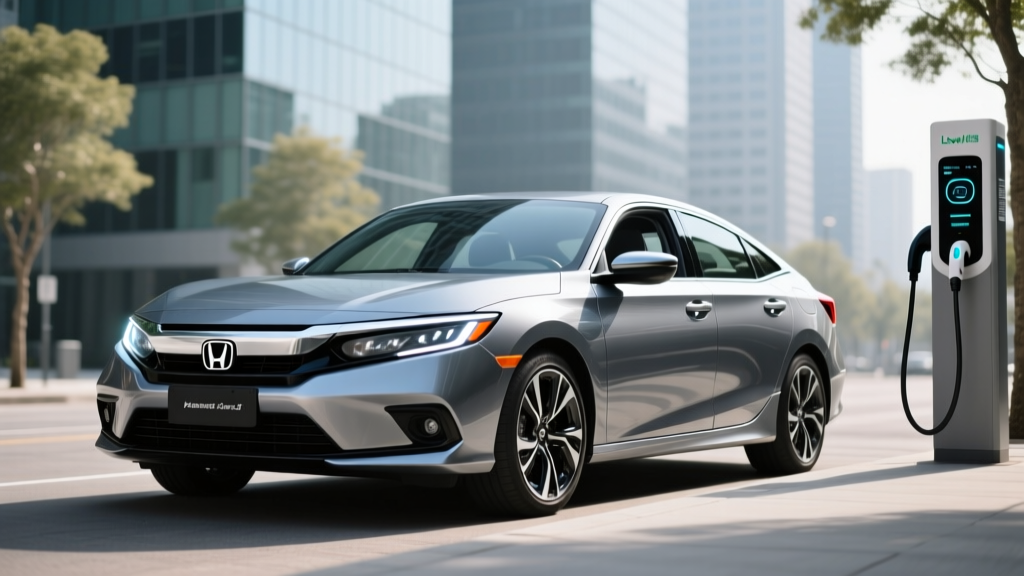
The 2026 Honda Civic Hybrid Touring sits at the top of Honda's compact hybrid lineup, pairing a 2.0-liter Atkinson-cycle engine with a two-motor hybrid system for 200 combined horsepower and an EPA-estimated 49 MPG combined. It's a conventional hybrid (HEV) — not a plug-in — meaning it never needs to be plugged in and recovers all its energy through regenerative braking and the gasoline engine. For buyers who want EV-like city efficiency without charging infrastructure, the Civic Hybrid Touring makes a compelling case.
This guide breaks down the Touring trim's exact fuel economy figures, powertrain specs, real-world MPG expectations, battery longevity, pricing, and how it compares to PHEVs and full BEVs in the compact segment.
EPA Fuel Economy and Real-World MPG
The 2026 Civic Hybrid Touring carries the same powertrain as lower trims but adds weight from premium features (leather seats, Bose audio, larger wheels). Despite this, its EPA ratings remain near the top of the compact hybrid class.
| Driving Cycle | EPA Estimate | Real-World Expectation |
|---|---|---|
| City | 50 MPG | 50–55 MPG (hybrids excel in stop-and-go) |
| Highway | 47 MPG | 42–46 MPG (sustained 70+ mph reduces regen benefit) |
| Combined | 49 MPG | 45–50 MPG depending on driving mix |
Honda's two-motor hybrid system operates primarily in electric-drive mode at low and moderate speeds, with the engine acting as a generator. Only at sustained highway speeds does the engine directly drive the wheels through a lock-up clutch. This is why city MPG exceeds highway MPG — the opposite of a conventional gas car.
In mixed driving with moderate temperatures (60–80°F), owners consistently report 47–51 MPG combined. In winter conditions (below 35°F), expect a 5–10% reduction due to increased engine runtime for cabin heat and reduced battery efficiency — bringing combined figures to roughly 43–46 MPG. The Civic Hybrid does not use a heat pump; cabin warmth comes from engine coolant, which means the engine must run more frequently in cold weather.
Powertrain Specs: Engine, Motors, and Horsepower
The Civic Hybrid uses Honda's fourth-generation two-motor hybrid system. Unlike Toyota's planetary-gear power-split device, Honda's system is predominantly series-hybrid: the engine mostly generates electricity while the traction motor drives the wheels.
| Specification | Value |
|---|---|
| Engine | 2.0L DOHC Atkinson-cycle 4-cylinder |
| Engine Output | 143 hp / 134 lb-ft torque |
| Traction Motor Output | 184 hp / 247 lb-ft torque |
| Combined System Output | 200 hp / 232 lb-ft torque |
| Transmission | Single-speed direct drive (no CVT, no traditional gears) |
| 0–60 mph | ~7.2 seconds (Honda estimated) |
| Drivetrain | Front-wheel drive |
| Hybrid Battery | ~1.1 kWh lithium-ion (nominal, not plug-in) |
| Towing Capacity | Not rated for towing |
The 247 lb-ft of electric torque is available from low RPM, giving the Civic Hybrid strong initial acceleration that feels quicker than its 7.2-second 0–60 time suggests. The single-speed transmission eliminates the rubber-band feel common in CVT-equipped hybrids. At highway speeds above ~65 mph, the lock-up clutch engages to connect the engine directly to the wheels, improving efficiency at steady-state cruising.
HEV vs PHEV vs EV: Which Is Right for You?
The 2026 Civic Hybrid Touring is a conventional hybrid (HEV). It cannot be plugged in and has no meaningful electric-only range (the small battery buffers energy for assist, not standalone propulsion). Here's how it compares to the alternatives:
HEV (This Car)
Example: Civic Hybrid Touring
Plug in? No
Electric-only range: ~1 mi (assist only)
Best for: No home charging access, want simplicity
PHEV
Example: Toyota Prius Prime
Plug in? Yes (Level 1/2)
Electric-only range: 30–44 mi
Best for: Home charging + short commutes
BEV (Full EV)
Example: Chevrolet Equinox EV
Plug in? Yes (Level 1/2/DC)
Electric-only range: 250–319 mi
Best for: Reliable home charging, lowest running cost
Choose the Civic Hybrid (HEV) if: You lack access to home or workplace charging, you want zero lifestyle change from a gas car, or you drive long distances where charging infrastructure is sparse.
Consider a PHEV instead if: You can install a Level 2 charger at home, your daily commute is under 40 miles, and you want to drive mostly on electricity while keeping a gas engine for road trips.
Consider a BEV instead if: You have reliable home charging, your daily driving is predictable, and you want the lowest per-mile energy cost and zero tailpipe emissions.
Pricing, Trims, and Tax Credit Eligibility
The 2026 Civic Hybrid is offered in Sport and Sport Touring trims. The Touring badge (branded "Sport Touring Hybrid" in Honda's lineup) is the top trim with the most equipment.
| Trim | MSRP | Key Additions Over Base Hybrid |
|---|---|---|
| Sport Hybrid | $30,750 | Hybrid powertrain, sport styling, 7" touchscreen |
| Sport Touring Hybrid | $33,750 | Leather, Bose 12-speaker audio, 9" touchscreen, wireless CarPlay/Android Auto, heated rear seats, Honda Sensing suite, 18" alloy wheels |
Destination charge adds approximately $1,095. Fully loaded, a 2026 Civic Hybrid Sport Touring comes in around $34,845 before dealer adjustments or incentives.
Battery Warranty, Longevity, and Replacement Cost
Hybrid battery longevity is a top concern for buyers. Honda backs the Civic Hybrid's lithium-ion battery pack with a robust warranty.
- Standard states: 8 years / 100,000 miles
- CARB states (CA, NY, MA, and others): 10 years / 150,000 miles
- Coverage: Defects and capacity loss below functional threshold
The hybrid powertrain components (motors, inverter, control unit) are covered under the same warranty period.
Honda's hybrid battery is small (~1.1 kWh) and operates within a narrow state-of-charge window — typically between 20% and 80% SoC. This shallow cycling dramatically reduces degradation compared to a full EV battery that cycles through a wider range. Honda's hybrid systems in the Accord and CR-V have demonstrated strong longevity, with many units exceeding 200,000 miles without battery replacement.
If replacement is needed out of warranty, a Civic Hybrid battery pack costs approximately $2,000–$3,500 including labor at a Honda dealer. Third-party refurbishment shops offer replacements for $1,500–$2,500. This is significantly less than a BEV battery replacement ($8,000–$20,000+) because the pack is far smaller.
Real-World Ownership: What to Expect
After extended driving in varied conditions, here's what the 2026 Civic Hybrid Sport Touring delivers in practice:
City driving (stop-and-go, 25–40 mph): This is where the Civic Hybrid shines. The traction motor handles most acceleration, the engine stays off at stops, and regenerative braking recaptures energy. Expect 50–55 MPG in warm weather. The transition between engine and motor is nearly imperceptible.
Highway cruising (70–80 mph): The engine engages the lock-up clutch and drives the wheels directly. Efficiency drops to 42–46 MPG, which is still excellent for a compact sedan. Wind and road noise are well-managed at the Touring trim's additional sound insulation.
Cold weather (below 35°F): The engine must run more frequently to provide cabin heat (no electric heater or heat pump on the Civic Hybrid). Combined MPG drops to 43–46 MPG. Using seat heaters and keeping cabin temperature moderate helps minimize the penalty.
Mountain/hilly terrain: Regenerative braking on descents recovers meaningful energy. The 200 hp system handles grades confidently, though you'll hear the engine at higher RPM under sustained climbing loads.
Safety, Technology, and Honda Sensing
The Touring trim includes Honda's full Honda Sensing suite as standard equipment:
- Adaptive Cruise Control with Low-Speed Follow
- Lane Keeping Assist System (LKAS)
- Road Departure Mitigation
- Collision Mitigation Braking System (CMBS)
- Traffic Sign Recognition
- Blind Spot Information with Rear Cross Traffic Monitor
The Touring's 9-inch touchscreen supports wireless Apple CarPlay and Android Auto. A 10.2-inch digital instrument cluster displays hybrid-specific information including energy flow, battery state of charge, and real-time MPG. The Bose 12-speaker audio system is a Touring exclusive.
The NHTSA and IIHS ratings for the 2026 Civic Hybrid carry over from the standard Civic's strong crash-test performance — the Civic sedan has historically earned Top Safety Pick+ status from IIHS and 5-star overall NHTSA ratings.
Who Should Buy the 2026 Civic Hybrid Touring?
Pros
- 49 MPG combined — best-in-class for a premium compact sedan
- 200 hp with instant electric torque — responsive in daily driving
- No plug-in required — zero lifestyle change from gas car
- 519+ mile total range between fill-ups
- Touring trim loaded with leather, Bose, and full Honda Sensing
- 8yr/100k battery warranty (10yr/150k in CARB states)
- Strong resale value and Honda reliability reputation
Cons
- No federal tax credit (HEV excluded from §30D)
- Highway MPG drops to ~43 (less regen benefit at speed)
- No heat pump — cold-weather MPG penalty
- Not rated for towing
- FWD only — no AWD option (unlike some competitors)
- Small trunk battery slightly reduces cargo vs. gas Civic
Frequently Asked Questions
How many MPG does the 2026 Honda Civic Hybrid Touring get?
The EPA rates it at 50 MPG city, 47 MPG highway, and 49 MPG combined. In real-world mixed driving, expect 45–50 MPG. City driving often exceeds the EPA estimate (50–55 MPG), while sustained highway driving at 75+ mph may drop to 42–44 MPG.
Does the Civic Hybrid need to be plugged in?
No. The Civic Hybrid is a conventional HEV, not a plug-in hybrid. It charges its small battery entirely through regenerative braking and the gasoline engine. You fuel it exactly like a standard gas car.
How far can the Civic Hybrid drive on electric only?
Not far — approximately 1 mile at very low speeds under light load. The battery (~1.1 kWh) is designed for assist, not standalone propulsion. The electric motor handles most acceleration, but the engine is almost always running or available. If you want meaningful electric-only range (30–44 miles), you need a PHEV like the Toyota Prius Prime.
Is the Civic Hybrid reliable and what does battery replacement cost?
Honda's hybrid systems have demonstrated strong reliability across the Accord, CR-V, and Civic lineups. The battery is warrantied for 8 years/100,000 miles (10/150k in CARB states). Out-of-warranty replacement runs $2,000–$3,500 at a dealer — far less than a BEV battery. The shallow charge-discharge cycle (20–80% SoC) promotes long battery life, with many Honda hybrids exceeding 200,000 miles on the original pack.
Does the 2026 Civic Hybrid qualify for any tax credit?
It does not qualify for the federal §30D New Clean Vehicle Credit, which is limited to plug-in vehicles (BEVs and PHEVs) meeting battery sourcing requirements per the IRS. Some states offer separate hybrid rebates — check your state energy office. The Civic Hybrid's lower MSRP (starting ~$30,750) partially offsets the lack of federal incentives compared to more expensive plug-in alternatives.
Civic Hybrid vs Toyota Prius vs Toyota Corolla Hybrid?
The Prius (57 MPG combined, LE trim) edges the Civic Hybrid on pure efficiency but offers a less refined interior. The Corolla Hybrid (50 MPG combined) matches Civic Hybrid efficiency at a lower price but with less power (138 hp vs 200 hp). The Civic Hybrid Touring wins on powertrain refinement, premium features, and driving dynamics. Per fueleconomy.gov, the annual fuel cost difference between these three is under $100 for a typical driver.
How does the Civic Hybrid perform in cold weather?
Expect a 5–10% MPG reduction in sustained cold (below 35°F), dropping combined figures to 43–46 MPG. The engine runs more frequently to heat the cabin since the Civic Hybrid uses coolant-based heating rather than a heat pump. Using seat heaters and minimizing cabin temperature settings helps recover some efficiency.