Quick Verdict: The 2026 Honda Civic Hybrid Sport Delivers Where It Counts
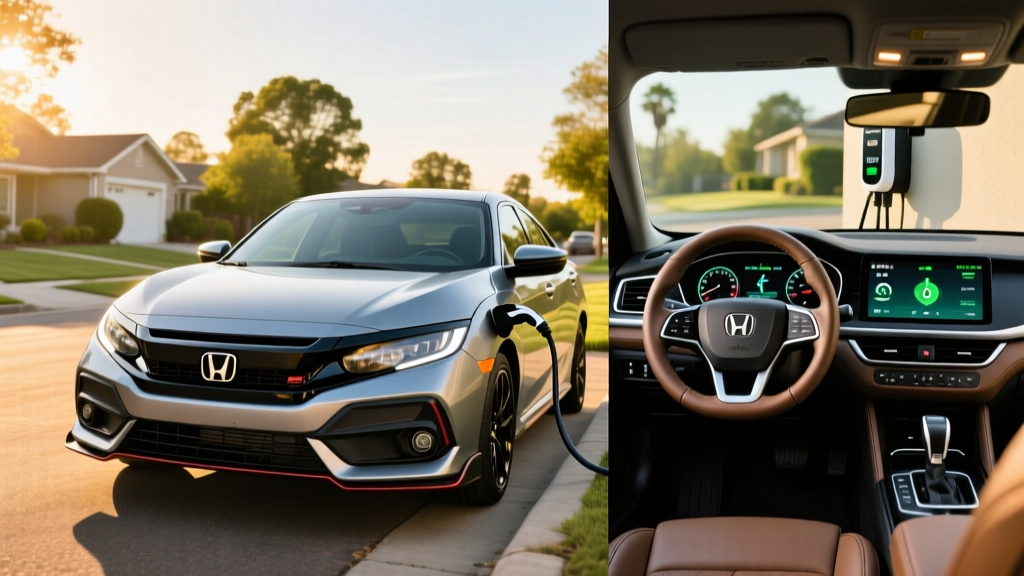
The 2026 Honda Civic Hybrid Sport occupies a precise niche: a compact sedan that extracts maximum efficiency from every gallon without asking you to plug in, change your driving habits, or pay an EV premium. With an EPA-estimated 49 MPG combined and a two-motor hybrid system producing 200 horsepower, it threads the needle between the fuel-sipping miser and the genuinely engaging daily driver. For buyers who lack home charging access, face long commutes, or simply want to eliminate range anxiety entirely, this is one of the most rational electrified vehicles on the market.
But rational doesn't mean boring — and it doesn't mean compromise-free. This guide breaks down the exact numbers, real-world fuel economy expectations, powertrain behavior, warranty coverage, and cost-of-ownership math you need before signing the paperwork.
HEV vs. PHEV vs. EV: Where the Civic Hybrid Fits
Before diving into specs, it's critical to understand what the 2026 Honda Civic Hybrid Sport is — and what it isn't. This is a conventional hybrid electric vehicle (HEV), not a plug-in hybrid (PHEV) or a battery electric vehicle (BEV). You never plug it in. The 1.1 kWh lithium-ion battery charges exclusively through regenerative braking and the gasoline engine.
| Feature | HEV (Civic Hybrid) | PHEV (e.g., Toyota Prius Prime) | BEV (e.g., Tesla Model 3) |
|---|---|---|---|
| Plug-in charging required? | No | Yes (optional but recommended) | Yes (mandatory) |
| Electric-only range | ~1 mile at low speed | 25–44 miles typical | 250–400+ miles |
| Battery size | ~1.1 kWh | 10–18 kWh | 50–100 kWh |
| Home charger needed? | No | Level 2 recommended | Level 2 strongly recommended |
| Federal tax credit (§30D) | Not eligible | Up to $7,500 (varies) | Up to $7,500 (varies) |
| Best for | No charging access, long commutes | Short daily drives + home charging | Home charging + mostly electric driving |
The Civic Hybrid Sport is engineered for drivers who want hybrid efficiency without infrastructure dependency. If you can install a Level 2 home charger and your commute is under 40 miles, a PHEV may offer greater electric-only savings. If you have reliable home charging and rarely exceed 300 miles between stops, a BEV will deliver the lowest per-mile energy cost. But if you live in an apartment, street-park, or regularly drive 500+ miles between fill-ups, the HEV architecture is the pragmatic choice.
EPA Fuel Economy and Real-World MPG
The 2026 Honda Civic Hybrid Sport carries an EPA-estimated 49 MPG combined, broken down as follows:
| Driving Cycle | EPA Estimate |
|---|---|
| City | 50 MPG |
| Highway | 47 MPG |
| Combined | 49 MPG |
Source: fueleconomy.gov
Real-World MPG: What to Actually Expect
Honda's two-motor hybrid system excels in stop-and-go traffic, where the electric motor handles low-speed propulsion and regenerative braking recaptures energy constantly. In real-world city driving, many owners report matching or slightly exceeding the 50 MPG city estimate, particularly in warm weather with moderate A/C use. According to aggregated owner data on Fuelly, Civic Hybrid models average around 47–51 MPG in mixed suburban and urban conditions.
Highway driving tells a different story. At sustained 70–80 MPH speeds, the gasoline engine operates more directly (Honda's system can lock the engine to the wheels via a clutch at highway speeds), but aerodynamic drag and the relatively small battery limit electric assist. Expect 43–46 MPG on the highway in real-world conditions, slightly below the EPA sticker.
Cold weather impacts all electrified vehicles. In sub-freezing temperatures, expect a 5–10% reduction in fuel economy due to cabin heating demands (the engine must run more to generate waste heat), reduced battery efficiency, and winter fuel blends. That puts winter combined MPG in the 44–46 range for most drivers.
Powertrain: 200 HP Two-Motor Hybrid System
The 2026 Civic Hybrid Sport uses Honda's fourth-generation two-motor hybrid system, a fundamentally different architecture from the older Integrated Motor Assist (IMA) designs. Here's how it works:
| Specification | Value |
|---|---|
| Engine | 2.0L Atkinson-cycle 4-cylinder |
| Engine horsepower | 146 hp @ 6,000 rpm |
| Electric motors | Two (one propulsion, one generator) |
| Propulsion motor output | 184 hp / 232 lb-ft torque |
| Combined system output | 200 hp / 232 lb-ft torque |
| Transmission | e-CVT (no traditional gears) |
| Drivetrain | Front-wheel drive |
| 0–60 mph (est.) | ~7.2 seconds |
| Battery | ~1.1 kWh lithium-ion |
The system operates in three primary modes:
- EV Drive: Battery powers the propulsion motor alone. Available at low speeds and light loads for roughly 1 mile. Silent, zero-emission crawling through parking lots or traffic jams.
- Hybrid Drive: Engine spins the generator motor, which produces electricity to feed the propulsion motor. This is the dominant mode in city and suburban driving. The engine runs at optimal RPM regardless of vehicle speed.
- Engine Drive: At steady highway speeds (typically above 45–55 MPH), a lock-up clutch directly connects the engine to the wheels, bypassing the electric motors for maximum efficiency at cruise.
The result is seamless power delivery with no perceptible gear shifts (the e-CVT has no physical gears in the traditional sense) and strong low-end torque from the electric motor. The 200 hp combined output makes the Civic Hybrid Sport notably quicker than competing non-turbo compact hybrids, and the Sport trim's tuned suspension and steering calibration add genuine engagement to the daily commute.
Pricing, Trims, and Tax Credit Eligibility
The 2026 Honda Civic Hybrid Sport starts at an MSRP of $29,845 (including destination charge). This positions it roughly $1,500–$2,000 above the equivalent gas-only Civic Sport, a premium you'll recoup through fuel savings within 2–3 years for most drivers.
| Trim | MSRP | Key Features |
|---|---|---|
| Sport | $29,845 | 18" wheels, sport suspension, heated front seats, 7" touchscreen, wireless Apple CarPlay/Android Auto |
| Sport Touring | $33,245 | Adds leather, Bose 12-speaker audio, 9" touchscreen, wireless charging, Honda Sensing suite with enhanced ADAS |
Federal Tax Credit: Not Eligible
Under current IRS §30D Clean Vehicle Credit rules, conventional hybrids (HEVs) do not qualify for the federal $7,500 tax credit. That credit is reserved for plug-in electric vehicles (PHEVs and BEVs) meeting battery sourcing, critical mineral, MSRP cap, and buyer income requirements.
Some states offer their own hybrid incentives — check your state's energy office or department of environmental quality for current programs. A few states have offered $500–$1,500 rebates for HEVs in the past, though these programs come and go with budget cycles.
Fuel Savings vs. Gas-Only Civic
Here's the math that matters. Comparing the Civic Hybrid Sport (49 MPG) to the gas-only Civic Sport (33 MPG combined) at $3.40/gallon and 15,000 miles/year:
- Gas Civic annual fuel cost: ~$1,545
- Hybrid Civic annual fuel cost: ~$1,041
- Annual savings: ~$504
- Payback on hybrid premium (~$1,800): ~3.6 years
- 5-year fuel savings: ~$2,520
If gas prices rise above $4.00/gallon in your area, the payback period compresses to under 3 years. For high-mileage commuters (20,000+ miles/year), the hybrid premium pays for itself in roughly 2.5 years.
Battery Warranty, Reliability, and Replacement Cost
Hybrid battery longevity remains the top concern for first-time hybrid buyers. Here's what Honda covers and what the data shows:
Real-World Battery Degradation
Honda's hybrid battery is deliberately small (~1.1 kWh) and operates within a narrow state-of-charge window — typically between 20% and 80% SoC. The battery management system (BMS) prevents full charges and deep discharges, which are the primary drivers of lithium-ion degradation. Combined with active thermal management, this means the Civic Hybrid battery is among the least stressed lithium-ion packs in any vehicle on the road.
Based on data from Honda's earlier hybrid models (Insight, Accord Hybrid, CR-V Hybrid), meaningful capacity loss is rare before 150,000 miles. The most common failure mode isn't gradual degradation but an individual cell imbalance, which Honda's warranty covers. Full battery replacement outside warranty, should it ever be needed, runs approximately $2,000–$3,500 at a Honda dealer, though refurbished units from third-party suppliers can reduce that to $1,200–$1,800.
Overall Reliability
Honda's two-motor hybrid system has been in production since 2014 (Accord Hybrid) and has proven robust. The e-CVT has no traditional transmission fluid, bands, or clutch packs to wear out — it's fundamentally simpler than a conventional automatic. IIHS ratings and NHTSA data for the Civic platform consistently show strong safety and reliability performance. The hybrid variant adds complexity in the power electronics but removes complexity from the transmission, largely balancing out.
Driving Dynamics: What the Sport Trim Adds
The Sport designation isn't merely cosmetic. The 2026 Civic Hybrid Sport includes:
- Sport-tuned suspension with firmer damping rates
- Variable-ratio electric power steering with a quicker rack
- 18-inch alloy wheels with 235/40R18 all-season tires
- Paddle-shift-mounted deceleration selectors (four levels of regen braking)
- Sport driving mode that sharpens throttle response and holds higher simulated RPM
The regen paddle selectors deserve attention: they let you modulate regenerative braking intensity from nearly freewheeling (Level 0) to aggressive one-pedal-style deceleration (Level 4). Level 4 won't bring the car to a complete stop like a BEV's one-pedal mode, but it handles most slowdowns without touching the brake pedal, reducing brake pad wear significantly. Expect original brake pads to last 80,000–100,000+ miles thanks to regen handling the bulk of deceleration duty.
Who Should Buy the 2026 Civic Hybrid Sport — And Who Shouldn't
Choose This If...
- You lack access to home or workplace charging
- Your commute is 30–80 miles daily, mostly suburban/city
- You want EV-like city MPG without plug-in dependency
- You take regular road trips exceeding 300 miles
- You want a sub-$30K entry price with strong resale value
- You live in a region with extreme cold (hybrid batteries handle cold better than BEV range loss)
Look Elsewhere If...
- You have home Level 2 charging and a short commute (PHEV or BEV saves more)
- You want pure electric driving for emissions reasons
- You need all-wheel drive (Civic Hybrid is FWD only — consider the CR-V Hybrid or Toyota Prius AWD)
- You prioritize maximum acceleration (a BEV like the Model 3 RWD hits 0–60 in ~5.8 sec)
- You want federal tax credit eligibility (requires a PHEV or BEV)
Frequently Asked Questions
How many MPG does the 2026 Honda Civic Hybrid Sport get?
The EPA rates it at 50 MPG city, 47 MPG highway, and 49 MPG combined. In real-world mixed driving, expect 46–51 MPG depending on conditions. City driving often matches or beats the EPA estimate; sustained highway driving at 75+ MPH may yield 43–46 MPG.
Does the Civic Hybrid need to be plugged in?
No. The Civic Hybrid is a conventional HEV. Its ~1.1 kWh battery charges through regenerative braking and the gasoline engine. There is no charging port and no plug-in capability.
How far can it drive on electric power alone?
Roughly 1 mile at very low speeds (under 25 MPH) in EV Drive mode. This is not a plug-in hybrid — the electric-only capability is designed for parking lots and brief traffic crawls, not meaningful commuting distance. If you need 25+ miles of electric-only range, look at a PHEV like the Toyota Prius Prime (44 miles electric-only).
Is the hybrid battery reliable, and what does replacement cost?
Honda covers the hybrid battery for 10 years/150,000 miles. Real-world data from Honda's hybrid lineup shows rare failures before 150K miles. Out-of-warranty replacement runs $2,000–$3,500 at a dealer, or $1,200–$1,800 with a refurbished unit. The battery management system's conservative charge window (never fully charging or fully depleting) maximizes longevity.
Does the 2026 Civic Hybrid qualify for any tax credit?
No federal tax credit. The IRS §30D Clean Vehicle Credit applies only to plug-in vehicles (PHEVs and BEVs). Some states may offer hybrid-specific rebates — check your state energy office. The hybrid premium over the gas Civic is typically $1,500–$2,000, which fuel savings offset within 3–4 years for average drivers.
How does the Civic Hybrid compare to the Toyota Prius?
The 2026 Toyota Prius LE achieves 57 MPG combined (EPA) and starts around $29,545 — slightly more efficient and similarly priced. The Civic Hybrid Sport counters with more horsepower (200 vs. 194), a more engaging chassis, and arguably more upscale interior materials. The Prius offers available AWD; the Civic Hybrid is FWD only. Both are excellent choices — the decision often comes down to styling preference and whether you value driving dynamics (Civic) or maximum MPG (Prius).
What maintenance does the hybrid system require?
Essentially none beyond standard service. The hybrid battery, electric motors, and power control unit are sealed and maintenance-free. The e-CVT has no transmission fluid to change on a scheduled basis. The gasoline engine follows Honda's standard maintenance schedule (oil changes every 7,500–10,000 miles with synthetic 0W-20). Brake pads last significantly longer than on gas-only models due to regenerative braking.