Quick Verdict: The Civic Hybrid's MPG Story
The 2026 Honda Civic Hybrid returns as one of the most efficient compact sedans on the market, and for good reason. Honda's two-motor hybrid system pairs a 2.0-liter Atkinson-cycle engine with dual electric motors to deliver an EPA-estimated 50 MPG combined — a figure that holds remarkably well in real-world mixed driving. For buyers researching 2026 Honda Civic Hybrid miles per gallon before committing, this guide covers every efficiency, powertrain, and ownership detail you need.
EPA sticker: 50 combined / 51 city / 47 highway. Real-world expectation: expect 48–53 MPG in city-heavy commutes (regenerative braking favors stop-and-go), 42–46 MPG on sustained 75+ mph highway trips, and roughly 44–48 MPG in cold-weather driving below 30°F where engine warm-up cycles reduce electric-only operation.
HEV vs. PHEV: What the Civic Hybrid Actually Is
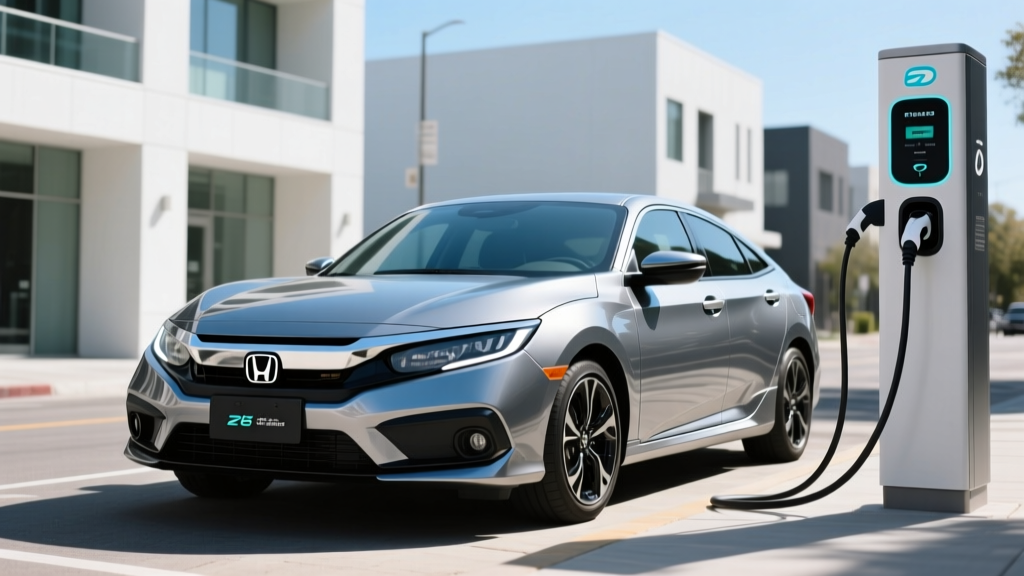
Before diving into specs, it's critical to understand what you're buying. The 2026 Civic Hybrid is a conventional hybrid electric vehicle (HEV) — not a plug-in hybrid (PHEV). This distinction matters for how you fuel it, what incentives apply, and how it fits your lifestyle.
| Feature | HEV (Civic Hybrid) | PHEV (e.g., Toyota Prius Prime) | BEV (e.g., Tesla Model 3) |
|---|---|---|---|
| Plug-in charging required? | No | Yes (optional but recommended) | Yes (mandatory) |
| Electric-only range | ~1 mile at low speed | 25–44 miles typical | 250–360 miles |
| Battery size | ~1.0 kWh (small buffer) | 13–18 kWh | 57–82 kWh |
| Fueling | Gasoline only | Gasoline + electricity | Electricity only |
| Federal tax credit (§30D) | No — not eligible | Up to $7,500 if eligible | Up to $7,500 if eligible |
| Home charger needed? | No | Recommended for EV range | Yes — Level 2 strongly advised |
The Civic Hybrid recharges its small lithium-ion battery entirely through regenerative braking and the gasoline engine. You never plug it in. You simply fill up at a gas station and drive — the hybrid system manages the rest automatically, seamlessly switching between electric motor assist, engine-only, and regenerative modes.
Fuel Economy Breakdown: EPA and Real-World Numbers
Honda publishes a single hybrid powertrain for the 2026 Civic, available in Sport Hybrid and Sport Touring Hybrid trims. Both share identical EPA ratings.
| Metric | EPA Estimate | Real-World Expectation |
|---|---|---|
| City MPG | 51 | 49–54 (regen-heavy routes can exceed EPA) |
| Highway MPG | 47 | 42–46 (aero drag and sustained ICE use at speed) |
| Combined MPG | 50 | 46–50 (mixed driving) |
| Annual fuel cost* | ~$1,050 | Varies with local gas prices and mileage |
| Total range (12.4-gal tank) | ~620 miles | ~570–620 miles |
*Based on 15,000 miles/year at $3.50/gallon. Source: fueleconomy.gov
One nuance that surprises first-time hybrid owners: the Civic Hybrid often exceeds its EPA city rating in stop-and-go traffic. Every brake application feeds energy back into the battery, allowing the electric motors to handle more low-speed propulsion. Highway driving, by contrast, relies more on the gasoline engine because regenerative opportunities are minimal and aerodynamic drag dominates above 65 mph.
Powertrain and Performance Specs
Honda's e:HEV two-motor hybrid system is fundamentally different from Toyota's planetary-gear hybrid design. In the Civic, the gasoline engine primarily acts as a generator — it produces electricity that feeds the drive motor. Only at sustained highway speeds does a lock-up clutch mechanically connect the engine to the wheels for direct drive efficiency.
| Specification | 2026 Honda Civic Hybrid |
|---|---|
| Engine | 2.0L DOHC Atkinson-cycle 4-cylinder |
| Engine output | 143 hp / 134 lb-ft |
| Drive motors (dual) | 184 hp / 232 lb-ft combined |
| Total system output | 200 hp / 232 lb-ft |
| 0–60 mph | ~6.7 seconds (estimated) |
| Transmission | e-CVT (no fixed gears) |
| Drivetrain | Front-wheel drive |
| Curb weight | ~3,150 lbs |
| Fuel tank | 12.4 gallons |
| CO₂ emissions | ~178 g/mile |
The 200 total system horsepower puts the Civic Hybrid ahead of most compact hybrid competitors and gives it confident highway merging ability. The e-CVT delivers smooth, linear acceleration without the rubber-band feel that older CVTs produced — Honda's software simulates stepped "gear shifts" under hard acceleration to maintain a natural driving feel.
Pricing, Trims, and Tax Credit Eligibility
The 2026 Civic Hybrid is offered in two trims:
- Sport Hybrid: Starting at approximately $29,845 MSRP (including destination)
- Sport Touring Hybrid: Starting at approximately $32,845 MSRP (including destination)
The 2026 Honda Civic Hybrid does not qualify for the IRS §30D Clean Vehicle Credit. This credit applies only to plug-in electric vehicles (PHEVs and BEVs) with battery capacities of at least 7 kWh and external charging capability. The Civic Hybrid's small, self-charging battery disqualifies it. No federal purchase incentive applies, though some states or utilities may offer modest hybrid rebates — check your local programs. Source: IRS §30D guidelines.
Without a tax credit, the Civic Hybrid's value proposition rests entirely on fuel savings and lower total cost of ownership versus a gasoline-only compact. At 50 MPG combined versus the gas Civic's ~35 MPG combined, a driver covering 15,000 miles annually at $3.50/gallon saves roughly $530 per year — recouping the hybrid's ~$1,500 price premium over a comparable gas Civic in about three years.
Battery Warranty, Reliability, and Replacement Costs
Hybrid battery longevity remains the top concern for buyers considering their first electrified vehicle. Here's what Honda provides:
| Coverage | Term |
|---|---|
| Hybrid battery warranty | 8 years / 100,000 miles (10 years / 150,000 miles in CARB states) |
| Powertrain warranty | 5 years / 60,000 miles |
| Bumper-to-bumper | 3 years / 36,000 miles |
| Hybrid system components | 8 years / 100,000 miles |
Honda's hybrid battery is a relatively small lithium-ion pack (~1.0 kWh total capacity) that operates within a conservative state-of-charge window — typically between 20% and 80%. This shallow cycling dramatically reduces degradation stress compared to a full BEV battery that regularly cycles from 10% to 90%.
Real-world reliability data: Honda's hybrid systems have proven exceptionally durable. The Accord Hybrid and Insight (which used earlier generations of the same two-motor architecture) routinely reach 150,000–200,000+ miles on the original hybrid battery. Failure rates in the first 100,000 miles are well under 2% based on industry warranty claim data.
Replacement cost if out of warranty: A Civic Hybrid battery replacement runs approximately $2,500–$4,000 including labor at a Honda dealer. Third-party hybrid battery specialists offer refurbished units for $1,500–$2,500. For context, this is far less than a BEV battery replacement ($8,000–$20,000+) because the pack is small and less complex.
Civic Hybrid vs. PHEV vs. Full EV: Which Fits You?
Choosing between a conventional hybrid, a plug-in hybrid, and a battery-electric vehicle depends on your driving patterns, charging access, and budget. Here's a practical decision framework:
- You lack access to home or workplace charging (apartment, street parking, no 240V outlet)
- You want maximum simplicity — fill up at any gas station, no apps, no charging cables
- Your budget is under $33,000 and you don't want to stretch for a BEV
- You drive 10,000–15,000 miles/year in mixed city/highway conditions
- You take frequent road trips to areas with sparse charging infrastructure
- You have home Level 2 charging and a commute under 40 miles round-trip
- You want electric-only daily driving but gas flexibility for long trips
- You qualify for the §30D tax credit (income and sourcing requirements apply)
- You want to reduce gasoline use by 60–80% without range anxiety
- You have reliable home Level 2 charging
- Your daily driving is under 250 miles and you can plan road-trip charging stops
- You want to eliminate gasoline entirely and minimize maintenance (no oil changes, fewer moving parts)
- You qualify for the $7,500 §30D credit and/or state EV rebates, narrowing the price gap
Pros, Cons, and Final Take
- 50 MPG combined — among the best in the compact class
- No plug-in charging required — total convenience
- 200 hp system output — genuinely quick for a hybrid
- Refined ride, excellent Honda Sensing ADAS suite (Level 2 driver assist)
- Low hybrid battery replacement cost vs. BEV
- Strong resale value — Honda hybrids hold well
- 8-year/100,000-mile hybrid battery warranty (10/150k in CARB states)
- No federal tax credit eligibility
- Highway MPG drops to low 40s at sustained 75+ mph
- FWD only — no AWD option unlike Toyota Prius or Subaru Crosstrek Hybrid
- Small trunk reduction vs. gas Civic due to battery placement
- Engine drone under hard acceleration (e-CVT characteristic)
- Cold-weather MPG penalty of 5–8 MPG in sub-30°F conditions
The 2026 Honda Civic Hybrid earns its place as a pragmatic, high-efficiency choice for drivers who want electrified fuel economy without changing their fueling habits. If you have no path to home charging and want a compact car that sips fuel without compromise, it's one of the strongest options available.
Frequently Asked Questions
How many MPG does the 2026 Honda Civic Hybrid get?
The EPA rates the 2026 Civic Hybrid at 51 city / 47 highway / 50 combined MPG. In real-world driving, city-heavy commuters often see 49–54 MPG thanks to regenerative braking, while sustained highway driving at 75+ mph typically yields 42–46 MPG. Cold weather below 30°F can reduce efficiency by 5–8 MPG due to increased engine warm-up cycles.
Does the 2026 Civic Hybrid need to be plugged in?
No. The Civic Hybrid is a conventional HEV (hybrid electric vehicle), not a PHEV. Its battery recharges automatically through regenerative braking and the gasoline engine. You never plug it in — you simply refuel at a gas station as you would with any conventional car.
How far can the Civic Hybrid drive on electric power alone?
Approximately 1 mile at very low speeds (under 25 mph) in EV mode, typically in parking lots or stop-and-go traffic. The hybrid system prioritizes electric assist at low speeds but the ~1.0 kWh battery is too small for meaningful electric-only driving. This is by design — the system optimizes for fuel efficiency, not electric range.
Is the Civic Hybrid battery reliable, and what does replacement cost?
Yes. Honda's hybrid batteries have an excellent reliability record, with most lasting 150,000+ miles. The battery is covered by an 8-year/100,000-mile warranty (10 years/150,000 miles in CARB states including California, New York, and others). Out-of-warranty replacement costs approximately $2,500–$4,000 at a dealer or $1,500–$2,500 from a third-party specialist.
Does the 2026 Civic Hybrid qualify for any tax credit?
No. The federal §30D Clean Vehicle Credit applies only to plug-in vehicles (PHEVs and BEVs) with battery capacities of 7 kWh or more. The Civic Hybrid's small self-charging battery does not qualify. Check your state and local utility programs — some offer modest hybrid purchase rebates, though these are less common than EV incentives.
How does the Civic Hybrid compare to the Toyota Prius on MPG?
The 2026 Toyota Prius (non-Prime) achieves an EPA-estimated 57 combined MPG in its LE FWD trim — about 7 MPG higher than the Civic Hybrid. However, the Prius trades some power (194 hp vs. 200 hp) and has a different body style (hatchback vs. sedan). The Civic Hybrid offers a more conventional sedan driving experience with slightly less peak efficiency. If maximum MPG is your top priority, the Prius leads; if you prefer a traditional sedan with strong acceleration, the Civic Hybrid is compelling.
What's the total annual fuel cost for the Civic Hybrid?
Based on 15,000 miles per year and a national average gas price of $3.50/gallon, expect approximately $1,050 annually in fuel costs. This compares to roughly $1,575 for the gasoline Civic (35 MPG combined) — a savings of about $525 per year. Over a 5-year ownership period, that's roughly $2,600 in fuel savings.