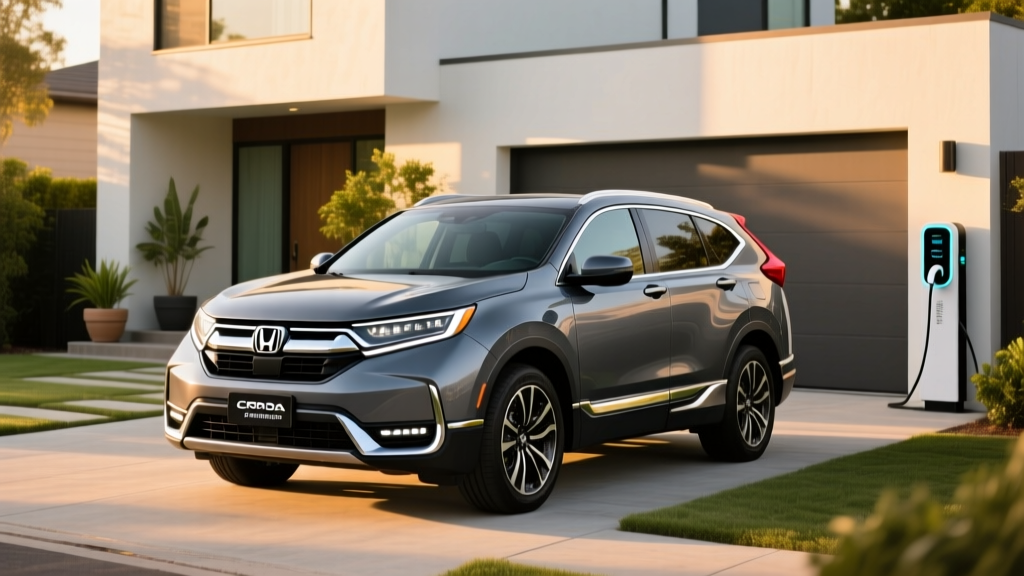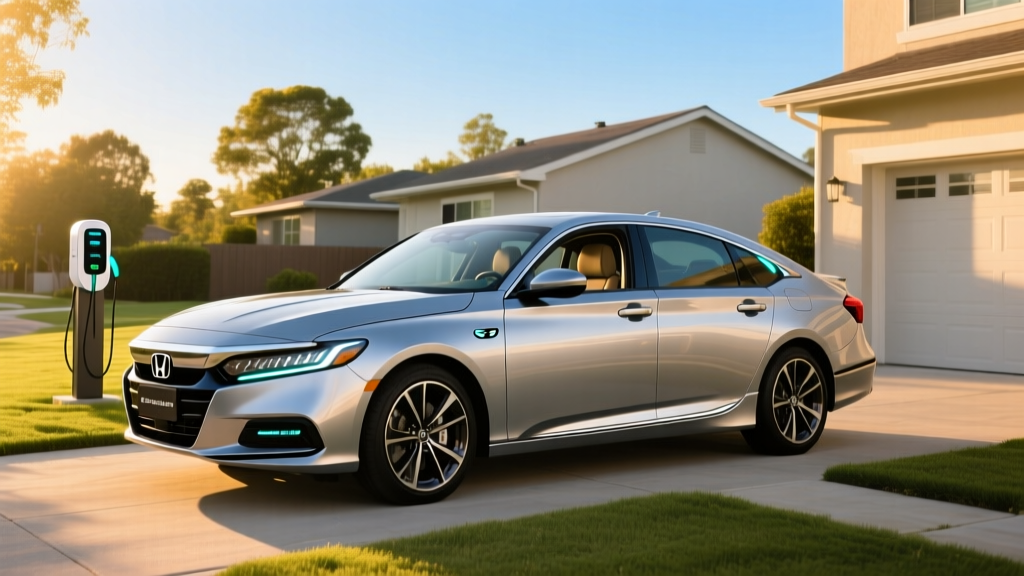
The midsize sedan segment keeps shrinking, but the 2026 Honda Accord Hybrid remains one of the smartest electrified vehicles you can buy — not because it plugs in, but because it doesn't need to. Honda's two-motor hybrid system delivers exceptional city fuel economy, seamless electric-motor torque at low speeds, and a starting price well below any comparable plug-in alternative. If you're cross-shopping the 2026 Accord Hybrid against full EVs, plug-in hybrids, or conventional gas sedans, this guide gives you the exact numbers to decide.
2026 Accord Hybrid Powertrain: How Honda's Two-Motor System Works
The 2026 Accord Hybrid uses Honda's fourth-generation two-motor hybrid system paired with a 2.0-liter Atkinson-cycle four-cylinder engine. Unlike traditional parallel hybrids that mechanically couple the engine and motor, Honda's system operates primarily in series-hybrid mode at low and moderate speeds: the gasoline engine drives a generator that produces electricity, which then powers the electric traction motor connected to the wheels. Only at sustained highway cruising speeds does a lock-up clutch mechanically link the engine to the drive wheels for efficiency.
| Specification | Value |
|---|---|
| Engine | 2.0L Atkinson-cycle inline-4 |
| Engine Output | 146 hp / 134 lb-ft torque |
| Electric Traction Motor | 181 hp / 247 lb-ft torque |
| Combined System Output | 204 hp / 247 lb-ft torque |
| Transmission | e-CVT (direct-drive, no belts) |
| Drivetrain | Front-wheel drive |
| Hybrid Battery | Lithium-ion, ~1.0 kWh (HEV — not plug-in) |
| 0–60 mph | ~7.2 seconds (est.) |
The result is a powertrain that feels more like an EV around town than a conventional hybrid. Electric-motor torque fills in instantly from a stop, and the engine rarely engages audibly unless you demand hard acceleration. At 204 combined horsepower, the Accord Hybrid has enough passing power for confident highway merging — a meaningful upgrade over the 1.5L turbo found in the non-hybrid Accord LX.
EPA Fuel Economy and Real-World MPG
Fuel efficiency is the Accord Hybrid's headline advantage. The EPA rates the 2026 Accord Hybrid Sport-L and Sport trims at 51 MPG city / 44 MPG highway / 48 MPG combined, while the EX-L trim achieves slightly different figures due to wheel and weight differences.
| Trim | City MPG | Highway MPG | Combined MPG |
|---|---|---|---|
| Sport | 51 | 44 | 48 |
| Sport-L | 51 | 44 | 48 |
| EX-L | 50 | 45 | 47 |
For context, the non-hybrid 2026 Accord 1.5T achieves 29/37/32 MPG (city/highway/combined) per fueleconomy.gov. The hybrid powertrain saves an estimated $500–$700 per year in fuel costs for an average driver, paying back its price premium in roughly 2–3 years depending on mileage.
HEV vs. PHEV vs. Full EV: Which Is Right for You?
The 2026 Accord Hybrid is a conventional hybrid electric vehicle (HEV) — it does not plug in. This is a critical distinction from plug-in hybrid electric vehicles (PHEVs) like the Toyota Prius Prime or Hyundai Tucson PHEV, which offer 25–44 miles of electric-only driving before the gas engine engages. Honda does not currently offer a plug-in Accord in the U.S. market.
| Factor | HEV (Accord Hybrid) | PHEV (e.g., Prius Prime) | Full EV (e.g., Tesla Model 3) |
|---|---|---|---|
| Plug-in Required? | No | Yes (for EV range) | Yes (always) |
| Electric-Only Range | ~1 mile at low speed | 25–44 miles | 250–360+ miles |
| Home Charging Needed? | No | Recommended (Level 2) | Essential (Level 2) |
| Typical Combined MPG/MPGe | 47–48 MPG | 48–52 MPG (gas) / 114–127 MPGe | 120–140 MPGe |
| Federal Tax Credit (§30D) | Not eligible | Up to $7,500 (if eligible) | Up to $7,500 (if eligible) |
| Upfront Price Premium | Low (~$1,500 over gas) | Moderate ($3,000–$6,000) | High ($5,000–$15,000+) |
| Best For | No home charging; road trips | Short commute + home charging | Home charging + low daily miles |
Look at a PHEV or full EV instead if: You have reliable Level 2 home charging, your daily commute is under 40 miles (PHEV sweet spot), you want to drive on electricity for most trips, or you want to claim the federal §30D tax credit of up to $7,500.
Pricing, Trims, and Tax Credit Eligibility
The 2026 Honda Accord Hybrid is available in three trims, all positioned above the base non-hybrid LX:
| Trim | MSRP (incl. destination) | Key Features |
|---|---|---|
| Sport | ~$34,990 | 19" alloy wheels, wireless CarPlay/Android Auto, heated front seats, Honda Sensing suite |
| Sport-L | ~$36,390 | Leather-trimmed seats, power moonroof, heated rear seats, wireless charging pad |
| EX-L | ~$38,690 | Leather, premium audio, navigation, ventilated front seats, low-speed braking control |
Federal tax credit status: The Accord Hybrid does not qualify for the IRS §30D Clean Vehicle Credit. That credit applies only to plug-in electric vehicles (BEVs and PHEVs) with sufficient battery capacity and compliant critical-mineral/battery-component sourcing. Because the Accord Hybrid is a conventional HEV with a small (~1 kWh) self-charging battery, it falls outside §30D eligibility entirely. There is currently no federal tax credit for conventional hybrids.
Some states offer their own incentives for efficient vehicles, though most state-level EV rebates also require plug-in capability. Check your state energy office or IRS §30D guidelines for current rules. A few utilities offer time-of-use rate discounts that benefit hybrid owners who also have solar or battery storage at home, but these are not vehicle purchase incentives.
Battery Warranty, Reliability, and Replacement Cost
Hybrid battery longevity is the single most common concern among first-time hybrid buyers — and it's largely solved by two decades of real-world data. Honda's hybrid systems have proven exceptionally durable, with the Accord Hybrid consistently earning top reliability marks from Consumer Reports and J.D. Power.
- Hybrid battery warranty: 10 years / 150,000 miles (in CARB states including CA, NY, MA, and 14 others) or 8 years / 100,000 miles (federal standard in other states)
- Powertrain warranty: 5 years / 60,000 miles
- Real-world battery lifespan: Most Honda hybrid batteries last 150,000–200,000+ miles before significant degradation. Third-generation Accord Hybrid owners (2018–2022) report minimal capacity loss at 100K+ miles.
- Replacement cost if out of warranty: Approximately $2,000–$4,000 for a refurbished or new hybrid battery pack installed — significantly less than a full EV battery replacement ($8,000–$18,000).
The Accord Hybrid's lithium-ion battery pack is small (~1 kWh) compared to a PHEV (~13–18 kWh) or a full EV (~60–85 kWh), which means replacement cost is proportionally low. More importantly, Honda's hybrid battery management system keeps the pack within a conservative state-of-charge window (roughly 40–80%), minimizing degradation. The battery never fully charges or fully depletes during normal operation — this buffer strategy is the same principle used in EVs, applied to a much smaller pack.
For reliability ratings, the Accord family has consistently scored well with NHTSA safety assessments and IIHS crash testing. The hybrid variant adds no mechanical complexity that historically leads to failures — the e-CVT has no belts, pulleys, or traditional transmission components to wear out.
Driving Impressions and Daily Practicality
The Accord Hybrid drives more like a refined EV than a traditional gas-electric compromise. At low speeds and in city traffic, the electric traction motor provides primary propulsion with the engine acting as a quiet generator. The transition from electric to engine-driven modes is nearly imperceptible — a significant achievement compared to older hybrid systems that hunted for gears or produced noticeable drone.
Highway cruising engages the direct-drive clutch, linking the 2.0L engine to the front wheels at a fixed ratio optimized for efficiency. This eliminates the "rubber-band" feeling some drivers associate with CVTs. Wind and road noise are well-suppressed at 70–80 mph, and the Accord's long wheelbase provides stable, confident tracking.
Practicality remains strong: the hybrid battery is packaged under the rear seats, preserving full trunk volume (16.7 cubic feet) and rear-seat fold-down capability. There's no cargo compromise versus the non-hybrid Accord — an advantage over some PHEVs and EVs where battery placement eats into storage.
Ownership Costs: 5-Year Total Cost Snapshot
| Cost Category | Estimated 5-Year Total |
|---|---|
| Purchase Price (MSRP) | $34,990 |
| Federal Tax Credit | $0 (HEV not eligible) |
| Fuel (regular unleaded, avg $3.40/gal) | ~$5,300 |
| Insurance (national avg) | ~$8,500 |
| Maintenance (oil changes, filters, brakes) | ~$2,200 |
| Estimated Depreciation (5 yr) | ~$14,000 |
| Total Estimated 5-Year Cost | ~$65,000 |
Maintenance costs are modest. The 2.0L Atkinson-cycle engine still requires periodic oil changes (typically every 7,500–10,000 miles with synthetic), but brake wear is significantly reduced thanks to regenerative braking — many Accord Hybrid owners report original brake pads lasting 60,000–80,000 miles. There is no transmission fluid service interval for the e-CVT under normal driving conditions.
Pros and Cons at a Glance
✓ Pros
- 51 MPG city — best-in-class for midsize sedans
- No plug-in charging required; zero behavior change
- Strong electric-motor torque for responsive city driving
- 10-year/150K-mile hybrid battery warranty (CARB states)
- No cargo space compromise vs. gas Accord
- Lower 5-year fuel cost than 1.5T gas model
- Honda Sensing ADAS suite standard on all trims
✗ Cons
- Not eligible for §30D federal tax credit
- No plug-in or electric-only driving mode
- Highway MPG drops noticeably above 75 mph
- Sport trim rides firmer than EX-L on rough pavement
- FWD only — no all-wheel-drive option
- Engine drone audible under hard acceleration
- Base price higher than non-hybrid Accord LX
Frequently Asked Questions
How many MPG does the 2026 Accord Hybrid actually get?
The EPA rates it at 51 city / 44 highway / 48 combined for Sport and Sport-L trims. In real-world driving, owners often exceed city estimates (52–55 MPG in warm urban commutes) but may see 38–42 MPG on sustained highway trips above 75 mph. Cold weather reduces efficiency by roughly 8–12%.
Does the Accord Hybrid need to be plugged in?
No. The Accord Hybrid is a conventional HEV — it charges its own small battery through regenerative braking and the gasoline engine. You never plug it in. If you want plug-in capability, you'd need to look at a PHEV like the Toyota Prius Prime or a full EV.
Is the 2026 Accord Hybrid reliable?
Yes. Honda's two-motor hybrid system is in its fourth generation and has an excellent reliability track record. The Accord consistently earns high marks from Consumer Reports and J.D. Power. The hybrid battery carries a warranty of 8 years/100,000 miles (federal) or 10 years/150,000 miles (CARB states), and real-world data shows most packs lasting well beyond 150,000 miles.
How much does it cost to replace the hybrid battery?
If replacement is needed out of warranty, expect approximately $2,000–$4,000 for a refurbished or new Honda hybrid battery pack, installed. This is far less than EV battery replacement costs ($8,000–$18,000+) because the Accord Hybrid's battery is only ~1 kWh. Most owners never need a replacement within the vehicle's useful life.
Does the 2026 Accord Hybrid qualify for any tax credit?
No. The IRS §30D Clean Vehicle Credit applies only to plug-in vehicles (BEVs and PHEVs) that meet battery sourcing, MSRP cap, and buyer income requirements. The Accord Hybrid, as a conventional HEV, does not qualify for the federal credit or most state EV incentives. Check IRS.gov for current eligibility rules.
Accord Hybrid vs. a full EV like the Tesla Model 3 — which should I pick?
If you have reliable home Level 2 charging, a daily commute under 60 miles, and want to minimize fuel costs and emissions, a full EV will save more over 5 years (especially with the $7,500 federal credit). If you lack home charging, take frequent long road trips, live in an area with sparse charging infrastructure, or simply want zero lifestyle change, the Accord Hybrid offers most of the efficiency benefit with none of the charging logistics.
Is the Accord Hybrid available with all-wheel drive?
No. The 2026 Accord Hybrid is front-wheel drive only across all trims. If AWD is a priority in a hybrid sedan, consider the Toyota Camry AWD Hybrid (50/47/48 MPG) or the Subaru Legacy (mild hybrid).