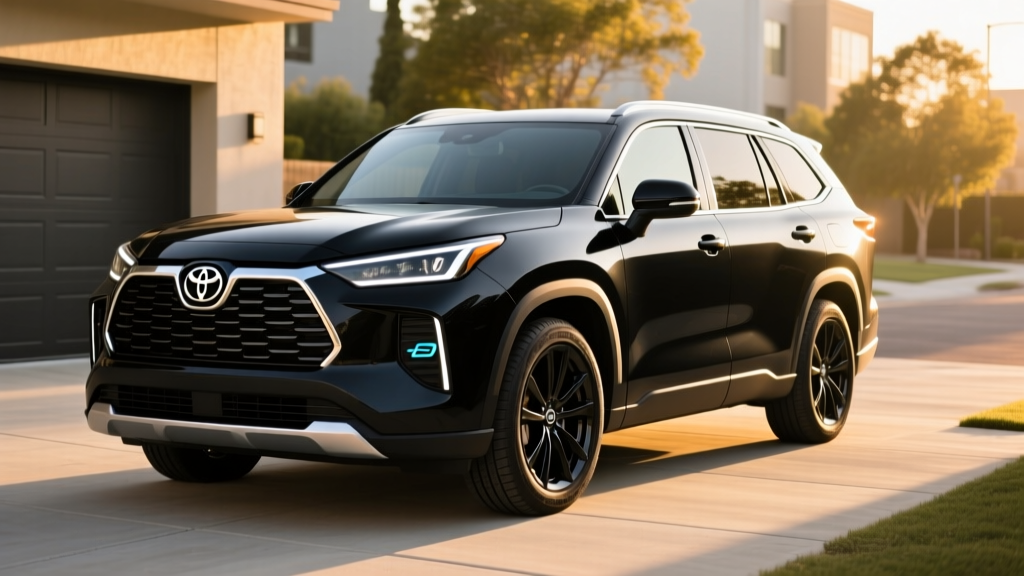
The 2026 Toyota Grand Highlander Hybrid Nightshade occupies a specific niche: a three-row family hauler with stealthy blacked-out styling, standard all-wheel drive, and a hybrid powertrain that sips fuel without requiring a plug. As Toyota's largest hybrid SUV, the Grand Highlander Hybrid targets buyers who need seating for seven or eight but want to avoid the fuel bills of a body-on-frame SUV — and who aren't ready to commit to a full battery-electric vehicle (BEV) for road-trip duty.
This guide breaks down everything you need to know about the 2026 Grand Highlander Hybrid Nightshade: EPA fuel economy, real-world MPG expectations, the hybrid powertrain under the hood, battery longevity, pricing, and whether this HEV makes more sense for your family than a PHEV or a full EV.
HEV vs PHEV vs EV: Where the Grand Highlander Hybrid Fits
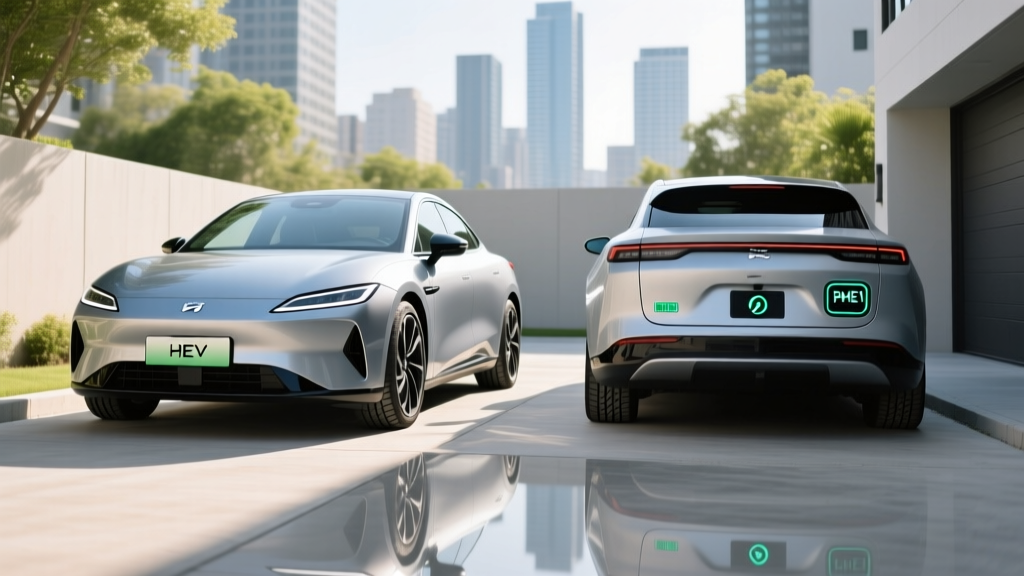
Before examining the specs, it's critical to understand what the Grand Highlander Hybrid is — and isn't. Toyota offers the Grand Highlander in three powertrain flavors for 2026: a conventional gas turbo-four, a conventional hybrid (HEV), and a Hybrid MAX performance hybrid. Notably, Toyota does not offer the Grand Highlander as a plug-in hybrid (PHEV) for the 2026 model year.
| Powertrain Type | Plug-In Required? | Electric-Only Range | How It Works | Federal Tax Credit |
|---|---|---|---|---|
| HEV (Conventional Hybrid) | No — self-charging via regen & engine | None (electric motor assists only) | Gas engine + small battery/motor for efficiency boost | No |
| PHEV (Plug-In Hybrid) | Yes — plug in to unlock EV range | Typically 25-45 mi | Larger battery allows EV-only driving; engine kicks in after depletion | Potentially up to $7,500 (§30D) |
| BEV (Battery Electric) | Yes — sole energy source | 200-400+ mi | No gas engine; fully electric motor(s) + large battery pack | Potentially up to $7,500 (§30D) |
The Grand Highlander Hybrid Nightshade is an HEV. You never plug it in. The hybrid system recovers energy during braking (regenerative braking) and uses the gas engine to recharge the small traction battery. The electric motor assists the gas engine during acceleration and can propel the vehicle at very low speeds for brief distances, but there is no meaningful electric-only driving range. If you want plug-in electric miles for school runs and commutes, you'd need to look at the RAV4 Prime (a PHEV) or a full EV like the bZ4X — neither of which offers three rows.
Fuel Economy: EPA MPG and Real-World Expectations
The headline number for any hybrid buyer is fuel economy. The 2026 Toyota Grand Highlander Hybrid with the standard hybrid powertrain and electronic on-demand AWD (standard on the Nightshade) carries the following EPA estimates:
| Driving Cycle | EPA Estimate | Real-World Expectation |
|---|---|---|
| City | 36 MPG | 34–38 MPG (hybrids often exceed EPA city in stop-and-go traffic) |
| Highway | 32 MPG | 28–31 MPG (sustained 75+ mph, roof rack, or heavy cargo reduces efficiency) |
| Combined | 34 MPG | 31–35 MPG depending on driving mix and climate |
Why real-world MPG varies: Toyota's hybrid system excels in city driving, where regenerative braking recaptures energy at every stoplight and the electric motor handles low-speed propulsion. On the highway, the gas engine does most of the work, and aerodynamic drag on a vehicle this size (over 19 feet long) takes its toll. Expect highway-heavy commutes to trend toward the low 30s, while suburban errands with frequent stops can push into the upper 30s.
According to fueleconomy.gov, the Grand Highlander Hybrid's combined 34 MPG translates to an estimated annual fuel cost of approximately $1,650 (based on 15,000 miles/year and national average fuel prices) — roughly $600–$800 less per year than the non-hybrid turbo-four Grand Highlander, which returns around 24 MPG combined.
Total Range on One Tank: With a 17.9-gallon fuel tank and 34 MPG combined, the Grand Highlander Hybrid delivers approximately 608 miles of total range between fill-ups. That's coast-to-coast road-trip capability with just four fuel stops — no charging logistics required.
Powertrain: What Powers the Nightshade
The 2026 Grand Highlander Hybrid Nightshade uses Toyota's fourth-generation hybrid system, pairing a 2.5-liter inline-four Atkinson-cycle engine with front and rear electric motors for electronic AWD. Here's the full powertrain breakdown:
| Specification | Figure |
|---|---|
| Engine | 2.5L 4-cylinder Atkinson-cycle |
| Engine Output | 186 hp / 186 lb-ft torque |
| Front Electric Motor | 134 hp / 199 lb-ft |
| Rear Electric Motor (AWD) | 54 hp / 89 lb-ft |
| Net Combined System Horsepower | 245 hp |
| Transmission | eCVT (electronically controlled continuously variable) |
| Drivetrain | Electronic On-Demand AWD (standard on Nightshade) |
| 0–60 MPH | ~7.8 seconds (estimated) |
| Towing Capacity | 3,500 lbs (hybrid AWD) |
| Hybrid Battery | ~1.6 kWh nickel-metal hydride (NiMH), self-charging |
| Fuel Tank | 17.9 gallons |
The Nightshade edition does not alter the powertrain — it's a styling and equipment package. You get the same hybrid system as other Grand Highlander Hybrid trims (LE, XLE, Limited), but with black exterior badges, dark-finish 20-inch alloy wheels, black mirror caps, and a black roof rail treatment.
Hybrid MAX note: Toyota also offers a Hybrid MAX powertrain on the Grand Highlander (Limited and Platinum trims only) that bumps output to 362 hp with a turbocharged 2.4-liter engine. However, the Hybrid MAX sacrifices fuel economy (approximately 27 MPG combined) and is not available on the Nightshade trim. If efficiency is your priority, the standard hybrid on the Nightshade is the right call.
Nightshade Trim: What You Get and What It Costs
The Nightshade package sits mid-range in the Grand Highlander Hybrid lineup, typically building on the XLE trim with aesthetic and convenience upgrades. Here's the 2026 pricing breakdown:
| Trim | MSRP (est.) | Key Additions Over Base Hybrid |
|---|---|---|
| Hybrid LE | $42,990 | Base hybrid with 7 seats, Toyota Safety Sense 3.0 |
| Hybrid XLE | $46,290 | SofTex seats, power liftgate, wireless charging |
| Hybrid Nightshade | $47,690 | Black 20" wheels, black badges, black mirror caps, 2nd-row captain's chairs (7-passenger) |
| Hybrid Limited | $51,290 | Leather, panoramic roof, 12.3" nav, ventilated front seats |
All prices include destination charge. The Nightshade edition commands roughly $1,400 over the XLE, which is modest for the visual differentiation and standard captain's chairs you receive.
Federal Tax Credit Eligibility
The 2026 Toyota Grand Highlander Hybrid Nightshade is a conventional hybrid (HEV), not a plug-in vehicle. Under current IRS §30D Clean Vehicle Credit rules, only plug-in electric vehicles (PHEVs and BEVs) with sufficient battery capacity qualify for the federal tax credit of up to $7,500. The Grand Highlander Hybrid does not qualify for any federal purchase incentive.
Some states and municipalities offer separate incentives for hybrid vehicles, but these are typically modest ($250–$500 rebates) and vary by jurisdiction. Check your state's energy office or department of environmental quality for current programs.
Battery Longevity, Warranty, and Replacement Cost
This is the question every hybrid buyer asks: how long will the hybrid battery last, and what does it cost to replace?
Toyota Hybrid Battery Warranty: Toyota covers the hybrid battery on the 2026 Grand Highlander Hybrid for 10 years or 150,000 miles, whichever comes first. This applies to the original owner and is transferable to subsequent owners.
Real-world longevity data: Toyota's hybrid battery packs — particularly the NiMH chemistry used in the Grand Highlander Hybrid — have an extensive track record. The Prius, Camry Hybrid, and RAV4 Hybrid have demonstrated hybrid battery lifespans routinely exceeding 150,000–200,000 miles with minimal degradation. Unlike the large lithium-ion packs in BEVs, the Grand Highlander's ~1.6 kWh NiMH pack operates within a narrow state-of-charge window (roughly 40–80% SoC), which dramatically reduces stress and extends cycle life.
Replacement cost if out of warranty: A Toyota hybrid battery replacement for the Grand Highlander Hybrid is estimated at $3,000–$5,000 (parts and labor) at a dealership. Independent hybrid specialists may offer refurbished packs for $2,000–$3,500. However, given the 10-year/150,000-mile warranty and Toyota's reliability track record, most owners will never face this expense.
The 12-volt auxiliary battery (a separate, conventional battery that powers electronics when the hybrid system is off) typically lasts 3–5 years and costs $200–$350 to replace — the same as any vehicle.
Reliability and Ownership Costs
Toyota's hybrid powertrains are among the most proven in the industry, with over 25 years of continuous refinement since the original Prius. The eCVT transmission has no traditional gears, clutch packs, or torque converters — it uses a planetary gearset that's mechanically simple and extraordinarily durable. There are no timing belts to replace, and regenerative braking significantly extends brake pad life (many owners report 80,000+ miles on original brake pads).
Five-year ownership cost estimate (15,000 miles/year):
| Cost Category | Grand Highlander Hybrid Nightshade | Grand Highlander Gas (Turbo 4) |
|---|---|---|
| Fuel (5 years) | ~$8,250 | ~$11,700 |
| Insurance (est.) | ~$9,500 | ~$9,200 |
| Maintenance (5 yr) | ~$2,800 | ~$3,400 |
| Depreciation (est.) | ~$18,500 | ~$20,000 |
| Estimated 5-Year Total | ~$39,050 | ~$44,300 |
The hybrid saves approximately $5,250 over five years in fuel and maintenance alone, partially offsetting its higher purchase price. Toyota hybrids also tend to hold resale value well, as IIHS Top Safety Pick ratings and strong reliability reputations keep demand high in the used market.
Who Should Buy the Grand Highlander Hybrid Nightshade?
Reasons to Choose It
- Three rows + high MPG: One of very few 7-passenger SUVs returning 34 MPG combined
- No plug-in required: Ideal for apartment dwellers, street parkers, or anyone without home charging access
- 600+ mile range: Road-trip ready with zero range anxiety or charging logistics
- Proven reliability: Toyota's 4th-gen hybrid system has decades of real-world validation
- AWD standard: Electronic on-demand AWD handles snow and rain without a fuel-economy penalty
- Nightshade styling: Blacked-out aesthetics without paying Limited/Platinum prices
Reasons to Look Elsewhere
- No EV mode: Can't do school-dropoff or grocery runs on electric power alone
- No federal tax credit: The $7,500 §30D credit is unavailable for conventional hybrids
- Modest power: 245 hp is adequate but not quick — Hybrid MAX is the performance choice (at the cost of MPG)
- 20" Nightshade wheels: Larger wheels can slightly reduce ride comfort vs. smaller-wheel trims
- Towing capped at 3,500 lbs: Hybrid MAX tows 5,000 lbs; gas turbo-four tows 5,000 lbs
Decision Framework
Choose the Grand Highlander Hybrid Nightshade if: You need three rows, drive 15,000+ miles per year, lack home charging access, and want maximum fuel efficiency without plugging in. It's the pragmatic choice for families who road-trip frequently and don't want to plan around charging infrastructure.
Choose a PHEV (like the Kia Sorento PHEV) if: You have home charging, your daily commute is under 30 miles, and you want electric-only driving for errands while retaining a gas engine for longer trips. PHEVs may also qualify for the §30D federal tax credit.
Choose a full EV (like the Kia EV9) if: You have reliable home Level 2 charging, rarely tow, want zero tailpipe emissions, and are comfortable planning DC fast-charging stops on road trips. BEVs also qualify for the full $7,500 federal credit (subject to income, MSRP caps, and battery sourcing rules).
Frequently Asked Questions
How many MPG does the 2026 Grand Highlander Hybrid Nightshade get?
The EPA rates it at 36 MPG city, 32 MPG highway, and 34 MPG combined. In real-world suburban driving with mixed stop-and-go and highway segments, owners typically report 31–35 MPG combined. Highway-heavy driving at 75+ MPH trends toward the low 30s.
Does the Grand Highlander Hybrid need to be plugged in?
No. It is a conventional hybrid (HEV), not a plug-in hybrid (PHEV). The hybrid battery recharges itself through regenerative braking and the gas engine. You simply fill it with gasoline like any other vehicle.
How far can the Grand Highlander Hybrid go on electric only?
It cannot drive meaningful distances on electric power alone. The small ~1.6 kWh hybrid battery and electric motor assist the gas engine during acceleration and can move the vehicle at very low speeds (parking lot speeds) for brief moments, but there is no usable EV-only range. If electric-only driving is a priority, you need a PHEV or BEV.
Does the Grand Highlander Hybrid qualify for a federal tax credit?
No. The IRS §30D Clean Vehicle Credit applies only to plug-in electric vehicles (PHEVs and BEVs). Conventional hybrids like the Grand Highlander Hybrid are not eligible for the federal $7,500 credit. Check your state for any local hybrid incentives, which are typically modest.
Is the Grand Highlander Hybrid reliable? What does a battery replacement cost?
Toyota's hybrid systems are among the most reliable powertrains in the industry, with over 25 years of production data. The hybrid battery is warrantied for 10 years / 150,000 miles. If replacement is needed out of warranty, expect $3,000–$5,000 at a dealership. Most owners will never need a hybrid battery replacement within the typical ownership period.
What's the difference between the Nightshade and other Grand Highlander Hybrid trims?
The Nightshade is primarily an appearance package built on the XLE trim. It adds black 20-inch alloy wheels, black exterior badges and mirror caps, and second-row captain's chairs (7-passenger seating). The powertrain, fuel economy, and technology are identical to the XLE. You're paying approximately $1,400 more than the XLE for the styling and captain's chairs.
How does the Grand Highlander Hybrid compare to the Hybrid MAX?
The Hybrid MAX (362 hp, ~27 MPG combined, 5,000-lb towing) prioritizes performance and towing. The standard hybrid Nightshade (245 hp, 34 MPG combined, 3,500-lb towing) prioritizes fuel economy. If you tow a boat or trailer regularly, the Hybrid MAX is worth the fuel-economy trade-off. For daily commuting and family hauling, the standard hybrid saves roughly $600–$800 per year in fuel.