Quick Verdict: The 2026 Honda CR-V Hybrid at a Glance
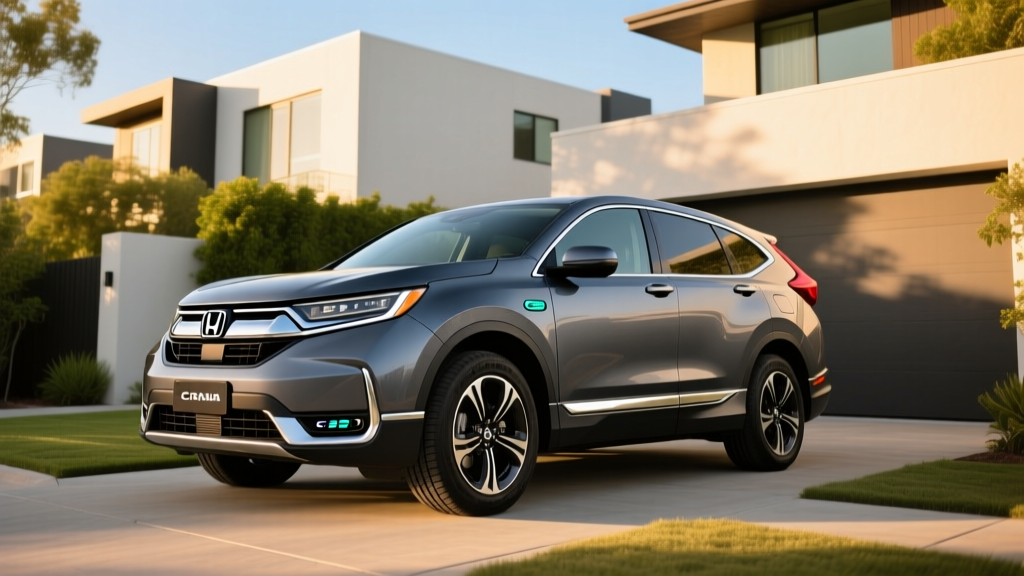
The 2026 Honda CR-V Hybrid remains one of the best-selling electrified compact SUVs in the U.S., and for good reason. It delivers an EPA-estimated 40 MPG combined without ever needing a plug, offers 204 combined horsepower from its two-motor hybrid system, and starts at $36,395. For buyers who want meaningful fuel savings without changing their refueling habits, the CR-V Hybrid occupies a practical sweet spot between a conventional gas SUV and a full battery-electric vehicle.
This guide covers everything a research-driven buyer needs: exact EPA fuel economy across trims, real-world MPG expectations, the hybrid powertrain breakdown, battery longevity and warranty details, pricing, tax credit eligibility, and a clear framework for deciding whether the CR-V Hybrid, a PHEV, or a full EV is the right call.
| Spec | Value |
|---|---|
| Powertrain | 2.0L 4-cyl Atkinson + 2-motor hybrid system |
| Combined Horsepower | 204 hp |
| Combined Torque | 247 lb-ft (electric motor) |
| EPA MPG (FWD) | 43 city / 36 highway / 40 combined |
| EPA MPG (AWD) | 40 city / 34 highway / 37 combined |
| Fuel Tank | 14.0 gallons |
| Total Range (FWD) | ~560 miles |
| 0–60 mph | ~7.8 seconds |
| Cargo Volume | 36.3 cu ft (rear seats up) / 76.5 cu ft (folded) |
| Towing Capacity | 1,000 lbs |
| Hybrid Battery Warranty | 8 years / 100,000 miles |
| Starting MSRP | $36,395 (Sport FWD) |
HEV vs PHEV: What the CR-V Hybrid Actually Is
A common source of confusion among compact SUV shoppers is the difference between a conventional hybrid (HEV) and a plug-in hybrid (PHEV). The 2026 CR-V Hybrid is a conventional hybrid (HEV). It does not have a charge port. You never plug it in. The small lithium-ion battery recharges through regenerative braking and the gasoline engine.
| Feature | HEV (CR-V Hybrid) | PHEV (e.g., Toyota RAV4 Prime) | BEV (e.g., Tesla Model Y) |
|---|---|---|---|
| Plug-in Required? | No | Yes (Level 1 or 2) | Yes (Level 2 or DC fast) |
| Electric-Only Range | ~1 mile at low speed | 35–42 miles typical | 250–330+ miles |
| Battery Size | ~1.1 kWh | ~18.1 kWh | 60–82 kWh |
| Refueling | Gas station only | Gas + plug-in | Plug-in only |
| Tailpipe Emissions | Yes (reduced vs gas) | Yes (zero in EV mode) | Zero |
| Federal Tax Credit (§30D) | Not eligible | Up to $7,500 (if eligible) | Up to $7,500 (if eligible) |
Honda does not currently offer a CR-V PHEV in the United States for the 2026 model year. If plug-in capability is a priority, competitors like the Toyota RAV4 Prime (42 miles electric-only, EPA-estimated) or the Hyundai Tucson PHEV (33 miles electric-only) are the closest alternatives in this segment.
Fuel Economy: EPA Numbers and Real-World MPG
| Trim | Drivetrain | City MPG | Highway MPG | Combined MPG |
|---|---|---|---|---|
| Sport | FWD | 43 | 36 | 40 |
| Sport | AWD | 40 | 34 | 37 |
| Sport-L | AWD | 40 | 34 | 37 |
| Sport Touring | AWD | 40 | 34 | 37 |
Source: EPA Fuel Economy Guide
Real-World MPG: What to Actually Expect
Honda's two-motor hybrid system excels in city and suburban driving, where regenerative braking recaptures energy at every stop. In mixed city/suburban driving, many owners report matching or slightly exceeding the EPA city estimate — 42–45 MPG is achievable on flat terrain in moderate temperatures.
Highway driving tells a different story. At sustained 70–80 mph speeds, the gasoline engine operates more frequently without the benefit of regenerative braking. Expect 32–35 MPG on the highway with AWD, which aligns with the EPA highway estimate but represents a noticeable drop from city figures. This is characteristic of all series-parallel hybrid systems, not a CR-V-specific limitation.
EPA combined: 40 MPG (FWD) / 37 MPG (AWD). Real-world expectation: 38–43 MPG city/suburban, 32–35 MPG sustained highway. Cold weather (below 30°F) can reduce fuel economy by 5–10% due to increased engine idling for cabin heat and reduced battery efficiency. Total real-world range on a full 14.0-gallon tank: approximately 480–560 miles depending on conditions.
Powertrain Deep Dive: How the Two-Motor System Works
The 2026 CR-V Hybrid uses Honda's fourth-generation two-motor hybrid system, pairing a 2.0-liter Atkinson-cycle 4-cylinder engine with two electric motors and a lithium-ion battery pack. Here's the breakdown:
- Gasoline engine: 2.0L DOHC Atkinson-cycle inline-4, producing 145 hp and 134 lb-ft of torque. The Atkinson cycle sacrifices peak power for thermal efficiency — ideal for hybrid duty where the electric motors compensate.
- Propulsion motor: Generates 181 hp and 247 lb-ft of torque. This motor drives the front wheels directly in most driving scenarios.
- Generator motor: Converts engine output to electricity to feed the propulsion motor or charge the battery.
- Combined system output: 204 hp (limited by system electronics, not a simple sum of engine + motor).
- Battery pack: Approximately 1.1 kWh lithium-ion, positioned under the rear cargo floor. This small capacity is intentional — it buffers energy for regenerative braking and electric assist, not for sustained electric-only driving.
The system operates in three primary modes: EV Drive (short low-speed electric-only), Hybrid Drive (engine generates electricity for the propulsion motor), and Engine Drive (engine connects directly to the wheels via a lock-up clutch at steady highway speeds). The transitions are seamless — most drivers won't notice which mode is active unless they watch the power-flow display.
AWD models add a rear-mounted electric motor that provides up to 40% of torque to the rear axle when needed. Unlike mechanical AWD systems, there is no driveshaft connecting the front and rear axles, reducing weight and drivetrain losses.
Pricing, Trims, and Tax Credit Eligibility
| Trim | Drivetrain | MSRP (incl. destination) |
|---|---|---|
| Sport | FWD | $36,395 |
| Sport | AWD | $37,895 |
| Sport-L | AWD | $40,695 |
| Sport Touring | AWD | $43,395 |
Federal Tax Credit: What Hybrid Buyers Need to Know
The 2026 Honda CR-V Hybrid does not qualify for the federal §30D Clean Vehicle Credit. Under current IRS rules, the §30D credit applies only to plug-in electric vehicles (BEVs and PHEVs) that meet battery capacity, critical-mineral sourcing, and MSRP thresholds. Conventional hybrids (HEVs) like the CR-V Hybrid are ineligible regardless of price or buyer income.
Some states offer separate incentives for hybrid vehicles — check your state's energy office or DMV for current programs. These vary by jurisdiction and change frequently.
Cost-per-Mile vs. Gas-Only CR-V
The gas-only 2026 CR-V (1.5L turbo) achieves an EPA-estimated 29 MPG combined (AWD). At $3.40/gallon (national average as of early 2026), that's roughly $0.117 per mile in fuel. The CR-V Hybrid AWD at 37 MPG combined costs about $0.092 per mile — a savings of approximately $0.025 per mile, or $375 per year at 15,000 miles. Over a 5-year ownership period, fuel savings alone approach $1,875, partially offsetting the hybrid's ~$2,500 premium over the gas-only EX AWD trim.
Battery Longevity, Warranty, and Replacement Costs
Honda covers the CR-V Hybrid's lithium-ion battery pack for 8 years or 100,000 miles (whichever comes first) under the hybrid system warranty. In California Air Resources Board (CARB) states, this extends to 10 years or 150,000 miles. This warranty covers battery capacity loss below a defined threshold and defects in hybrid system components including the electric motors, inverter, and control electronics.
How Long Will the Hybrid Battery Last?
Real-world data from Honda's hybrid systems (which have been in production since the early 2000s) shows that the small lithium-ion packs in conventional hybrids experience minimal degradation. Unlike full EVs that cycle the battery through deep charge/discharge ranges daily, the CR-V Hybrid's system keeps the battery in a narrow state-of-charge window — typically between 40% and 70%. This shallow cycling dramatically extends cell life.
Based on long-term ownership reports and fleet data, Honda hybrid batteries routinely last 150,000–200,000+ miles without requiring replacement. The battery is not a wear item the way brake pads or tires are — it's designed to outlast the vehicle's economic life in most cases.
Battery Replacement Cost (If Needed)
If a hybrid battery does fail outside warranty, replacement costs for the CR-V Hybrid typically range from $2,000 to $3,500 for the battery pack itself, plus $500–$800 in labor, depending on the dealership and region. Third-party hybrid battery specialists often offer refurbished packs at lower cost. This is substantially less than a full EV battery replacement ($8,000–$20,000+), reflecting the CR-V Hybrid's much smaller ~1.1 kWh pack.
Who Should Choose the CR-V Hybrid vs. a PHEV or Full EV?
Decision Framework: Which Powertrain Fits You?
Choose the 2026 CR-V Hybrid (HEV) if:
- You don't have access to home or workplace charging (apartment, street parking, no garage outlet)
- You want fuel savings without changing any habits — just fill up at the gas station
- Your driving is primarily city/suburban where the hybrid system excels (40+ MPG achievable)
- You want a lower purchase price than a PHEV or EV (typically $3,000–$8,000 less)
- You frequently take long road trips and don't want to plan around charging stops
Consider a PHEV (e.g., RAV4 Prime, Tucson PHEV) if: