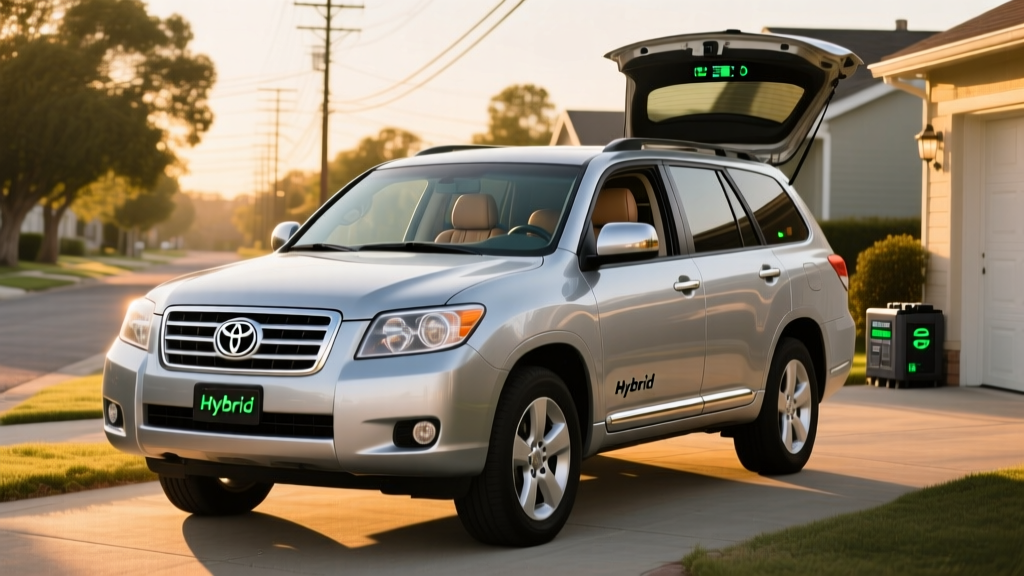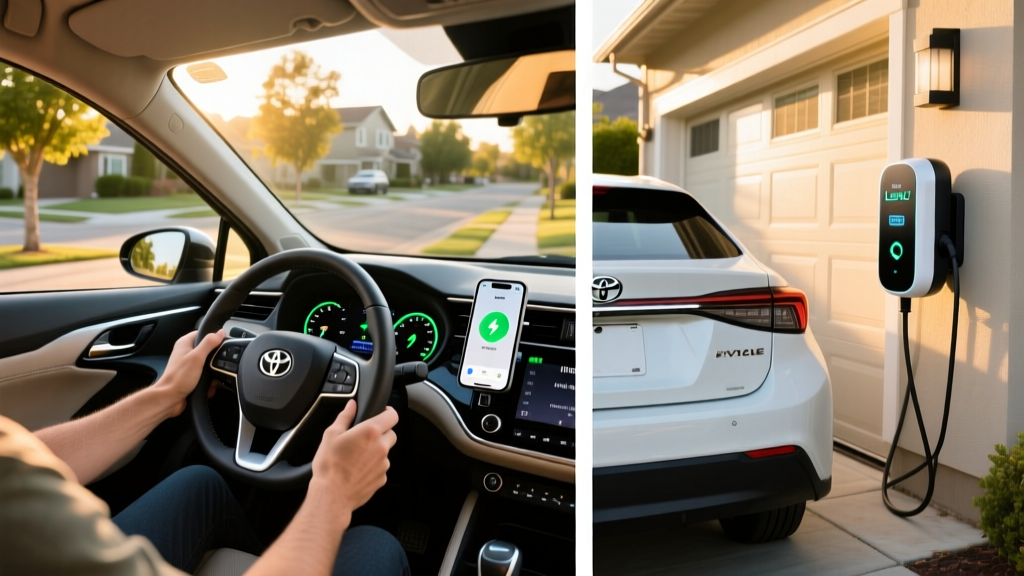
The Toyota Corolla Hybrid has carved out a specific niche: delivering maximum fuel economy with minimum lifestyle change. You never plug it in, you never think about charging, and you fill up at the same gas station you've always used. For the 2026 model year, the Corolla Hybrid LE remains the entry point to Toyota's fifth-generation hybrid system, offering an EPA-estimated 50 MPG combined at a base MSRP of $24,225 (including destination). This guide breaks down the exact specs, real-world efficiency you can expect, battery longevity data, and whether this HEV makes sense against a PHEV or full EV for your daily commute.
HEV vs PHEV vs EV: Where the Corolla Hybrid Fits
Before diving into specs, it's critical to understand what the 2026 Corolla Hybrid LE is — and what it isn't. This is a conventional hybrid electric vehicle (HEV). It has no plug, no electric-only driving mode of any meaningful distance, and no external charging capability. The small traction battery recharges exclusively through regenerative braking and the gasoline engine.
| Attribute | HEV (Corolla Hybrid) | PHEV (e.g., Prius Prime) | BEV (e.g., bZ4X) |
|---|---|---|---|
| Plug-in charging? | No | Yes (Level 1/2) | Yes (Level 1/2/DC) |
| Electric-only range | ~1 mi (low-speed creep) | 35–45 mi typical | 220–320 mi typical |
| Gasoline engine? | Yes — primary power | Yes — backup after battery depletes | No |
| Home charging install needed? | No | Recommended (240V) | Required (240V Level 2) |
| Federal tax credit (§30D)? | No | Up to $7,500 if eligible | Up to $7,500 if eligible |
| Best for | No plug access, long highway miles | Short commute + home charging + road trips | Home charging + daily driving under 250 mi |
If you have access to home or workplace Level 2 charging and your commute is under 40 miles round-trip, a PHEV like the 2026 Prius Prime (44 miles EPA electric-only, 48 MPG combined after depletion) will save significantly more fuel. But if you live in an apartment without charging access, drive long or unpredictable distances, or simply want zero behavioral change from a gas car, the Corolla Hybrid LE's HEV setup is the pragmatic choice.
2026 Corolla Hybrid LE: Powertrain and Key Specs
| Powertrain | 1.8L 4-cyl Atkinson-cycle + 2 electric motor-generators (5th-gen Toyota Hybrid System) |
| Combined net horsepower | 138 hp |
| Engine output | 96 hp @ 5,200 rpm / 105 lb-ft torque |
| Electric motor output | 94 hp / 139 lb-ft (front-drive motor-generator) |
| Transmission | Electronically controlled CVT (eCVT — planetary gearset, not belt-driven) |
| Traction battery | ~1.3 kWh lithium-ion (nominal; HEV buffer limits usable to ~0.5 kWh) |
| Drivetrain | Front-wheel drive (AWD-e available on SE/XLE trims, not LE) |
| 0–60 mph | ~9.2 seconds (est.) |
| Curb weight | ~3,085 lbs |
| Fuel tank capacity | 11.4 gallons |
| EPA fuel economy | 53 city / 46 highway / 50 combined MPG |
| Total driving range (est.) | ~570 miles (at combined EPA) |
| Base MSRP (incl. destination) | $24,225 |
The fifth-generation Toyota Hybrid System (THS V) in the 2026 Corolla is lighter and more compact than the prior generation. The lithium-ion traction battery replaces the older nickel-metal hydride pack, improving energy density and cold-weather performance. Note: the ~1.3 kWh battery is not designed for plug-in charging or sustained electric-only driving. Its purpose is to buffer regenerative energy and assist the gasoline engine during acceleration, enabling the Atkinson-cycle engine to operate in its most efficient range more often.
Fuel Economy: EPA Ratings and Real-World MPG
| Driving Condition | EPA Estimate | Real-World Expectation |
|---|---|---|
| City | 53 MPG | 50–56 MPG (hybrids often beat EPA in stop-and-go) |
| Highway (70 mph) | 46 MPG | 42–46 MPG (less regen benefit at steady speed) |
| Combined | 50 MPG | 47–52 MPG (varies by driving mix) |
| Cold weather (below 32°F) | N/A | 40–45 MPG (engine runs more for cabin heat) |
Toyota hybrids consistently deliver real-world fuel economy close to — or slightly above — their EPA city estimates. The reason is physics: regenerative braking recovers kinetic energy that a gas car wastes as heat at every stoplight. In dense urban driving with frequent stops, owners commonly report 52–55 MPG. Highway driving is where the Corolla Hybrid's advantage narrows; at 70+ mph, aerodynamic drag dominates and the hybrid system has fewer opportunities to recapture energy.
Cold weather hits all hybrids. Below freezing, the gasoline engine runs more frequently to maintain cabin heat and bring the catalytic converter to operating temperature. Expect a 10–15% fuel economy penalty in winter months, bringing real-world combined figures to roughly 40–45 MPG in northern climates. This is still significantly better than a comparable gas-only compact sedan, which typically returns 28–32 MPG combined under the same conditions.
For authoritative EPA data, the fueleconomy.gov side-by-side tool lets you compare the Corolla Hybrid LE against any competitor with official test data.
Hybrid Battery Warranty, Lifespan, and Replacement Cost
Battery longevity is the number-one concern for hybrid buyers, and Toyota's track record here is among the strongest in the industry. The 2026 Corolla Hybrid LE's lithium-ion traction battery is covered under Toyota's hybrid battery warranty:
Battery & Hybrid Component Warranty
- Hybrid battery: 10 years / 150,000 miles (whichever comes first), transferable to subsequent owners
- Hybrid system components (inverter, motor-generators, control module): 8 years / 100,000 miles
- Capacity retention guarantee: Toyota warrants the battery against defects and abnormal capacity loss; there is no specific percentage threshold published (unlike EV warranties which typically guarantee 70% SoH)
- Powertrain warranty: 5 years / 60,000 miles
In practice, Toyota hybrid batteries from the Prius lineage have demonstrated remarkable longevity. Fleet data and owner surveys indicate that the majority of Toyota hybrid batteries last 150,000–200,000+ miles before needing replacement. The lithium-ion chemistry in the 5th-gen system has better thermal stability and cycle life than the older NiMH packs.
If replacement is needed out of warranty, a new OEM hybrid battery for the Corolla Hybrid runs approximately $2,500–$4,000 including labor at a dealership. Independent hybrid specialists can often source refurbished or new aftermarket packs for $1,500–$2,500 installed. This is a fraction of full EV battery replacement costs ($10,000–$20,000+), reflecting the much smaller battery capacity.
Pricing, Trims, and Tax Credit Eligibility
The 2026 Corolla Hybrid LE starts at $24,225 (MSRP including $1,095 destination charge). This is the sole hybrid trim available at launch; the SE and XLE hybrid trims (which add AWD-e and additional features) carry premiums of $1,500–$3,000.
Federal Tax Credit: Not Eligible Under §30D
The 2026 Corolla Hybrid LE does not qualify for the federal §30D clean vehicle tax credit (up to $7,500). Per IRS rules, the §30D credit applies only to plug-in electric vehicles — battery electric vehicles (BEVs) and plug-in hybrids (PHEVs) with a minimum battery capacity of 7 kWh. Conventional hybrids like the Corolla Hybrid LE, which cannot be plugged in and have batteries well below that threshold, are excluded.
Some states and municipalities offer their own incentives for hybrid vehicles, though these are increasingly rare as incentive programs shift toward zero-emission vehicles. Check your state's energy office or department of environmental quality for any active hybrid rebate programs. A few states still offer reduced registration fees or HOV lane access for hybrids, but these benefits are phasing out in most jurisdictions.
Total Cost of Ownership Context
While the Corolla Hybrid LE doesn't benefit from federal tax credits, its economics are straightforward: lower fuel cost from day one, no charging infrastructure investment, no behavioral change. At 50 MPG combined and a national average gas price of ~$3.30/gallon, annual fuel cost for 12,000 miles of driving is approximately $792. A comparable gas-only compact sedan averaging 30 MPG would cost roughly $1,320 annually — a savings of about $528 per year, or $2,640 over five years, before accounting for the Corolla Hybrid's modest MSRP premium over its gas sibling.
Who Should Choose the Corolla Hybrid LE?
Choose the 2026 Corolla Hybrid LE if:
- You lack access to home or workplace plug-in charging (apartment, street parking, no garage)
- You drive 15,000+ miles per year and want maximum fuel savings without charging logistics
- Your driving is a mix of city and highway with frequent stop-and-go segments
- You want Toyota's proven hybrid reliability with minimal maintenance cost
- Your budget is under $27,000 and you don't want to stretch for a PHEV or EV
Consider a PHEV (Prius Prime) or BEV instead if:
- You have Level 2 home charging and a commute under 45 miles round-trip (PHEV eliminates most gas use)
- You want to qualify for the $7,500 federal §30D tax credit (PHEV/BEV only)
- You want to eliminate tailpipe emissions entirely for daily driving (BEV)
- You drive mostly short city trips where a PHEV's electric-only mode covers 100% of your mileage
The Corolla Hybrid LE occupies a rational middle ground: it doesn't promise the transformative fuel savings of a PHEV running on electricity, but it also doesn't demand any infrastructure investment or range planning. For buyers in charging-desert regions or multi-unit dwellings where installing a Level 2 charger isn't feasible, it's the most fuel-efficient vehicle you can buy that behaves exactly like a conventional car.
Pros and Cons at a Glance
Pros
- 50 MPG combined EPA — among the highest of any non-plug-in vehicle sold in the US
- $24,225 starting MSRP — accessible entry to hybrid ownership
- No plug-in charging required — zero lifestyle adjustment from a gas car
- 10-year / 150,000-mile hybrid battery warranty
- 5th-gen Toyota Hybrid System with proven reliability track record
- Real-world city MPG often exceeds EPA estimate
- Low annual fuel cost (~$792 at 12,000 mi/yr)
- Toyota Safety Sense 3.0 standard (AEB, lane-keeping, adaptive cruise)
Cons
- No federal §30D tax credit eligibility (HEV exclusion)
- 138 hp combined — adequate but not quick; 0-60 in ~9.2 seconds
- Highway MPG drops to 46 EPA (less hybrid advantage at steady speed)
- AWD-e not available on LE trim (SE/XLE only)
- Small ~1.3 kWh battery limits electric assist at higher speeds
- Cold-weather MPG penalty of 10-15% (common to all hybrids)
- Infotainment and interior materials are functional, not premium
- No DC fast charging capability (not applicable to HEVs, but worth noting vs. PHEV/EV)
Frequently Asked Questions
How many MPG does the 2026 Corolla Hybrid LE get?
The EPA rates the 2026 Corolla Hybrid LE at 53 MPG city, 46 MPG highway, and 50 MPG combined. In real-world driving, city mileage often reaches 52–56 MPG thanks to regenerative braking, while highway mileage typically falls in the 42–46 MPG range. Cold weather (below freezing) reduces combined efficiency to roughly 40–45 MPG.
Does the Corolla Hybrid need to be plugged in?
No. The Corolla Hybrid LE is a conventional hybrid (HEV), not a plug-in hybrid (PHEV). Its small lithium-ion traction battery recharges entirely through regenerative braking and the gasoline engine. You fuel it exactly like a standard gas car — no plug, no charging cable, no home charger installation.
Does the 2026 Corolla Hybrid LE qualify for any tax credit?
It does not qualify for the federal §30D clean vehicle tax credit, which is reserved for plug-in vehicles (BEVs and PHEVs) with battery capacity of at least 7 kWh. Some states may offer minor hybrid incentives, but these are increasingly uncommon. Check your state's energy office for current programs.
How long will the Corolla Hybrid battery last, and what does replacement cost?
Toyota covers the hybrid battery for 10 years or 150,000 miles. Historical data from Toyota's hybrid lineup suggests most batteries last 150,000–200,000+ miles. If replacement is needed out of warranty, expect to pay $2,500–$4,000 for a new OEM battery at a dealership, or $1,500–$2,500 through an independent hybrid specialist.
Is the Corolla Hybrid LE better than the Prius?
They serve different buyers. The 2026 Prius (57 MPG combined, 196 hp, ~$28,500 MSRP) is more efficient and more powerful but costs roughly $4,000 more. The Corolla Hybrid LE trades about 7 MPG and 58 hp for a lower entry price and a more traditional sedan profile. If budget is the priority, the Corolla Hybrid wins on value; if maximum efficiency matters more, the Prius is the stronger choice.
Hybrid vs PHEV vs EV — which should I choose?
If you cannot charge at home or work, choose an HEV like the Corolla Hybrid. If you can charge at home and your commute is under 45 miles, a PHEV like the Prius Prime lets you drive most days on electricity while keeping a gas engine for road trips — and it qualifies for up to $7,500 in federal tax credits if you meet income and sourcing requirements. If you have reliable home charging, drive under 250 miles daily, and want zero tailpipe emissions, a BEV eliminates gas entirely. The right choice depends entirely on your charging access and driving patterns.
Is the Corolla Hybrid reliable?
Toyota's hybrid powertrain is one of the most proven in the automotive industry, with over 25 years of continuous refinement since the original Prius. The IIHS and NHTSA have historically rated the Corolla platform highly for safety, and the hybrid variant shares the same structural design. Toyota Safety Sense 3.0 comes standard on the LE trim, including automatic emergency braking, lane departure alert with steering assist, and full-speed adaptive cruise control.
Bottom Line
The 2026 Toyota Corolla Hybrid LE delivers exactly what it promises: 50 MPG combined, no plug, no complexity, at $24,225. It won't qualify for federal tax credits, it won't drive on electricity alone for more than a block, and it won't win any stoplight drags. But for the buyer who wants to cut fuel costs by roughly 40% compared to a gas-only compact sedan — without changing a single habit — it remains one of the most rational vehicles on the market. The 10-year/150,000-mile battery warranty and Toyota's hybrid reliability data address the primary ownership concern, and the ~$2,500–$4,000 out-of-warranty replacement cost is manageable compared to EV battery expenses. If your situation allows for plug-in charging, a PHEV or BEV will save more money and emit less. If it doesn't, the Corolla Hybrid LE is the efficiency ceiling for a no-plug lifestyle.