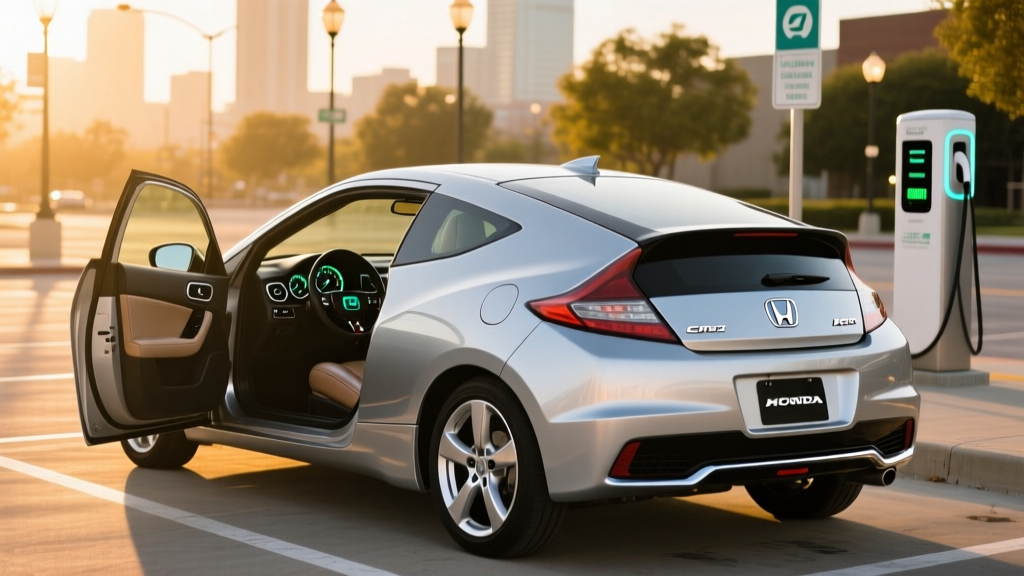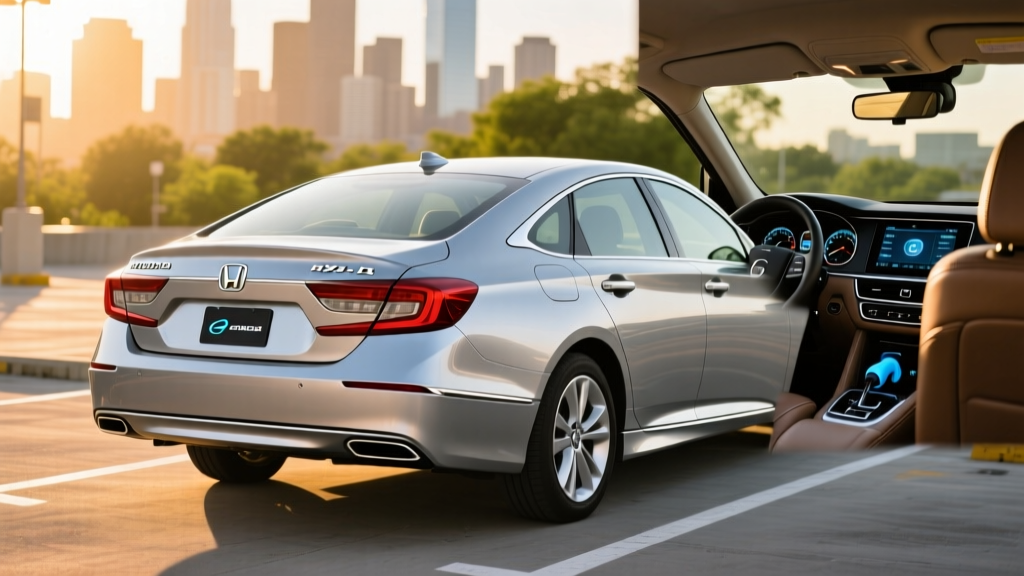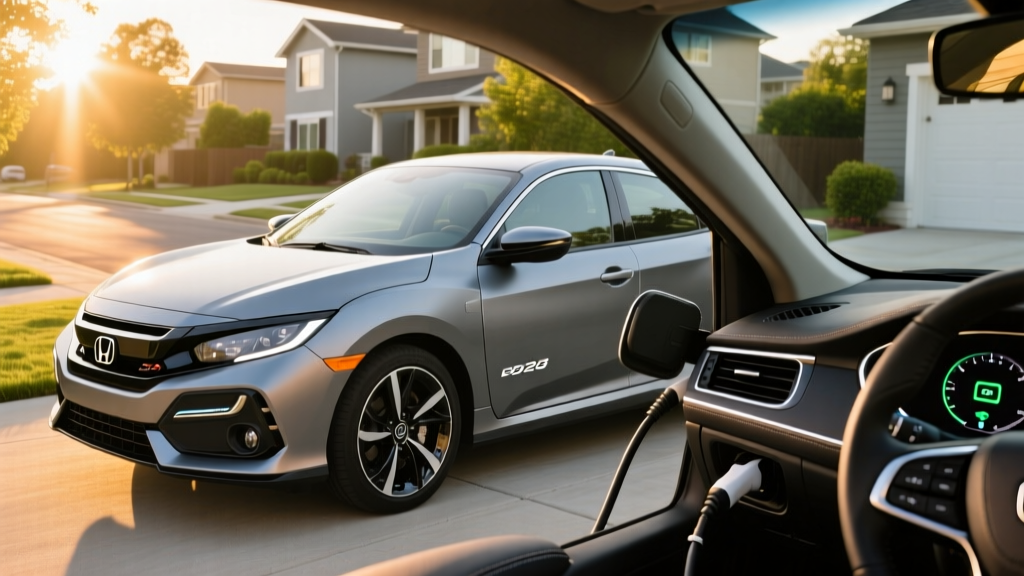
The Honda Civic has been a compact-car benchmark for decades, but the electrified variant is where the real value proposition sits for 2026. The 2026 Civic Hybrid Hatchback pairs Honda's two-motor hybrid system with the practical cargo space of a hatchback, delivering EPA-rated fuel economy that routinely exceeds 45 MPG in daily driving — without ever needing to plug in.
This is a conventional hybrid (HEV), not a plug-in hybrid (PHEV). That distinction matters for your budget, your daily routine, and your expectations at the pump. Below, we break down every number that matters: real-world MPG, powertrain output, battery longevity, pricing by trim, and how the Civic Hybrid stacks up against full EVs and plug-in alternatives.
HEV vs. PHEV: What the Civic Hybrid Actually Is
Before diving into specs, it's critical to understand what you're buying. The 2026 Civic Hybrid Hatchback is a conventional hybrid electric vehicle (HEV). It generates its own electricity through regenerative braking and the gasoline engine — you never plug it in.
| Feature | HEV (Civic Hybrid) | PHEV (e.g., Toyota Prius Prime) | BEV (e.g., Chevy Bolt EV) |
|---|---|---|---|
| Plug-in required? | No | Yes (Level 1/2) | Yes (Level 1/2/DC) |
| Electric-only range | ~1 mi at low speed | 25–44 mi typical | 200–350+ mi |
| Battery size | ~1.0 kWh (small buffer) | 10–14 kWh usable | 50–85+ kWh |
| Federal tax credit (§30D) | Not eligible | Up to $7,500 (if eligible) | Up to $7,500 (if eligible) |
| Best for | No home charging access | Short commutes + road trips | Home charging + daily driving |
The Civic Hybrid is engineered for drivers who want maximum fuel efficiency without changing their refueling habits. If you can't install a home charger or frequently drive in areas with sparse charging infrastructure, the HEV approach eliminates range anxiety entirely.
Fuel Economy: EPA Ratings vs. Real-World MPG
Honda's two-motor hybrid system excels in stop-and-go traffic, where the electric motor handles low-speed propulsion and the gasoline engine acts primarily as a generator. This is why the city MPG rating often exceeds the highway number — the opposite of most gas-only cars.
| Trim / Drivetrain | City MPG | Highway MPG | Combined MPG |
|---|---|---|---|
| Sport Hybrid (FWD) | 50 | 47 | 49 |
| Sport Touring Hybrid (FWD) | 50 | 47 | 49 |
Source: EPA / fueleconomy.gov
In mixed suburban and city driving, many Civic Hybrid owners report 48–52 MPG — often matching or slightly exceeding the EPA combined rating. On sustained highway trips at 70–80 mph, expect 42–46 MPG as the gasoline engine takes on more direct-drive duty. In cold weather (below 30°F), fuel economy can dip 8–12% due to increased engine runtime for cabin heating and reduced battery efficiency.
With a 10.6-gallon fuel tank, the Civic Hybrid Hatchback delivers a real-world total range of approximately 460–520 miles per tank, depending on driving conditions. That's fewer fuel stops and less money spent at the pump compared to the gas-only Civic, which averages around 33–36 MPG combined depending on trim.
Powertrain and Performance Specs
The 2026 Civic Hybrid Hatchback uses Honda's fourth-generation two-motor hybrid system, which is fundamentally different from the parallel-hybrid setups found in older vehicles. Here, the gasoline engine primarily generates electricity, while the propulsion motor drives the wheels most of the time. At highway speeds, a lockup clutch allows the engine to drive the wheels directly for efficiency.
| Specification | Detail |
|---|---|
| Engine | 2.0L Atkinson-cycle 4-cylinder |
| Combined System Horsepower | 200 hp |
| Combined System Torque | 232 lb-ft |
| Propulsion Motor Output | 184 hp / 232 lb-ft |
| Transmission | e-CVT (single-speed direct drive with lockup clutch) |
| 0–60 mph | ~7.2 seconds |
| Drivetrain | Front-wheel drive |
| Battery Type | Lithium-ion, ~1.0 kWh |
| Cargo Volume (rear seats up) | 24.4 cu ft |
| Cargo Volume (rear seats folded) | ~47 cu ft |
Source: Honda Automobiles
The 200 combined horsepower and instant electric torque give the Civic Hybrid a genuinely responsive feel off the line — noticeably quicker than the 158-hp gas-only Civic LX. The e-CVT is smooth, and Honda's lockup clutch engagement at highway speeds eliminates the "rubber band" effect that plagues older CVTs. It's not a sport car, but it's a hatchback that won't feel sluggish during highway merges or passing maneuvers.
Pricing, Trims, and Tax Credit Eligibility
The 2026 Civic Hybrid Hatchback is offered in two trims, both built on the well-equipped Sport foundation:
| Trim | MSRP (est.) | Key Features |
|---|---|---|
| Sport Hybrid | ~$30,350 | Hybrid powertrain, 7" touchscreen, wireless Apple CarPlay/Android Auto, Honda Sensing suite, 18" alloy wheels |
| Sport Touring Hybrid | ~$34,350 | Adds Bose 12-speaker audio, 9" touchscreen, wireless charging, leather-trimmed seats, heated rear seats, low-speed braking control |
Because the Civic Hybrid is a conventional HEV (not a PHEV or BEV), it does not qualify for the IRS §30D Clean Vehicle Credit, which requires a minimum 7 kWh battery and plug-in capability. There is currently no federal tax credit for conventional hybrids. Some states may offer minimal incentives for high-efficiency vehicles — check your state energy office for details. Always consult a tax professional for personal eligibility.
While the lack of a federal tax credit stings compared to PHEV and EV alternatives, the Civic Hybrid's lower starting price and zero charging infrastructure costs offset this for many buyers. You're not spending $1,000–$2,000 on a home Level 2 charger installation, and you're not dependent on public charging reliability.
Battery Longevity, Warranty, and Replacement Cost
Battery anxiety is the number-one concern for hybrid shoppers, but the data is reassuring. Honda's lithium-ion hybrid battery is small (~1.0 kWh), operates within a conservative state-of-charge window (rarely fully depleted or fully charged), and benefits from active thermal management. This shallow cycling dramatically extends cell life compared to the deep cycles in full EVs.
| Coverage | Term |
|---|---|
| Hybrid Battery Warranty | 8 years / 100,000 miles (10 years / 150,000 miles in CARB states) |
| Powertrain Warranty | 5 years / 60,000 miles |
| Limited Vehicle Warranty | 3 years / 36,000 miles |
Honda's hybrid battery warranty covers capacity loss below a defined threshold and any manufacturing defects. In CARB-adopting states (California, New York, Massachusetts, and others), the extended 10-year/150,000-mile warranty applies.
Replacement cost if out of warranty: Based on current Honda hybrid battery pricing and independent shop data, a replacement hybrid battery pack for the Civic Hybrid runs approximately $2,000–$3,500 including labor. This is significantly less than a full EV battery replacement ($8,000–$20,000+) because the pack is small. Real-world failure rates for Honda's hybrid batteries remain very low — many first-generation Insight and Civic Hybrid units exceeded 200,000 miles on original batteries.
Civic Hybrid vs. PHEV vs. Full EV: Which Fits You?
The right electrified vehicle depends on your charging access, driving patterns, and budget. Here's a decision framework:
- You don't have access to home or workplace charging
- You want zero behavior change — just drive and refuel at gas stations
- Your annual mileage is moderate (10,000–15,000 miles) and fuel savings matter
- You want a lower purchase price without credit-eligibility complexity
- You have home Level 1/2 charging and a commute under 40 miles
- You want electric-only daily driving but gas flexibility for road trips
- You may qualify for the §30D federal tax credit (up to $7,500)
- You have reliable home Level 2 charging
- Your daily driving is under 250 miles and you road-trip infrequently
- You want zero tailpipe emissions and minimal maintenance
- You qualify for the §30D credit, effectively lowering the purchase price
For apartment dwellers, street parkers, and anyone in regions with unreliable public charging infrastructure, the Civic Hybrid offers the most practical path to 45+ MPG without infrastructure dependency.
Safety, Technology, and Daily Livability
The 2026 Civic Hybrid Hatchback comes standard with the Honda Sensing suite, which includes:
- Collision Mitigation Braking System (CMBS)
- Adaptive Cruise Control (ACC) with Low-Speed Follow
- Lane Keeping Assist System (LKAS)
- Road Departure Mitigation (RDM)
- Traffic Sign Recognition
These are SAE Level 1 driver-assistance features — they support the driver but do not replace active attention. Honda does not market these as "self-driving" or "autonomous," which is the correct framing. The driver remains fully responsible for vehicle operation at all times.
The hatchback body style adds genuine utility: 24.4 cubic feet behind the rear seats accommodates groceries, luggage, or a large dog crate, and the wide liftgate opening makes loading easier than the Civic sedan's trunk. The Sport Touring trim adds a premium Bose audio system and a larger 9-inch infotainment display, bringing the interior experience closer to entry-luxury competitors.
Pros and Cons at a Glance
- 49 MPG EPA combined; real-world often matches or exceeds in city driving
- 200 hp provides confident acceleration for the class
- No plug-in required — zero infrastructure dependency
- Hatchback cargo versatility (24.4 cu ft)
- Honda Sensing safety suite standard on all trims
- Conservative battery cycling suggests strong long-term reliability
- 8-year/100,000-mile hybrid battery warranty (10/150k in CARB states)
- No federal tax credit eligibility (HEV, not PHEV/BEV)
- No AWD option (competitors like the Prius offer e-AWD)
- Highway MPG drops to ~42–46 in real-world 75+ mph driving
- Only two trims available — limited configuration flexibility
- Cold-weather fuel economy penalty of 8–12%
- Higher MSRP than the base gas-only Civic (~$6,000 premium over Civic LX sedan)
Frequently Asked Questions
How many MPG does the 2026 Civic Hybrid Hatchback get?
The EPA rates the Civic Hybrid Hatchback at 50 city / 47 highway / 49 combined MPG. In real-world city and suburban driving, many owners achieve 48–52 MPG. Highway-only trips at 70–80 mph typically yield 42–46 MPG.
Does the Civic Hybrid need to be plugged in?
No. The 2026 Civic Hybrid is a conventional HEV. It charges its small lithium-ion battery through regenerative braking and the gasoline engine. You refuel exclusively at gas stations, just like a traditional car.
Is the Civic Hybrid Hatchback reliable, and what does a battery replacement cost?
Honda's hybrid system has a strong reliability track record across multiple model generations. The hybrid battery is warrantied for 8 years/100,000 miles (10 years/150,000 miles in CARB states). Out-of-warranty replacement costs approximately $2,000–$3,500 including labor — far less than a full EV battery swap.
Does the 2026 Civic Hybrid qualify for any tax credit?
No. The IRS §30D Clean Vehicle Credit requires plug-in capability and a minimum 7 kWh battery. The Civic Hybrid, as a conventional HEV with a ~1.0 kWh battery, does not qualify for the federal credit. Check your state energy office for any local high-efficiency vehicle incentives. Consult IRS.gov for current credit rules.
How does the Civic Hybrid compare to the Toyota Prius?
The Prius (52–57 MPG combined) edges out the Civic Hybrid on pure fuel economy and offers an available AWD-e drivetrain. However, the Civic Hybrid delivers more horsepower (200 vs. 196 for the Prius), a more engaging driving feel, and a conventional hatchback design that some buyers prefer over the Prius's polarizing styling. The Prius Prime PHEV variant adds 44 miles of electric-only range for those with home charging access.
How far can the Civic Hybrid go on a full tank?
With a 10.6-gallon tank and real-world fuel economy of 46–50 MPG, expect a total range of approximately 460–520 miles between fill-ups, depending on driving conditions.