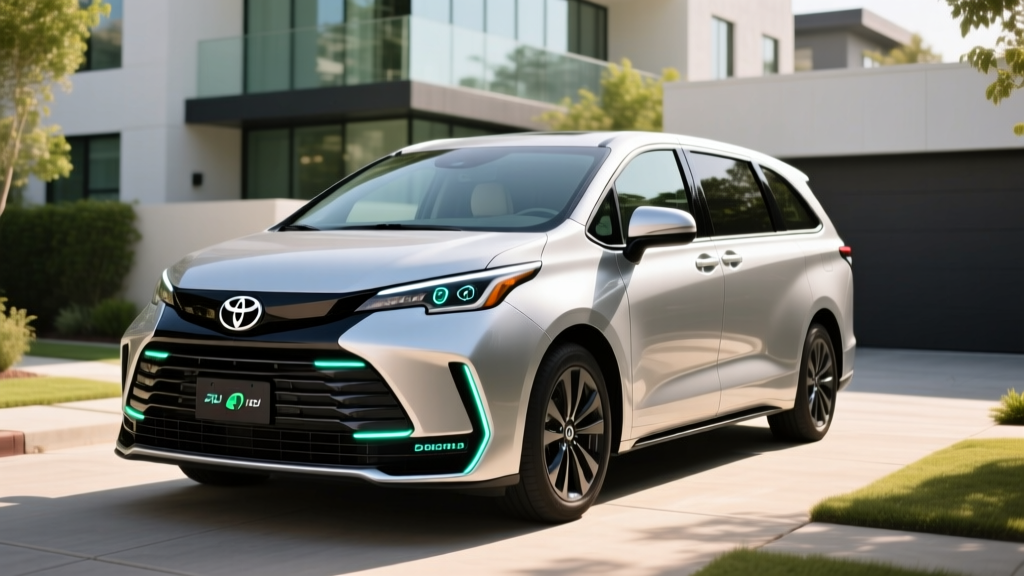
The 2025 Toyota Sienna remains one of the only minivans sold in the United States with a standard hybrid powertrain across every trim. While competitors like the Honda Odyssey and Chrysler Pacifica offer conventional V6 engines (with the Pacifica adding a plug-in hybrid variant), Toyota committed fully to its fourth-generation hybrid system when it redesigned the Sienna for 2021 — and the formula carries into 2025 with minor refinements. If you're researching the 2025 Toyota Sienna hybrid powertrain, this guide covers the exact fuel economy figures, powertrain specs, real-world efficiency, battery longevity, and whether any tax incentives apply.
Hybrid (HEV) vs. Plug-In Hybrid (PHEV): Where the Sienna Fits
Before diving into specs, it's essential to understand what the Sienna is — and isn't.
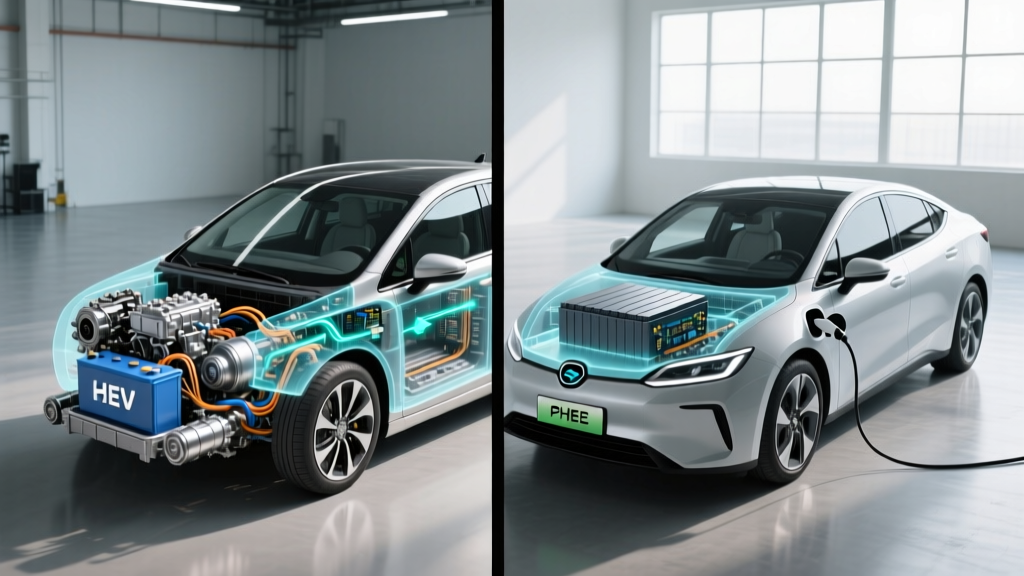
Conventional Hybrid (HEV) — Toyota Sienna: The Sienna uses a self-charging hybrid system. A gasoline engine and electric motor(s) work together, and the small battery recharges through regenerative braking and the engine. You never plug it in. You simply fuel up at any gas station.
Plug-In Hybrid (PHEV) — e.g., Chrysler Pacifica PHEV: A PHEV has a larger battery (typically 15-20 kWh) that you plug in to recharge, providing 20-40 miles of electric-only driving before the gas engine kicks in. Once the battery depletes, it operates as a conventional hybrid.
Full EV (BEV) — e.g., upcoming electric minivans: Runs entirely on battery power with no gasoline engine. Requires home or public charging infrastructure.
The 2025 Sienna is strictly a conventional HEV. There is no plug, no electric-only range, and no charging port. This is the right architecture for families who want better fuel economy without changing their refueling habits or worrying about charging access.
2025 Toyota Sienna Hybrid Powertrain: Engine, Motors, and Horsepower
| Specification | 2025 Toyota Sienna |
|---|---|
| Engine | 2.5L inline-4 (Dynamic Force) |
| Engine Output | 189 hp / 176 lb-ft torque |
| Electric Motors | 2 front motors + 1 rear motor (AWD models) |
| Front Motor Output | 134 hp / 199 lb-ft |
| Rear Motor Output (AWD) | 54 hp / 89 lb-ft |
| Net Combined System Horsepower | 245 hp |
| Transmission | eCVT (electronically controlled continuously variable) |
| Drivetrain | FWD standard; electronic AWD available |
| Hybrid Battery | 1.6 kWh (nickel-metal hydride), sealed |
| 0-60 mph (est.) | ~7.1 seconds (FWD) |
| Towing Capacity | 3,500 lbs (max, properly equipped) |
The Sienna's hybrid system pairs Toyota's 2.5-liter Dynamic Force four-cylinder engine with two permanent-magnet electric motors on the front axle, routed through an eCVT planetary gearset — not a traditional belt-and-pulley CVT. This eCVT is mechanically robust and has proven reliable across millions of Toyota hybrids. AWD models add a third electric motor on the rear axle, providing on-demand all-wheel drive without a mechanical driveshaft.
The net system output of 245 horsepower is competitive for the minivan segment, though it trails the Honda Odyssey's 280-hp V6 and the Chrysler Pacifica's 287-hp V6. Where the Sienna wins decisively is fuel economy — and for most families hauling kids and cargo, torque delivery and efficiency matter more than outright power.
Fuel Economy: EPA Ratings and Real-World MPG
This is the Sienna's headline advantage. According to EPA data on fueleconomy.gov, the 2025 Sienna achieves:
| Configuration | City MPG | Highway MPG | Combined MPG |
|---|---|---|---|
| FWD (all trims) | 36 | 36 | 36 |
| AWD (all trims) | 35 | 36 | 35 |
For comparison, the 2025 Honda Odyssey achieves 22 MPG combined, and the gas-only Chrysler Pacifica manages 22 MPG combined. The Sienna delivers roughly 60% better fuel economy than its non-hybrid rivals.
Real-World MPG: What Owners Actually See
Hybrid minivans behave differently than EPA tests suggest — often in your favor. The Sienna's hybrid system thrives in stop-and-go city driving, where regenerative braking recaptures energy and the electric motor handles low-speed acceleration. Many owners report 37-40 MPG in city and suburban driving, exceeding the EPA city estimate.
Highway driving is where hybrids lose some advantage. At sustained 70-80 mph speeds, the gasoline engine does most of the work, and aerodynamic drag dominates. Expect 30-33 MPG on extended highway trips, especially when fully loaded with passengers and cargo. In cold weather (below 30°F), the engine runs more frequently to provide cabin heat and maintain battery temperature, dropping observed economy to roughly 28-32 MPG until the system warms up.
With a 14.5-gallon fuel tank, real-world total range typically falls between 435 and 520 miles depending on driving conditions — enough for most family road trips without excessive fuel stops.
Battery Longevity, Warranty, and Replacement Cost
The hybrid battery is the number-one concern for buyers considering any hybrid vehicle. Here's what you need to know about the Sienna's pack:
2025 Toyota Sienna Hybrid Battery Warranty:
- Coverage: 10 years / 150,000 miles (whichever comes first), transferable to subsequent owners
- Applies in: All 50 states (previously 10/150k was limited to CARB states; Toyota extended it nationwide starting with 2020 models)
- What's covered: Hybrid battery pack, hybrid control module, inverter, and related hybrid system components
- Capacity threshold: Toyota warranties against defects and abnormal degradation; there is no published minimum capacity retention percentage (unlike EV warranties that guarantee 70% capacity)
How Long Will the Battery Actually Last?
The Sienna uses a 1.6 kWh nickel-metal hydride (NiMH) battery — a chemistry Toyota has refined over two decades of hybrid production. Unlike the larger lithium-ion packs in EVs and PHEVs, this small NiMH pack operates within a narrow state-of-charge window (roughly 40-80%), which dramatically reduces stress and extends cycle life.
Based on long-term data from Toyota's hybrid fleet (Prius, Camry Hybrid, Highlander Hybrid), NiMH hybrid batteries routinely last 150,000-200,000+ miles before significant degradation. Failures before 100,000 miles are uncommon. The 10-year/150,000-mile warranty provides strong coverage during the highest-risk period.
Battery Replacement Cost
If the hybrid battery does fail outside warranty:
- New OEM replacement: $2,500 - $4,000 (parts and labor at a Toyota dealer)
- Refurbished/remanufactured pack: $1,500 - $2,500 (independent hybrid specialists)
- Individual module replacement: $500 - $1,200 (only failed modules replaced, not the full pack)
These costs are a fraction of EV battery replacements ($10,000-$20,000+) because the Sienna's hybrid pack is small and the NiMH chemistry is simpler to service. For most owners who sell or trade the vehicle within 10 years, battery replacement is a non-issue.
Pricing, Trims, and Tax Credit Eligibility
The 2025 Toyota Sienna starts at $39,185 (LE trim, including destination) and climbs to approximately $53,000 for the fully loaded Platinum trim with AWD. Here's a trim-level breakdown:
| Trim | MSRP (FWD) | AWD Add-On | Key Features |
|---|---|---|---|
| LE | $39,185 | $760 | 8-seat, Toyota Safety Sense 3.0, 8" touchscreen |
| XLE | $42,185 | $760 | SofTex seats, power liftgate, 7-seat config available |
| XSE | $44,185 | $760 | Sport-tuned suspension, 20" wheels, black accents |
| 25th Anniversary | $45,685 | $760 | Special edition, unique wheels, red interior accents |
| Limited | $48,185 | $760 | Leather, JBL audio, dual sunroofs, HUD |
| Platinum | $51,485 | $760 | 12.3" screen, rear entertainment, heated/ventilated 2nd row |
Does the 2025 Sienna Qualify for a Federal Tax Credit?
No. The 2025 Toyota Sienna is a conventional hybrid (HEV), not a plug-in vehicle. Under current IRS rules (IRS §30D), the federal clean vehicle credit of up to $7,500 applies only to battery electric vehicles (BEVs) and plug-in hybrids (PHEVs) that meet battery sourcing, critical mineral, MSRP cap, and buyer income requirements. Conventional hybrids like the Sienna do not qualify for §30D.
There is also no federal tax credit specifically for conventional hybrids as of the current tax year. Some states or municipalities may offer rebates or incentives for hybrid purchases — check your state's energy office or department of environmental quality for current programs. However, the Sienna's fuel savings alone ($1,200-$1,800/year vs. a gas minivan at current fuel prices) partially offset the lack of a purchase incentive.
Who Should Choose the Sienna Hybrid vs. a PHEV or Full EV?
Pros: 2025 Toyota Sienna Hybrid
- 36 MPG combined — best-in-class minivan fuel economy
- No plug required; identical refueling to a gas car
- AWD available across all trims (rare for minivans)
- Proven, reliable hybrid system with 10-yr/150k-mi battery warranty
- Low battery replacement cost if needed ($2,500-$4,000)
- Strong resale value (Toyota minivan demand remains high)
- Toyota Safety Sense 3.0 standard (adaptive cruise, lane keep, AEB)
Cons: 2025 Toyota Sienna Hybrid
- No electric-only driving mode (unlike Pacifica PHEV's 32-mi EV range)
- No federal tax credit eligibility
- 245 hp is adequate but not quick — trails V6 rivals in acceleration
- Engine drone under hard acceleration (eCVT characteristic)
- No DC fast charging capability (not applicable to HEV architecture)
- Third row is tighter than Odyssey for tall adults
Decision Framework: Sienna HEV vs. Pacifica PHEV vs. a Full EV
Choose the Toyota Sienna (HEV) if:
- You want maximum fuel savings with zero lifestyle changes — no charging, no plug, no range planning
- You don't have reliable access to home or workplace charging
- You drive a mix of city and highway miles and want consistent 30-36+ MPG everywhere
- You value long-term reliability data and low maintenance costs
Choose the Chrysler Pacifica PHEV if:
- You can charge at home (Level 2) and most daily trips are under 32 miles
- You want to drive electric for school runs and errands, using gas only for road trips
- You qualify for the federal §30D credit (income and sourcing requirements apply)
Choose a full EV (or wait for an electric minivan) if:
- You have reliable Level 2 home charging and your daily driving is under 250 miles
- You want zero tailpipe emissions and the lowest per-mile fuel cost
- You're willing to plan around charging on road trips
Reliability and Long-Term Ownership
Toyota's hybrid systems are among the most proven electrified powertrains on the road. The fourth-generation hybrid architecture in the Sienna shares core components with the RAV4 Hybrid, Highlander Hybrid, and Camry — vehicles with millions of units in service globally. The eCVT planetary gearset has no belts, clutches, or torque converter to wear out, contributing to its durability.
The Sienna carries strong reliability ratings from major testing bodies. IIHS has evaluated the Sienna with good ratings in crashworthiness categories. Toyota Safety Sense 3.0 (standard on all trims) includes forward collision warning, automatic emergency braking, lane departure alert, lane tracing assist, and full-speed adaptive cruise control — a comprehensive Level 2 driver-assist suite (SAE Level 2: driver must remain engaged at all times).
Maintenance costs are low. The hybrid system requires no additional service beyond standard oil changes, tire rotations, and brake inspections. In fact, regenerative braking reduces wear on the friction brakes — many hybrid owners report original brake pads lasting 80,000-100,000 miles.
Frequently Asked Questions
How many MPG does the 2025 Toyota Sienna hybrid get?
The EPA rates the 2025 Sienna at 36 MPG city / 36 MPG highway / 36 MPG combined for FWD models, and 35/36/35 for AWD. Real-world city driving often yields 37-40 MPG, while highway-heavy trips may return 30-33 MPG.
Does the Toyota Sienna need to be plugged in?
No. The Sienna is a conventional hybrid (HEV). Its small battery recharges automatically through regenerative braking and the gasoline engine. There is no charging port and no plug-in capability.
How far can the Sienna drive on electric power alone?
The Sienna cannot drive on electric power alone for any meaningful distance. The electric motor assists the gasoline engine at low speeds and during acceleration, but the vehicle always uses the gas engine for sustained driving. If you need electric-only capability, look at the Chrysler Pacifica PHEV (32 miles EV range).
Is the 2025 Sienna hybrid battery reliable, and what does replacement cost?
Yes — Toyota's NiMH hybrid batteries routinely last 150,000-200,000+ miles. The battery is covered by a 10-year/150,000-mile warranty nationwide. Out-of-warranty replacement costs $2,500-$4,000 for a new OEM pack, or $1,500-$2,500 for a refurbished unit.
Does the 2025 Toyota Sienna qualify for any federal tax credit?
No. Federal clean vehicle credits under IRS §30D apply only to plug-in vehicles (BEVs and PHEVs). The Sienna, as a conventional hybrid, does not qualify. Check your state's energy office for any local hybrid incentives.
Is the Sienna hybrid good for towing?
The Sienna is rated to tow up to 3,500 pounds when properly equipped — sufficient for a small boat, utility trailer, or lightweight camper. Towing will reduce fuel economy to approximately 20-25 MPG depending on load and terrain.
How does the Sienna hybrid compare to the Honda Odyssey?
The Odyssey offers more power (280 hp V6) and a roomier third row but gets only 22 MPG combined. The Sienna delivers 36 MPG combined, available AWD, and lower annual fuel costs (~$1,200-$1,800/year savings). If fuel economy and all-weather traction are priorities, the Sienna wins; if maximum power and cargo space matter most, the Odyssey is worth considering.