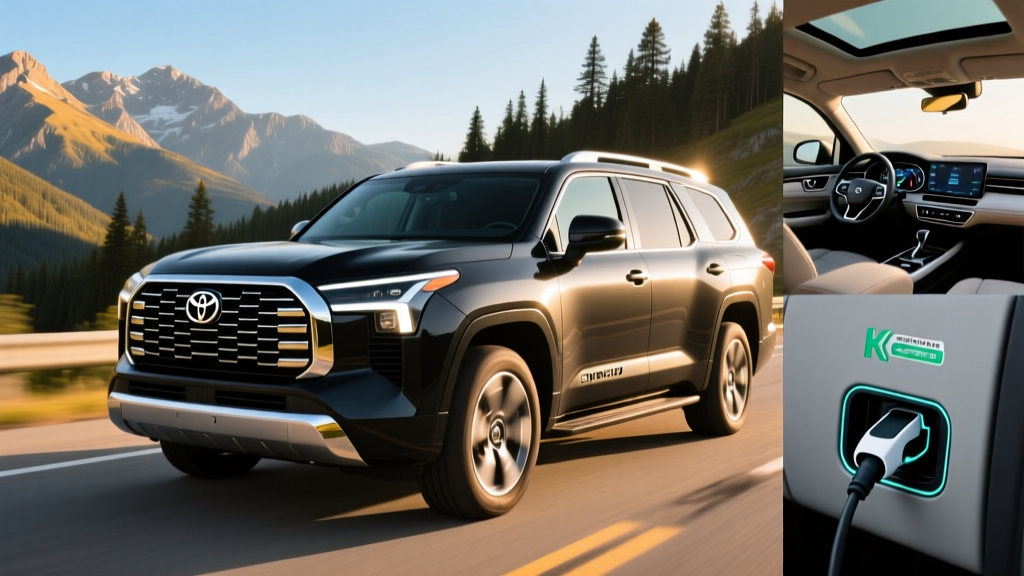
The 2025 Toyota Sequoia hybrid is one of the few full-size, three-row SUVs that pairs genuine towing capability with hybrid efficiency. Built on the TNGA-F body-on-frame platform and powered exclusively by Toyota's i-FORCE MAX hybrid powertrain, the Sequoia targets families who need serious cargo and towing capacity but want to cut fuel costs versus a traditional V8 competitor. With 437 horsepower and up to 9,000 pounds of towing capacity, it doesn't sacrifice capability for efficiency. Here's a data-driven look at what the 2025 Sequoia hybrid actually delivers.
HEV vs. PHEV: Where the Sequoia Fits
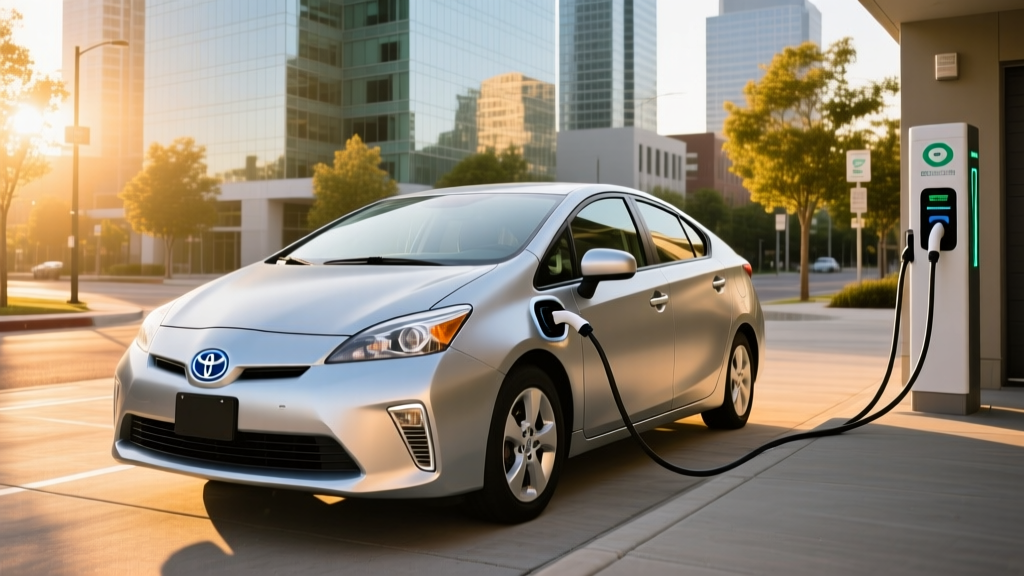
Before diving into specs, it's critical to understand what the Sequoia is — and isn't. The 2025 Sequoia is a conventional hybrid electric vehicle (HEV), not a plug-in hybrid (PHEV). That distinction matters:
- HEV (Sequoia): No plug. The 1.87 kWh nickel-metal hydride battery charges entirely through regenerative braking and the gasoline engine. You never need to find a charger. The electric motor assists the turbocharged V6 for improved acceleration and low-speed efficiency, but the Sequoia cannot drive on electric power alone for meaningful distances.
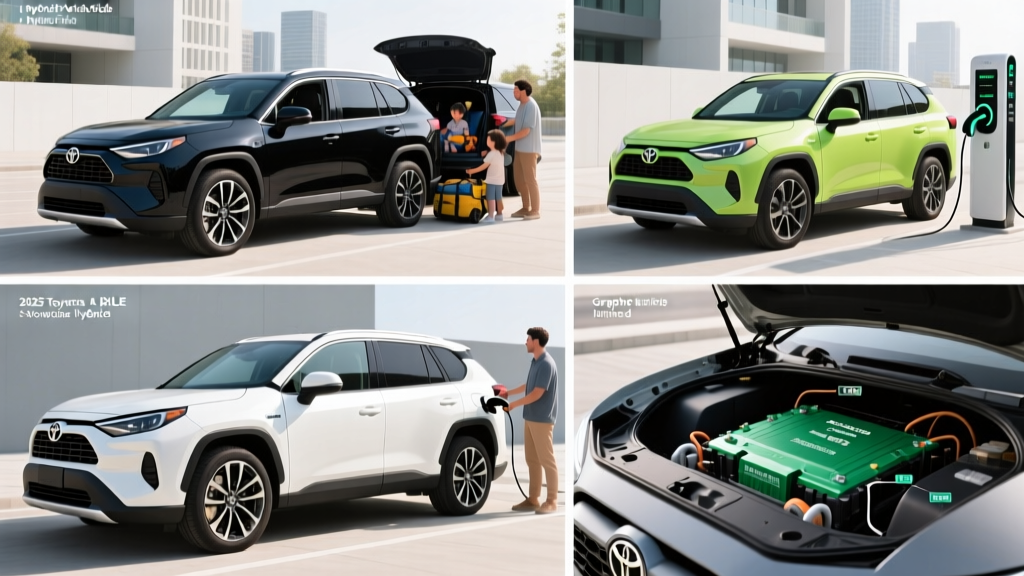
- PHEV (e.g., Toyota RAV4 Prime): Has a larger battery (typically 18+ kWh) that you plug in at home or at public chargers, offering 30-40+ miles of electric-only driving before the gas engine engages.
- BEV (e.g., Rivian R1S): Fully electric, no gasoline engine. Requires charging infrastructure but eliminates fuel costs entirely.
If you want electric-only commuting, the Sequoia isn't the vehicle. If you want a no-plug-required full-size SUV that sips less fuel than its V8 rivals, it's one of the strongest options available.
2025 Toyota Sequoia Hybrid: Full Spec Sheet
| Specification | 2025 Toyota Sequoia |
|---|---|
| Powertrain | 3.4L twin-turbo V6 + electric motor (i-FORCE MAX) |
| Combined Horsepower | 437 hp |
| Combined Torque | 583 lb-ft |
| Transmission | 10-speed automatic |
| Drivetrain | RWD standard; 4WD available |
| Hybrid Battery | 1.87 kWh, Nickel-Metal Hydride (NiMH) |
| EPA MPG (RWD) | 22 combined / 21 city / 24 highway |
| EPA MPG (4WD) | 22 combined / 19 city / 22 highway |
| Fuel Tank | 22.5 gallons |
| Total Range (RWD) | ~495 miles |
| 0-60 mph | ~5.6 seconds |
| Max Towing Capacity | 9,000 lbs (properly equipped) |
| Cargo Volume (behind 3rd row) | 18.9 cu ft |
| Seating | 7 or 8 passengers |
| Starting MSRP | $62,175 (SR5 RWD) |
| Top Trim MSRP | $81,960 (Capstone 4WD) |
Fuel Economy: EPA Ratings vs. Real-World MPG
| Configuration | City | Highway | Combined |
|---|---|---|---|
| Sequoia RWD | 21 MPG | 24 MPG | 22 MPG |
| Sequoia 4WD | 19 MPG | 22 MPG | 22 MPG |
The EPA figures come from fueleconomy.gov, and the Sequoia's hybrid system behaves much like other Toyota hybrids in real-world driving: city MPG often exceeds the EPA estimate. The electric motor handles low-speed acceleration and stop-and-go traffic — the exact conditions where pure gas engines are least efficient. Owners who do heavy urban driving frequently report 23-25 MPG in the RWD model.
Highway driving is a different story. The Sequoia is a 6,000-pound body-on-frame SUV with the aerodynamic profile of a brick. At sustained 75-80 mph speeds, expect 19-21 MPG even in the RWD model. Cold weather, roof cargo boxes, and towing will further reduce fuel economy. When towing near its 9,000-pound max capacity, figure on 10-13 MPG depending on terrain and trailer profile.
For context, the Sequoia's closest non-hybrid competitor, the Chevrolet Tahoe with the 5.3L V8, returns 17 combined MPG. The Ford Expedition with the 3.5L EcoBoost V6 achieves 18-19 combined. The Sequoia's 22 MPG combined represents a meaningful 3-5 MPG improvement — roughly 350-500 fewer gallons per year at 15,000 miles of driving.
The i-FORCE MAX Hybrid Powertrain Explained
Toyota's i-FORCE MAX system pairs a 3.4-liter twin-turbocharged V6 (producing 389 hp and 479 lb-ft on its own) with a 48-hp electric motor sandwiched between the engine and the 10-speed automatic transmission. Combined output reaches 437 hp and 583 lb-ft of torque — numbers that rival or exceed the V8 engines in competing full-size SUVs.
The electric motor fills in torque at low RPMs before the turbos fully spool, eliminating the lag typical of turbocharged engines in heavy vehicles. The result is immediate, confident acceleration from a stop — a trait you notice merging onto highways or pulling away from stoplights with a full load of passengers and cargo.
The 1.87 kWh NiMH battery pack is compact and positioned to avoid compromising cargo or passenger space. Unlike PHEV systems, this battery is never plugged in. It charges through regenerative braking (capturing energy normally lost during deceleration) and excess engine output during cruising. The system is self-managing — no driver input or behavior change is required.
Hybrid Battery Warranty and Longevity
Toyota Hybrid Battery Coverage
- Hybrid Battery Warranty: 10 years / 150,000 miles (whichever comes first)
- Hybrid System Components: 8 years / 100,000 miles
- Powertrain Warranty: 5 years / 60,000 miles
Toyota's hybrid battery warranty is among the most comprehensive in the industry. The 10-year/150,000-mile coverage applies in all 50 states and reflects Toyota's confidence in NiMH battery durability.
Toyota's hybrid battery track record is well-established. The Prius, now in its fifth generation, routinely sees original hybrid batteries lasting 200,000+ miles. The Sequoia's NiMH chemistry is proven and less prone to thermal degradation than some lithium-ion alternatives. Real-world failure rates for Toyota hybrid batteries in the first 10 years are low.
If replacement is ever needed out of warranty, a Sequoia hybrid battery replacement currently runs approximately $3,000-$5,000 including labor at a Toyota dealer. Independent hybrid specialists often offer refurbished units for $2,000-$3,500. Given the 10-year warranty and Toyota's track record, most original owners will never face this expense.
Pricing, Trims, and Tax Credit Eligibility
The 2025 Toyota Sequoia starts at $62,175 for the SR5 RWD and climbs through SR5 4WD ($65,175), Limited ($72,555), Platinum ($76,965), TRD Pro ($79,965), and Capstone ($81,960). All trims use the identical i-FORCE MAX hybrid powertrain.
Federal tax credit status: The Sequoia does not qualify for the federal §30D clean vehicle credit. That credit is restricted to plug-in electric vehicles (BEVs and PHEVs) with battery capacities of at least 7 kWh. As a conventional hybrid with a 1.87 kWh battery and no plug, the Sequoia is ineligible. The IRS §30D guidelines are explicit on this requirement.
Some states and municipalities offer incentives for hybrid purchases, though these are far less common than EV incentives. Check your state's energy office or department of environmental quality for current programs — they vary significantly by jurisdiction and change frequently.
Sequoia Hybrid vs. Full EV vs. Gas SUV: Which Is Right for You?
Choose the Sequoia Hybrid If:
- You need 3-row seating and 9,000-lb towing with no plug-in requirement
- You want better fuel economy than a Tahoe or Expedition without changing refueling habits
- You take frequent road trips where charging infrastructure is sparse
- You value Toyota's long-term reliability reputation and 10-year hybrid warranty
- You don't have access to home or workplace charging
Consider a Full EV (Rivian R1S, Tesla Model X) If:
- You have reliable Level 2 home charging
- You want $7,500 federal tax credit eligibility (income and sourcing rules apply)
- Your daily driving is under 300 miles and you rarely tow
- You want to eliminate gasoline costs entirely
- You prioritize instant electric torque and a frunk
The Sequoia occupies a specific niche: full-size, body-on-frame capability without the fuel penalty of a traditional V8. If you regularly tow a boat, trailer, or camper and lack charging access, the Sequoia hybrid is arguably the best-executed option in its class. If your driving is mostly suburban and you can charge at home, a BEV will save more money long-term — but you'll sacrifice some towing capacity and face charging logistics on road trips.
Ownership Costs: 5-Year Outlook
At 15,000 miles per year and $3.50/gallon regular unleaded, a Sequoia 4WD owner will spend roughly $2,860 annually on fuel. That compares to approximately $3,700 for a Tahoe 5.3L V8 and $3,550 for an Expedition EcoBoost at the same mileage. Over five years, the Sequoia saves roughly $4,000-$5,000 in fuel versus a V8 competitor.
Insurance premiums for the Sequoia tend to run slightly higher than the Tahoe or Expedition due to the higher MSRP and hybrid-specific components, though the gap is modest. Toyota's resale values remain among the strongest in the industry, which offsets the higher entry price at trade-in time. According to IIHS, the Sequoia earned strong safety ratings in crash testing, which helps keep insurance costs in check.
Frequently Asked Questions
How many MPG does the 2025 Toyota Sequoia hybrid get?
The Sequoia RWD is EPA-rated at 21 city / 24 highway / 22 combined MPG. The 4WD model is rated at 19 city / 22 highway / 22 combined. Real-world city driving often yields 23-25 MPG in the RWD model thanks to the hybrid system's low-speed efficiency. Highway driving at sustained speeds typically returns 19-21 MPG.
Does the Toyota Sequoia need to be plugged in?
No. The Sequoia is a conventional hybrid (HEV), not a plug-in hybrid. The battery charges through regenerative braking and the gasoline engine. You fuel it exactly like any other vehicle — at a gas station. No charger, no plug, no behavior change required.
Does the 2025 Sequoia qualify for any tax credit?
The Sequoia does not qualify for the federal §30D clean vehicle credit, which requires plug-in capability and a battery of at least 7 kWh. Some state or local incentives for hybrids may exist, but these vary by jurisdiction. Consult your state energy office or a tax professional for specifics.
Is the Sequoia hybrid reliable, and what does battery replacement cost?
Toyota's hybrid systems have a proven track record spanning two decades. The Sequoia's hybrid battery is covered by a 10-year/150,000-mile warranty. If replacement is needed out of warranty, expect $3,000-$5,000 at a dealer or $2,000-$3,500 from an independent hybrid specialist. Most owners will never need a replacement.
How does the Sequoia hybrid compare to the Ford Expedition and Chevy Tahoe?
The Sequoia leads the class in combined fuel economy (22 MPG vs. 17-19 MPG for competitors), horsepower (437 hp), and torque (583 lb-ft). The Tahoe offers more third-row cargo space and a lower starting price. The Expedition sits between the two in price and efficiency. If fuel economy and powertrain output are top priorities, the Sequoia wins.
Can the Sequoia tow as much as non-hybrid full-size SUVs?
Yes. When properly equipped with the tow package, the Sequoia tows up to 9,000 pounds — competitive with the Tahoe (8,400 lbs with max tow) and Expedition (9,300 lbs). The hybrid system's electric torque actually improves low-speed trailer maneuvering.