Quick Verdict: The Sensible Compact SUV Benchmark
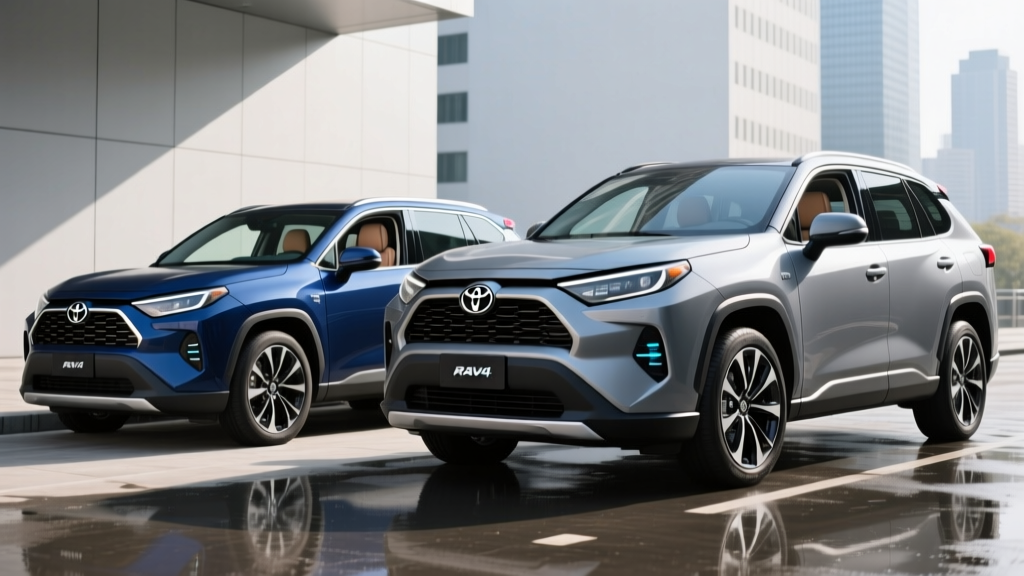
The 2025 Toyota RAV4 LE Hybrid remains one of the most pragmatic compact SUVs on the market. It requires no plug, no behavior change, and no charging infrastructure — just fill up with regular unleaded and drive. With an EPA-estimated 41 MPG city, 38 highway, and 40 combined, the LE Hybrid trim is the volume seller in Toyota's hybrid lineup, starting at an MSRP of $33,425 (including destination). For buyers who want hybrid efficiency without the complexity or cost of a plug-in hybrid or full EV, this is the default recommendation.
Fuel Economy: EPA Ratings and Real-World MPG
| Metric | EPA Estimate | Real-World Expectation |
|---|---|---|
| City | 41 MPG | 39–44 MPG |
| Highway | 38 MPG | 35–38 MPG |
| Combined | 40 MPG | 37–41 MPG |
| Fuel Tank | 14.5 gallons | ~540–580 mi total range |
According to fueleconomy.gov, the 2025 RAV4 Hybrid AWD achieves its 40 MPG combined rating across all trims, including the LE. In practice, Toyota's hybrid system excels in stop-and-go city traffic where the electric motor handles low-speed propulsion and regenerative braking recaptures energy. Many owners report exceeding the EPA city estimate in urban driving — a rarity in the auto world where real-world numbers typically fall short of stickers.
Highway driving tells a different story. At sustained 75–80 mph speeds, the 2.5-liter four-cylinder engine does most of the work, and aerodynamic drag reduces efficiency. Expect 35–38 MPG on extended highway trips. Cold weather (below 32°F) can reduce fuel economy by 3–5 MPG as the engine runs more frequently to generate cabin heat and maintain battery temperature.
Powertrain: 219 Horsepower with Seamless Hybrid Operation
| Component | Specification |
|---|---|
| Engine | 2.5L Dynamic Force 4-cylinder (176 hp, 163 lb-ft) |
| Front Electric Motor | Permanent magnet synchronous (118 hp) |
| Rear Electric Motor (AWD) | 40 kW independent rear motor |
| Net Combined Output | 219 hp |
| Transmission | eCVT (electronically controlled continuously variable) |
| Drivetrain | Electronic On-Demand AWD (standard on all Hybrid trims) |
| 0–60 mph | ~7.4 seconds |
| Hybrid Battery | 1.6 kWh lithium-ion (sealed, not plug-in) |
| Towing Capacity | 1,750 lbs |
Toyota's fourth-generation hybrid system uses a planetary gearset eCVT rather than a traditional belt-driven CVT or geared automatic. The result is seamless power delivery with no shift shock. The 219 combined horsepower is adequate for merging and passing, though the RAV4 Hybrid won't win drag races. The electronic on-demand AWD system engages the rear motor only when slip is detected or during hard acceleration, minimizing efficiency losses compared to a mechanical AWD system.
The 1.6 kWh lithium-ion hybrid battery is small by EV standards — it stores enough energy for brief electric-only motoring at low speeds (typically under 25 mph for short distances) but cannot sustain electric-only driving. This is by design: the battery buffers energy from regenerative braking and assists the engine during acceleration, then recharges continuously. There is no plug and no charging port.
Pricing and Tax Credit Eligibility
The 2025 Toyota RAV4 LE Hybrid starts at $33,425 MSRP (including $1,395 destination charge). Higher trims range from the XLE ($34,925) through the XSE ($37,445), Woodland Edition ($37,245), SE ($38,865), and Limited ($41,075).
Some states offer their own incentives for conventional hybrids, though these are increasingly rare as programs shift toward plug-in vehicles. Check your state's energy or environmental agency for current programs.
Battery Longevity, Warranty, and Replacement Costs
Toyota's hybrid battery track record is among the best in the industry. Data from fleet operators and long-term owners shows that the nickel-metal hydride and lithium-ion packs used in Toyota hybrids typically retain 80%+ capacity well past 150,000 miles. The RAV4 Hybrid's 1.6 kWh pack undergoes shallow charge-discharge cycles (rarely dropping below 40% or above 80% state of charge), which dramatically extends cell life compared to the deep cycling seen in full EVs.
If replacement is needed out of warranty — uncommon before 200,000+ miles — a new OEM hybrid battery for the RAV4 Hybrid costs approximately $2,500–$3,500 installed at a Toyota dealer. Refurbished or aftermarket packs are available for $1,500–$2,200. This is a fraction of the $10,000–$20,000+ replacement costs for full EV traction batteries.
RAV4 Hybrid vs. RAV4 Prime vs. Full EV: Which Fits You?
| Factor | RAV4 Hybrid (HEV) | RAV4 Prime (PHEV) | Full EV (e.g., Ioniq 5, Model Y) |
|---|---|---|---|
| Plug-in Required? | No | Yes (for max benefit) | Yes |
| Electric-Only Range | None (brief low-speed assist) | 42 miles EPA | 250–330 miles EPA |
| Fuel Cost (annual, 15k mi) | ~$1,310 (gas only) | ~$600–$900 (gas + electric) | ~$500–$700 (electric only) |
| Federal Tax Credit | None | Up to $7,500 (varies) | Up to $7,500 (varies) |
| Starting MSRP | $33,425 | $44,900 | $42,000–$52,000+ |
| Home Charging Needed? | No | Recommended (Level 2) | Essential (Level 2) |
| Best For | No garage/outlet access; road-trip heavy | Short commute + home charging | Home charging + daily commute under 250 mi |
Choose the RAV4 Hybrid (HEV) if: You lack access to home or workplace charging, frequently take long road trips where DC fast-charging infrastructure is sparse, or want the lowest upfront cost with no behavioral change. The HEV is the "set it and forget it" option.
Choose the RAV4 Prime (PHEV) if: Your daily commute is under 42 miles round-trip, you have a garage where a Level 2 (240V) charger can be installed, and you want to drive on electricity most days while retaining a gas engine for longer trips. The higher MSRP is partially offset by the potential $7,500 federal credit and years of fuel savings.
Choose a full EV if: You have reliable home Level 2 charging, your daily driving is well within the vehicle's EPA range, and you want the lowest per-mile energy cost and zero tailpipe emissions. Full EVs eliminate oil changes and have fewer moving parts, but require charging planning for road trips exceeding 250+ miles.
Ownership Costs: 5-Year Projection
| Category | Estimated Cost |
|---|---|
| Fuel (15,000 mi/yr at $3.50/gal, 40 MPG) | $6,563 |
| Maintenance (oil changes, filters, tires) | $2,800–$3,500 |
| Insurance (national average, varies widely) | $7,500–$9,500 |
| Depreciation (est. 45% over 5 years) | $15,040 |
| Total Estimated 5-Year Cost | $31,900–$34,600 |
The RAV4 Hybrid's strong resale value — Toyota hybrids historically retain value better than their gas-only counterparts — keeps depreciation competitive. Maintenance costs are modest: the hybrid system adds no additional service intervals beyond the standard gas engine. Brake pad life is often extended to 80,000+ miles thanks to regenerative braking reducing friction brake wear.
Pros and Cons
✓ Pros
- 40 MPG combined EPA — excellent for an AWD compact SUV
- No plug-in charging required; zero behavior change from a gas car
- Standard AWD across all hybrid trims (gas RAV4 LE is FWD-only)
- 10-year/150,000-mile hybrid battery warranty
- Proven reliability track record; low long-term maintenance
- Strong resale value; low depreciation for the segment
- Competitive starting MSRP at $33,425
✗ Cons
- No federal tax credit eligibility (HEV, not PHEV/BEV)
- eCVT drone under hard acceleration (common hybrid complaint)
- 1,750-lb towing capacity limits utility for trailers/boats
- Highway MPG drops to mid-30s at sustained 75+ mph
- LE trim has basic cloth seats and smaller 8-inch infotainment screen
- No DC fast charging capability (not applicable — no plug)
- Dealer markups still common in high-demand markets
Frequently Asked Questions
How many MPG does the 2025 Toyota RAV4 LE Hybrid get?
The EPA rates the 2025 RAV4 Hybrid AWD (all trims, including LE) at 41 MPG city, 38 MPG highway, and 40 MPG combined. In real-world driving, expect 39–44 MPG in city traffic (where the hybrid system shines) and 35–38 MPG on extended highway trips. Cold weather and heavy cargo reduce these figures by 5–10%.
Does the RAV4 Hybrid need to be plugged in?
No. The RAV4 Hybrid is a conventional HEV with no charging port. The 1.6 kWh hybrid battery recharges itself through regenerative braking and the gasoline engine. If you want plug-in capability with electric-only range, look at the RAV4 Prime PHEV instead.
Is the RAV4 Hybrid reliable, and what does battery replacement cost?
Toyota's hybrid system is among the most proven in the industry, with over 25 years of continuous refinement since the original Prius. The hybrid battery is warranted for 10 years / 150,000 miles. Out-of-warranty replacement, rarely needed before 200,000+ miles, costs approximately $2,500–$3,500 at a dealer or $1,500–$2,200 for a refurbished pack. The IIHS and NHTSA rate the RAV4 highly for safety as well.
Does the 2025 RAV4 Hybrid qualify for any tax credit?
The conventional RAV4 Hybrid (HEV) does not qualify for the federal IRS §30D Clean Vehicle Credit, which is reserved for plug-in vehicles (BEVs and PHEVs). Some states may offer minor incentives for hybrids — check your state's energy office. If a federal credit is important, the RAV4 Prime PHEV or a full EV like the Hyundai Ioniq 5 or Tesla Model Y may qualify, subject to income limits, MSRP caps, and battery sourcing requirements detailed at irs.gov.
Hybrid vs. PHEV vs. EV — which RAV4 should I buy?
If you have no home charging access and want the simplest ownership experience, the standard RAV4 Hybrid (HEV) is the right call. If you have a garage with a 240V outlet and a commute under 42 miles, the RAV4 Prime PHEV lets you drive on electricity daily while keeping a gas engine for road trips — and it may qualify for up to $7,500 in federal credits. If you have reliable home charging and rarely exceed 250 miles in a day, a full EV offers the lowest per-mile cost and zero tailpipe emissions, but requires charging planning for longer trips.