Quick Verdict: The Benchmark Compact Hybrid SUV
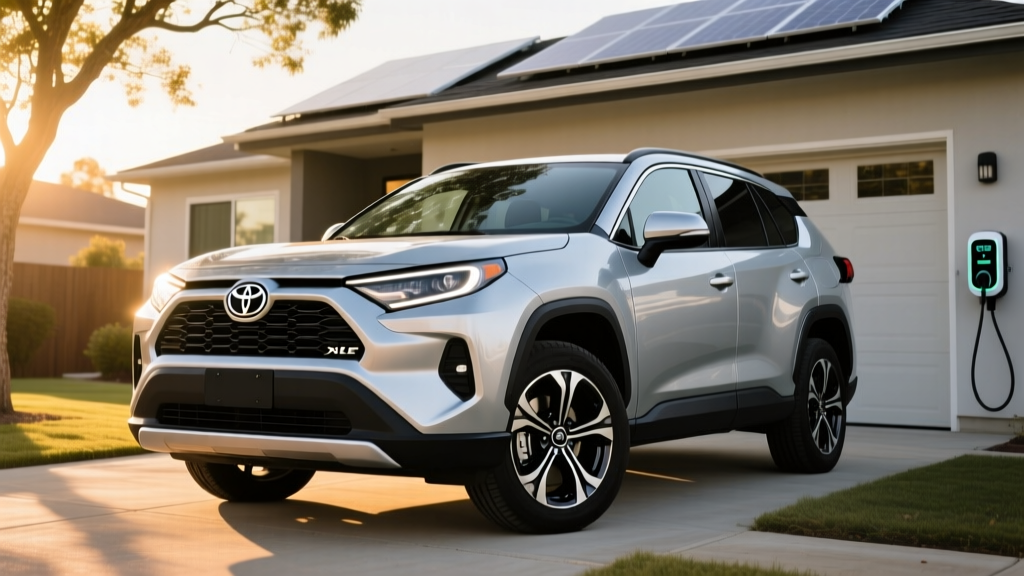
The 2025 Toyota RAV4 Hybrid remains the default recommendation in the compact hybrid SUV segment for buyers who want meaningful fuel savings without plugging in. With an EPA-estimated 41 MPG city, 38 MPG highway, and 39 MPG combined in its most efficient LE trim, the RAV4 Hybrid pairs a 2.5-liter four-cylinder engine with a dual-motor all-wheel-drive system for 219 combined horsepower. Starting at roughly $33,500 MSRP, it undercuts most plug-in competitors while delivering real-world fuel economy that frequently exceeds its EPA sticker in city driving.
This guide covers the conventional RAV4 Hybrid (HEV) in depth, with a direct comparison to the plug-in RAV4 Prime (PHEV) so you can determine which powertrain fits your driving pattern, charging access, and budget.
HEV vs PHEV: Which RAV4 Is Right for You?
Toyota offers two electrified RAV4 variants, and confusing them is the most common mistake shoppers make. Here is the fundamental split:
| Attribute | RAV4 Hybrid (HEV) | RAV4 Prime (PHEV) |
|---|---|---|
| Powertrain Type | Conventional hybrid — no plug | Plug-in hybrid — charges from outlet |
| Combined Horsepower | 219 HP | 302 HP |
| EPA Combined MPG / MPGe | 39 MPG (LE) | 94 MPGe (electric+gas) / 38 MPG (gas only) |
| Electric-Only Range | N/A (EV mode limited to ~1 mi at low speed) | 42 miles (EPA) |
| Battery Capacity | ~1.6 kWh (nickel-metal hydride) | 18.1 kWh (lithium-ion) |
| Charging Required | No — regenerates via braking and engine | Yes — Level 1 (120V) ~12 hrs; Level 2 (240V) ~2.5 hrs |
| DC Fast Charging | No | No |
| Starting MSRP | ~$33,500 | ~$44,500 |
| Federal Tax Credit (§30D) | Not eligible | Not eligible (discontinued credit eligibility) |
The takeaway: The RAV4 Hybrid (HEV) is a self-charging system. You never plug it in. The gasoline engine and regenerative braking keep a small battery charged, which assists acceleration and enables low-speed electric-only creep. The RAV4 Prime (PHEV) has a much larger battery you charge from a wall outlet, giving you 42 miles of pure electric driving before the gasoline engine takes over.
Fuel Economy: EPA Ratings vs Real-World MPG
According to fueleconomy.gov, the 2025 RAV4 Hybrid LE achieves 41 MPG city, 38 MPG highway, and 39 MPG combined. Higher trims (XLE, XLE Premium, Woodland Edition, Limited) with larger 18- or 19-inch wheels and additional weight drop slightly to 38 city / 35 highway / 37 combined.
| Trim | City MPG | Highway MPG | Combined MPG |
|---|---|---|---|
| LE | 41 | 38 | 39 |
| XLE | 38 | 35 | 37 |
| XLE Premium | 38 | 35 | 37 |
| Woodland Edition | 38 | 35 | 37 |
| Limited | 38 | 35 | 37 |
Real-World MPG: What Owners Actually See
Toyota's hybrid synergy drive system excels in stop-and-go city traffic, where the electric motor handles low-speed propulsion and the engine shuts off at stops. In real-world city driving, many owners report 42–44 MPG on the LE trim — slightly above the EPA estimate. Highway driving at 70–80 MPH, however, typically yields 34–36 MPG because the gasoline engine carries the full load and aerodynamic drag dominates.
Real-World Expectation: EPA combined is 39 MPG (LE). Expect 40–43 MPG in mixed city/suburban driving, 34–36 MPG on sustained highway trips, and a 10–15% reduction in extreme cold (below 25°F) as the engine runs more frequently for cabin heat.
Powertrain and Performance Specs
The 2025 RAV4 Hybrid uses Toyota's fourth-generation hybrid system with an electronic on-demand all-wheel-drive setup. There is no mechanical driveshaft to the rear wheels — instead, a dedicated rear electric motor provides torque to the rear axle when traction is needed.
| Specification | 2025 RAV4 Hybrid |
|---|---|
| Engine | 2.5L DOHC 4-cylinder (176 HP, 163 lb-ft) |
| Front Electric Motor | 88 kW (118 HP) |
| Rear Electric Motor | 40 kW (54 HP) |
| Net Combined Horsepower | 219 HP |
| Transmission | eCVT (electronically controlled continuously variable) |
| Drivetrain | AWD (electronic on-demand) |
| 0–60 MPH | ~7.4 seconds |
| Towing Capacity | 1,750 lbs |
| Fuel Tank | 14.5 gallons |
| Total Driving Range | ~565 miles (LE, EPA combined) |
| Cargo Volume | 37.5 cu ft (rear seats up) / 69.8 cu ft (rear seats folded) |
The 7.4-second 0–60 time is adequate for merging and passing. The eCVT eliminates shift shock but produces the characteristic drone under hard acceleration. In normal driving, the transition between electric and gasoline power is nearly imperceptible.
Pricing, Trims, and Tax Credit Eligibility
For the 2025 model year, the RAV4 Hybrid is available in five trims. All trims include electronic AWD as standard equipment — there is no front-wheel-drive option.
| Trim | MSRP (approx.) | Key Features |
|---|---|---|
| LE | $33,500 | Toyota Safety Sense 2.5, 8-inch touchscreen, 17-inch wheels |
| XLE | $35,000 | Blind-spot monitoring, dual-zone climate, 18-inch wheels |
| XLE Premium | $37,300 | SofTex seats, power liftgate, moonroof |
| Woodland Edition | $37,800 | TRD-tuned suspension, all-terrain tires, roof rails |
| Limited | $40,700 | Leather, 12.3-inch digital cluster, JBL audio, 19-inch wheels |
Federal Tax Credit Status
The conventional RAV4 Hybrid (HEV) does not qualify for the federal §30D Clean Vehicle Credit. That credit is reserved for plug-in electric vehicles with a minimum battery capacity of 7 kWh. Since the RAV4 Hybrid's battery is approximately 1.6 kWh and the vehicle cannot be plugged in, it is ineligible.
The RAV4 Prime (PHEV) previously qualified for up to $7,500 under §30D, but as of 2025, Toyota's plug-in hybrid credit availability has been affected by the critical-mineral and battery-component sourcing requirements under the Inflation Reduction Act, as well as the manufacturer cap phase-out rules. Always verify current eligibility on IRS.gov before purchasing. Point-of-sale transfer of the credit is available for eligible vehicles under current rules.
Some states offer separate incentives for hybrid vehicles — check your state's energy office or department of environmental quality for current programs.
Battery Longevity, Warranty, and Replacement Costs
Hybrid battery reliability is the single most common concern for first-time hybrid buyers. Toyota has over two decades of real-world data on its hybrid battery packs, beginning with the original Prius in 2000.
Toyota Hybrid Battery Warranty: 10 years or 150,000 miles (whichever comes first) for 2020 and newer models. Prior model years (2019 and earlier) carry an 8-year / 100,000-mile warranty. The warranty covers defects and capacity loss below a specified threshold.
Real-World Battery Lifespan
The RAV4 Hybrid uses a nickel-metal hydride (NiMH) battery pack, which is less energy-dense than lithium-ion but extremely durable and tolerant of thousands of shallow charge-discharge cycles. Based on long-term fleet data and owner reports, Toyota hybrid battery packs routinely last 150,000–200,000+ miles before significant degradation. Complete failure before 100,000 miles is uncommon.
Replacement Cost
If a battery replacement is needed outside of warranty, expect to pay between $2,000 and $4,000 for a new OEM hybrid battery pack, including labor. Refurbished or reconditioned packs are available for $1,000–$2,000. Independent hybrid specialists in most metro areas can perform the replacement, and the job typically takes 2–3 hours. Toyota dealerships charge at the higher end of that range.
For context, a conventional gasoline vehicle's transmission replacement or major engine repair often exceeds $3,500, so the hybrid battery cost is comparable to a major ICE repair that the hybrid system eliminates.
RAV4 Hybrid vs RAV4 Prime vs Full EV: Decision Framework
Choose the RAV4 Hybrid (HEV) if:
- You cannot charge at home (apartment, street parking, no garage)
- You want fuel savings without changing any habits — just fill up and go
- Your budget is under $40,000 and you want AWD
- You drive 12,000–15,000 miles/year in mixed city/highway conditions
- You want Toyota's long-term reliability record with minimal new-technology risk
Choose the RAV4 Prime (PHEV) if:
- You can charge at home (Level 1 or Level 2) and your daily commute is under 42 miles
- You want to drive mostly on electricity but need gas-engine range for road trips
- You want 302 HP and the quickest RAV4 in the lineup (0–60 in ~5.7 seconds)
- You can absorb the ~$11,000 price premium over the HEV LE
Choose a full EV (BEV) if:
- You have reliable home Level 2 charging and your daily driving is under 250 miles
- You want zero tailpipe emissions and the lowest per-mile energy cost
- You are eligible for the $7,500 federal tax credit and can apply it to a qualifying BEV
- You rarely take road trips over 300 miles, or you are willing to plan DC fast-charging stops
Total Fuel Cost Comparison
At 15,000 miles per year and $3.40/gallon regular unleaded:
- RAV4 Hybrid (39 MPG combined): ~$1,308/year in fuel
- RAV4 Gas AWD (28 MPG combined): ~$1,821/year in fuel
- Annual savings vs gas model: ~$513/year
Over a 10-year ownership period, the hybrid saves roughly $5,100 in fuel compared to the gasoline RAV4 AWD — enough to offset the hybrid's typical $1,500–$2,000 price premium over the equivalent gas trim.
Pros and Cons at a Glance
Pros
- 39 MPG combined (LE) — among the best in the compact SUV class
- Standard AWD on all trims with no fuel-economy penalty
- Proven hybrid system with 25+ years of Toyota reliability data
- No charging infrastructure required — works with existing gas stations
- 10-year / 150,000-mile hybrid battery warranty
- Strong resale value — RAV4 Hybrid retains value better than most competitors
- Toyota Safety Sense 2.5 standard (AEB, lane-keep, adaptive cruise)
Cons
- eCVT drone under hard acceleration — not engaging for enthusiastic drivers
- 1,750-lb towing capacity is low for the class
- LE base trim interior is basic — cloth seats, smaller screen
- Higher trims (Limited) push $41K+ where PHEV territory begins
- No federal tax credit eligibility
- Rear-seat legroom is average — not class-leading
- Infotainment system lacks wireless CarPlay on lower trims
Frequently Asked Questions
How many MPG does the 2025 RAV4 Hybrid actually get?
The EPA rates the RAV4 Hybrid LE at 41 city / 38 highway / 39 combined. In real-world city and suburban driving, owners commonly see 40–44 MPG. Sustained highway driving at 75+ MPH typically drops to 34–36 MPG. Higher trims with larger wheels are rated 3–4 MPG lower across the board.
Do I need to plug in the RAV4 Hybrid?
No. The RAV4 Hybrid is a conventional hybrid (HEV). Its small battery charges through regenerative braking and the gasoline engine. You never plug it in. Only the RAV4 Prime (PHEV) requires plug-in charging to access its 42-mile electric-only range.
How long will the hybrid battery last, and what does replacement cost?
Toyota covers the hybrid battery for 10 years or 150,000 miles. Real-world data shows these NiMH packs routinely lasting 150,000–200,000+ miles. If replacement is needed out of warranty, expect $2,000–$4,000 for a new OEM pack, or $1,000–$2,000 for a refurbished unit.
Does the RAV4 Hybrid qualify for a federal tax credit?
No. The §30D Clean Vehicle Credit requires a plug-in vehicle with at least 7 kWh of battery capacity. The RAV4 Hybrid has a ~1.6 kWh battery and cannot be plugged in, making it ineligible. Check IRS.gov for current rules on the RAV4 Prime PHEV.
Is the RAV4 Hybrid better than the gas-only RAV4?
For most buyers, yes. The hybrid delivers roughly 39 MPG combined versus 28 MPG for the gas AWD model — a 39% improvement. It also provides smoother low-speed acceleration from the electric motor and standard AWD at a modest price premium of $1,500–$2,000. The fuel savings typically pay back the premium within 3–4 years.
How does the RAV4 Hybrid compare to a full EV like the Tesla Model Y or Hyundai Ioniq 5?
A full EV offers lower per-mile energy costs (roughly $0.04–$0.06/mile on home electricity vs $0.09/mile for the hybrid on gas), zero tailpipe emissions, and stronger acceleration. However, EVs require home charging access, have higher upfront costs, and need route planning on long road trips. The RAV4 Hybrid is the pragmatic choice if you lack charging access or frequently drive 300+ miles without stopping.
Is the RAV4 Hybrid reliable?
Toyota's hybrid powertrain has one of the strongest reliability records in the automotive industry. The RAV4 Hybrid consistently earns top marks from Consumer Reports and J.D. Power. The eCVT transmission has no traditional gears or belts to wear, and the hybrid battery is designed to last the life of the vehicle under normal use. Toyota Safety Sense is standard across all trims. Check NHTSA.gov for official safety ratings as they become available.
Bottom Line
The 2025 Toyota RAV4 Hybrid is the default compact hybrid SUV for a reason: it delivers nearly 40 MPG combined with standard AWD, proven reliability, and a starting price that makes financial sense without requiring any lifestyle changes. If you can charge at home and want electric-only commuting, the RAV4 Prime PHEV is worth the premium. If you want a pure EV, look at the Tesla Model Y or Hyundai Ioniq 5. But for the buyer who simply wants to spend less on fuel without plugging in, the RAV4 Hybrid remains the segment benchmark.