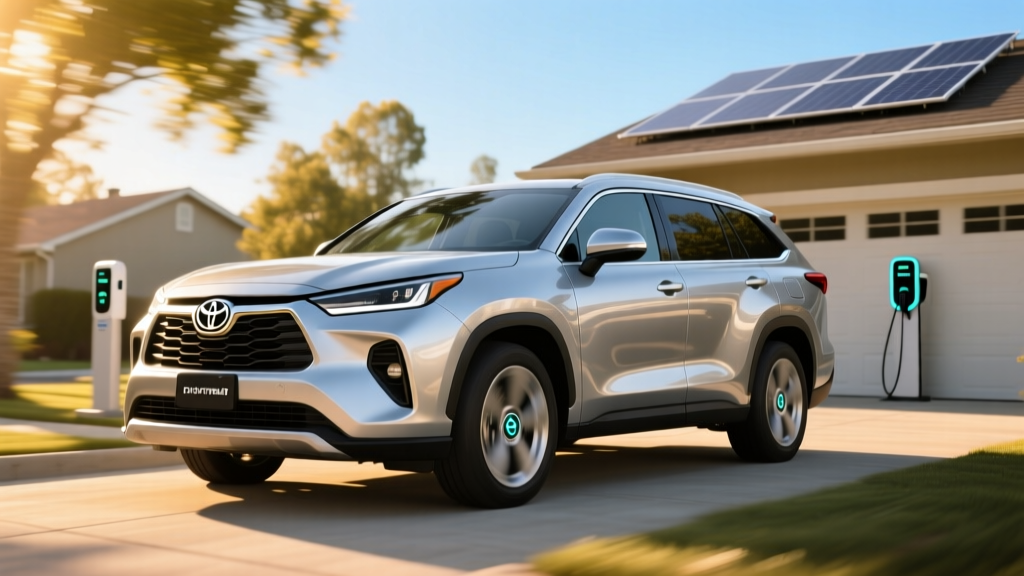
The three-row hybrid SUV segment is crowded, but the 2025 Toyota Highlander Hybrid remains a benchmark for families who want maximum fuel efficiency without plugging in. Unlike plug-in hybrids (PHEVs) that require a home charger to unlock their best economy, this is a conventional hybrid electric vehicle (HEV) — it charges its own small battery through regenerative braking and the gasoline engine. You just fill it with fuel and drive.
For 2025, the Highlander Hybrid carries over the proven 2.5-liter four-cylinder hybrid powertrain rated at 35 MPG combined by the EPA. But sticker numbers only tell part of the story. This guide covers real-world fuel economy, the hybrid battery's expected lifespan, ownership economics, and whether this HEV is the right fit versus a PHEV or full battery-electric vehicle (BEV).
2025 Toyota Highlander Hybrid: Key Specifications
| Specification | Value |
|---|---|
| Powertrain Type | Conventional Hybrid (HEV) — no plug required |
| Engine | 2.5L inline-4 Atkinson-cycle + 2 electric motors (AWD) or 1 motor (FWD) |
| Combined Horsepower | 243 hp net system |
| EPA MPG (FWD) | 36 city / 35 highway / 36 combined |
| EPA MPG (AWD / Electronic On-Demand) | 35 city / 34 highway / 35 combined |
| Hybrid Battery | 1.87 kWh (nickel-metal hydride, NiMH) |
| Plug-In Charging | None — self-charging via regen and engine |
| Electric-Only Range | N/A (brief EV mode at low speeds, under ~1 mile) |
| Total Driving Range | ~600+ miles (17.9-gallon tank × 35 MPG) |
| 0–60 mph | ~7.8 seconds (estimated) |
| Seating | 7 passengers (standard second-row captain's chairs) |
| Cargo Volume | 16.1 cu ft (behind 3rd row) / 84.3 cu ft (max) |
| Towing Capacity | 3,500 lbs (all trims) |
| Starting MSRP (LE FWD) | $40,970 |
| Top Trim MSRP (Platinum AWD) | $53,075 |
Fuel Economy: EPA Ratings vs. Real-World MPG
The EPA rates the front-wheel-drive Highlander Hybrid at 36 MPG combined, while the AWD version drops just 1 MPG to 35 combined. According to fueleconomy.gov, that puts it among the most efficient three-row SUVs on the market — roughly 40% better fuel economy than the now-discontinued gas-only V6 Highlander (24 MPG combined).
Hybrids like the Highlander tend to exceed their EPA city ratings in stop-and-go traffic, where regenerative braking recaptures energy most effectively. Owner-reported data on Fuelly clusters around 33–37 MPG combined for mixed driving. On sustained highway trips at 75+ mph, expect the AWD model to dip to 30–32 MPG — the aerodynamic penalty of a large SUV matters more at speed, and the hybrid system has fewer regen opportunities. In winter conditions with cold starts and cabin heating demands, some owners report 28–30 MPG until the powertrain reaches operating temperature.
For context, competing three-row hybrid SUVs deliver the following EPA combined figures:
| Vehicle | EPA Combined MPG | Powertrain Type |
|---|---|---|
| 2025 Toyota Highlander Hybrid (FWD) | 36 MPG | HEV |
| 2025 Kia Sorento Hybrid (FWD) | 37 MPG | HEV |
| 2025 Hyundai Santa Fe Hybrid (AWD) | 34 MPG | HEV |
| 2025 Mazda CX-90 PHEV | 56 MPGe / 25 MPG (gas only) | PHEV |
HEV vs. PHEV: Why the Highlander Hybrid Doesn't Plug In
This distinction is critical for shoppers cross-referencing hybrid SUVs. The 2025 Highlander Hybrid is a conventional hybrid (HEV). It uses a small 1.87 kWh nickel-metal hydride (NiMH) battery that charges exclusively through regenerative braking and the gasoline engine. There is no charge port, no plug, and no electric-only driving range beyond very short, low-speed EV-mode bursts (typically under one mile at parking-lot speeds).
- HEV (this vehicle): No plug. Small battery (~1–2 kWh). Gasoline is the sole energy source. Electric motor assists for efficiency. You never need to think about charging.
- PHEV (e.g., Toyota RAV4 Prime, Mazda CX-90 PHEV): Has a plug and a larger battery (~13–18 kWh). Offers 25–40 miles of electric-only driving before the gas engine engages. Requires home or public charging to capture the full benefit.
- BEV (full electric): No gasoline engine. Large battery (70–100+ kWh). Requires regular charging. Zero tailpipe emissions.
Toyota does not currently offer a Highlander PHEV in the U.S. market. If you want Toyota plug-in hybrid capability in a three-row package, you would need to look at the Toyota Grand Highlander Hybrid (HEV only, 34 MPG combined) or wait for a potential future Highlander PHEV variant. The closest Toyota PHEV is the RAV4 Prime with 42 miles of electric range — but it seats only five.
Powertrain and Driving Performance
The Highlander Hybrid pairs a 2.5-liter Atkinson-cycle four-cylinder engine with two electric motor-generators on the front axle (and a third on the rear axle for AWD models). Net system output is 243 horsepower, routed through an electronically controlled continuously variable transmission (eCVT).
The eCVT is a power-split device, not a belt-driven CVT like those in some competitors. It uses a planetary gearset to blend engine and motor torque seamlessly — there are no rubber bands or slippage. Acceleration to 60 mph takes approximately 7.8 seconds, which is adequate for highway merging but not sporty. The trade-off for 35 MPG is a powertrain optimized for efficiency, not thrust.
The AWD system (branded Electronic On-Demand AWD) uses a dedicated rear electric motor rather than a mechanical driveshaft. It engages the rear wheels only when traction demands it, which minimizes the fuel-economy penalty versus FWD — just 1 MPG on the EPA cycle.
Pricing, Trims, and Tax Credit Eligibility
The 2025 Highlander Hybrid is offered across four trims, all available with FWD or AWD (AWD adds $1,600):
| Trim | FWD MSRP | AWD MSRP |
|---|---|---|
| LE | $40,970 | $42,570 |
| XLE | $43,970 | $45,570 |
| Limited | $48,070 | $49,670 |
| Platinum | $51,475 | $53,075 |
The 2025 Toyota Highlander Hybrid does not qualify for the IRS §30D Clean Vehicle Credit (up to $7,500). That credit applies only to plug-in electric vehicles — battery-electric vehicles (BEVs) and plug-in hybrids (PHEVs) with a minimum battery capacity of 7 kWh. Since the Highlander Hybrid is a conventional HEV with a 1.87 kWh battery and no plug, it is ineligible. Always verify current rules at IRS.gov, as incentive structures can change.
Some states offer separate rebates for conventional hybrids, though these are increasingly rare as incentive programs shift toward plug-in vehicles. Check your state's energy or environmental agency website for local programs.
Hybrid Battery Longevity, Warranty, and Replacement Cost
The Highlander Hybrid uses a nickel-metal hydride (NiMH) battery pack — a mature, well-proven chemistry that Toyota has refined over more than 25 years of hybrid production since the original Prius. Unlike the lithium-ion packs in EVs and PHEVs, NiMH packs are less energy-dense but extremely tolerant of the shallow charge-discharge cycles that characterize hybrid operation.
- Coverage: 10 years / 150,000 miles (whichever comes first) — applies in all 50 states for 2020 and newer models
- What's covered: Hybrid battery assembly and related hybrid system components (inverter, control module)
- Capacity retention threshold: Toyota warrants against defects and abnormal loss of capacity; unlike EV warranties, there is no published minimum SoH percentage — coverage applies if the battery fails to function normally
Real-world longevity data is encouraging. Toyota's hybrid battery packs routinely last 150,000–200,000+ miles before requiring replacement, and many first-generation Prius and Camry Hybrid batteries are still in service well past 200,000 miles. The Highlander Hybrid's relatively small 1.87 kWh pack experiences very shallow cycling (typically staying between 40–80% state of charge), which is gentle on NiMH chemistry.
If replacement is eventually needed out of warranty, a new OEM hybrid battery pack for the Highlander Hybrid costs approximately $2,000–$3,500 including labor at a Toyota dealer. Remanufactured packs from third-party suppliers run $1,500–$2,500 installed. This is dramatically less than EV traction battery replacements, which can exceed $10,000–$20,000.
Ownership Economics: 5-Year Cost vs. Gas and EV
With no plug to worry about, the Highlander Hybrid's ownership equation is straightforward: you pay for gasoline and maintenance, same as a conventional car, but burn roughly 40% less fuel.
| Vehicle | Combined MPG | Annual Fuel Cost | 5-Year Fuel Cost |
|---|---|---|---|
| Highlander Hybrid (AWD) | 35 MPG | $1,500 | $7,500 |
| Comparable Gas-Only 3-Row SUV | 22 MPG | $2,386 | $11,932 |
| Comparable BEV (3 mi/kWh, $0.14/kWh) | ~100 MPGe | $700 | $3,500 |
The Highlander Hybrid saves roughly $4,400 in fuel costs over five years versus a gas-only competitor. A BEV saves even more (~$4,000 vs. the hybrid), but requires access to charging infrastructure and carries a higher purchase price for comparable three-row models. Maintenance costs are similar to a gas car — the hybrid system adds no routine maintenance items, and regenerative braking extends brake pad life significantly.
Who Should Choose the Highlander Hybrid?
- You need three rows and want the best fuel economy without plugging in
- You lack access to home or workplace charging
- You frequently take long road trips and don't want to plan charging stops
- You want Toyota's proven hybrid reliability with a 10-year battery warranty
- You tow occasionally (3,500-lb capacity)
- You have home charging and want to drive on electricity for daily commutes (consider a PHEV or BEV)
- You want access to the $7,500 federal tax credit (requires a plug-in vehicle)
- You prioritize acceleration over efficiency (243 hp is adequate, not quick)
- You want the latest EV tech like one-pedal driving or vehicle-to-load power
- You need more cargo space behind the third row (16.1 cu ft is tight)
Frequently Asked Questions
How many MPG does the 2025 Toyota Highlander Hybrid actually get?
The EPA rates it at 36 city / 35 highway / 36 combined (FWD) or 35/34/35 (AWD). Real-world owner data averages 33–37 MPG combined, with city-heavy driving often exceeding the EPA estimate thanks to regenerative braking. Highway-only driving at high speeds may drop to 30–32 MPG.
Does the Highlander Hybrid need to be plugged in?
No. This is a conventional hybrid (HEV), not a plug-in hybrid (PHEV). The battery charges itself through regenerative braking and the gasoline engine. You simply refuel at any gas station.
Is there a plug-in hybrid (PHEV) version of the Highlander?
Not in the U.S. market as of the 2025 model year. Toyota offers the RAV4 Prime (42 miles electric range) and Prius Prime (44 miles) as PHEVs, but neither seats seven. The Grand Highlander is also HEV-only. If Toyota introduces a Highlander PHEV, it would likely offer 30–40 miles of electric range and qualify for partial federal tax credits.
Is the hybrid battery reliable, and what does replacement cost?
Toyota's NiMH hybrid batteries have an exceptional track record, routinely lasting 150,000–200,000+ miles. The factory warranty covers 10 years / 150,000 miles. Out-of-warranty replacement runs $2,000–$3,500 for a new OEM pack — far less than an EV battery replacement.
Does the 2025 Highlander Hybrid qualify for any tax credit?
It does not qualify for the federal §30D Clean Vehicle Credit, which is limited to plug-in vehicles (BEVs and PHEVs) with at least 7 kWh of battery capacity. Some states may offer minor hybrid incentives — check your local programs. The lack of a federal credit means the effective purchase price is the sticker price minus any dealer discounts.
How does the Highlander Hybrid compare to the Grand Highlander Hybrid?
The Grand Highlander Hybrid is larger (more third-row and cargo space) and uses a similar hybrid powertrain rated at 34 MPG combined (AWD). It starts at approximately $45,490 — about $4,500 more than the standard Highlander Hybrid LE. If maximum interior volume is a priority, the Grand Highlander is the better choice; if budget and slightly better MPG matter more, the standard Highlander Hybrid wins.