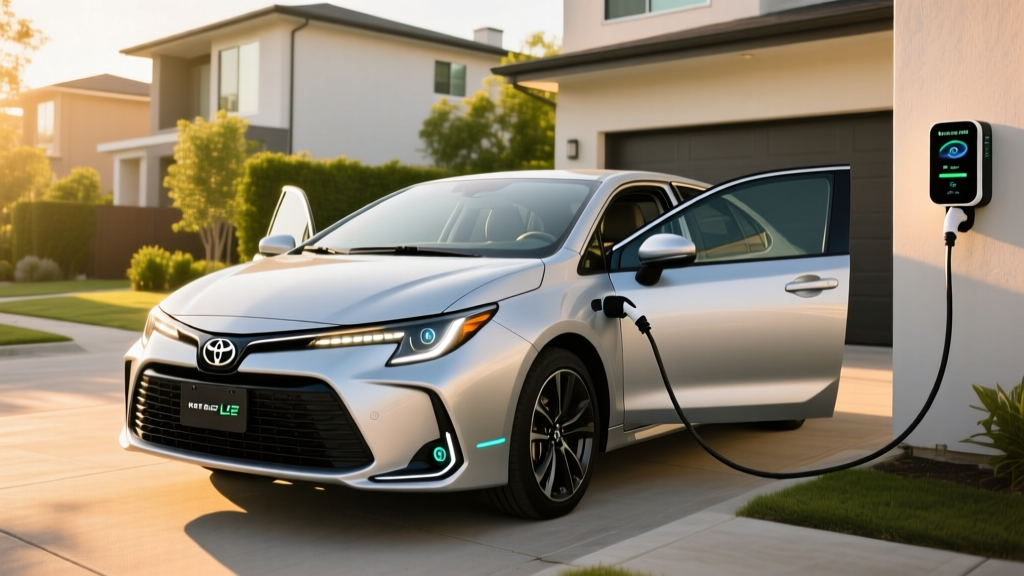
The 2025 Toyota Corolla Hybrid LE occupies a specific and increasingly crowded niche: the no-plug-required, high-MPG compact sedan that costs less than a mid-size crossover's base trim. With an EPA-estimated 50 MPG combined and a starting MSRP near $23,500, it undercuts most plug-in hybrids and all battery-electric vehicles on upfront price while delivering fuel economy that rivals them on a cost-per-mile basis. This guide breaks down exactly what the Corolla Hybrid LE delivers, where it falls short, and how it compares to the PHEV and EV alternatives buyers are cross-shopping.
HEV vs PHEV: Where the Corolla Hybrid LE Fits
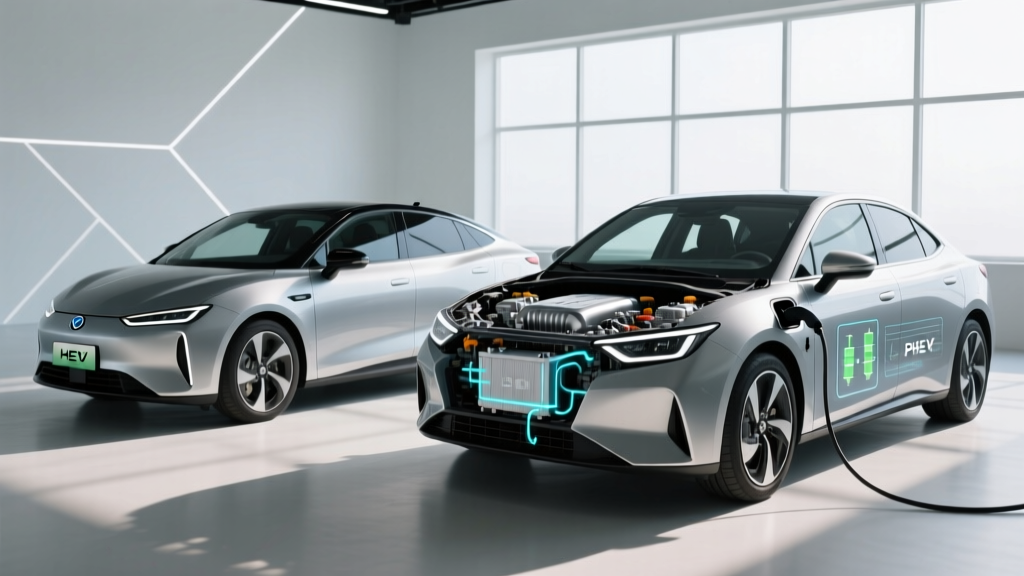
Before examining specs, it is essential to distinguish what the Corolla Hybrid LE is — and what it is not. It is a conventional hybrid electric vehicle (HEV), sometimes called a "self-charging hybrid." It has no plug, no electric-only driving mode of meaningful distance, and no external charging capability. The small traction battery recharges exclusively through regenerative braking and the gasoline engine.
| Attribute | HEV (Corolla Hybrid) | PHEV (e.g., Prius Prime) | BEV (e.g., Tesla Model 3) |
|---|---|---|---|
| Plug-in charging | No | Yes (Level 1/2) | Yes (Level 1/2/DC) |
| Electric-only range | <1 mile at low speed | 25–45 miles typical | 250–360+ miles |
| Battery size | ~0.9 kWh (NiMH or Li-ion) | 10–18 kWh (Li-ion) | 50–100+ kWh (Li-ion) |
| Gas engine | Yes (primary) | Yes (backup + highway) | None |
| Tailpipe emissions | Yes (low) | Yes (when engine runs) | None |
| Federal tax credit (§30D) | No | Up to $7,500 (if eligible) | Up to $7,500 (if eligible) |
| Base MSRP range | $23,000–$28,000 | $33,000–$43,000 | $30,000–$55,000+ |
The Corolla Hybrid LE is the choice for drivers who want maximum fuel efficiency without altering their refueling habits. If you can charge at home and want electric-only commuting, a PHEV like the Toyota Prius Prime or a full BEV may serve you better — but at a $10,000–$20,000 premium before incentives.
Powertrain Specs and Performance
The 2025 Corolla Hybrid LE pairs Toyota's fifth-generation hybrid system with a 1.8-liter four-cylinder Atkinson-cycle engine. Combined output is 138 horsepower — adequate for commuting and highway merging, but not sporty. The hybrid system uses two motor-generators (MG1 for starting and generating, MG2 for propulsion and regen) routed through a planetary eCVT gearset.
| Engine | 1.8L 4-cylinder Atkinson-cycle |
| Combined system horsepower | 138 hp |
| Drivetrain | FWD (AWD available on higher trims) |
| Transmission | eCVT (planetary gearset) |
| Hybrid battery | ~0.9 kWh, lithium-ion (5th-gen system) |
| Plug-in capable | No (HEV) |
| 0–60 mph | ~9.2 seconds (est.) |
| Curb weight | ~3,085 lbs |
| Cargo volume | 13.1 cu ft (trunk) |
| Base MSRP (LE trim) | $23,500 (excl. destination) |
Acceleration is the Corolla Hybrid's most obvious compromise. At roughly 9.2 seconds to 60 mph, it trails the gas-only Corolla and most turbocharged compact competitors. The eCVT delivers smooth, stepless acceleration in city traffic, but highway passing requires planning. For buyers prioritizing efficiency over performance, this trade-off is acceptable; for those who regularly merge onto fast-moving freeways, a test drive is warranted.
Fuel Economy: EPA Ratings vs Real-World MPG
The headline number is what draws buyers to this car. Here is the EPA-estimated fuel economy breakdown for the 2025 Corolla Hybrid LE (FWD), per fueleconomy.gov:
| Cycle | EPA Estimate |
|---|---|
| City | 53 MPG |
| Highway | 46 MPG |
| Combined | 50 MPG |
Real-world expectation: Toyota's hybrid system excels in stop-and-go city driving, where regenerative braking and electric-motor assist do the heaviest work. Many owners report exceeding the 53 MPG city estimate in moderate-temperature urban commutes, with 55–58 MPG achievable on flat terrain at moderate speeds. Highway driving is less efficient — expect 42–45 MPG at 70–75 mph sustained, particularly with headwinds or elevation changes.
Cold weather (below 35°F) reduces MPG by roughly 5–10% as the engine runs more frequently to maintain cabin heat and battery temperature. In our experience, a mixed suburban/highway commute in winter conditions yields approximately 44–47 MPG combined. This is still class-leading, but buyers in northern climates should budget for the seasonal dip.
At 50 MPG combined and $3.25/gallon regular unleaded (national average), annual fuel cost for 12,000 miles is approximately $780. A comparable gas-only compact averaging 32 MPG combined would cost roughly $1,219 — a $439 annual savings with the hybrid, or about $2,195 over five years.
Battery Warranty, Lifespan, and Replacement Cost
Hybrid battery longevity is the single most common concern among first-time hybrid buyers. Toyota addresses this with one of the strongest warranties in the segment.
Toyota Hybrid Battery Warranty (2025 Models)
- Coverage: 10 years / 150,000 miles (whichever comes first)
- Applies to: Hybrid traction battery, hybrid control module, inverter
- Transferable: Yes, to subsequent owners
- Capacity threshold: Warranty covers defects and premature degradation; Toyota does not publish a specific % capacity retention guarantee (unlike BEV warranties)
In practice, Toyota's hybrid batteries have demonstrated exceptional longevity. The nickel-metal hydride (NiMH) packs in earlier-generation Prius models routinely lasted 150,000–200,000 miles before significant degradation. The fifth-generation lithium-ion pack in the 2025 Corolla Hybrid is smaller, lighter, and operates within a tighter state-of-charge window managed by the hybrid control system — all factors that promote longevity.
Out-of-warranty replacement cost: If the hybrid battery fails after warranty expiration, a new OEM replacement from Toyota currently costs between $2,500 and $3,500 including labor at a dealership. Independent hybrid-specialty shops and refurbished battery options can reduce this to $1,500–$2,200. Given the 10-year/150,000-mile warranty and Toyota's track record, most owners will never face this expense.
Pricing, Trims, and Tax Credit Eligibility
The 2025 Corolla Hybrid LE starts at an MSRP of approximately $23,500 (excluding destination charge of ~$1,095). The Hybrid SE and Hybrid XLE trims add features like larger wheels, synthetic leather, and upgraded infotainment, pushing prices to $26,000–$29,000. AWD is available on select trims for approximately $1,400 additional.
Federal tax credit: The Corolla Hybrid LE does not qualify for the IRS §30D Clean Vehicle Credit. Under current IRS rules, only plug-in electric vehicles (BEVs and PHEVs) with a battery capacity of at least 7 kWh are eligible. Conventional HEVs like the Corolla Hybrid have been excluded from §30D since the credit's restructuring under the Inflation Reduction Act.
State incentives: A small number of states offer rebates or HOV-lane access for conventional hybrids, but these programs are increasingly rare and typically prioritize PHEVs and BEVs. Check your state's energy office or department of environmental quality for current programs — do not assume hybrid eligibility.
Total cost context: While the Corolla Hybrid LE forgoes the $7,500 federal credit available to qualifying PHEVs and BEVs, its $10,000–$15,000 lower purchase price often results in a lower 5-year total cost of ownership for buyers who do not itemize deductions or who exceed the §30D income caps ($150,000 single / $300,000 joint AGI).
Hybrid vs PHEV vs EV: Which Powertrain Fits Your Life?
Choose the Corolla Hybrid LE (HEV) if:
- You cannot charge at home (apartment, street parking, no garage)
- Your budget is under $25,000 and you want maximum MPG
- You drive 10,000–15,000 miles/year with a mix of city and highway
- You want zero behavioral change — just fill up at any gas station
- You plan to own the car 8–12 years and value long-term reliability data
Choose a PHEV (e.g., Prius Prime) if:
- You can install a Level 2 charger at home and commute <40 miles round-trip
- You want electric-only daily driving but gas flexibility for road trips
- You qualify for the full $7,500 §30D credit (income + sourcing requirements met)
- You want to reduce — but not eliminate — gasoline consumption
Choose a BEV (e.g., Tesla Model 3, Hyundai Ioniq 6) if:
- You have reliable home charging and access to DC fast-charging corridors
- You want zero tailpipe emissions and minimal maintenance (no oil, no spark plugs)
- Your daily driving is under 250 miles and you can plan road-trip charging stops
- You qualify for federal/state incentives that narrow the price gap
The Corolla Hybrid LE's strongest argument is accessibility. It requires no infrastructure investment, no behavioral change, and no incentive qualification. For the roughly 40% of US households that lack reliable home charging access, it delivers near-PHEV city efficiency with none of the complexity.
Pros, Cons, and Real Ownership Trade-Offs
Pros
- 50 MPG combined EPA — among the highest of any non-plug vehicle sold in the US
- $23,500 base MSRP — thousands less than any PHEV or BEV
- 10-year/150,000-mile hybrid battery warranty
- No charging infrastructure required
- Toyota Safety Sense 3.0 standard (AEB, lane-keep, adaptive cruise)
- Strong resale value and reliability reputation
Cons
- 138 hp — sluggish acceleration, especially highway merging
- No federal tax credit eligibility
- 13.1 cu ft trunk — smaller than some compact competitors
- Base LE infotainment is functional but dated (8-inch screen, wired CarPlay)
- No electric-only driving mode — engine runs frequently in cold weather
- AWD only available on higher trims, reducing fuel economy to ~47 MPG combined
Frequently Asked Questions
How many MPG does the 2025 Toyota Corolla Hybrid LE get?
The EPA rates the FWD Corolla Hybrid LE at 53 city / 46 highway / 50 combined MPG. Real-world city driving often exceeds the EPA city estimate (55–58 MPG), while sustained highway driving at 70+ mph typically yields 42–45 MPG. Cold weather reduces combined MPG by approximately 5–10%.
Does the Corolla Hybrid need to be plugged in?
No. The Corolla Hybrid LE is a conventional HEV, not a plug-in hybrid. Its small lithium-ion traction battery charges exclusively through regenerative braking and the gasoline engine. You refuel it at any gas station, exactly like a conventional car.
How far can the Corolla Hybrid drive on electric power alone?
Less than one mile, and only at very low speeds (under 25 mph) in specific conditions. The hybrid system uses the electric motor to assist acceleration and enable engine-off coasting, but it is not designed for meaningful electric-only driving. If electric-only range is a priority, you need a PHEV or BEV.
Is the Corolla Hybrid reliable, and what does battery replacement cost?
Toyota's hybrid powertrains are among the most proven in the industry, with two decades of Prius data demonstrating 150,000–200,000+ mile battery life in typical use. The 2025 model carries a 10-year/150,000-mile hybrid battery warranty. Out-of-warranty replacement, if ever needed, costs $2,500–$3,500 OEM or $1,500–$2,200 refurbished/independent.
Does the 2025 Corolla Hybrid qualify for any tax credit?
No. Under current IRS §30D rules, only plug-in vehicles (BEVs and PHEVs) with batteries of 7 kWh or larger qualify for the federal Clean Vehicle Credit. The Corolla Hybrid's ~0.9 kWh battery does not meet this threshold. Some states may offer minor hybrid incentives — check your state energy office.
How does the Corolla Hybrid compare to the Prius?
The 2025 Prius (redesigned for 2023) offers more power (194 hp FWD), slightly better highway fuel economy, and a more modern interior — but starts approximately $4,000–$5,000 higher. The Corolla Hybrid LE is the value play: maximum MPG per dollar, with a more conservative design and lower feature content.
Is the Corolla Hybrid LE a good choice for high-mileage drivers?
Yes. At 15,000+ miles per year, the fuel savings compound significantly. A driver covering 20,000 miles annually at 50 MPG and $3.25/gallon spends approximately $1,300 on fuel — versus $2,031 in a 32 MPG gas compact. That $731 annual savings, combined with Toyota's reliability record, makes the Corolla Hybrid one of the lowest total-cost vehicles in its class for high-mileage use.